Arch 241 Midterm Review
 Call Kai
 Learn
 Practice Test
 Spaced Repetition
 Match
 Flashcards
 Knowt Play
1/164

There's no tags or description
Looks like no tags are added yet.
165 Terms
Baroque
Early 17th century-18th century
Buildings built quickly
Interior cladding, a lot of pilaster
Palais im Grossen Garten
Cladding brick building with pilaster - built quickly

Palladio Palladianism (style) - (Italian Renaissance Movement)
Italian architecture during Baroque period
Used pilasters
Vitrivius column order, columns on different levels (doric=1st floor, ionic=2nd floor, corinthian=3rd floor)
Mansard
type of roof that has curved edges

Point of gods and goddesses in architecture
personify virtue
Fasanenschloss
Rennosance palace
Greek gods - sign of education, shows building meaning
muses that represent memory and storytelling
stitched wallpaper
ovens made of porcelain used for heating (need good soil to make)

Matthias Daniel Poppelmann
Saxon Baroque architect
Famous aside Wolf Kaspar von Klengel
Built through Saxony and Poland
Der Zwinger
built by Poppelmann
near palace of Dresden (fortress)
gets military through town quickly
open on inside - hosted parades, circus, Turkish displays (they conquered Turks)
Eagle statues - shows Roman standards
Onion dome (Baroque)
Caryatids - fawns, nymphs (showed it was a party place)
Mass-produced and used wood + brick
Mansard roof used as tax evasion - Hippodrome inspired

Baroque columns
wire used to get pilaster to stick to wooden columns
painted frescas to look like marble (showed wealth and power)
2 anchors holding column to wall
plinths (base) is the only place where stone is used on columns
steel or iron anchors used to hold piers and structures together
1800s=mass production of nails
Berlin Palace
Andrew Schluter=architect (worked for both Prussia and Russia)
the schluterhof (reconstructed)
Corinthian columns on third floor (prestigious)

Great Northern War
1 mil+ deaths
England forced to join Prussia
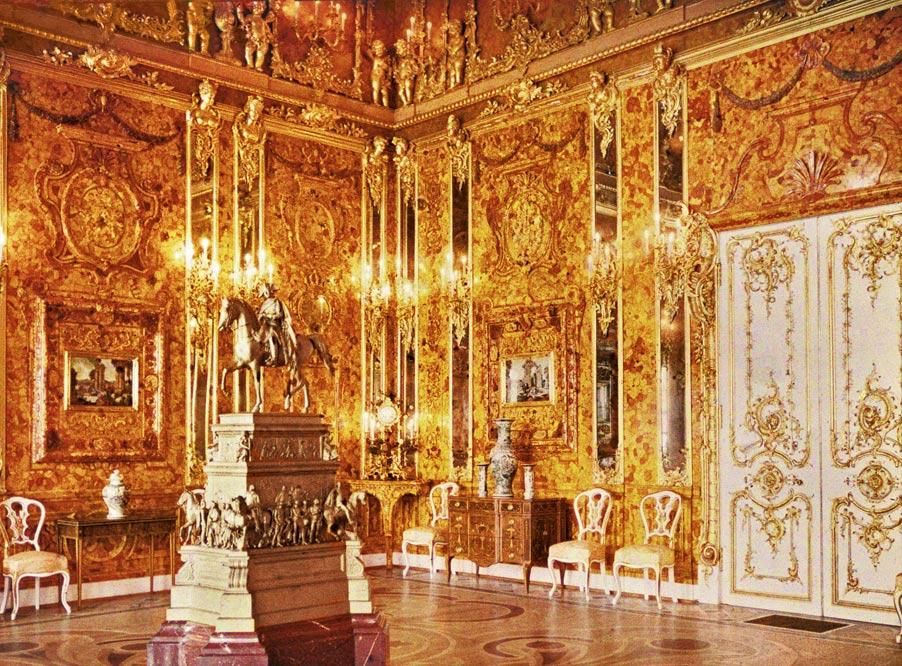
The Amber Room, Catherine Palace
Designed by Schluter - originally located in Berlin Palace
Gifted to Tsar Peter the Great by Prussian King
Destroyed by Nazis
Peter takes over army and modernized it - gets rid of Russian powers
He then won against Sweeden and gained a lot of land
The Winter Palace, St. Petersburg
Francesco Bartolomeo Rastrelli=architect
Inspired by cathedrals in Dresden

Difference between tower numbers
Orthodox=triple tower
Catholic=single tower (shows unity of Father, Son, and Holy Spirit)
Heidelburg City
obliterated in 9 year war
never had successor
rebuilt city to have a quadratic grid (added town squares for markets)

The Alte Aula (Old Lecture Hall)
Designed by Johann Adam Breunig
Used wood and painted murals
boxy windows with little detail
Calvinists didn’t like ornamentation

Heidelburg Castle
distroyed in war, rebuilt, got struck by lightning and burned down
Prince elector was Catholic and wanted something elaborate (so he built Manheim Palace)

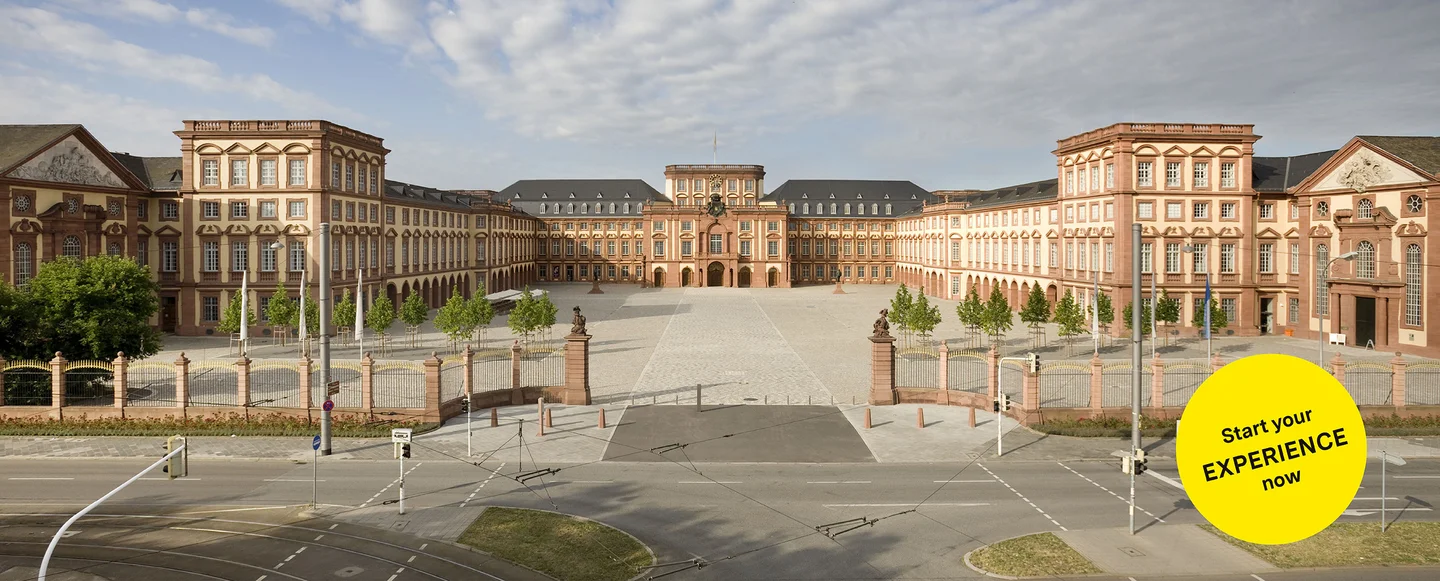
Mannheim Palace
Made of natural stone (Redstone) and has no pediments
Replaced Heidelburg castle and was permanent residence of electors of Palatinates
Biggest quadrant city of all time
Pediments
Triangle with statues in middle

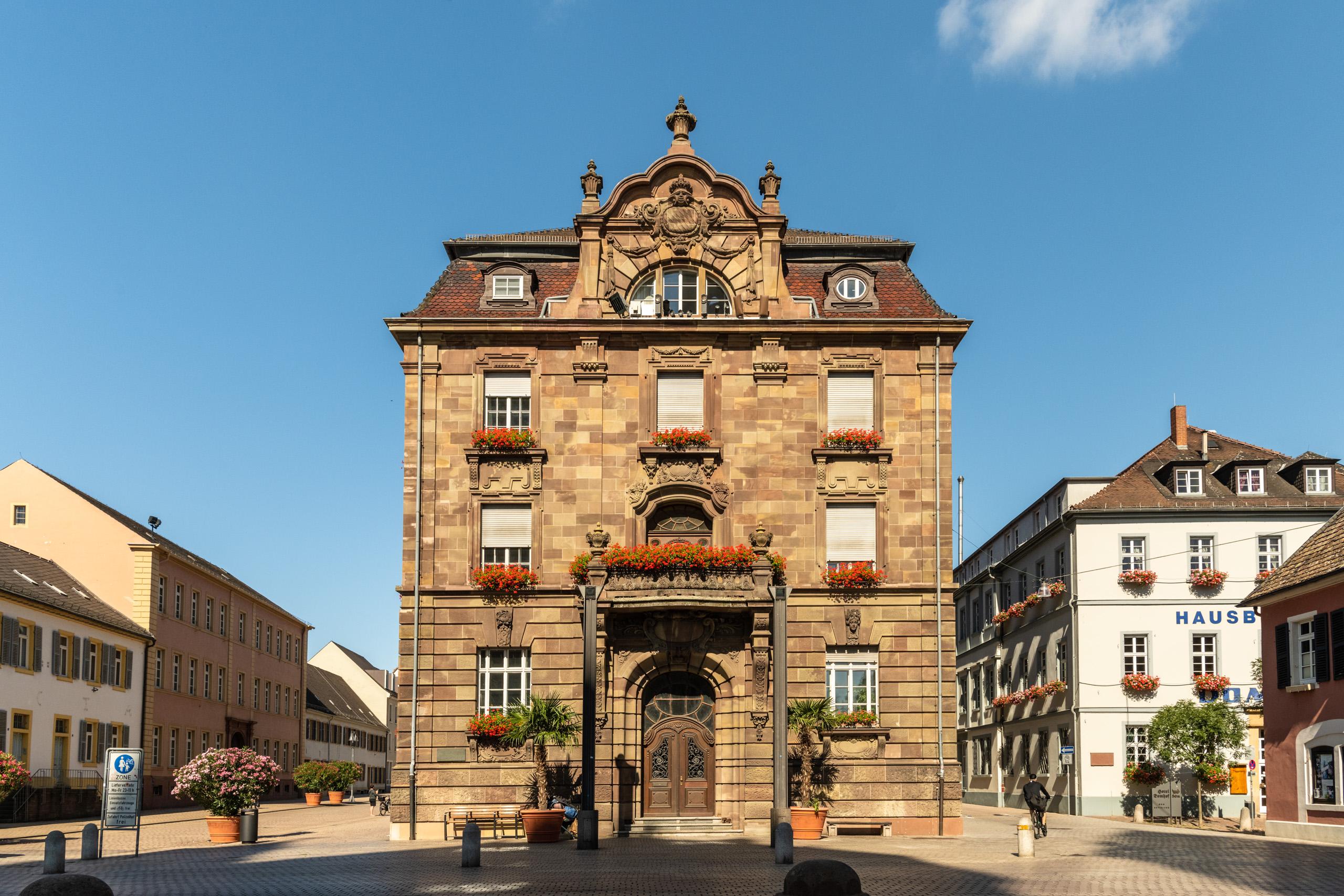
City Hall of Speyer, Germany
built by Breunig
located in Palatinate
Speyer, Germany
Baroque introduced fluid facades with walls between buildings
used color to make people happier
multi-room structure houses
top level=maids/butlers, smaller house=stall/stable, master/guards

Volutes
Gestibute construction
Catholic architecture style

Queluz Palace
Rococo
designed by Mateus Vicente de Oliveria (student of Ludwig and Robillon)
Furniture=hand carved wood with linen/silk
ceiling=vaults with domes made of wood
pastel orange and green (staple colors of neoclassical and Rococo)
green interior with gold=rococo
Dutch built lighthouses (bought by British) to keep enemies away
portrayed in tiles (azuela) at palace

Nymphenburg Palace
Zuccalli and Effner=architects
longest baroque palace
has canals and a large garden
all electors lived here (more powerful than kings)
large fountain with original gravity pump system
Ministers in radially spaced houses around palace
walk out and see palace directly
Ballroom
Colorful ceiling, checkered floor, many light openings, chandeliers, gold to reflect light
wood, pilaster, and brick (quick build)
Kitchen
Azuela (hand painted tile)
blue and white showing family’s colors
Similar to Winter Palace exterior (built at same time)
no pediments, plain compared to Winter Palace
Long roof helped with insulation and getting snow off roof

Who taught who?
Baroque began after 30 year war, where did architects meet and train?
Paris
International language during 17th/18th century
French
Where did most Baroque architects come from?
Italy - have a lot of experience (most from Venice and Munich)
Art school in Venice - many went there to train
Roman ruins are in Italy
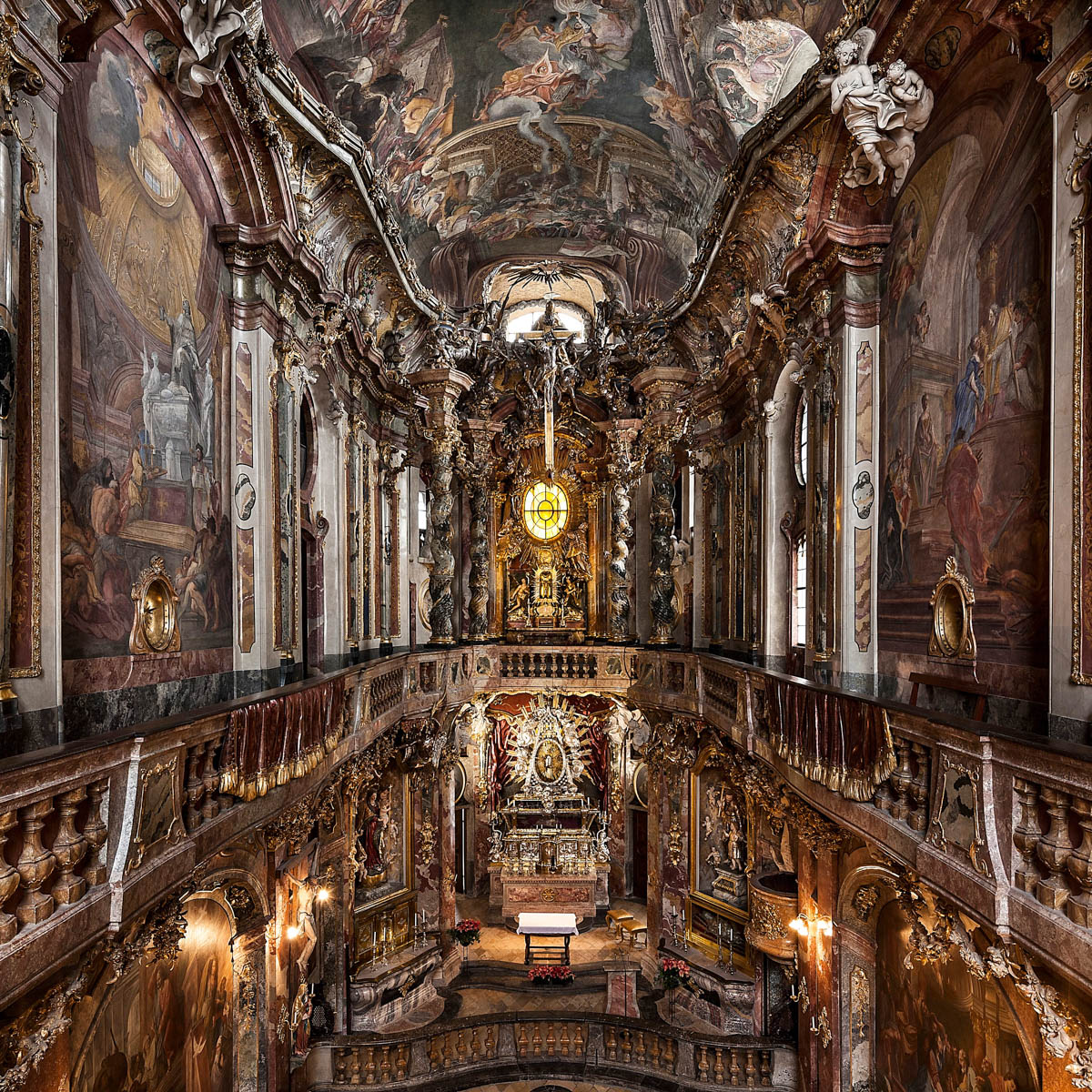
Asamkirche, Munich
Rococo church
dedicated to tomb of parents of the brother architects
Pilaster and marble
Obsessed with illusions
must understand optics (Newton)
Cross appears lifted when walking toward it
Ludswigburg Palace
450+ Rooms
Designed to go straight to Stuttgart (positioned north of Stuttgart, Germany)
Mansard roofs
Dukes are reformed, not Christian
Calvanist=reformed
No pediments (Calvanism)
Fruit and nut trees planted around to combat famine

English Baroque
begins after great fire of London
more limited in scope than on the continent
Main Cathedral of London
use the church as a national symbol
England had split nations (7 in total)
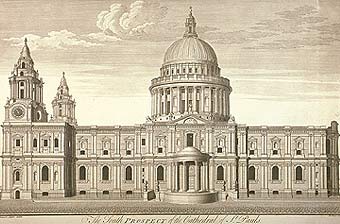
St. Paul’s Cathedral
English Baroque period
Rebuilt St. Paul’s Cathedral (Sir Christopher Wren)
less Catholic and more reformed (Calvinists - Anglican)
Corinthian columns on both levels, unique pediment, no onion dome
Georgian Style
named after King George of England (refers to architecture after his election)
St. Martin in the Fields, London
Baptist church w/ spire on top
reformed church (King George’s religion)

Shift in architecture seen when universities were built
Senate House, Cambridge University
Radcliffe Camera, Oxford University (shown in image)
Baroque, Neoclassical, Greco-Roman


The Circus
Built by James Wood the Elder
Bad=Roman Bath
Vitruvian order on exterior columns
Rounded building - modeled after hippodrome (where they raced charriots)
referenced people that died there
Neoclassicism
no color, proper ashlar build (structurally sound)
reffered to as classicism
rediscovery of ancient Rome and Greece architecture
2nd half of 18th century
Key elements=
Versatile
1st industrialization of architectural elements
more sober than Baroque
Palladianism
began by Andreas Palladio
16th century movement featuring classical elements
Johann Joachim Winckelmann
found everything out about Greco-Roman design
Founder of Modern Archaeology
Age of Enlightenment
network of architects, philosophers, salesmen, and writers
separation of church and state, freedom, and scientific reasoning
period that influenced the founding of the US
18th century - slave trade and spices to the US
Years - 7 Years war, American Revolution, French Revolution
7 years war (French-Indian war) - 1756-1763
American Revolution - 1775-1783
French Revolution - 1789-1799
Royal Salt Works at Arc-et-Senans
designed by Claude-Nicolas Ledoux
Salt factory
Pillars are different - told people it’s not a church
first factory of its kind - allowed salt to dry properly (ventilation)

Etienne-Louis Boullee
wanted to make architecture expressive
Pantheon, Paris
designed by Jacques-Germain Soufflot and Jean-Baptiste Rondelet
intended as church for St. Genevieve
renamed “Temple of Humanity” - no longer a church
after renovation, became mausoleum for illustrious men
modeled after new St. Peters and the Panthenon in Rome

The Brandenburg Gate
Design by Prussian architect Carl Gotthard Langhans
Fortuna on top - dedicated to 7 years war that they won
Berlin wall used to be right in front of this gate

Schloss Dyhernfurth
Also designed by Langhans
Neoclassical (very sober)
Identical alimentation of windows
showed mass production and standardization

French Revolution
2 parts - monarchy and obliteration of monarchy
destruction of palaces and Catholic churches
40,000+ deaths (reign of terror)
followed by 7 coalition wars (Napoleonic Wars)
Ended Ancient Regime
Battle of Waterloo
Napolean defeated in 1815
Napolean’s empire
expanded into Russia
dismantled every state along the way
Dissolved Holy Roman Empire in 1806
Napolean created 1st engineering school
Winter in Russia - Napolean’s war
Very cold
many soldiers died because of armor made of tin
tin dissolved in cold temps
lost war and had to return home
Arc de Triomphe de I’Etoile
Jean Chalgrin=architect
Triumphant arch - came from Romans
Coming home from an army’s victory
Napolean was Hitler’s role model
Greco-Roman, French Neoclassicism (small baroque details)

Kazan Cathedral, St. Petersburg
Andrei Nikiforowitsch Woronichin
Symbol of 1812 victory
Modeled after St. Peters Basicilla
not friends with Catholic
Ionic columns (more sober)
Inside had gold Corinthian columns
inspired by St. Paul beyond the Wall

Karl Friedrich Schinkel
Prussian architect
Studied work of Winkleman
Established a free schooling and education system
not enslaved to greco roman style
A purely functional building lacks human dignity
Altes Museum, Berlin
Schinkel=architect
ionic columns (sober)
rectangular box structure
1st to draw architectural renderings and include people

Neue Wache, Berlin
Schinkel=architect
imperial city (built Berlin in 19th century)
Built during Napolean war period
After war they made Neue Wache to show that areas had to find who they were
Doric Columns (masculine) and greco roman/egyptian influence
Made of brick and stone veneer

British Museum, London
Sir Robert Smirke=architect
ionic columns (Athena=goddess of wisdom)
greco roman with baroque wings

Composers are friends with architects/artists/composers
Hegel (philosopher)
taught Marx and Engels
Abstractionist - Kant
Architecture is a representation of the time its from
as architecture develops, art develops
Old St. Petersburg Stock Exchange
Thomas de Thomon=architect
built trade system
completely surrounded with columns (cella)
money is at top priority at the time (1811)

Palace of Ajuda
Neoclassical and Baroque
baroque usually has statues on top
neoclassical is pretty basic and has many square forms on the wall
brick with stone veneer
has a rotunda (inspired the US)

industrialization
2nd half of the 18th century
Sayner Hutte
is an ironworks
famous for giesshalle (casting hall) which made a lot of guns
fell to prussians in 1815
has original iron arching

The casting hall
1st industry hall with weihjt carrying cast iron construction
sold to Krupp in 1860s
cella wrought=shaped iron
cast iron=mold
Isambard Kingdom Brunel
father was a french civil engineer
attended Lycee Henri IV in Paris (fancy school)
Credited for 1st suspension bridge and steamboat
Clifton Suspension Bridge
Brunel=architect
214 meters
cast iron and steel, clad with brick

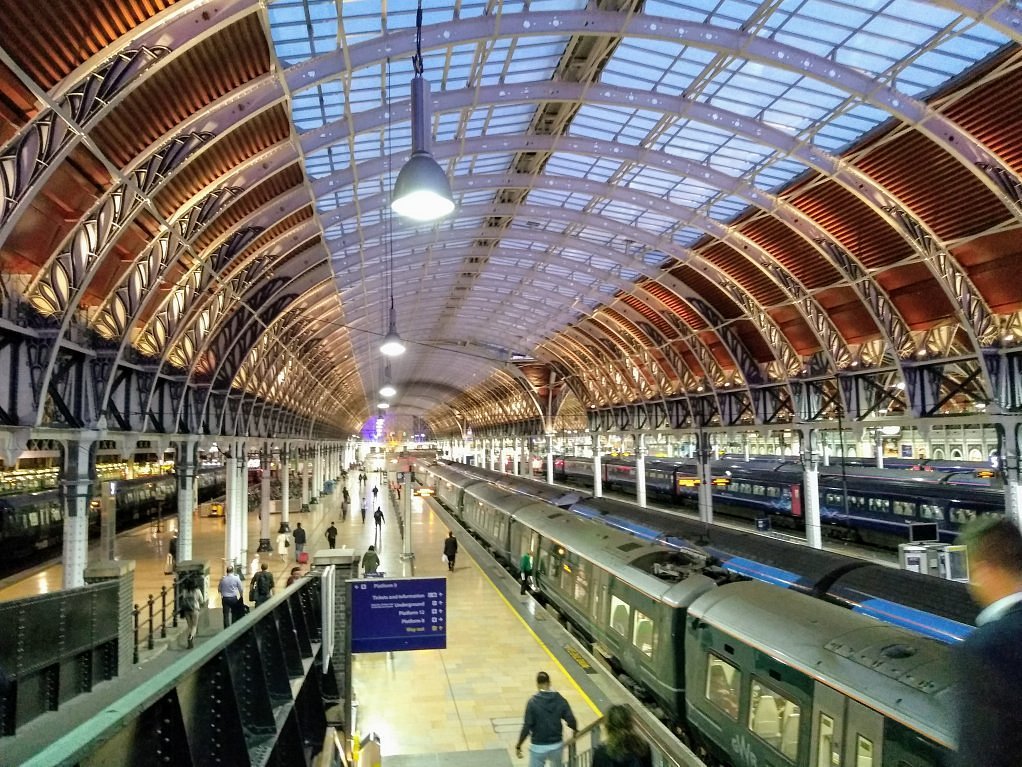
Paddington Station
Brunel=architect
trains come in 1830s to transport goods
built in 1854
Neoclassical design (sober arches)
Crystal Palace, London
Joseph Paxton=architect
Brunel over sought construction
built of glass, cast iron, and wrought iron
Victoria and Albert lived here
interested in reformed
Albert knows philosophers
originally designed to be an exhibition hall
can make tropical inside
Beginning of modernisim (flanking tower)

Table and cloth design - Crystal Palace
cast iron trusses draped with glass
internal framework painted
steel louvers
mechanically operated air openings
glass sheets were 4ftx10ft
significant at time because glass was hard to make
4 pieces of parchment/sheep - need a lot of parchment to make glass
Thin piers, barrel vault
ribs into piers (after Cathedrial)
Neogothic
British and the Navy
British had a lot of power in 1800s
controlled the sea (Navy)
owned coastline
St. Pancras Train Shed, London
William Henry Barlow=architect
constructed on former slum grounds
wrought iron pillars supporting single span roof
Foundation piers made of brick and cast iron steel (had to make deep - load goes out due to pointed arch)
west side was nicer - better wind flow
London was very polluted - made Schriebergarten (land by railroad people bought and made gardens on)
Sewer systems made to combat cholera
Largest single span in the world
Set for demolition in 1960s but saved 11 hours before

Turbine Building of the Menier Factory
cast iron steel frame, brick and iron on a steel box, resting on masonry piers
3 levels=3 stages of chocolate production
hot chocolate, cappuccino, croissant, and bagel are popular after war
pharmacist made building because of popularity
hydraulic powered building
works down due to gravity

Arts movements in Europe, mid 1800s
Europe’s writers, composers, musicians, and architects are all connected
Modern countries were product of this time
The Semperoper
designed by Semper
right next to Zwinger (looks like inverted Zwinger)
Neoclassical and baroque
temple with pediment on top, copper roof
new style emerging
1st opera house that has set that can move up and down
extends art to everyone (public theater, not just nobles)

baroque vs neoclassical
baroque=curved lines
neoclassical-straight lines

Changes in Philosophy
Marx and Engel wanted rebellion
Marc influenced by French author Balzac
Marx studied Hegelian Philosophy
emphasizes symbolism and abstractions
led to 1848 revolutions
1848 Revolutions
Louis P is overthrown and replaced by Louis Napolean as president of new republic
In Germany, citizenry and peasantry revolted against nobility
Napolean III (Napolean’s Nephew)
led failed coup in 1836, regrouped and succeeded in 1848
elected president, then led another coup in 1851 as French emperor
opposed literary network
Reconstruction of Paris
overhaul of city design - most significant remodel of city
Hausmann design
made new opera districts and wide boulevards, connecting squares w/ government building views
Napolean III kicked a lot of people out while building
2nd Empire style
Napolean III style
old part of Paris
half timber with pilaster, stone veneer, slate roofs (popular in baroque)
new gates
everything has chimneys
continued until 1890s until Beaux-arts takeover

Opera Garnier
designed by Charles Garnier
Standard 2nd Empire style
Napoleon III is eccentric
designed crazy buildings - wanted everything
marble columns with gold, well lit
modern for the time
artists and architects work together
Paris conquered by Germany (took a long time to build)

St. Augustin, Paris
designed by Baltard
student of beaux arts
80 meter tall dome
steel frame construction
British like big spaces and pushing architectural limits
French take new materials and old designs
medieval, neoclassical, and baroque
steel beams hold dome
holds windows in place

Royal Palace of Brussels
rebuilt and remodeled many times
Brussels, Belgium
came into existence as buffer state between France
owed to uncle for his wife and wanted to show allegiance, that’s why its neoclassical

Beaux-Arts
1848 revolutions and Napolean III’s reign (late 1850s)
all architects of 2nd empire were students of Beaux-Arts
Leipzig Neues Theater
designed by Langhans

Propylaen, Munich
designed by Leo von Klenze
stone ashlars with invisible mortar seams (no brick or steel)

Central Europe
1848 revolutions failed east of France
new wave of architecture - similar to Beaux-Arts
Founders Time (Gunderzeit) 1848-1873
people move around which creates new arch styles
look at why people move, where they move, why arch develops in a certain way
major events make people move (war, famine, etc.)
Semporer and Richard opposed revolution
Prussia design
sober and neoclassical
shift in arch style=shift in allegiance
Rubber
people need it to help them build higher
whale oil used for fuel
push on historical architectural development
new cities
major cities expand, mostly without demolishing their historic centers
wide boulevards, more sober railings, straight facade
The Mietskaserne (rental barracks)
multi-level rental apartments in middle of cities
half timber covered in plastic
designed for workers and families in industrialization
cholera spread
4 designs
back courtyards (feels communal), remise=open stall, hof=inner court, provides fireplace and bathroom, improves health and cross drafting
Gorlitzer Train Station, Berlin
opened during Astro-Prussian was as portal to the east
Neorennisance style
main transportation but bombed WW2

Frankfurts Old Opera
bombed and rebuilt
neoclassical
built greco roman to show stories being told

Gunderzeit (historicism)
Germany, Austria Hungary, and Russia encouraged nationalism and revival of arch (before Napolean)
neogothic
Egyptian things being found - influences art deco
RIngsta Bezeit
ring street time
overhaul of Vienna’s city center and striking of 7 walls
empty space
first city with street trains
Burgtheater, Vienna
Designed by Hasenauer
Copy design to join allegiance with Germany
Round walls on outside
similar to Paris Opera house (gold)

The New Castle
neo-baroque design by Semper and Hasenauer
never finished
big castle=a lot of industries, need a lot of people to be representing
triumphant gates

City Hall of Vienna
neo gothic
designed by Schmidt
heros from antiquity sculptures (war heros)
showed patriotic pride
Rennosance Plinths, marble shaft, corinthian column
no proper gothic rules yet

New City Hall of Munich, Germany
designed by George von Hausnerrisser
Neo gothic
2 building phases
babaschnit=building phase

Rise of Nationalism in Europe
after 1848 revolutions, states/kingdoms wanted different identities from each other
away from pan-European styles
What is Historicism?
Return to older styles while using new techniques
embellish/overuse certain elements
no firm idea of styles
Pena Castle
commissioned by Ferdinand II and designed by Ludwig von Eschwege
built atop a former covent
oculus windows
neo romanesque/neogothic

Wilhem Ludwig von Eschwege
was artiliery officer, geologist, etc.
Crenelation
decor that sticks up from the wall, protects people during battle

corbels
holds things up on wall
