Biology 2401 Collin College Lab Practical 1
 Call Kai
 Learn
Learn Practice Test
 Spaced Repetition
 Match
Match Flashcards
 Knowt Play
1/108

There's no tags or description
Looks like no tags are added yet.
Name | Mastery | Learn | Test | Matching | Spaced | Call with Kai | Chat |
|---|
No analytics yet
Send a link to your students to track their progress
109 Terms
Characteristics of anatomical position
Standing upright
Feet parallel and on the floor
Head level and looking forward
Arms at the side of the body
Palms facing forward and thumbs pointing away from the body

crural
shin

Perineal
region between the anus and the external reproductive organs

Scapular
shoulder blade

Cervical
neck
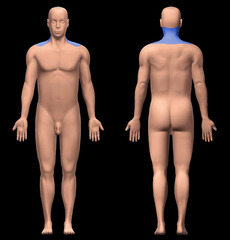
Occipital
back of head

Coxal
hip

Antebrachial
forearm

Otic
ear

Axillary
armpit

Tarsal
ankle

Femoral
thigh

Mental
chin

Sternal
breastbone

The Mental is Superior to the __________ but inferior to the __________
Acromial and Buccal
Antecubital
front of elbow

back of elbow
olecranal

the antecubital area is _____________ to the carpal area
proximal
Proximal
Closer to the point of attachment
Distal
away from the point of attachment
The Patellar is ____________ to the gluteal
anterior
The pollex and pinky finger are what to each other in anatomical position?
Lateral

The Nasal is __________ to the Otic?
Medial

Lateral
away from the midline

Medial definition
towards the midline

Midline
An imaginary line is drawn down the center of the body, dividing it into right and left halves.

Ventral
front

Dorsal
back

Sagittal
A plane that divides the body into right and left portions.

Transverse
Divides body into upper and lower parts

Frontal (coronal)
divides the body into anterior and posterior parts

What organs are apart of the dorsal body cavity?
Brain and spinal cord
What organs are apart of the ventral body cavity?
lungs, heart, stomach, intestines & reproductive organs
The Thoracic cavity consists of ...
Pleural cavity: lungs
Pericardial cavity: heart
Mediastinal cavity: space between the apex of the lungs
Serosa
serous membrane; epithelial membrane that secretes a thin, watery fluid
Visceral
Covers a vital organ

Parietal
lines a body cavity or body wall
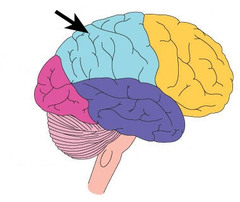
Pericardium
Membrane surrounding the heart
Pleura
Membrane surrounding the lungs
Peritoneum
membrane that lines the abdominal cavity
organs found in right upper quadrant
Colon (hepatic flexure), liver, and gallbladder.

organs found in the left upper quadrant
Stomach, colon (splenic flexure), pancreas, and spleen.
organs found in the right lower quadrant
Small intestines, cecum, and appendix.
organs found in the left lower quadrant
left ovary, Small intestines and sigmoid colon.
A
right hypochondriac region?

C
Left hypochondriac region?

D
Right lumbar region?

F
Left lumbar region?

B
Epigastric region?
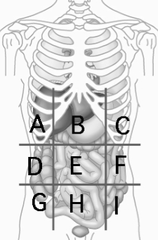
E
Umbillical region?

H
Hypogastric region?

G
Right iliac (inguinal) region?

I
Left iliac (inguinal) region?

Four tissue types
epithelial, connective, muscle, nervous
epithelial tissue
Tissue that covers outside of the body and lines organs and cavities.

connective tissue
A body tissue that provides support for the body and connects all of its parts

muscular tissue
Contracts and moves the various parts of the body.

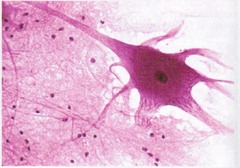
nervous tissue
A body tissue that carries electrical messages back and forth between the brain and every other part of the body.
types of connective tissue
connective tissue proper, cartilage, bone, blood

types of muscle tissue
skeletal, cardiac, smooth

Type of epithelial tissue
skin

type of nervous tissue
neurons and glial cells

What organ systems does the heart belong to?
cardiovascular

Spleen
This organ belongs to the lymphatic system

What organ system does the brain belong to?
nervous system
liver
This organ belongs to the digestive system

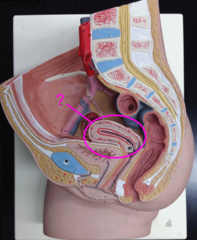
What organ system does the uterus belong to?
Reproductive system
Kidney
This organ belongs to the urinary system

What organ system does the pancreas belong to?
Endocrine system

Cartilage
This organ belongs to the skeletal system?

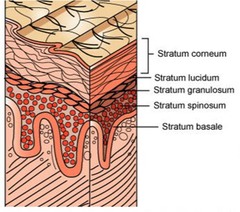
What organ system does the epidermis belong to?
Integumentary system
function of muscular system
locomotion, support, heat production
function of lymphatic system
Returns fluid leaked from blood vessels to blood and Defense against infection and disease
function of integumentary system
Protection from injury and pathogens, waterproofs the body, regulation of body temp- synthesizes vitamin D3
function of nervous system
receives sensory information and coordinates the body's response
function of respitory system
gets oxygen from outside and exhales carbon dioxide
Trachea
This organ belongs to the respiratory system

function of cardiovascular system
to deliver oxygen and nutrients and to remove carbon dioxide and other waste products
Function of skeletal system
support, protection, movement, storage, blood cell production
function of digestive system
break down and absorbs nutrients from food; removes waste; maintains water balance
function of reproductive system
production of Germ (sex) cells and hormones
function of urinary system
elimination of excess water, salts, and waste products; control of pH
function of endocrine system
1. To secrete hormones that coordinate and direct target cells and organs
simple squamous epithelium
Function: Allows passage of materials by diffusion and filtration in sites where protection is not important; secretes lubricating substances in serosae.
Location: Kidney glomeruli, air sacs of lungs, lining of heart, blood vessels, and lymphatic vessels; lining of ventral body cavity(serosae)

simple cubodial epithelium
Function: secretion and absorption
Location: Kidney tubules; ducts and secretory portions of small glands, ovary surface.

simple columnar epithelium
Function: Absorption; secretion of mucus, enzymes, and other substances; ciliated type propels mucus (or reproductive cells) by ciliated action.
Location: nonciliated type lines most of the digestive tract (stomach to anal canal), gallbladder and excretory ducts of some glands; ciliated variety lines small bronchi, uterine tubes, and some regions of the uterus.

transitional epithelium
function: stretches readily and permits distension of urinary organ by contained urine
Location: lines the ureters, urinary bladder, and part of the urethra

stratified squamous epithelium
Function: protects underlying tissues in areas subject to abrasion
Location: nonkeratinized type forms the moist lining of the esophagus, mouth, and vagina; keratinized type forms the epidermis of the skin, a dry membrane.

stratified cuboidal epithelium
Function: protection
Location: Largest ducts of sweat glands, mammary glands, and salivary glands.

pseudostratified columnar epithelium
Function: Protection, secretion, movement of mucus
Location: Linings of respiratory passages

What is mesenchyme?
This is the first connective tissue to appear in the embryo

CT proper
loose CT and dense CT
loose connective tissue
areolar, adipose, reticular
dense connective tissue
dense regular, dense irregular, elastic
specialized connective tissue
cartilage, bone, blood
What is the functional role of ground substance in connective tissue?
provide a route for communication and transport (by diffusion) between tissues
fluid connective tissue
blood and lymph
Supporting CT
cartilage and bone
adipose tissue
Tissue that stores fat.

Reticular tissue
type of loose connective tissue that provides a supportive framework to soft organs, such as lymphatic tissue, spleen, and the liver
