COMM 420 Midterm Exam
 Call Kai
 Learn
 Practice Test
 Spaced Repetition
 Match
 Flashcards
 Knowt Play
1/130

There's no tags or description
Looks like no tags are added yet.
131 Terms
what is business
an exchange
a relationship (giver and taker)
positive long term relationships
what you have and what you want and then the process of getting it through relationships
explain an exchange (under what is marketing)
two or more parties with unsatisfied needs
desire and ability to satisfy these needs
need to see value in the exchange
a way for the parties to communicate
what is marketing definition
managing profitable customer relationships
need marketing for everything to function
building, enriching, stabilizing relationship
the tool you are using to make all relationships
process of developing the relationships
what is marketing goals
attract new customers by promising superior value
keep and grow current customer base by delivering satisfaction
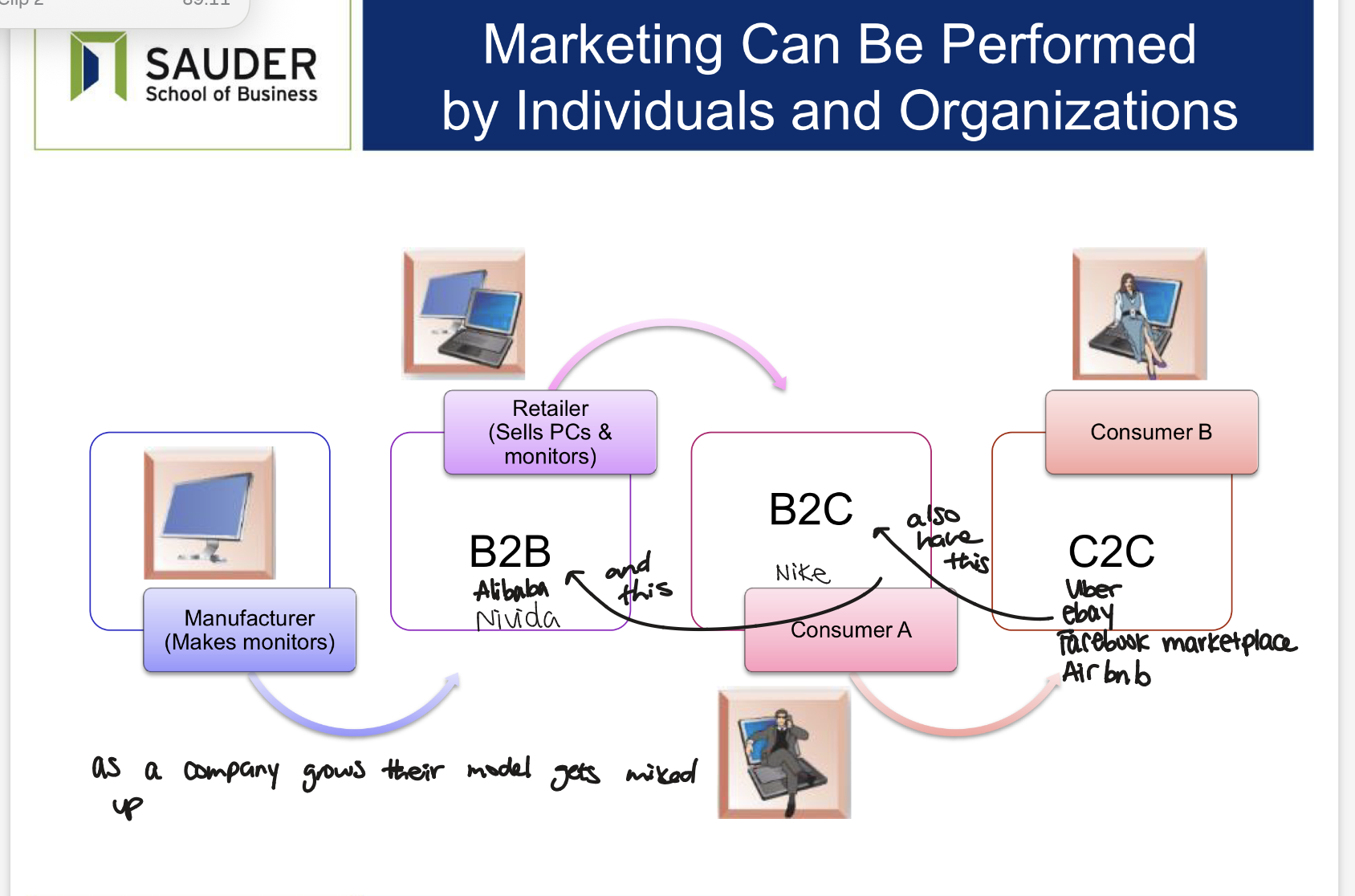
B2B Relationship
a commercial connection where one company sells products, raw materials, software, or services to another company rather than to an individual consumer
alibaba
nivida
B2C Relationship
A B2C relationship is “business-to-consumer”: a company sells its products or services directly to individual people who will use them personally, rather than to other businesses.
nike
amazon,
netflix
C2C Relationship
C2C stands for “consumer-to-consumer,” meaning transactions or interactions between individuals rather than involving a business. The most common form is people selling used or secondhand items to each other, through platforms like eBay, Facebook Marketplace, Craigslist, Poshmark, or Depop.
4Ps (list them)
Product
Price
Place
Promotion
relationship between B2b, B2C, C2C
they all interact
companies can have components of all these things
Marketing Mix
marketing has 4 main pillars that holds the entire thing together
all marketing activities fall into one of these 4p’s
all 4 pillars are equally as important
P1 - Product (creating value)
what the company has to give
what value the company has to give to its consumers

Example: P1 of Apple
ipads
laptops
icloud
software
store location
store experience
warrently system
confidence in the brand
creating social status
brand of the company
P2 Price (capturing value)
what the company gets from the consumer
structure it in a way that you get what you want from the consumer
what you think you are worth/what you want
how you are capturing what you want from the consumer
revenue

Example: Apple’s P2
changing charger to make you buy more
warranty system (apple care)
uses IOS
charges a premium on the phone
makes money on the phone
accessories
Example: P2 Toyota
dont make money from the car
make from from leasing or financing
the company that helps you do this is Toyota Bank
helping you finance the product they are selling you
which is more money than marking up the car price
Premium Pricing Strategy
ex: apple
everything is priced up/high
if you dont like it buy something else
no discount
structure is always high
P3 Place (delivering the value proposition)
platform of distribution

Example: P3 Apple
apple store → create an experince
exclusive space just for them in other retailers
direct sales online
amazon, booths in best buy
all treat amazon exclusively
Pricing Decoy
draw you in with someone then you end up spedning lots of money
ex: buy an ipad and then pay more for storage then if youre already spending that much why not buy more storage or more other features
cost is all the same for anything

P4 Promotion (communicate value)
how the company communicates who they are to others
Example: P4 Apple
they are communicating the brand
they develop feelings etc
whenever you buy a product you are buying into the ecosystem through the brand
visible stores
everyone has an apple
design and color stands out so much
online exposure
visible of the ppl who work there → shirt they wear
presence is very difficult to deny
can you control the 4 P’s
Yes
4Cs (list them)
Consumer Value
Cost
Convenience
Communication
Consumer value
what are they looking for
ex: resale value, milage etc
Cost
how much am I willing to pay
convience
where is it placed
ex: the automall
communication
why should I buy
ex: cost features
relationships between 4P’s and 4C’s

Scarcity Principle
the most you feel like you don’t belong there the most you want to prove it
purposely make you feel like you dont belong so that you buy more and prove them wrong
ex: BMW
waitlist, need a trade in etc
never enough supply so you feel like you need it
only a certain type of engineer
make sure its limited
Marketing Prior to 1920’s
Before: Marketing is just Manufacturing
if you can make it you can sell it
bc consumers have very little options
before WW1 basically just manufactoring if you could make it you can sell it bc there are SO little options

Marketing Prior to 1950’s
spending a lot of money bc you were making a lot of money
Marketing = Sales
who is my customer

Maketing Since 1950’s
position you company in the place that you want it to be

Early Marketing
how can i manufacture more, how can I drive effiencies how can I push
Contemparary Marketing
who is my customer, what do they need, how do they feel
consumer approach
Marketing today
just by selling product just bc you need it is not enough
need to create experiences meaning etc
the brand understands you

Main concept of the evolution of marketing
marketing has changed into more experiences based
no one is everywhere but its mostly about creating experiences and exposure, background, everything has an impact
what do companies do in new enviroments
adapt, alter their marketing strategies based on culture, traditions etc
companies taylor their approch based on their audience
IKEA USA - appeal
appealed to families
focused on the product itself
IKEA USA - Emphasis
emphasis on DIY and affordability
talked mostly about the product in the ads
Why did IKEA use this specific approch in USA
USA homes bigger, more time on hand, and nescesities to build something
there was a big DIY movement in the USA
sellable proposition
sells a lot more bc of the trends
How is this model good for IKEA USA
lowers their labor costs
labor in north america is expensive
bc of lower population there is lots of regulations and more expensive
in america ppl dont really see their time as money they see cheap and dont think about how much time that will take them
easier to transport items
Why does IKEA’s USA model work so well?
bc cities in USA are designed for cars and vehicles
What does IKEA Japan focus on selling?
sells more of a feeling rather than a product,
message is the lifestyle
offer something that is different
does focus on efficiency
Why don’t they focus on DIY in Japan IKEA
bc the DIY movement failed bc of rigid housing cultural empahsis on professional craftmenship
more empahsis on gender rolls therefore someone is always working not a big family activity like is USA and also less time
induvidualistic mindset
only focus on work work work therefore time for yourself is sparce
Why is this model good for Japan?
public transportation is the main mode
asian cities are built for ppl not cars and public transport is less feasible
cars are more a status symbol
cost of labour is cheaper and more accessable
Why does IKEA market their products like this
bc western products are positioned high therefore something foreign should be protigious and self assemly is not prostigious
pushing the “relaxed” western lifestyle laid back about the experience etc
japan is more minimalist
reglion is embeded into culture
KFC in China
lifestyle based
use celebrities bc they signify a status symbol and have lots of influence
emphasis on a GOOD/BETTER burger
KFC in North America
cheaper, bigger, emphasis on good value, size & product itself
don’t use celebirties bc they are polarizing
A Marketing Environment Analysis Framework
9 factors that are crucial to the enviroment that shapes marketing

The Immediate Enviroment
Company
Compeition
Coporate Partners
Consumers
4 main factors that shapes the DNA of the Firm
4C”s but for the company
who you are shapes your identity
whatever the companies main audience is shapes the company

Company
you
what is the goal @hand
Corporate Partners
friends
you are what you work with
most organizations are working in partnerships with other companies and its ability to “win” greatly depends on the quality and availability of good partners. you cannot do busniess alone
Competition
enemies
who you choose to see as your biggest rival says a lot about who you are and what you’re obessed with
Honda Engines Analysis
good at making proformance engines
honda is an engine supplier
which segregates them from their competition
Toyota Analysis
focus: production system and best manufactoring
highest efficiency of assembling to selling the car
Direct Competitors
same target segment
same need
same product
indirect competitors
same target segment
same need
different product
marketplace competitors
same target segment
different need
different product
Marcoenviroment Factors CD STEP
Culture
Demographics
Political/Legal
Economic
Social
Technology
more zoomed out that still shape the company
*keep this in mind for all cases
Culture
location
ex: work oriented or family oriented
Demographics
younger vs older age
Social
multicultrilsim vs monocultralism
presitige
technology
online allows you to be who you want not you are are
social medial influence is very high and impactful
economic
economic booms conditions make a large impact
political/legal
regulations that shape what the company can & cannot do
some companies are very nationalistc and feel like they need to be apart of the group
CD STEP

Selling Soy Sauce in USA - How did they enter the market
american food is very heavy on sauce & they eat a lot of meat
(avg 4-5x more)
BBQ was the niche for the US market bc they sell more BBQ grills then cars in USA
introduced teriyaki sauce instead of soy sauce
once they had a bigger presence they introduced soya sauce
Why did Kikkoman struggle to enter the market in the first place
nobody eats rice in north america
unlike IKEA where you can sell a lifestyle
the sauce is only used in specific foods that westerners dont really eat
Economic Factor in Kikkoman Case
cheaper option & fast food is huge in the USA
the expat rate is very high and ppl are moving back and forth constantly
How did Matcha enter the US Market
introduced as Matcha icecream first
sweet and cold then introduced matcha
Selling Betty Cocker in Japan - Cake Fail
cake mixes cookies biscuits etc were a fail bc DIY is a flop in Japan and also nobody has a oven
less then 2% have an oven that is suitable for baking
instead everyone has a rice cooker which is how they tried to introduce but it was a huge fail
why did betty crocker fail in japan
bc mothers take pride in what they do therefore they are emotional standpoint and mix doesnt invoke that feeling of homecooked the gap was too big
rice is spiritual - dont mess around with the process
didnt work bc of a deep cultural stance
Barbie and Licca in Japan - Challenges
different beauty standards
beautiful = cute
STP Framework
Segmentation
Targeting
Positioning
Segmentation
creating groups based on a commonality
putting pppl in groups not bc we are similar but bc we have enough shared traits
make sure a product is customized enough so that its appealing to a group
identify & describe segments
Example Segmentation of this class
no busniess major
UBC students
similar age group
Targeting
choosing what you want to do with the groups you have just formed
Evaluate & select segments
positioning
trying to be unique for the group you’ve chosen
tailor to meet segments needs
relationship between targeting and positioning
use both initially when coming up with a busniess plan
P’s and STP relationship

Why use STP
consumers want something that is targeted to them
gives your company a huge competitive advantage
allows marketers to determine the value their product of service can deliver to customers
Segementation =? Targeting + Postitioning =?
select, differentiate
challenging process but can give a firm competitive advantage
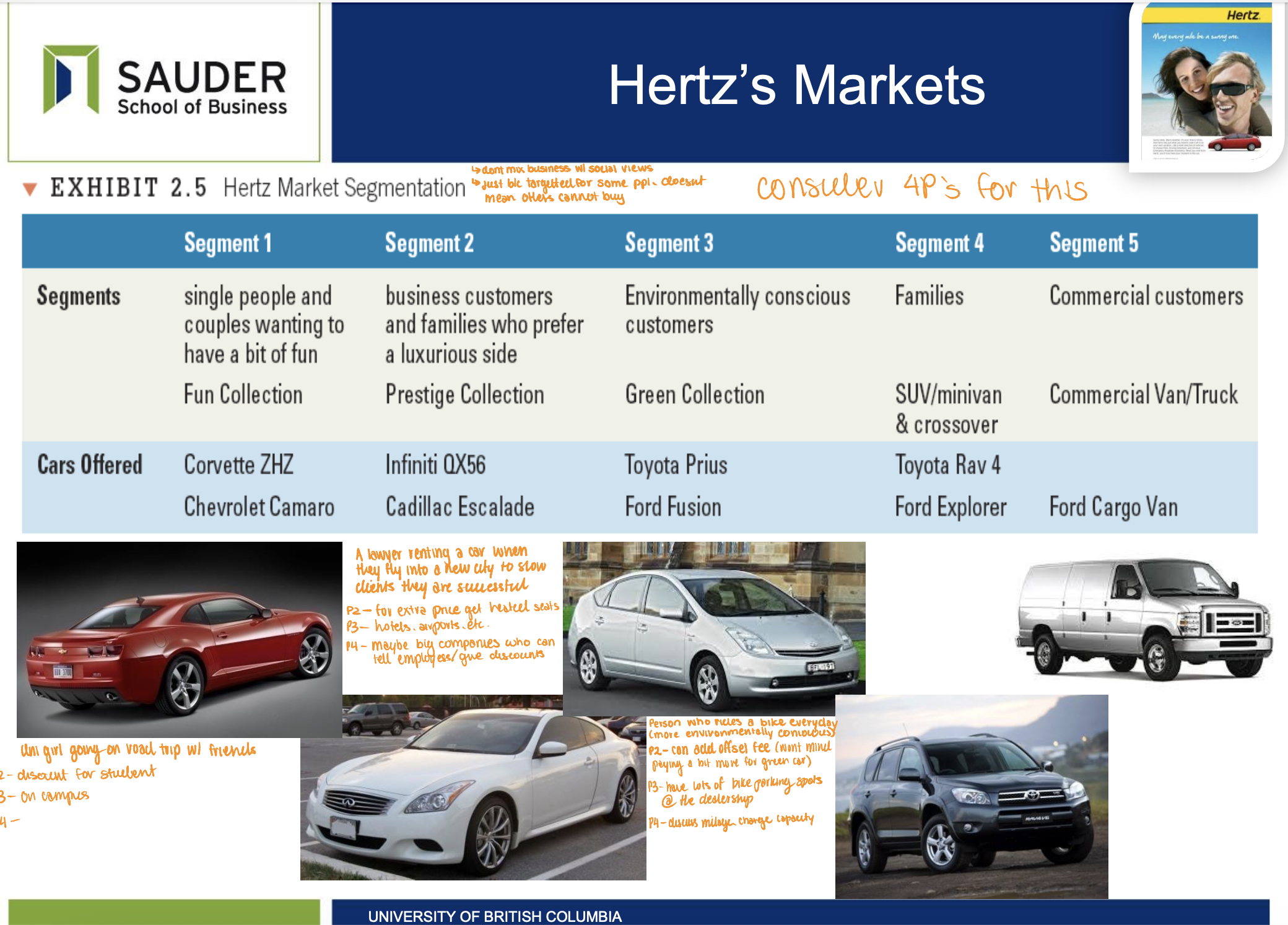
Hertz’z Markets
demographic segmentation
most common segmentation method
based on the question - “what” kind of consumers
gender age education income family size marital status occupation
downfall of demographic segmentation
can be misleading, thus it should be used with other segmentation methods
describe demographic data
inexpensive
easy to aquire
what does a good segment have
5 good variables
out of 5, 3 should be demgraphic
less than 5 too broad
geographic segmentation
useful when consumer characteristics differ in regions
based on the question “where” are the customers
ex: rural, urban, east etc
have 1/5
behavioral segmentation
very common based on “how” customers spend?use ex: buying habits
innovators price buyers infuelncers etc
1/5
Market segmentaiton
tiered system
each tier is a different segment
Tier 1
unprofitable
but you want ppl to think you are exclusive and this needs to be unreachable
Tier 2
more mainstream brings it closer to teh regular persone
Tier 3
drives sales
Hermes Tiers

evaluating the segment
Substantial
reachable
responsive
profitable
identifiable
substantial
influential enough
continuesly growing
not just in # of ppl but how influential/impactful is the group
segment big eough for buines
reachable
effective and efficient for the company ro reach out to these segments
potential of a marketing action to reach a segment
responsive
is the customer going to respond the way you want them to respond
react positively to offerings and accept the firm’s value prop
profitabel
can i charge a price which justifies my busniess
profit potential
identifiable
hear what ehy want to hear
are the segments uniqe