ART 1020 Slide Quiz 1
 Call Kai
 Learn
Learn Practice Test
 Spaced Repetition
 Match
Match Flashcards
 Knowt Play
1/20

There's no tags or description
Looks like no tags are added yet.
Name | Mastery | Learn | Test | Matching | Spaced | Call with Kai | Chat |
|---|
No analytics yet
Send a link to your students to track their progress
21 Terms

Hokusai — Great Wave off Kanagawa
Date: c. 1830
Medium: Color woodblock print
Important things to know:
Shows a huge wave towering over boats.
Mount Fuji is visible in the background.
The wave is much larger than the people, emphasizing the power of nature.
Uses dramatic composition and color.
Example of Japanese ukiyo-e art.
Comes from 19th-century Japan.

Hall of the Bulls — Lascaux
Date: c. 15,000–13,000 BCE
Location: Lascaux caves, Dordogne, France
Medium: Pigment on rock
Important things to know:
Paleolithic (The Old Stone Age; the period associated with prehistoric cave art) artwork.
Found inside a cave.
Contains prehistoric paintings of animals, especially bulls.
One of the famous examples of prehistoric cave art.
Shows early humans using pigment to create images on rock.

Ai Weiwei — Sunflower Seeds
Date: 2010
Medium: Porcelain
Important things to know:
Made up of millions of porcelain sunflower seeds.
The seeds were individually handmade.
Each seed looks similar, but they were individually produced.
The huge number of individual objects is important to the artwork.
Ai Weiwei often uses art to address ideas about Chinese society, culture, and individual identity.
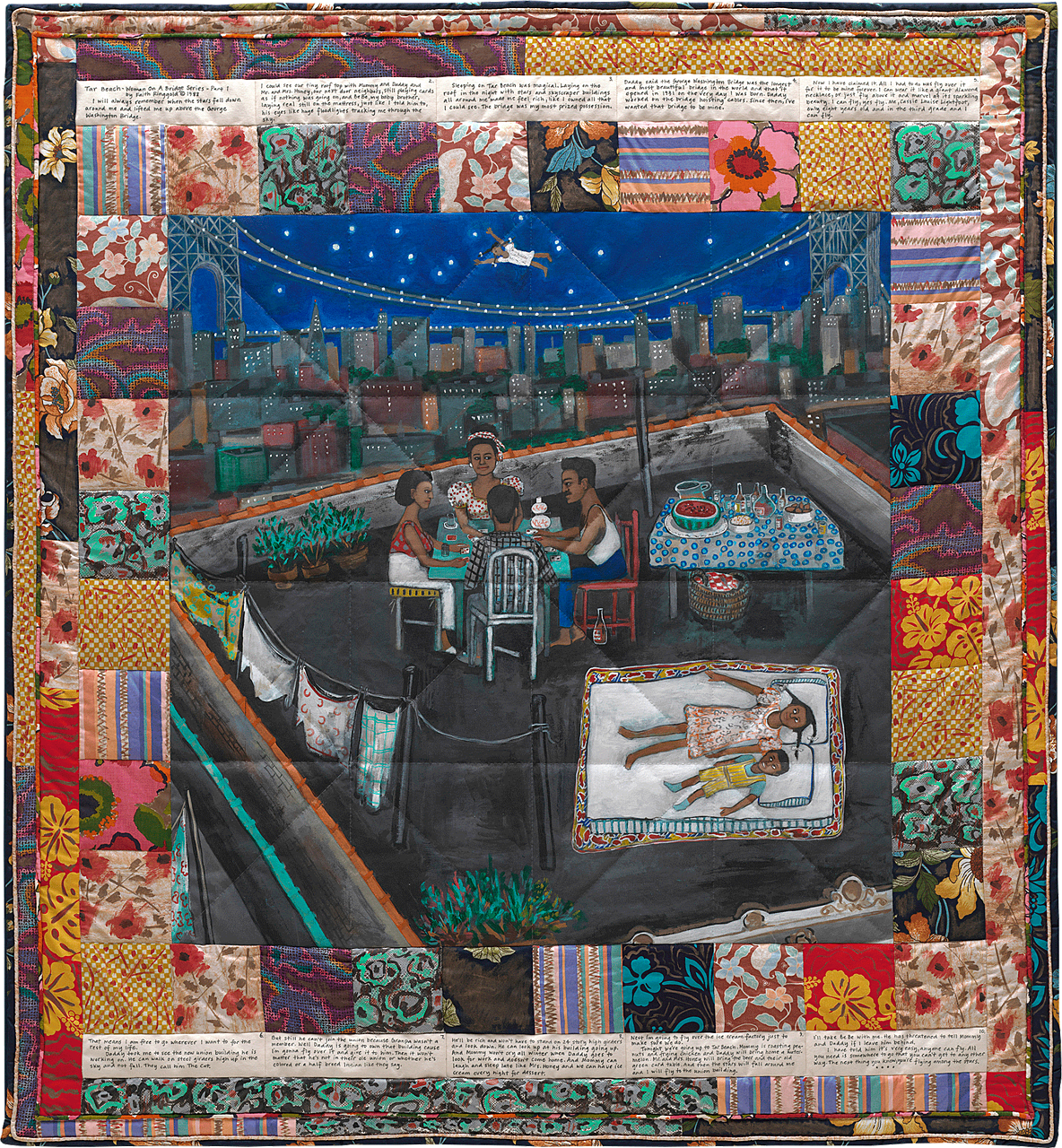
Faith Ringgold — Tar Beach
Date: 1988
Medium: Mixed media
Important things to know:
Shows a young girl flying over New York City.
Based partly on Ringgold's memories and storytelling.
The rooftop becomes a place where the girl can imagine freedom and escape.
Combines painting with quilting.
This makes it an example of mixed media.
Storytelling is an important part of the artwork.

Bayeux Tapestry
Date: c. 1070
Medium: Embroidered wool on linen
Important things to know:
Tells the story of the Norman conquest of England.
Shows events leading up to and including the Battle of Hastings.
Uses embroidery to tell a historical story.
Works almost like a visual history/story.
Important example of continuous narrative.

Column of Trajan
Date: 113 CE
Location: Rome
Important things to know:
Built to honor the Roman emperor Trajan.
Shows scenes from Trajan's military campaigns.
A spiral relief wraps around the column.
The scenes tell a story as they move upward.
Important example of continuous narrative.
Trajan appears throughout the sequence of events.

Ghiberti — Isaac and His Sons
Date: 1425–1452
Medium: Gilded bronze relief
Location: Florence Cathedral Baptistery
Important things to know:
Created by Lorenzo Ghiberti.
Part of the doors of the Florence Cathedral Baptistery.
Made from gilded bronze.
Important example of Renaissance art.
Uses realistic figures and perspective to create depth.
Another example of continuous narrative.
Multiple moments from the biblical story are represented within the same relief.

Michelangelo — Ceiling of the Sistine Chapel
Date: 1508–1512
Medium: Fresco
Important things to know:
Painted by Michelangelo.
Located on the ceiling of the Sistine Chapel.
Depicts scenes from the Book of Genesis.
Includes stories about the creation of the world and humanity.
One of the major works of the Renaissance.
Includes The Creation of Adam.
The review specifically indicates that the fresco includes a portrait of Michelangelo.
Fresco:
A painting made on freshly applied plaster.

Raphael — Philosophy
Date: Begun c. 1508
Medium: Fresco
Location: Stanza della Segnatura, Vatican Palace
Important things to know:
Created by Raphael.
Represents Philosophy.
Shows a gathering of important thinkers.
Uses an idealized architectural setting.
Associated with the High Renaissance.
Uses Renaissance ideas about perspective and balanced composition.
Important review detail: it includes a portrait of Michelangelo.

Bruegel — Netherlandish Proverbs
Date: 1559
Medium: Oil on panel
Important things to know:
Created by Pieter Bruegel.
Shows a village filled with people performing or acting out proverbs and sayings.
Many different things are happening at the same time.
Encourages you to look closely at the details.
Focuses on everyday people and human behavior.

Berlinghieri — Saint Francis Altarpiece
Date: 1235
Medium: Tempera on wood
Location: San Francesco, Pescia, Italy
Important things to know:
Created by Berlinghieri.
Shows Saint Francis.
Saint Francis was an Italian saint.
The work includes scenes connected to his life.
Shows miracles attributed to Saint Francis.
Religious artwork made as an altarpiece.

Parthenon
Date: 447–432 BCE
Location: Athens, Greece
Important things to know:
An ancient Greek structure.
Located in Athens.
A temple dedicated to Athena.
Major example of Classical Greek architecture.
Known for its columns and balanced proportions.
Associated with Greek ideas of order, harmony, and beauty.

Great Pyramids of Gizeh
Date: 2600–2500 BCE
Location: Egypt
Important things to know:
Ancient Egyptian structures.
Built as tombs for Egyptian pharaohs.
Connected to Egyptian beliefs about death and the afterlife.
Demonstrate Egyptian engineering and construction.

Fan Kuan — Travelers Among Mountains and Streams
Date: c. 1000
Medium: Ink on silk
Important things to know:
Chinese landscape painting.
Created by Fan Kuan, a scholar-artist.
Comes from medieval China.
Scholar-artists were educated people who participated in an intellectual and artistic tradition.
Mountains are enormous compared with the tiny human figures.
Emphasizes the power and scale of nature.
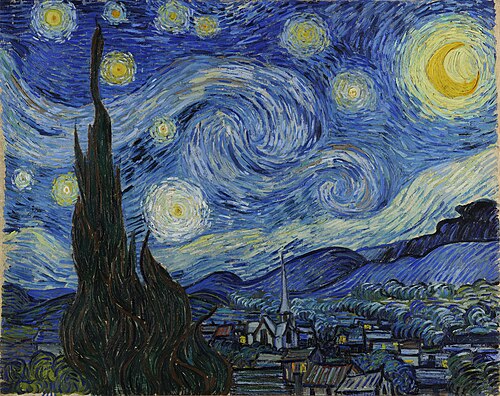
Van Gogh — Starry Night
Date: 1889
Medium: Oil on canvas
Important things to know:
Created by Vincent van Gogh.
Shows a nighttime landscape.
The sky contains swirling lines and bright stars.
Uses imaginative/expressive color rather than simply copying nature realistically.
Uses expressive lines to communicate the experience of the nighttime sky.
Example of Post-Impressionism.

Perugino — Christ Giving the Keys to St. Peter
Date: c. 1481
Medium: Fresco
Important things to know:
Shows Christ giving keys to Saint Peter.
The keys symbolize Peter's authority.
Saint Peter is considered the first pope.
Located on the wall of the Sistine Chapel.
Uses Renaissance perspective.
Has a carefully organized architectural background.
Religious/Biblical subject.

Pollock — Number 1, 1950
Date: 1950
Medium: Oil on canvas
Important things to know:
Created by Jackson Pollock.
An abstract artwork.
Made by dripping, pouring, and splattering paint onto the canvas.
Does not show a traditional recognizable subject.
The physical process of making the artwork is important.
Associated with Abstract Expressionism.

Opening of the Gospel of Mark — Book of Kells
Date: c. 800
Medium: Manuscript
Important things to know:
From the Book of Kells.
A medieval illuminated/ornamented manuscript.
Contains highly decorative lettering and patterns.
Religious text connected to the Gospel of Mark.
Important term: Kells Profile.
The Kells Profile is a distinctive human face/profile incorporated into the page's ornamentation.
The decoration is an important part of the artwork, not just the written words.

Van Gogh — The Night Café
Date: 1888
Medium: Oil on canvas
Important things to know:
Created by Vincent van Gogh.
Shows the inside of a night café.
Uses distorted space.
Uses intense, unusual acidic colors.
The combination of distorted space and intense color creates a feeling of psychological unease.
Shows how an artist can change realistic space and color to communicate an emotional experience.

Caravaggio — Calling of St. Matthew
Date: c. 1597
Medium: Oil on canvas
Important things to know:
Shows Christ calling Matthew.
Uses dramatic light and darkness.
Important term: tenebrism.
Tenebrism = extreme contrast between light and dark.
The dramatic light draws your attention toward important figures.
Figures are shown realistically rather than as perfect/idealized people.
Important example of Baroque art.
French Ambassadors
Hans Holbein
Date: 1533
Medium: Oil and tempera on panel
Location: Not specified in slide list