Endocrine Pancreas: Insulin, Glucagon + Blood Glucose
 Call Kai
 Learn
 Practice Test
 Spaced Repetition
 Match
 Flashcards
 Knowt Play
1/11

There's no tags or description
Looks like no tags are added yet.
12 Terms
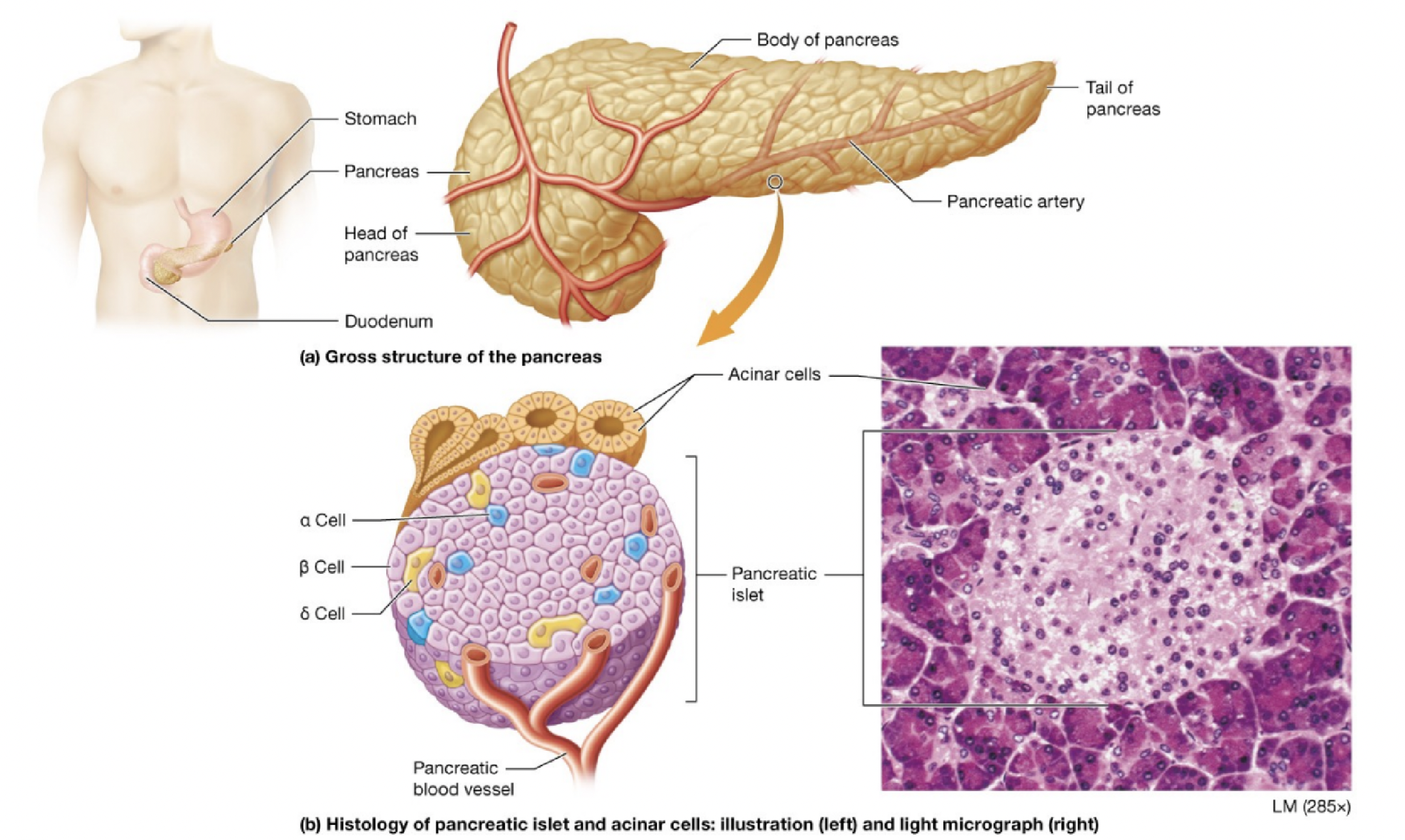
Pancreas and Pancreatic Islets
Pancreas is a club-shaped organ in the abdominal cavity mostly posterior to the stomach
Includes a rounded Head, middle Body, and thin Tail
There are two groups of cells within the pancreas
– Small, round “islands” of endocrine cells called Pancreatic Islets
– Exocrine cells called Acinar Cells
Located around small ducts, into which they secrete enzymes and other products that are delivered into the digestive tract

Pancreatic Islets
secrete peptide hormones into the bloodstream and contain three main cell types:
– Alpha (α) Cells, which secrete the hormone Glucagon
– Beta Cells, which secrete the hormone Insulin
– Delta Cells, which secrete the hormone Somatostatin (identical to the somatostatin produced by the hypothalamus)
Glucagon
Promotes reactions that increase glucose and other metabolic fuels in the blood
targets liver, muscle, and adipose tissue, and causes:
Glycogenolysis (breakdown of glycogen into glucose)
gluconeogenesis in the liver
protein breakdown in muscle to provide amino acids for gluconeogenesis
release of fats from adipose tissue for gluconeogenesis and an additional fuel source
Formation in the liver of fuel substances called Ketone Bodies from fatty acids
Ketone Bodies
Ketone bodies are released into the blood stream
Heart and skeletal muscle can oxidize ketone bodies
Brain can adapt to use ketone bodies if starvation conditions occur
-During extreme calorie restriction or starvation, ketone body production increases and they accumulate in the blood, which may lower pH causing Ketoacidosis
Regulation of Glucagon
Glucagon secretion is triggered by decreased blood glucose, sympathetic nervous system stimulation, circulating catecholamines, and ingested proteins
inhibited by elevated blood glucose and somatostatin
Insulin
Promotes uptake of ingested nutrients by target cells, which lowers blood glucose
promotes storage of nutrients when they are not immediately needed for fuel
targets liver, cardiac and skeletal muscle, and parts of the brain
promotes lipid, amino acid, and glucose uptake
glycogen synthesis in the liver and skeletal muscle
fat synthesis from lipids and carbohydrates
satiety (feeling of fullness)
Insulin maintains glucose concentration within a tight range and helps replenish fuel sources
Absolutely required for target cells to take up glucose
Regulation of Insulin
secretion decreases during fasting and increases during feeding
stimulated directly by rising blood glucose and inhibited by somatostatin and the sympathetic nervous system
Blood glucose rises above the normal range of 70–99 mg/dL
beta cells detect the increase
beta cells increase insulin secretion while glucagon secretion decreases
insulin increases glucose uptake and storage of glucose, amino acids, and fats
blood glucose returns to normal
beta cells decrease insulin secretion

Blood glucose falls below the normal range of 70–99 mg/dL
alpha cells detect the decrease
alpha cells increase glucagon secretion while insulin secretion decreases
glucagon stimulates glycogen breakdown and formation of new glucose and increases availability of ketone bodies, amino acids, and fatty acids
blood glucose returns to normal
alpha cells decrease glucagon secretion

Occurs when insulin levels are too high and blood glucose drops
causes weakness, dizziness, rapid breathing, nausea, and sweating
severe hypoglycemia can cause confusion, hallucinations, seizures, coma, and death
often caused by over administration of insulin but may have other causes
Immune system destroys insulin-producing beta cells
target cells cannot take in circulating glucose and glucagon acts unopposed, causing increased glucose and ketone production
glucose and ketones enter urine causing Glucosuria and Ketonuria and Osmotic Diuresis → Polyuria and Polydipsia
ketone accumulation can cause Diabetic Ketoacidosis
treated with injected insulin
Beta cells become less responsive to blood glucose and target cells become less responsive to insulin, called Insulin Resistance
strongly associated with heredity and obesity
patients usually produce enough insulin to prevent ketoacidosis
may be managed with lifestyle changes, Oral Hypoglycemics, and sometimes insulin therapy