Biology Chapter 9
 Call Kai
 Learn
 Practice Test
 Spaced Repetition
 Match
 Flashcards
 Knowt Play
1/74

There's no tags or description
Looks like no tags are added yet.
75 Terms
Asexual Reproduction
form of reproduction in which offspring arise from only one parent. In this process, an organism copies its DNA and splits the contents of one cell into two. The offspring are identical to the parent unless, mutations occur. Successful in habitats that never change and is not adaptive in changing environments. Not genetically diverse.
Sexual Reproduction
the combination of genetic material from two individuals to create a third individual that is genetically variable. In this process, the male parent contributes sperm cells, one of which fertilizes a female’s egg cell. Generates genetic variability, which boosts the chance that at least some members of the population will survive in a changing
Similarities and Differences between Asexual and Sexual Reproduction
Asexual Reproduction requires only one parent. Sexual reproduction requires
Asexual reproduction produces identical offspring (except for mutations) and Sexual Reproduction does not produce identical offspring.
Mutations occur in both asexual and sexual reproduction.
Asexual reproduction is not adaptive in a changing environment. Sexual reproduction is.
Autosomes
a nonsex chromosome. They are numbered from 1 to 22 in the human karyotype. The same regardless of sex.
Sex chromosomes
a chromosome that carries genes that determine sex. Of the 46 chromosomes in a human cell, there are two sex chromosomes. In humans, an individual with two X chromosomes is female, and an individual with one X and one Y chromosome is male.
Homologous pair/Homologous chromosomes
two chromosomes, one from the father and one from the mother, that share the same size, centromere position, and pattern of light- and dark-staining bands and carry the same sequence of genes. They are not identical and may carry different alleles. Two chromosomes that look alike and have the same sequence of genes.
Explain the roles of meiosis, gamete formation, and fertilization in sexual reproduction
In meiosis, a diploid nucleus divides twice to produce four haploid nuclei, reducing the chromosome number by half. Meiosis also creates new allele combinations in the resulting haploid nuclei. Gamete formation packages the haploid nuclei into reproductive cells, the sperm and egg cells. Fertilization merges haploid gametes from two parents, producing a new diploid cell with half its chromosomes coming from each parent.
Haploid Cell
cell containing one set of chromosomes; also called n. Sperm cells and egg cells are haploid.
Diploid Cell
cell containing two full sets of chromosomes, one from each parent; also called 2n. Each diploid human cell contains 46 chromosomes arranged in 23 pairs.
Somatic cells
body cell that is not part of the germline and does not give rise to gametes. Divides only by mitosis and does not participate directly in reproduction.
Germ cells
specialized cell that gives rise to gametes, which are involved directly in reproduction; cell of the germline. Undergoes meiosis and are diploid. Occurs in ovaries of females and testes of males.
Interphase
stage preceding mitosis or meiosis, when the cell carries out its functions, replicates its DNA, and grows. This is where DNA replicates for the one time preceding meiosis.
Steps in meiosis and location
Meiosis I then Meiosis 2; germ cells.
Steps of Meiosis I
Prophase I, Metaphase I, Anaphase I, Telophase I, and Cytokinesis.
Steps of Meiosis II
Prophase II, Metaphase II, Anaphase II, Telophase II, and Cytokinesis
Prophase I
prophase of meiosis I, when chromosomes condense and become visible. Spindle forms from microtubules assembled at the centrosomes, and kinetochores grow on each centromere. The nuclear envelope breaks up. Each chromosome lines up next to its homolog, and crossing over occurs.
Metaphase I
metaphase of meiosis I, when homologous chromosome pairs line up double-file along the equator of the cell. Each member of a homologous pair attaches to a spindle fiber stretching to one pole.
Anaphase I
anaphase of meiosis I, when spindle fibers pull homologous chromosomes toward opposite poles of the cell. The sister chromatids that make up each chromosome remain joined.
Telophase I
telophase of meiosis I, when homologs arrive at opposite poles and nuclear envelopes form around chromosomes, which may temporarily decondense. Spindle disappears.
Cytokinesis
distribution of cytoplasm into daughter cells in cell division. Divides the cell into two.
Product of Meiosis I
2 nonidentical haploid daughter cells
Prophase II
prophase of meiosis II, when chromosomes condense and become visible. Nuclear envelopes break up and spindles form.
Metaphase II
metaphase of meiosis II, when chromosomes are lined up along the equator of a cell by the spindle.
Anaphase II
anaphase of meiosis II, when centromeres split as spindle fibers pull sister chromatids toward opposite poles of the cell
Telophase II
telophase of meiosis II, when chromosomes arrive at opposite poles and nuclear envelopes assemble around daughter nuclei. Chromosomes decondense and spindles disappear.
Product of Meiosis II
four nonidentical haploid daughter cells
List the three ways that meiosis generates genetic variability among offspring
Crossing over, Independent Assortment, and fertilization
Crossing over
exchange of genetic material between two homologous chromosomes during prophase I of meiosis, producing variability among the four chromatids in the homologous pair. This process generates genetic diversity because each of the resulting chromatids have a unique combination of alleles.

Independent Assortment
many arrangements of homologous pairs of chromosomes are possible during metaphase I; each round of meiosis is therefore likely to produce daughter cells with different allele combinations. Chromosome pairs align randomly during metaphase I.
Fertilization
chance combinations of maternal and paternal chromosomes through fertilization produce a unique combination of genetic information. In other words, which sperm fertilizes which egg is random, generating genetic variability among offspring.
Compare and Contrast Mitosis and Meiosis
Mitosis takes place within somatic cells. Meiosis takes place within germ cells.
The function of mitosis is growth, development, repair, and asexual reproduction. The function of meiosis is to produce the gametes.
In mitosis, one single division of the mother cell results in two daughter cells. In meiosis, two divisions of the mother cell result in four haploid daughter cells.
A miotic mother cell can either be haploid or diploid. A meiotic mother cell is always diploid.
In mitosis, the number of chromosomes per nucleus remains the same after division. In meiosis, the number of chromosomes per nucleus is reduced by half after division.
Mitosis has one S phase and one nuclear division. Meiosis has one S phase but 2 nuclear divisions.
In mitosis, there is no pairing of homologous chromosomes. In meiosis, in prophase I, complete pairing of all homologous chromosomes takes place.
In mitosis, crossing over does not occur. In meiosis, there is at least one crossing over per homologous pair of chromosomes.
In mitosis, the centromeres split during anaphase. In meiosis, the centromeres do separate during anaphase II, but not during anaphase I.
In mitosis, the genotype of the daughter cells is identical to that of the mother cells. In meiosis, the genotype of the daughter cells is different to that of the mother cells.
In mitosis, independent assortment of chromosomes does not occur. In meiosis, independent assortment of chromosomes occurs.
Polyploid cell
cell with extra chromosome sets. Errors in cell division can lead to a polyploid cell, which has one or more complete sets of extra chromosomes.
Polyploidy
condition in which a cell inherits one or more extra full sets of chromosomes.
Nondisjunction
failure of chromosomes to separate at anaphase I or anaphase II of meiosis.
Explain how polyploidy and nondisjunction can lead to missing or extra chromosomes in a gamete
Polyploidy can lead to extra chromosomes in a gamete because if errors in cell division occur, the gamete can become a polyploid cell where it has one or more extra chromosome sets. Most human polyploids fail to live past the very early stages of development.
Nondisjunction can lead to one or a few extra or missing chromosomes in a gamete because the chromosomes fail to separate during anaphase I or anaphase II. This results in a sperm or egg cell with two copies of a particular chromosome or none at all.
Chromosomal Deletion
condition in which one or more genes are lost from a chromosome.
Chromosomal Duplication
Type of structural variation in which a portion of a chromosome is repeated.
Chromosomal inversion
Type of structural variation in which part of the chromosome flips and reinserts, changing the gene sequence of the chromosome.
Chromosomal Translocation
condition in which crossing over occurs between nonhomologous chromosomes
Gamete Formation in a man
Spermatogenesis
Spermatogenesis
formation and specialization of sperm cells in the testes. Inside the testes, spermatogonia divide mitotically to produce more spermatogonia and a primary spermatocyte. During interphase, primary spermatocytes replicate their DNA. Then, the diploid primary spermatocyte undergoes meiosis I, producing two haploid secondary spermatocytes. Each secondary spermatocyte then undergoes meiosis II to produce four spermatids. Each spermatid then matures into a sperm cell.
Gamete formation in a woman
Oogenesis
Oogenesis
formation of egg cells in the ovaries. A diploid germ cell, an oogonium in the ovaries divides mitotically to produce more oogonia and a primary oocyte. During interphase, the primary oocyte replicates its DNA. Then, the primary oocyte undergoes meiosis I to produce a small haploid cell, called a polar body, and a much larger haploid cell, called a secondary oocyte. After fertilization, meiosis II in the polar body produces two polar bodies and meiosis II in the secondary oocyte produces a large haploid ovum, the mature egg cell, and another polar body. The 3 polar bodies normally play no further role in reproduction and disintegrate, leaving only the mature egg cell.
Chromosome
a single molecule of DNA and its associated proteins.
Karyotype
a size-ordered chart of all the chromosomes in a cell.
Human Karyotype
consists of 46 chromosomes arranged in 23 pairs; each of the biological parents contributed one member of each pair. Consists of autosomes and sex chromosome.
Allele
alternative versions of the same gene. One of two or more alternative forms of a gene. Each allele of a gene encodes a different version of the same protein.
Monozygotic (identical) twins
after fertilization, the resulting zygote or embryo splits in half, creating separate, identical babies. Called monozygotic because they derive from one zygote.
Dizygotic (fraternal) twins
occurs when two sperm cells fertilize two separate egg cells at the same time. So, they arise from two separate fertilized eggs and are therefore as similar (or dissimilar) as any two non-identical siblings.
Sperm cell
male gamete
Egg cell
female gamete
Conjugation
a form of horizontal gene transfer in which one cell receives DNA via direct contact with another cell. One bacterial cell uses an outgrowth called a sex pilus to transfer genetic material to another bacterium.
Gametes
a sex cell; sperm or egg cell. Are haploid cells.
Fertilization
the union of two gametes to produce a zygote. The fusion of two haploid gametes (sperm and egg) resulting in a diploid zygote.
Zygote
fused egg and sperm; develops into a diploid individual. Has two full sets of chromosomes, one set from each parent. It is the first cell of a new diploid organism.
Meiosis
division of genetic material that halves the chromosome number and yields genetically variable nuclei
Mitosis
division of genetic material that yields two genetically identical nuclei. Produces cell needed for growth, development, and tissue repair. Form of asexual reproduction in unicellular organisms.
2 main outcomes of meiosis
the resulting gametes contain half as many chromosomes as the rest of the body’s cells. This ensures that the chromosome number does not double with every generation. The second function is to scramble genetic information so that two parents can generate offspring that are genetically different from the parents and from one another.
Spindle
a structure of microtubules that aligns and separates chromosomes in mitosis and meiosis
Kinetochores
protein that attaches a chromosome to the spindle in cell division
Recombinant chromatids
chromatid containing genetic information from both parents as a result of crossing over
Parental chromatid
chromatid containing genetic information from only one parent. They are the (often two) chromatids that did not form chiasmata in crossing over. Chromatid that does not participate in crossing over and therefore retains its original allele combination.

Aneuploid Cell
cell with too many or too few chromosomes, but not involving a full extra or missing set. Results from nondisjunction. Most embryos with aneuploidy cease developing before birth. Extra genetic material causes fewer problems than missing material.
Aneuploidy
condition in which a cell inherits too many or too few chromosomes, but not in a full set (polyploidy); typically, one or a few chromosomes are extra or missing.
Alternation of generations
the sexual life cycle of plants and many green algae, which alternates between a diploid sporophyte stage and a haploid gametophyte stage
Sexual Life Cycle
Adults produce haploid gametes, the sperm and egg, by meiosis. Then, fertilization occurs and produces the diploid zygote. Then, mitotic cell division during development enables the zygote to grow and develop into an adult. Eventually, once the adult organism has reach reproductive maturity, the cycle can repeat. Stages: meiosis, gamete formation, fertilization, and development.


Prophase I (early)


Prophase I (late)


Metaphase I
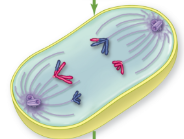
Anaphase I

Telophase I and Cytokinesis

Prophase II

Metaphase II

Anaphase II

Telophase II and Cytokinesis