history of photography midterm
 Call Kai
 Learn
 Practice Test
 Spaced Repetition
 Match
 Flashcards
 Knowt Play
1/67

There's no tags or description
Looks like no tags are added yet.
68 Terms
camera obscura
Means dark chamber. A camera with a light-tight, 4 walled room with a pinhole opening. An upside-down image of the world in front of the pinhole was cast onto the far wall. Earliest evidence of this dates from 350 BC when Aristotle made observations on an eclipse.
Heliograph
Used asphaltum coated on a glass plate. When exposed to light, the asphaltum hardened, making it less soluble. After exposure, the plates were treated with solvents that dissolved the unexposed areas leaving only the exposed areas. Created by Niepce. The first time that a mechanical representation of the real world was transferred to a 2D surface.
Daguerreotype
1839: Less exposure time, silver plate (light-sensitive). It was unique, direct positive; couldn’t make multiple copies. Silver-plated copper plate was fumed over heated iodine in darkness and placed into a camera obscura. After 3-30 minutes of exposure, the plate was removed in darkness and placed in a chamber and fumed with heated mercury, which reacted with the exposed silver iodide image, creating a dark grey color on the surface of the plates. Created by Daguerre.
Calotype/talbotype
1839: more reproducible, softer than the Daguerreotype. Paper soaked in a weak solution of salt and water, then soaked in a silver nitrate solution, which then reacted with the sodium chloride to form silver chloride.
Wet collodion
1851: On glass. Not on paper, so it can be a sharp image. Reproducible. You had to take the darkroom with you. Used cyanide to make glass negatives.
Stereograph
A pair of side-by-side photographs taken from slightly different angles, matching the distance between human eyes, that create a 3D optical illusion when viewed through a specialized lens device called a stereoscope.
Dry Glass Plate
1871: Marked the beginning of the modern era of photography and replaced the wet plate. Amateur photographers became a prominent force within the photographic art world. The advantage of this was that it was pre-packaged, thereby making photography less cumbersome and allowing more hobbyists. Started by Richard Maddox when he suggested suspending silver bromide in a gelatin emulsion.
Kodak #1
1888: first handheld camera model. Launched an aggressive camera marketing campaign in which he suggested that every individual needs a camera to record life's memorable moments.
Niepce
Worked with Daguerre. Created the first photograph in 1827, called heliography.
Daguerre
Invented the daguerreotype. Businessman. Discovered that a warm solution of table salt and water would sufficiently fix the image, allowing long-term viewing under daylight conditions. His process created highly detailed images.
Fox Talbot
Created the calotype/talbotype. Concentrated on figuring out how to permanently fix images projected on the back of a camera obscura. Coined the term photography to describe his photographic drawing process and the terms negative and positive. Used a strong salt solution with potassium iodide to reduce the sensitivity of images. Discovered the latent image and the principle of development.
Matthew Brady
Had a very prominent photo studio in NY and Washington DC. Opened his first daguerreotype studio in 1844. He photographed for the government and wanted to create an archive as a chronicle of history to create a narrative to help identify who we are.
Southward and Hawes
Elite daguerreotype studio. They were interested in using props and natural lighting to elevate the portrait and tell more about the person in the portrait.
Roger Fenton
One of the most famous nineteenth-century war photographers, whose Crimean War photographs depict large, barren landscapes and intimate portraits of army generals and war officers. Striking and bold images that were not neutral but represented a contemporary agenda.
Alexander Gardner
Staged war photographs to talk about war through a story. Brady’s studio assistant, hired by Brady to go out into the fields. Sometimes moved and repositioned dead bodies to capture more compelling images.
Timothy O’Sullivan
Best known for his stark panoramas of western landscapes. His pictures were one of the first to record the prehistoric ruins, Navajo weavers, and Pueblo villages of the Southwest.
William Henry Jackson
Was sent to take pictures to depict the American West. Used wet collodion to show what we could expand to. Created American desert views that seemed too large for human life. Very cumbersome process, with difficult traveling equipment, and it gave objective views of Yellowstone to the public.
Julia Margret Cameron
British woman. Portrait taker. Made soft-focus portraits that often incorporated biblical symbolism. Brought her camera close to her subjects, fashioning a close-up portrait that brought to the forefront the subject’s distinctive intellectual and psychological qualities. Portraits were made on large plates. Used lighting to bring out certain features and used blurring techniques.
Oscar Gustave Rejlander
Promoted manipulated and handcrafted images in the mid 1800s. Practiced multiple exposures, combination printing, and photographic staging.
H.P Robinson
Promoted manipulated and handcrafted images. Maintained that a successful art photograph exhibited as much handcraft and finesse as any other popular art medium, such as painting and sculpture. Practiced multiple exposures, combination printing, and photographic staging. Published the book Pictorialist Effects of Photography.
Edward Steichen
Played an important part in the Photo Secession. Was originally trained as a painter and was accepted by the pre-established art world. Experimented with pigment prints and autochrome, and experimented with color photography. Work was featured in the journal called “Camera Work”.
Alfred Stieglitz
Proposed using a handheld camera. Wasn’t just a photographer, but a genre-making man. Believed in having galleries, publications, and visions. Focused on photography as a study, instead of something that emulates a painting.
Pencil of Nature
1844: a journal in which Daguerre further explained his photographic process and showcased sample images.
Pictorialist Effects of Photography
1869: published by Robinson. A textbook on photography that advocated multiple exposures, combination printing, and adherence to the academic rules of design and composition. Illustrated his text with simple drawings and actual albumen prints. Described how to properly work with a model and embrace different theatrical techniques. The most widely read photography textbook of the nineteenth century.
Gardner’s Photographic Sketchbook of the War
1866: included many of the great photographs of the time and attributed each photograph to its proper maker. He wrote a textbook that accompanied the pictures.
Camera Work
1903-1917: Launched by Stieglitz and featured fine art photographers such as Kasebeir, Steichen, and White. Covered the evolution of the Pictorial movement through the new hard-edged modernism and introduced new art movements. Only made 1000 copies.

view from his window at Le Gras
Niepce
1827

Boulevard Du Temple
Daguerre
1839
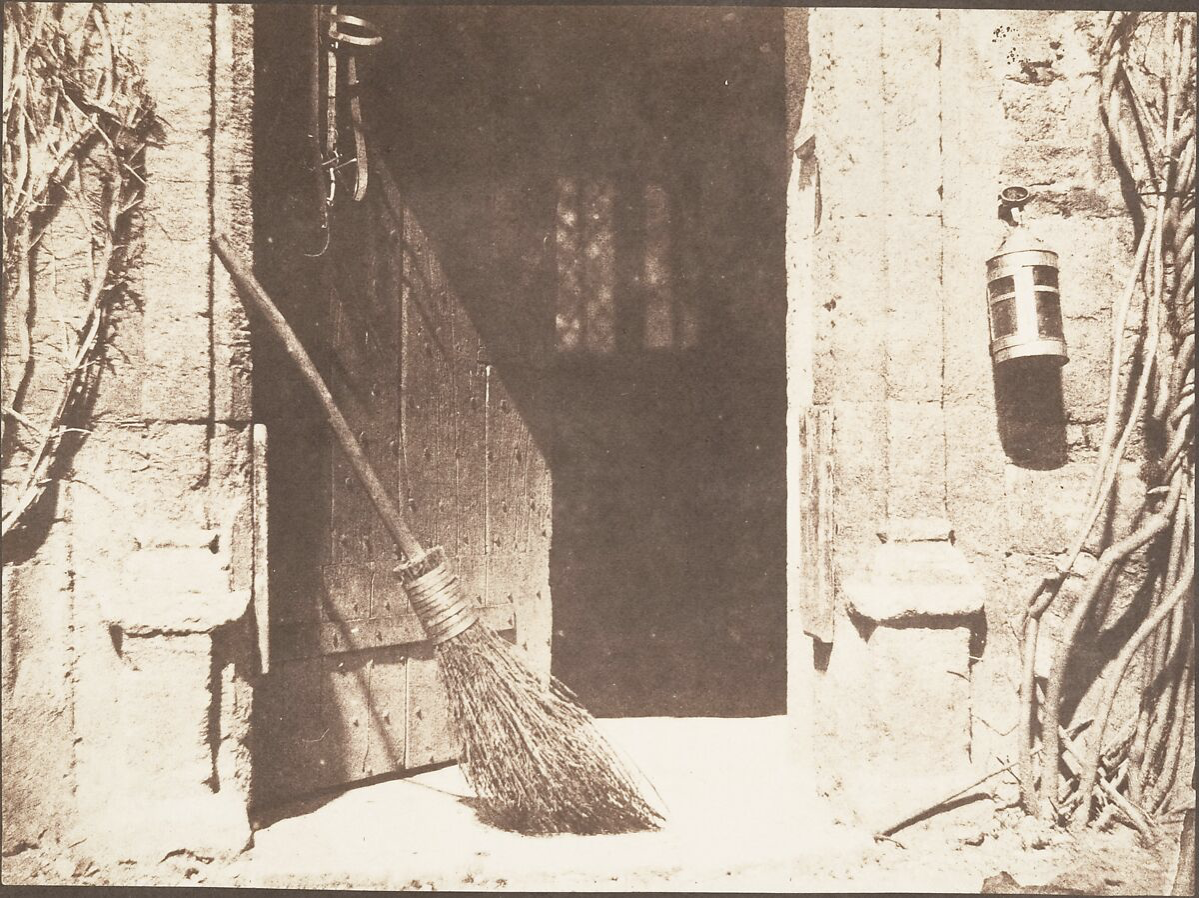
open door
Talbot
1841

Southworth & Hawes
Rufus Choate
1850

valley of the shadow of death
roger fenton
1855

Death of the Rebel Sharp Shooter
Alexander Gardner
1863

Mount of the Holy Cross
William Henry Jackson
1873

Grand Canyon of the Colorado River
William Henry Jackson
1880

two ways of life
Oscar Gustave Rejlander
1857

fading away
Henry Peach Robinson
1958

winter on 5th avenue
Alfred Stieglitz
1893

the flatiron
Edward Steichen
1904

morning (Detail)
Clarence White
1905
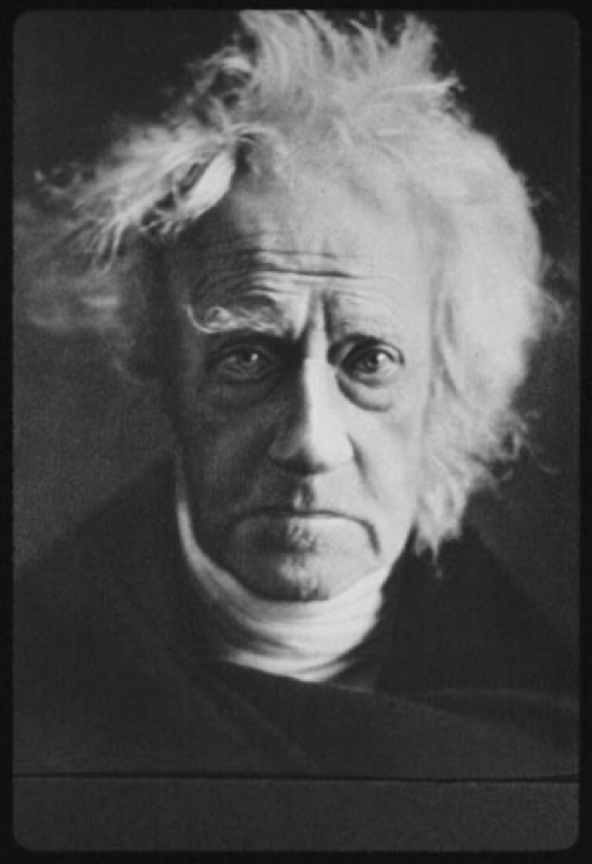
Sir John Herschel
Julia Margaret Cameron
1867

the steerage
Alfred Stieglitz
1907

the octopus
Alvin Langdon Coburn
1909
291 galleries
Opened in 1905. Stieglitz exhibited not only photo-secessionist work, but also works by other photographers and painters including Picasso, Cezanne, and Matisse. Named the gallery this due to its address. Not only brought modern art to NYC but also helped make NY a major force in the art world. Purpose was to promote and elevate photography as a fine art form through the Photo-Secession movement.
View from his Window at Le Gras: Niepce 1827
8 hours of exposure caused the image to be difficult to decipher. Picture of rooftops.
Boulevard Du Temple, Paris: Daguerre 1839
Busy street, but exposure time caused the moving objects to not appear. First photo of a human.
open door, Talbot, 1841
Pictured in the pencil of nature. Interested in inside vs. outside. Focused on humble and simple everyday scenes unlike grand architecture or formal portraits. Played with light and shadows.
Southworth and Hawes: Rufus Choate 1850
Rufus was a prominent American lawyer, orator, and senator. He posed with props including a law book to portray his career and captures his wild hair, disheveled clothing, and intense expression.
Valley of the Shadow of Death: Roger Fenton 1855
One of the most well-known images of war. Shows the aftermath of war, cannonballs, and the emptiness of war
Death of the Rebel Sharp Shooter: Alexander Gardner 1863
Staged photo. The weapon was placed next to the soldier. The artist continues to use the rifle as a weapon in all of his images. The soldier is facing the camera, making us stare at the face of the dead soldier. How can we use photography in a documentary way to talk about what happened in this war?
Mount of the Holy Cross: William Henry Jackson 1873
Landscape that was used in the exploration era, showing a cross on a mountain as a religious reason to expand westward. Shows the beauty of the West and how we are religiously destined to expand. Symbolism that the land was religiously blessed for them.
Grand Canyon of the Colorado river: William Henry Jackson 1880
Illustration of romantic views of the landscape. Manifest Destiny.
Two Ways of Life: Oscar Gustave Rejlander 1857
Collection of 30 images that were cut out and put together (kind of like Photoshop). Failed to imitate the painting exactly. Used to prove that photography could be art and could be handcrafted. Tried to make photography fit into the painting art form. Had meaning like a painting has. Photographic realism was thrown out the door in this photo.
Fading Away: Henry Peach Robinson 1958
Trying to follow a “painting” sort of vibe. Staged photo. The subject is a young woman dying of tuberculosis (consumption) or a broken heart, surrounded by her grieving family. It was inspired by a line from Shakespeare's Twelfth Night. Critics viewed the staged, intimate deathbed scene as overly morbid and felt that combining multiple negatives violated photography's core duty of truthfulness.Helped launch the Pictorialist movement, which sought to treat photography as a fine art form comparable to painting
Winter of 5th Avenue: Alfred Stieglitz 1893
Thought it was important to really use the materials he was given and really wanted to show what he could see. It helped prove that photography could function as an expressive, fine-art medium rather than just a simple record.
The Flatiron: Edward Steichen 1904
A defining masterpiece of the pictorialist movement, which sought to prove that photography could be appreciated as fine art on par with painting. The subject is the Flatiron Building in NYC. Framed the skyscraper as a bold symbol of American industrial and modern progress.
Morning (detail): Clarence H. White 1905
A seminal American pictorialist photograph combining soft focus, expressive content, and compositions that draw heavily from American tonalism, Impressionist painting, and Japanese woodblock prints.
Sir John Herschel: Julia Margaret Cameron 1867
Portrait. Can see imperfections. Depth of field, which caused his eyes to be the only thing that’s fully in focus. Doesn’t have that much detail because it is not fully in focus
The Steerage: Alfred Stieglitz 1907
Depicts passengers on the lower and upper decks of the ocean liner during a voyage from NY to Europe. Focused on abstract structural forms rather than social documentary. The frame is split by a bright white gangway bridge and features diagonals, circular chains, a round hat, and a triangle created by a mast in the sky. Stieglitz’s signature transition from pictorialism to early artistic modernism.
The Octopus: Alvin Langdon Coburn 1909
An aerial view of Central Park showing a circular pathway and radiating paths that resemble the tentacles of an octopus. It is celebrated as a landmark transitional work bridging pictorialism and early modernist abstraction, utilizing high-angles, elevated viewpoints to turn urban landscape lines into graphic design.
Vantage point
The physical position and orientation of the camera relative to the subject. Dictates what elements appear in the frame, how objects relate to one another spatially, and how the viewer perceives scale, depth, and emotion.
Focus
The point of maximum sharpness where light rays converge inside the camera to make a specific subject appear clear and crisp.
Framing
A compositional technique where you use elements within a scene to create a border or "frame" around your main subject
Depth of Field
The distance between the nearest and farthest objects in a photograph that appear in acceptably sharp focus
Motion Blur
The apparent streaking or smearing of moving objects or backgrounds in a still image. It happens when a subject or the camera moves while the camera’s shutter is open.
Light
The art and technique of using natural or artificial light sources to illuminate a subject, control exposure, and shape the mood, texture, and depth of an image
Exposure
The total amount of light that reaces your cameras sensor when you take a picture. It determines how bright or dark your final image appears.
subject
the primary physical object, person, creature, or focal point inside the frame—essentially the "hero" of the image around which the composition is built.
content
Goes beyond the literal object to encompass the emotional resonance, story, symbolism, mood, and underlying ideas the photograph communicates.