NATS1530 - Unit 3 (slides)
 Call Kai
 Learn
Learn Practice Test
 Spaced Repetition
 Match
Match Flashcards
 Knowt Play
1/89

Earn XP
Description and Tags
Name | Mastery | Learn | Test | Matching | Spaced | Call with Kai | Chat |
|---|
No analytics yet
Send a link to your students to track their progress
90 Terms
SpaceX latest launch
- Sep 29, 2023, SpaceX deployed 22 Starlink communication satellites into low Earth orbit
- launch more than once a week (70-80 times/year)
What is the main aim of StarLink?
StarLink is the opportunity to latch on to global internet when you're in the middle of nowhere (gives Internet capability to world wide audiences)
What is the Falcon 9 launch vehicle? (Stages of the Falcon 9?)
2 stages & liquid fueled.
- first stage: fully reusable (launched and soft landed successfully 10 times)
- second stage: not reusable & deorbits shortly after use in a fiery destruction
(Soviet & USA's launchings are very costly because they had to build brand new rockets every launch => REUSABILITY = key ingredient to improve performance)
- Starship that SpaceX is building == fully reusable! (most powerful vehicle we've ever launched to moon & mars; least costly)
SpaceX process
launch (first stage) -> sway back, refurbish vehicle @ facility -> fly again
Starlink satellites >< communications satellites
located at geostationary orbit such that from the surface of the earth, we can look to the satellite at geostationary orbit & satellite atenna here on the earth does not have to move (unit 2)
Currently, 4,800 Starlink satellites have been deployed to Low Earth Orbit.
Why there?
Much better latency (responsiveness) from LEO compared to Geostationary orbit. Distance is key! + financially beneficial
from the ground (earth), if we try to latch on to the StarLink signal, the satellite is continually moving -> deploy a lot of satellites (4800) so that no matter where you are on earth, you will be able to latch onto a sequence of satellites and therefore have continuous coverage
Drawback of StarLink
More satellites must be deployed for world-wide coverage
-> generate "light pollution" for astronomers taking images of objects in the sky
-> transmitting a lot of signals backwards & forwards to earth, which swamp the faintest signals (when we're a radio astronomer trying to pick up some of the signals from the earliest moments in the universe)
-> these satellites will eventually reenter the Earth atmosphere -> problematic
Rocket development
in the 1950s, rocket development was occurring primarily in Canada, England, the US, and the Soviet Union
Most of the advances of rocket development
...were building on the design and success of the V2 (from Germany)
+ rockets, utilization of the rocket equation and Newtons third law, the ability for humanity to launch sizeable masses to significant heights and the possibility of them entering Earth orbit (since Oct 4, 1957)
+ Images from space (but not orbit) had been taken
Beginning of the Space Age
October 4, 1957
England (UK) & Australia: Rocket Development. Why was rocket development deemed crucial from the UK perspective?
1. Rocket development was deemed crucial from the UK perspective
(London was bombed from Germany with a V2 rocket -> England experiences with the V2 during WW2 => problems rocketry could generate from a warfare perspective)
Where’s UK's first rocket testing facility (1)
No place to test in the UK (small island) -> established a rocket testing facility in Woomera, South Australia
UK's first rocket testing facility (2)
Military and science flights from there starting in the 1950s
-> Second busiest launch facility on the planet
Skylark Launch (NASA, Woomera)
Scientific & Military (Skylark Rocket)
- Second busiest launch facility in the 1950s and 1960s
- Still active and capable of launching orbital missions
- WRESAT (1st Aussie satellite) launched 29 November 1967
WRESAT - Skylark Launch
1st satellite launched from Australia, 1967 (29 Nov)
CANADA: Black Brant (=Australia Skylark)
Black Brant was the result of research at Canadian Armament Research and Development Establishment (CARDE)
((UK wanted another location (Northern Hemisphere) -> Canada))
Main goals of Black Brant? (Canada's main rocket facility = by the UK)
1) probe the upper atmosphere == a Canadian forte since 1960s
2) better develop long rance communication
3) science & military objectives intertwined
Black Brant launch
- Launch initially from Churchill, Manitoba
- First sub-orbital flight: September (1959)
- Over 3,000 launches from churchill
Alouette 1
- Canada's first satellite launched in 1962 (September 29)
- 4th country to operate a satellite in earth orbit (US, Soviet Union, UK)
- Operational for 10 years
Sputnik 1 (comprehensive)?
4 Oct 1957
only one instrumentation was carried into orbit: a radio transmitter onboard (beep beep beep)
=> generated fear & elationMass of 83.6 kg, 58 cm sphere.
Radio transmission for 21 days received worldwide by amateur radio enthusiasts & gov. agencies
de-orbit January 4, 1958 (low orbit => friction from gasses)
** Ushered in the Space Race
When was Sputnik 1 launched & de-orbited (& why?)
Launched on 4 October 1957. Only carried 1 instrumentation - a radio transmitter - onboard
Radio transmission for 21 days
4 months later (4 Jan 1958), Sputnik 1 de-orbited (low orbit and thus friction from gasses)
=> ushered in the Space Race
When was Sputnik 2 launched? & Laika the Dog
3 November 1957 to coincide with the 40th anniversary of the Bolshevik Revolution
First living creature aboard: Laika the Dog
Sputnik 2 & Did Laika the dog survive?
Much more sophisticated mission with science instruments onboard along with Laika
Big question: Could living creatures survive the weightless environment of space?
=> YES. BUT:Laika succumbed to heat exhaustion in the 4th orbit (a malfunction of the environmental system)
Vanguard TV-3
Complete failure
A 3-stage liquid fueled rocket attempted to launch the first US satellite into orbit
2 seconds of flight, total height of 1.2 meter
Explorer 1 (first successful US satellite). Launch vehicle? Discoveries?
First successful launching of a satellite into orbit for the US came on January 31, 1958
Launch vehicle: Juno 1 rocket (von Braun design, 4 stages)
Discovered the Van Allen Radiation belts
Explorer 1 = 14 kg satellite with instruments, built by JPL, had 111 days of operation.
Van Allen Radiation Belts
discovered by US first satellite Explorer 1 (1958)
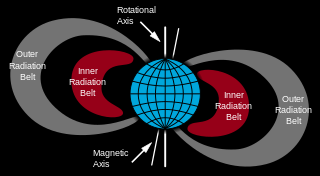
1958 for the US and Soviet
more failure than success in launching rockets into space/orbit for both the US and the Soviet Union
both were looking towards the Moon & beyond, although the emphasis was on perfecting reliable launch to orbit capability and deploying science instruments
Formation of NASA
29 July 1958, President Eisenhower signed the National Aeronautics and Space Administration Act and NASA
→ began its work on Oct 1, 1958
Mercury 7 Astronauts (NASA’s first astronaut selection) (1)
April 9, 1959
famed “Right Stuff” / the Mercury 7
Alan Shepard, Gus Grissom, Gordon Cooper, Wally Schirra, Deke Slayton, John Glenn, Scott Carpenter
All have passed away
First NASA Astronauts (2)
military test pilots
under 5ft11
508 candidates
Luna 2
A Soviet impactor probe, launched 12 September 1959
→ impacted the Moon ~40 hours later
first human-made object to reached another celestial object
What does it mean, Moon is tidally locked?
its rotation rate = revolutionary period around the Earth.
- the same face of the Moon is always turned towards the Earth → ground based observers can never see the lunar farside
First time the Lunar farside was observed…
…on 7 October 1959, by the Luna 3 (?)
Luna 3
Launched on 4 Oct 1959
Lunar farside: 7 oct?
First “gravity assist” maneuver
26 images returned from ~65,000km
Yuri Gagarin - Vostok 1
Yuri Gagarin: April 12, 1961
Vostok 1 (Orient or East 1)
launched from Baikonur cosmodrome in April 1961
first human to orbit the Earth - April 12 = Yuri’s Day
108-minute flight (just under one complete orbit of the Earth)
Yuri Gagarin - Vostok 1 (2)
after re-entry, Gagarin parachuted from the capsule (at a height of 7km) (info wasn’t released until 1971)
2 stage rocket w/ 4 strap-on boosters
→ A huge success for human space flight. Left the US far behind in the Space Race. (Soviet Union vs the US)
The US response to Vostok 1
Despite the intense pressure, NASA successfully flew Alan Shepard as a sub-orbital flight on 1961 (May 1)
→ The mission met all objectives and paved the way for an orbital flight in 1962
→ More importantly, it empowered President John Kennedy to commit the US to a Moon landing “by the end of the decade” before NASA had managed to fly an orbital flight with a human aboard. NASA met the challenge.
Mercury-Redstone 3
…or Freedom 7. → First US human spaceflight (suborbital flight), piloted by Alan Shepard
launched from Cape Canaveral on May 5, 1961, for a 15-minute suborbital flight
John Glenn: Friendship 7 (February 20, 1962)
3rd flight of the Mercury program, 1st to orbit the Earth
Launched from Cape Canaveral on February 20, 1962
Flight time: just under 5 hours
(incorrect) concerns re heat shield & reentry → the flight was still a resounding success
Mercury 13
NASA precluded women from being astronauts (til ‘78)
13 women were tested by the Lovelace foundation & passed the same tests that the Mercury 7 experienced
→ NASA erred in believing women could not be astronauts.
The only member of Mercury 13 to fly into space
Wally Funk, one of the Mercury 13, flew into space aboard New Shepard of Blue Origin on July 20, 2021
*Unit 3: The Space Age
Apollo 12 image of LM, astronaut Alan Bean, and Surveyor 3
The Apollo Program is arguably the pinnacle of human spaceflight to date
Breaking News: Psyche
NASA’s mission to a metallic asteroid, 16 Psyche
- Successful launch on the SpaceX Falcon Heavy occurred on Friday October 13.
• Arrival of the spacecraft is ~July 2029.
• Psyche is a metal rich asteroid in the Main Asteroid Belt (between Mars and Jupiter).
MECHANISM:
Its onboard propulsion will use solar energy to create electricity to then accelerate ions at ~15 km/s.
• A gravity assist for the spacecraft from the planet Mars will boosts the Psyche spacecraft speed and redirect the spacecraft without expending fuel.
Breaking News: Psyche. Why go to 16 Psyche?
Largely metallic with a much higher density → Relatively unique asteroid.
(Why go to 16 Psyche? • Most asteroids are rocky objects with relatively low densities (~3 gm/cm3 ). • Psyche is largely metallic with a much higher density (4.1 gm/cm3 ). It is relatively unique.)
• Is it a left over planetesimal core? (?)
+ 16 Psyche is relatively large with an approximate 280 km diameter at its largest point (although it’s more potato shaped).
The Psyche spacecraft will spend ~1-2 years studying the asteroid from orbit.
Summary (the Beginnig of the Space Age)
• The beginning of the Space Age, 4 October 1957.
• The first missions to space: satellites and human.
• Yuri Gagarin, launched 12 April 1961.
• The Space Race and President Kennedy’s Moon landing commitment.
Venera 1
Venera 1 launched February 12, 1961
flew by Venus from a distance of 100k km on May 19, 1961
no data obtained
Mariner 2
Venus:
Launched August 27, 1962
flew by venus from a distance of 35k km on December 14, 1962
Valentina Tereshkova
First woman in space (16 June 1963) - Vostok 6 Flight (Soviet Union)
- Her flight duration was just under 3 days
Flew in conjunction with Vostok 5
Like Gagarin, she never flew into space again
Vostok 6 Flight
Valentina Tereshkova: 1 of 5 women selected in Feb. 1962 to train as cosmonauts.
→ Significant political motivation (Soviet Union would fly first woman in space)
No military and little pilot experience
- Her flight duration was just under 3 days
Flew in conjunction with Vostok 5
Like Gagarin, she never flew into space again
First Walks in Space (1)
Alexei Leonov
Voskhod 2, 1965 (March 18)
exited Voskhod for 12 minutes
while he was fine in the environment, his spacesuit stiffened and almost did not allow him to re-enter the spacecraft
First Walks in Space (2)
Ed White
Gemini 4, 1965, June 3
20 minute space walk, 4 day mission
Flight lengths growing year by year (?)
still cramped within the spacecraft
The Planets Beckon: Mars
Mariner 4
Mariner 4 launched 1964, Nov 28
successful flyby of Mars on 1965, July 15, from a distance of 10,000km
Lunar Missions
the understanding of our Moon was v limited in the 960s.
what was known included simple things like diameter, density, orbital chracteristics,…
how it formed, how solid its surface was, whether it was still an “active world”, etc. were not known
Luna 9 (Soviet) (1966)
First lunar landing: successful soft lunar landing spacecraft on the Moon, 1966 6 Feb
8 hours of operation, images return (first image from moon surface)
Arthur C. Clarke’s “A Fall of Moondust” (1961)
…highlights this concern!
(Soviet Union and the US both dedicated a series of space mission to better understand the Moon, specifically how solid the surface was)
Lunar Missions (1950s-70s)
Luna (Soviet) (1958-1976) 15/44 successful missions (flyby, orbit, landing)
Ranger (NASA) (Aug 1961-1965) 4/7 successful hard impact missions
Surveyor (NASA) (June 1966-Jan 1968) 5/7 successful soft landings
Lunar Orbiter (NASA) (Aug 1966-1967) 5 successful orbiters
Spin offs! Implications and applications for humanity
Space Age was less than a decade old but implications and app. for humanity were becoming apparent. e.g. Weather satellites
Worldwide communication was becoming increasingly easier and reliable
A revolution in electronics design (e.g. computers!) was fueled by the need for lower mass electroinc components
Late 1966
The “Space Race” to the Moon was widely considered as too close to call
Both nations had developed human spacecraft capabilities that allowed for LEO operations
Uncrewed missions to the Moon, Mars, and Venus were also being undertaken
Commercial activity in Earth orbit were increasing
Apollo 1 (1967, Jan 27)/ First disaster
a rocket contains an enormous amount of fuel and thus energy; it generates and channels the energy of a large explosive/bomb. This control is not always compelte thus leading to the destruction of the rocket.
1967 Jan 27, the crew of the first Apollo mission were conducting a “Dress rehearsal” (simulation) on the ground. Fire broke out inside their capsule and engulfed the crew within seconds → All 3 astronauts perished
Gus Grissom, Ed White, Roger Chaffee
Soyuz 1 (1967, 24 April) / Second disaster
24 April 1967, Cosmonaut Vladamir Kamarov, died on impact with the ground after multiple capsule malfunctions including no parachute deployment.
2 disasters?
Apollo 1 (3, fire, dress rehearsal) & Soyuz 1 (Cosmonaut Kamarov, impact w/ ground, capsule malfunctions)
Final laps of the Space Race
2 tragedies => changes and improvements to human spaceflight.
Apollo 7: Oct 1968
Soyuz 3: Oct 1968
The return of human spaceflight confirmed that Soviet Uion didn’t have the necessary technical capability to put humans on the Moon at that time. The US would “Win” this Race.
Humans on the Moon: 1969-72
Saturn V Rocket (1967-1973) (1)
Saturn V Rocket (flew between 1967-1973)
3-stage, liquid fueled rocket developed under the guidance of Wernher von Braun
Only launcher (to date) that has carried humans beyond Earth orbit
had a perfect flight record: 13 for 13
~ Soviet equivalance was the N1 (never flew successfully, eventually cancelled in mid 1970s)
Humans on the Moon!
6 successful missions to the surface of the Moon had 12 people walk, run and drive on that world
Apollo 11: Historic Moon Landing
Apollo 11 crew: Neil Armstrong, Buzz Aldrin, and Michael Collins
Apollo 11 crew Neil Armstrong, Buzz Aldrin and Michael Collins.
6 missions landed on the Moon: 12 humans walked upon the Moon Apollo 11, 12, 14, 15, 16, 17 all left instruments upon the Moon to study
the lunar interior (moonquakes), the solar wind environment (from the Sun), the changing distance to the Moon and brought back nearly 400 kg of rocks for analysis. • Apollo 17 astronaut, Harrison Schmidt, only scientist (geologist) to walk on the Moon.
Much of our knowledge about the Moon has come from human exploration in the 1960s and early 1970s and from more recent observations by uncrewed spacecraft
Soviet Triumph on the Moon (1) Sample return missions & First rovers
Luna 16 successfully returned 101 gm of lunar soil to Earth (1970)
→ Sample return missions are extremely valuable science missions (bringing distant object materials to Earth-based labs) but also difficult to achieve)
Roving missions: landers are able to move/relocate around their environment (Lunokhod (Moonwalker) Rovers)
* First rovers (Soviet) Lunokhod (Moonwalker) Rovers (1970-73)
Luna 17 delivered Lunokhod 1 to the Moon’s surface (1970). Operated for 322 days and travelled 10.5 kms.
Luna 21 delivered Lunakhod 2 to the Moon’s surface (1973). Operated for 122 days and travelled 42 kms.
→ delivered impressive science results
Venera 7 (Soviet) FIRST SUCCESSFUL SOFT LANDING @ VENUS
Venera 7 spacecraft (Soviet) - 1970 (following successful flyby muissions to Venus in the 1960s)
only survived for 53 min (20 in on the surface) but ascertained that Venus had a CO2 atmosphere (~97%), a surface temp of 475C and an atmospheric pressure 90 times Earth’s
Mariner 9 (NASA) - Mars - first spacecraft to orbit another planet
First spacecraft to orbit another planet, Mars (1971)
Mars 2 & 3 (Soviet) - Mars 2 = first spacecraft to reach the surface of mars
arrived in Mars orbit: Nov & Dec 1971
both carried landers. Mars 2’s crashed (first spacecraft to reach the surface of Mars). Mars 3’s lander survived its descent & transmitted for 110s.
Salyut 1: First Space Station (April 1971)
first space station, launched into LEO April 1971
Re-focus of Soviet space program
home to crews for 24 days. 88.5 minutes orbital period
de-orbit (controlled) on Oct 11, 1971
salyut series continued until 1986 with increasing mission lifetimes
Soyuz 11 (soviet): Tragedy
After successfully docking and use of Salyut 1, the crew of Soyuz 11 re-entered the atmosphere in June 1971.
3 crewmembers died on re-entry from a faulty valve that depressurized the spacecraft.
The only cosmonauts to die beyond the Karman Line & in space
Skylab: 1973-1979
utilizied leftover hardware from the Apollo program
orbiting workshop (Experiments), a solar observatory, and Earth observations (remote sensing)
3 crewed missions (2, 3, 4) from 1973-1974
had a shower onboard since habitality was important for the crew
1973 first launched → near disaster occurred, necessitating on-orbit repairs by the first crewed mission. → success
orbital decay (atmospheric drag) crashed Skylab (uncontrolled re-entry) into Western Australia, July 1979
Spaec Shuttle Development (STS)
• Its official name, Space Transportation System (STS), was taken from a 1969 plan for a system of reusable spacecraft.
• Routine transportation for Earth-to-orbit crew and cargo from 1981 to 2011 (with 5 shuttles). • It flew 135 missions and carried 355 astronauts from 16 countries, many on multiple trips.
Often referred to as a “space truck” it could not fly higher than LEO.
• Expected to launch monthly and generate a cost-effective access to LEO. • Enterprise rolled out 17 September 1976. • First atmospheric and landing flight for Enterprise 18 February 1977.
Mercury - Mariner 10 (first spacecraft to fly by multiple planets V and M using gravity assist)
Mercury is a difficult planet to reach despite being relatively close to the Earth. • Mariner 10 launched on 3 November 1973 and was the first spacecraft to fly by multiple planets (Venus and Mercury using gravity assist). • It remained the only spacecraft to examine Mercury until 2008 (MESSENGER).
Mariner 10
the gravity assist (redirect) from Venus allowed 3 separate encounters of Mercury, one as close as 327 km in 1975
Apollo-Soyuz
one of the most important milestones in space cooperation - 1975
first crewed international mission between the Soviet Uninon and the US
- the end of the Space Race: 1975, orbital docking of Apollo and Soyuz