Art History Chapter 30
 Call Kai
 Learn
 Practice Test
 Spaced Repetition
 Match
 Flashcards
 Knowt Play
1/27

There's no tags or description
Looks like no tags are added yet.
28 Terms

The Americas, 600–1300 CE
North, Central, and South America • 600–1300 CE
Hieroglyph
a type of written script that uses conventionalized signs to represent concepts,
sounds, or words.

Chocolate Vessel with Palace Scene
Maya • c. 600–900 CE
Fresco
wall or ceiling painting on wet plaster (also called true or buon fresco). Wet
pigment merges with the plaster.

Presentation of Captives to Lord
Chan Muwan (Reproduction)
Bonampak, Mexico — Maya • c. 791 CE
Lintel
a horizontal support above a door or other opening.

Portrait Head of Pakal
Temple of the Inscriptions, Palenque, Mexico • c. 683 CE
Stele
a carved stone slab that is placed upright and often features commemorative
imagery and/or inscriptions.

Sarcophagus Lid (Detail), Tomb of
Pakal
Temple of the Inscriptions, Palenque, Mexico • c. 683 CE
Sarcophagus
a container for human remains.

Mosaic Funeral Mask of Pakal
Palenque, Mexico — Maya • c. 683 CE
Roof comb
lattice structure surmounting the roof of a temple; often used to support
monumental sculptur
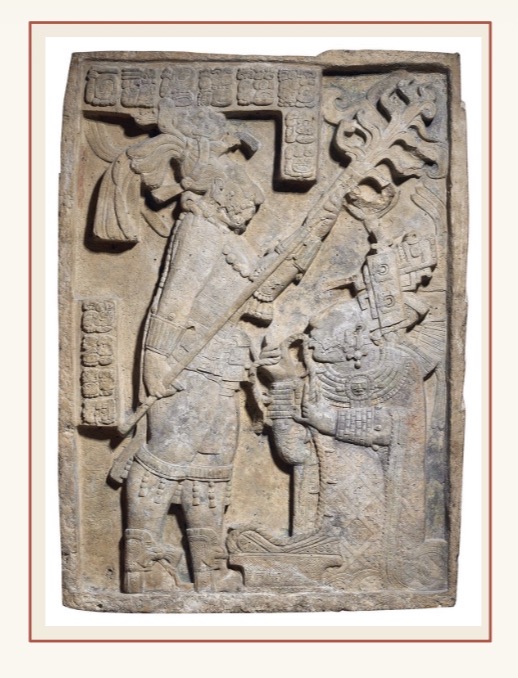
Shield Jaguar II and Lady K'ab'al
Xook, Lintel 24
Temple 23, Yaxchilan, Mexico • c. 725 CE
Atlantid
monumental figural sculpture that serves to hold up a roof or other
architectural element.

Temple 1, Tikal
Tikal, Guatemala • c. 734 CE
Zoomorphic
having an animal-like form.

Central Ball Court, Copán
Copán, Honduras • completed 738 CE
Rammed-earth
building technique in which damp earth is compressed within a frame or mold,
to form a solid structure.

Great Serpent Mound
Adams County, Ohio • c. 1070 CE (dating debated)
Effigy
a sculpture or model, usually created for its symbolic and/or material value in
relation to the thing it represents.

Pipe, Adena Culture
Ohio • c. 100 BCE–100 CE
Kero
an Andean decorated drinking cup used in feasts.

Central Cahokia as It Would Have
Appeared About 1150–1200
near present-day St. Louis • c. 1150–1200 CE
Gorget
an object worn near the neck area as a costume item.

Pueblo Bonito
Chaco Canyon, New Mexico — Pueblo culture • 830–1250 CE

Seed Jar
Ancestral Puebloan • c. 1050–1250 CE

Gorget with Running Warrior
Sumner County, Tennessee • c. 1250–1350 CE

Mimbres Bowl with Two Cranes and
Geometric Motifs
New Mexico • c. 1250 CE