Bio 1001a midterm 1
 Call Kai
 Learn
 Practice Test
 Spaced Repetition
 Match
 Flashcards
 Knowt Play
1/169

Earn XP
Description and Tags
Cycles 2-5
170 Terms
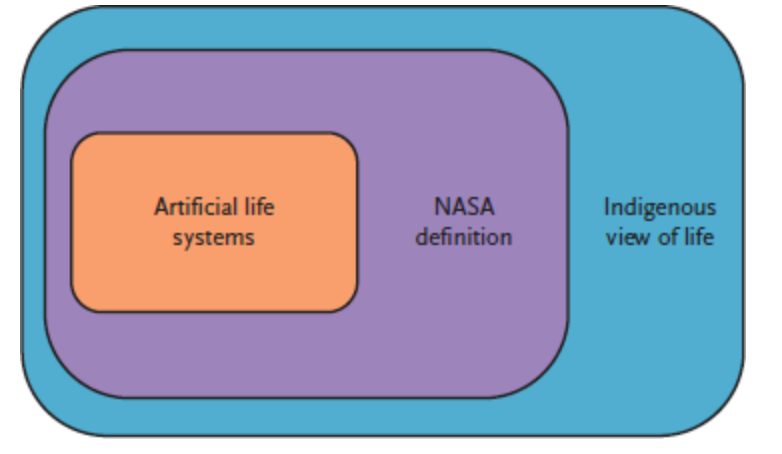
explain: perspectives relating to life
issues choosing one
Indigenous
Artistotle
NASA definition
finding a concept that is universal; make sense for both scientists and non-scientists (applicable across disciplines)
Indigenous: emphasize the interconnectedness and reciprocity of all living things, beyond what science considered living
Aristotle: something that grows, is self sustaining and reproduces…..includes the concept of the cell being a universally accepted characteristic of life
NASA definition: a self sustaining chemical system capable of Darwinian evolution…bring in molecules from the surronding and use energy to transform those molecules into different forces necessary for life
explain whether or not viruses should be considered “life”
lack their own metabolism..by NASA def. are not self sustaining
dont undergo cell resp or synthesize their own proteins
cant complete their lifecycle without invading living cells (needs the ribosomes to make proteins bc it can’t itself)
but they do have nucleic acis and replicate
can evolve through natural selection
define
entity
includes a wide range of sel replicating and evolving systems (viruses, computer programs)
define
organism
forms of life that posses five core characteristics
5 core characteristics of life
comprised of cells : cell is the fundamental unit of life
harness energy and matter: all forms of life acquire energy and matter form the env and use them to maintain their highly ordered state
reproduce and grow: organisms reproduce giving rise to offspring that grow and develop into adults
respond to stimuli: organisms can make adjustments to their structure, function, and behavior in response to changes to the external env
evolve: populations of living organism change over the course of generations to become better adapted to their environment
define
cell
smallest unit of life
cant have life without cell and the other way you get a new cell is by an older cell dividing by two
cells can look very different (different environments and roles)
core features of a cell (3)
+types of organelles
plasma membrane
organelles that are universal (ribosomes)
organelles that are cell specific (nuclei, chloroplasts, mitochondria)
how are organisms thermodynamically open systems?
constantly bringing in energy and matter from their surrounds and releasing other forms of energy and matter back into the environment
energy is just required to maintain the highly ordered state required to stay alive
ie. DNA, proteins, membrans are constantly breaking forna nd new ones are bein made using the matter and energy cells bring in from the outside
explain
reproduction
+inheritance
parental organisms produce offspring
parents pass copies of their DNA to their offspring
inheritance: transmission of DNA (genetic information) from one generation to the next
explain
cell cycle in terms of growth
an increase in organism size is the result of an increase in the size of individual cells along with an increase in the number of cells (cell division)
growth is a process of development; series of programmed changes encoded in DNA (move from embryonic state to maturity)
explain
life responding to stimuli
+homeostasis
organisms can make adjustments to their structure, function and behavior in response to changes to the external env
organisms has to sense a change in env
homeostasis: goal is to maintain a relatively constant internal state to compensate for when external conditions change
explain
evolution in terms of a characteristic of life
+effects of natural selection
+evolutionary adaptation
evolution is a trait that is only true of a population of individuals or a particular specific (not just one organism)
evolutionary adaptation: natural selection allows the population as a whole to be able to grow and reproduce better in a particular env over many generations
changes in gene structure and function and the development of novel traits, and can lead to the emergence of new species
define
natural selection
random mutations to DNA result in offspring within a population being better able to survive and reproduce than others, leading to a population expressive the favorable trait in a greater proportional with each passing generation
explain
cell theory
all living cells arise only from the growth and division of other pre-existing living cells
4 marcomolecules all organisms are composed of
nucleic acids
proteins
lipids
polysaccharides
define
abiotic syntehsis
synthesis of organic molecules in the absence of life
building blocks of complex biological molecules (4)
amino acids (building blacks of proteins)
fatty acids (component of lipids)
purine and pyrimidine nucleotides (components of nucleic acids
range of sugars such as riose, glucose, fructose
why are viruses not necessarily bad
viruses play vital ecological roles and have valuble applications in human health
ecologically, viruses relate microbial populations, influence nutrient cycling, maintain ecosystem balance and enhance genetic diversity through horiontal gene transfer
we can harness their genetic material fo =r various purposes (gene theorapy to treat cancer adn other conditions)
why are viruses classified as infectious biological particles rather than organisms
cannot reproduce on their own
lack metabolic system to provide energy for their own life cycles; depend on host cell that they infect for these functions
does not have cytoplasm enclosed by a plasma membrane (like all known organisms)
strucutre of a virus
+capsid
+envelope
one of more nucleic acid molecules surrounded by a protein coat (capsid)
some capsid can be enclosed in a membrane (envelope)

explain
viruses nucleic acid genome (5)
either DNA or RNA
can be composed of either single strand or double stand
all viruses have genes that encode at least their coat proteins as well as proteins involved in regulation of transcription
genomes of enveloped viruses also include genes required for the sysnthesis of envelope proteins
some have virus specific enzymes for nucleic acid replication
explain
helical viruses
protein subunits assemble in rod-like sprial around the genome
ie. viruses that infect plants
cab be enveloped in a membrane from the hosts membrane (like polyhedral)
explain
polyhedral viruses
coat proteins form triangular units that fit together like the parts of a soccer ball
can infect animals, plants and bacteria
in some, protein spikes that provide host cell recognition extend from the corners, where the facets fit together
can be enveloped with membrane from host membrane (like helical)
explain
enveloped viruses
whatever virus type, now its just enveloped in the host cell’s membrane
proteins synthesized from the viral genome in the host cell are transported to and embedded in the membrane before the virus particle buds through the host cells
…these proteins are important for recognition and binding to host cells

why is the ane. of a vrisu not the same as the disease it causes
while viruses themselves are trasmitted from host to host, the disease is a manifestation of the bodys reponse to the viral infection
ie. HIV virus leads to AIDS
how are viruses classified
using critera such as virus size, strucutre, genome structure (DNA or RNA, single stranded or double stranded) and how theri nucleic acid is replicated
what do viruses usually infect (2)
a single specifies or a few closely related species
may even infect only one organ system or s single tissue or cell type in its host
how come some viruses arent pathogens
benefit their hosts
infect by a non pathogenic virus protects human hosts against pathogenic viruses
ininfere with replication or other functions of pathogenic viruses
act to defend their host cell
how to viral particles move
random molecular motions until they contact the surface of a host cell
how to viruses infect host cell
virus or viral geno0me must enter the cell’
inside the cell the viral genes are expressed, leading to replication of the viral genome and assembly of pregeny viruses
virons: new virus particles are the new, complete, extracellular form of the virus
virons are released from the hot cell, usually killing the host cell in the process
explain
viruses infecting animal cells (2)
follow similar pattern to viruses for bacterial cells but but both the viral coat and the genome enter the cell
depending on the virus, removal of the coat to release the genome occurs during or after cell entry (envelope does not enter the cell
how do viruses without an envelope enter a host cell
bind by their recognition proteins to the plasma membrane and then are taken into the host cell by endocytosis
how do enveloped viruses enter the host cell (2)
virus coat and genome enter the host cell plasma membrane
other ones enter host cells by endocytosis
define
spike proteins (S proteins)
they have two parta S2 and S2
S1: top portion that binds to the receptor on the host cell
S2: transmembrane portion that participate in the fusion of the viral envelop with the host membrane
define
nucleocapsid
the combination of the capsid and the viral nucleic acid
three mechanisms by which the virus shuts down the hosts cell’s translation (reduces competition)
protein are produces that seek out and neutralize mRNAs that do not have a viral tag
channels are blocked to prevent host mRNA from moving from the nucleus into the cytoplasm
the prevention of mRNA from reaching the cytoplasm also means that proteins that would alter the immune system are not produced
define
retro virus
two copies of singel stranded RNA
explain the HIV replication cycle

how does HIV infect the cell
can access cells nucleus and integrate its genome into the hosts nuclear genome
second strand of DNA is synthesized using the first strand as a template
define
asymptomatic
+example w virus
does not benefit the virus to harm the host
mostly animal viruses
how do pathogenic viruses cause diseases
cause cell death when progeny viruses are released from the cell (massive cell death, destorying vital tissues or causing leasions in membranes/skin)
other release cellular molecules when infected clls break down, which can induce fever and inflammation
other viruses alter gene function when they insert into the host cell DNA, leading to cancer and otehr abnormalities combating
characteristics of plant viruses (4)
rodelike or polyhedral
most contain RNA as their nuclic aci, some have DNA
due to the protective nature of cell wall, they access plant cells through mechanical injuries (tramistted from one plant to another during pollination or herbivorous animals)
tramission can also occur from one genenration to the next in seeds
how do plant viruses act inside a cell
mostly replicate like animal viruses
virus particles can pass from infected to healthy cells through plasmodesmata, the opening in cell walls that interconnect the cytoplasm of plant cells, and through the vascular system
how are plant viruses classified
by the type of plant they infect and tehir most visible effects
why are viral infection difficult to treat (4)
viruses are “hidden” inside host ells and use host cell machinery to replicate
there are often no obvious viral products to be targeted by drugs
unaffected by antibiotics and other treatment methods for bacterial infections
many viral infections are allowed to run their course… with treatment limiting to releiving symoptoms while the natural immune defences of the patient atack the virus
orrr vaccine development for really deadly viruse
why do we need new flu vaccines every year (4)
genome consists of eight seperate pieces of of RNA
when two different fly viruses infect the same person, the RNA segments can assemble in random combinations derived from either parent virus
new combos change protein coat of the virus, making it unrecognizable to antibodies developed againt either parent virus
random mutations in RNA genome of the viruys add to the variations in the coat proteins that make previously formed antibodies defective
Hep C/AIDS treatment case study: how does it work
it helps suppress the virus’s replication, reduce viral load in the bloodstream to undetectable levels and prevetn progression to AIDS
made of a bunch of inhibitors that block the various stages of the viral life cycle
doesnt cure but helps individuals to live longer

why is the effort to control viruses from animals so complicated? (3)
dealing with viruses that have broad host specificty and can infec other animal in addition to humans
since other animals can harbour these viruses, we can never succesfully eradicate the diseases they cause
also, as human invade animal habitat, animals mutate and make virus mutate with them and then even badder
origins of virus hypothesis (fragments) (4)
+explain the process of fragments of genetic material into virus and incliude evolution
viruses can duplicate only by infecting a host cell (probably evolved after cell appeared)
may rep “escaped” fragments of DNA molecules that once formed part of genetic materia of living cells or an RNA copy of such a fragment
the fragments first became surrounded by a protective layer of protein with recognition functions and then these fragments escaped their parents
as it evolved, info encoded in the core of thevrius became reduced to a set of diretions for producing more viral particles of the same kind
origins of virus hypothesis (ancient) (2)
viruses are very ancient
virus like particles predating the first cell an=d originating in the “primordial gene pool” - pool of RNA that is thought to have been the first genetic material
viruses and their evolution (4)
+common ancestor
+impact on evolution of cell life
+benefit to genetic material
+eukaryotic life…
they do not have one common ancestor (cannot draw phylogenetic tree)
they play an important role in the evolution of cellular life becuase of their ability to integrate their genes into their hosts and to aquire genes from their hosts
can also provide new genetic material (new enzymes and other proteins)
evolution of eukaryotic cells…nucleaus originating from a large, double straded DNA virus that infected prokaryotic cells= eukayotic cell
define
evolution
gradual change of populations of organisms over time
how does evolution explain diversity (3)
underlying common features that organisms posess
enoumous diveristy of life on earth
so many forms…one common ancestor
understanding of evolution helps in understanding how species continue to change over time in response to environmental changes or challenges (antibiotics in case of bacteria, pollution, deforestation, climate change)
define
process of evolution
+mechanism that drives evolution
descent with modification
natural selection
explain
natural selection
+4 conditions for evolutions through natural selection
occurs when differential survival and reproduction of individuals with particular traits in a population lead to changes in the genetic makeup of the population over generations
the trait must be heritable
genetic variation in the trait must exist in the population
there must be differential survival and reproduction of individuals with different versions for the trait based on environmental factors
more offspring must be born than can survive
explain natural seleciton
effect of environmental factors
limited food or habitat avalibility, disease….can reduce ability of individual organisms to survive/reproduce
organisms with certain traits/characteristics may be able to overcome or tolerate differnt environmental conditions better thank
explain
evolution in terms of traits being passed on
difference result from changes in their DA and thus can be inherited
organisms with heritable traits that allow them to outcompete for limited resouces, or to avoid predation or disease will increase their rates of survival and reproduction and leave more offspring
individuals in population without those traits are less likelu to reproduce, leaving fewer, if any, offspring
the advantageous heritable traits will become more common in the next generation
individuals with certain hertiable traits are more likely to survive ad reproduce reprodce than other individuals, leaving to population level changes
explain
selective breeding
humans can select which of the crops, anismals or whatever to breed with the best traits (bigger corn, sweeter fruit, cuter dogs with less health problems)
these beings are selectively bred by humans to have the best outcome…not technically natural selection
define
population
+generation
connection between them
a group of interbreeding individuals of a species that life together in a specific space
the time period over which evolution acts
the differental reproduction of individuals in a population over many genrations leads to population-level changes in the expression of certain heritable trait
define
endemic species
+Galapagos mockingbirds
species found nowhere else on earth
four species of mocking bird on the Galapagos islands
each of these mockingbirds have morphologically distinct traits…but the four species have underlying general similarities, indicating that the four species all diverged from a common ancestral population

this is an example of decent with modification
define
adaptation
+connection to differential survival and then natural selection
-the inherited aspects of an individual that make it well suited to thrive in a particular environment
from generation to generation, with differential survival and reproduction, a population can become better adapted to a specific environment because of natural selection
define
fitness
individuals with the set of traits that lead to greater survivorship ad reproductive success are said to be more fit than others
the term describes an individuals reproductive success
an orgfanism has higher fitness than another if it leaves more ofpsring, in turn, survive to reproduce
3 aspects crucial to fitness
fitness is a relative concept (doesnt matter in absoluite terms how many offspring an individual leaves, only that ut leaves more than others)
a trait is only adaptive is if it increases fitness (traits that are “valuble” are only considered that way bc they increase reproductive success)
the traits that increase fitess may change (if env changes, previous increased fitness may not be the same anymore)
how do variations in a population happen
variations are due to genetic variations (genetic basis)
variation of DNA sequences - individuals within a population having different inherited traits
usually the influence of many genes (ubt it can be just one)
define
mutation
+how do they happen
+effect of mutations on fitness
+mutations and the path of evolution
a random and heitable change in the DNA sequence
inevitable consequence of the impeft nature of DNA replication, as well as effects of certain physical, chemical and bio agents
muations can be helpful (increase fitness) or harmfull (lower fitness) or others have no effect
while mutations are the source of variation, they do not determine the path of evolution
why is natural selection referred to as a theory
heritable variation leads to differental survival and reproduction
its been tested and proven right a lot but its still a theory
define
transposable element
a biological agent that can cause utations
pieces of DNA hat can move from one posistion to another in the genome, sometimes inserting themselves in ways rhat affect the expression of genes
define
selection pressure
usually an environmental pressure, that forces the populations best traits to be selected for by natural selection
define
convergent evolution
independant evolution of comparable traits in unrelated species, such as the wings of insects, birds and bats (they all have wings but arent related)
define
generation time
average difference in age between a parent and its offspring
the age when an organism produces the next generation varies tremendously amond different groups
organisms with short generation times evolve more repidly than those with longer geenration times
who challenged the religious considerations from Aristotle
jean basptiste lamarck
he proposed that a so-called perfectng principle whereby simple organisms evolved into more complex ones, moving yp the Scale of Nature
…simple forms of life were believed to arise from non-living material
his thoery was incorrect (that charcteristics during a organisms lifetime can be passed on to future generation)
ie a giraffe extending its neck to reach higher fruits
why is Lamarcks theory wrong (3)
organisms do not appear through spontaneous generation
although muscles can grow larger through continued use, organisms cannot evolve fundemenal physiological changs during their lifetime
physical changes aquired during an organisms life are not passed to offspring
define vestigial structures
useless parts of animal bone structure that remains even after the animal has evolved
define *
zoonotic disease
diseases that jump top humans (spill over) from other animals
at a higher risk when aniaml is more closely related to (similar zoology)
75% of new infection disease
more likely b/w closely related species
often not very harmful in the original host (resevoir) but much more in new host
define
viruses*
+obligate parisites
protein shell with nucleic acid genome inside (DNA or RNA, single or double stranded)
need to infect cells to make proteins and replicate
compare the difficulty of creation for antibiotics, antifungals and antivirals*
relative to antibiotics (bacterial infections) antifungals (fungal infections) antiviral drugs are harder to design and usually have more serious side effects
viruses are very unique in structure compared to bacteria, which have easily identifiable structures (so drugs are easier to make…dissolve cell membrane, stop ribosomes from protein synthesis…)
we need to identify and target processes that the viruys needs but the host cell does not
central dogma of RNA genome*
+what viruses have an RNA genome
+define reverse transcription

retroviruses (including HIV) have an RNA
extra step viruses take to infect the cell (through enzyme)
very fast but also a lot of mutations (might mutation rate)
HIV lifecycle: targets immune cells
virion fuses with host immune cell
viral reverse transciptase reverse- transcribes viral RNA to ds DNA
viral intergrase splices virus DNA into host DNA
viral DNA gets transcribed, translated, and forms new virions

explain
the drug AZT*
basically how does it affect HIV life cycle and then into resistance
nucleoside analong- shaped almost like thymine

once RT adds AZT to the chain, DNA synthesis is blocked
after months of AZT treatment, HIV becomes resistace (it can still synthesize)
there is a change in the reverse transcriptase enzyme active site to make sure that the AZT cannot fit anymore (it becomes resistant)

a change to two nucleotides confers to AZT resistace
how does HIV become AZT resistant*
mutations are random mistakes
AZT’s lowered efficacy is caused by randomized mutations, lowering efficacy
RT makes errors in copying HIV genome (mutations) A tiny fraction of mutations improve AZT resistance
Susceptible mother virons mostly produce daughter virons
there is genetic and phenotypic variation in viral population
AZT treatment: virons susceptible to treatment stop (red)
some varients are able to reproduce in the presence of AZT = drug resistance HIV (green)

evolution of AZT resistance*
mutations→ variation in AZT-resistance
AZT resistance passed from “parents” to “offspring”
nto all virons reproduce
when AZT is present, some forms (AZT resistance) are more likely to reproduce than others (AZT- susceptible)
viral populations changes over time (b/c resistance strand will survive)
how does evolution by natural selection
variation + nonrandom survival
“mutation proposes, selection disposes” *
new genetic variants (mutations) are constantly occuring, regardless of the environment
the environment (in this case presence vs absence of AZT) affect which variants become more common, not which variants occur
environment determines how abundant a strand/genome would be over another
HIV’s high mutation rate also makes vaccine development challenging*
mutations in HIV’s other genes change the outer structure of the virus
this lets HIV hide from out immune system
hard to design vaccine to account for all potential varients
there is not universal HIV vaccine (yet!)
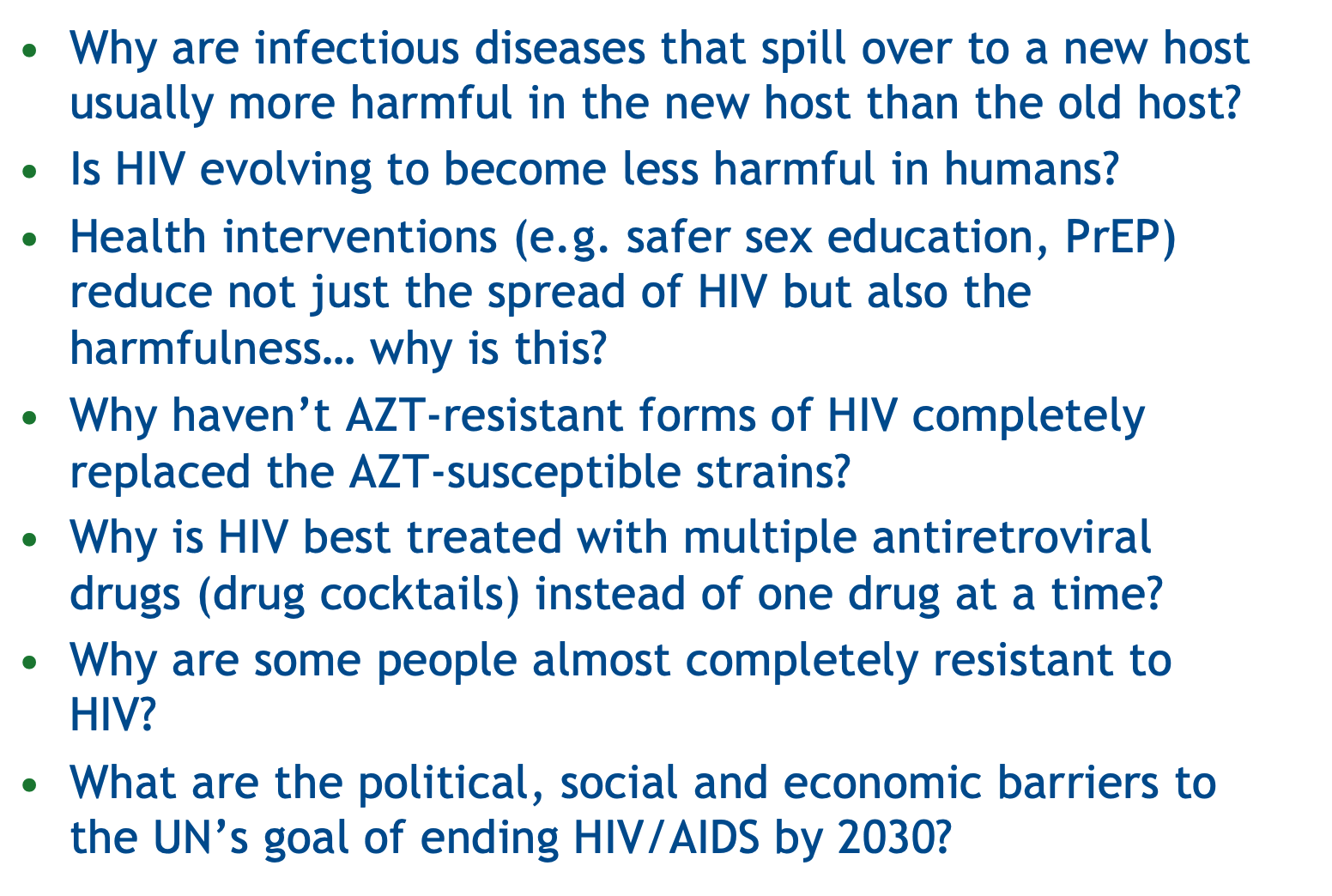
consider these questions…cycle 1*
difference between belief system and scientific theory*
belif system
a set of principles or belifs which togeth\er form the basis of a religion, philosophy, or moral code
belif- conviction or acceptance that certain things are true or real, faith
not intended to be tested or rely on evidence
scientific theory
coherent set of testable hypothesis that try to explain facts about the natural world
must be tesable and falsifiable. if falsified, change the theory
to be a scientific theory, it must should be able to be tested
to be scientifc, an idea (theory must be most testable and falsifiable*
some possibel observation or experiemental finding could prove the theory (or hypothesis) wrong
“AZT-resistance forms of HIV will increase in frequency whenever a patient is takign AZT. These forms will NOT increase in frequency if the patient is not taking AZT” (easiy to test)
“positive thinking can cure cancer, if you try hard enough” (hard to test)
what is the theory of evolution* (6)
descent with modification frrom a common ancestor
evolution happens (allele frequencies (and phenotyes) in a population change from one generation to next
all life is related through common ancestry
speciation: lineages diverge into daughter lineages
evolution is not transformational, it is variational. individuals do not evolve within a lifetime; populations evolve from one generation to the next
gradualism and transitional forms (intermediate): takes many generations to produce large changes; some transitional forms may be found in the fossil record
selection generates adaptation, and explains much evolutionary change (but not all)
darwin vs lamarck views on evolution 9the names of their view and how it works)*

lamarck believed that individuals could change to theoir circumstances (ie giraffes extending their neck) transformational view
over lifetime, change phenotype to be better suited to environment
Darwin supports variational view
those that mutated have a higher chance of surviving and propagating
common misconceptions about evolutionary theory*
mutatins are directed towards the needs of teh organism (mutations are random)
humans decended from chimpanzees (descended does not mean related to)
humans are more highly evolved than plants…some species are more highly evolved than others( structurally might be more complex but not necessarily highly evolved)
evolution and selection are the same thing
selection mades organisms perfectly suited to their environment
all evolution is due to selection (theres also gene flow…)
explain cell cycle
G1 - growth 1
period of cell growth before DNA replicates
cell can function in G1 9and its also preparing for S phase)
G0
cell cycle arrest
can exit or enter this cycle
some places in the body have vert fast replication (ie. skin)
others dont need to replicate (ie neurons)
S (synthesis)
period when DNA replicates and chromosomal proteins are duplicated
lots of E required
G2
period after DNA replicates; cell prepares for division
Mitosis (meiosis)
Prophase
Metaphase
Anaphase
Telophase
Cytokinesis
***G1,G2 are preparatory phases
what happens within embryos in reference to division/differentiation
replication is not the only thing that happens but the cell DIFFERENTIATE
as cell divides, cell will specialize into difference types of cells
Happens in G1…where cell makes important decisions
early embryonic stage…differentiation doesnt really happen (cell just wants to divide as much as possible)
explain
cell turnover rate (for egg and sperm)
+other cells
the cell turnover rate for eggs is lifetime compared to sperm cells which is about 2 months
since sperm cells reproduce a lot more than eggs, they are more prone to mutations
but as the woman gets older, the replication process gets sloppy and she has a higher chance of developing mutations
for other cells, some regen very fast and some never have to regen
why do cells divide? Why not just grow larger?
volume of the cell is contatnly increasing ..surface area isnt as fast (cell division restores a larger membrane area relative to the amount of cytoplasm)
so cells dvided to increase the surface are to volume ratio
required for growth and development, tissue repair and regeneration, and productio of specialized cells and gametes
high SA:V ratio = efficient exchange across membrane
low SA:V ratio= exchange cannot keep up with cellular demand

where are the checkpoints for cellular reproduction?
G1/S
right at the end of G1, right before S
cell makes sure everything is perfect BEFORE the cell replicates (most important)
in G1, all the cell is doing is growing in size…DNA hasnt replicated yet
G2/M
right at the end of G2, before M
molescules come together
repair enzyme and check genome
“are we ready for mitosis”
Mitotic spindle
during metaphase
makes sure the chromatids are pulled apart properly
if they arent, this causes disjunction which can lead to aneuploidy
define
aneuploidy
less/more chromosomes than normal
explain
positive regulation: cyclins and CDKs
positive regulation is like a green light for cellular reproduction
CDK- cyclin dependent kinase
CAK - CDK activating kinase
unactive cyclin is close to CDK active site…still not active
CAK, which is a phosphate donating enzyme, allows cyclin to attach to CDK and activates the complex (via phosphorylation)
cyclin-CDK complex is phosphorylated and the activated complex then phosphorylates target protein
target protein now has phosphate…changes conformation into active form
this allows cell to more into the next stage of cell cycle
explain
negative regulation: p53 and p21
p53 acts like the guardian of the genome
when there is no DNA damage = cell cycle continues
when there IS DNA damage
p53 (guard) activates p21 (army)
cell is put into temporary cell cycle arrest
If repair is successful, cell cycle continues
if repair isnt successful, damage persists and cell goes to apoptosis
define apoptosis
programmed cell death
explain
p53 inhibiting cycle-CDK by targeting p21 production
p53 detects DNA damage and increases p21 production by binding to the p21 promoter
p53 acts as a transcription factor to activate the p21 gene to produce more p21
p21 is produces and looks for the active cyclin-CDK complex
p21 is a cyclin-CDK inhibitor
inactivated by the binding of p21, the cyclin-cdk complex cannot phosphorylate proteins involved in cell cycling