lab practical 2
 Call Kai
 Learn
 Practice Test
 Spaced Repetition
 Match
 Flashcards
 Knowt Play
1/61

There's no tags or description
Looks like no tags are added yet.
62 Terms
aves skin

frog skin

fish skin

snake skin
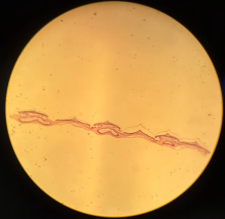
mudpuppy temporal fenestration & adaptations
does not have true fenestrae
retains paedomorphic traits
frog temporal fenestration & adaptations
does not have true fenestrae
open (gymnokratophic) cheek regions
loggerhead turtle temporal fenestration & adaptations
anapsid
massive, wide jaws
diet-driven shape shift (ontogeny)
keratin beak
tuatara temporal fenestration & adaptations
diapsid
acrodont dentition
python temporal fenestration & adaptations
diapsid
loose lower jaws
swinging quadrate & supratemporal bones
alligator temporal fenestration & adaptations
diapsid
secondary hard palate
wolf temporal fenestration & adaptations
synapsid
sagittal crest
human temporal fenestration & adaptations
synapsid
expansion of braincase
facial reduction
foramen magnum shift
reduction of brow ridges
chin development
key features of tuatara skull
diapsid fenestration
acrodont dentition
double row of teeth on the upper jaw
parietal “third” eye
no external ear openings
what structure do turtles have that has functionally replaced teeth?
a beak
tuatara skull
classic/ complete diapsid
complete lower temporal bar
akinetic cranial kenesis
two upper rows of teeth, one lower
acrodont dentition
beak-like premaxilla shape
iguana skull
modified diapsid skull
incomplete/ absent lower temporal bar
kinetic cranial kenesis
single upper row, single lower row
pleurodont dentition
triangular/ blunt premaxilla shape
in what ways are the python teeth adapted for predation?
backward- curving teeth
6 rows of aglyphous teeth
rapid tooth replacement
what is the purpose of the secondary palate?
separates mouth from nasal cavity & allows us to breathe with our mouths closed
in what way is the frog skeleton modified for jumping?
elongated hindlimbs
urostyle
rigid, short spine
fused forearm ones
specialized pelvic & hip girdles
lightweight skull
what is the function of the urostyle?
transmits & absorb the immense backward thrust from the legs directly into the rest of the body without bending sideways
evolutionary origin and function of columella
ancestral homolog of stapes in mammals
derived from hyomandibular bone in fish
transmits airborne sound vibrations from the external tympanic membrane to the inner ear receptors
what family do axolotls belong to?
mole salamanders
Ambystomatidae
paedomorphic traits of axolotls
a developmental trait where it reaches sexual maturity & adulthood while retaining its larval, juvenile body structures
feathery external gills
dorsal & tail fins
aquatic lifestyle
underdeveloped facial features
skin respiration
specializations of snake skeletons
kinetic skull
unfused bone
independent L & R jaws
pterygoid walk
elongated quadrate
specialized fangs
hyper-vertebral skull
high vertebral count
zygosphene-zygantrum joints
ribs & absence of sternum
no breastbone
elastic expansion
locomotion aid
vestigial limbs & pelvic remnants
no front limbs
pelvic spurs
why don’t lizards run marathons?
they cannot run & breathe at the same time
evolutionary hold over from when early tetrapods moved onto land
monitor lizards have gular pumping
how did snakes lose their legs?
sonic hedgehog- required for limb development
is only on very briefly on in snakes
3 mutations in the sonic enhancer
differences between snakes and legless lizards
snakes
very flexible
very short tails
evolved from legless lizards
mandible is not fused
boas & pythons have vestigial legs
forked tounges
leglesslizards
moveable eyelids
external ears
long tails
can drop tails
how do snakes slither?
take advantage of rough scales on their underside
they catch & grab the ground to push themselves forward
combination of friction & weight distribution
how do the bellies of snakes and legless lizards differ?
lizard
longer tail
smooth
snake
short tail & long trunk
scaly
hypotheses for the origin of the turtle shell
The De Novo (Broadening Ribs) Hypothesis
The shell did not form from external skin scales (osteoderms) fusing together. Instead, it evolved from the deep skeletal structure through the broadening and flattening of the ribs and vertebrae
The Composite (Osteoderm / Dermal Armor) Hypothesis
The shell is a complex composite structure formed by the fusion of dermal armor or scales (osteoderms) in the skin with the underlying endoskeletal ribs and backbone
what are scutes made out of?
keratin
marginal scutes
the series of scutes along the outer edge/ rim of the carapace
pleural scutes
paired rows of scutes on either side of the vertebral scutes, between the vertebrals & marginals
vertebral scutes
central longitudinal row of scutes running along the midline of the carapace
what are the relative positions of scutes and shell bones to each other?
scutes overlap with each other & are not a direct replication of the bones beneath them
provides extra protection
how do ribs contribute to the structure of the shell?
the ribs make up the plastron & carapace
they are flattened & widened
protection evolved secondarily, they are hypothesized to have developed as a stable base for digging holes
what is unique about the turtle pectoral & pelvic girdles?
positioned inside rib cage rather than outside of it
synapomorphies of Lepidosaurs & Squamates
keratinous, overlapping scales
transverse cloacal slit
autotomy plates in caudal vertebrae
what kind of dinosaur was Allosaurus? what significant bone was discovered and what is its significance?
large, bipedal therapod (meat-eating)
carpal bone (found in the wrists of therapods, reshaping out understanding of how bird-like flight evolved)
adaptations of Velociraptor skull
light skull
large temporal fenestration
ziphodont teeth
puncture-and-pull feeding
Velociraptor fenestration
5 fenestrae
maxillary
antorbital
upper temporal
lower temporal
mandibular
how has the hypothesis explaining the purpose of the giant claw on the foot of dinosaurs changed over time?
shifted dramatically from aggressive combat theories to behavioral, biochemical & ecological models
describe the hands of Megaraptor
3 digits
1st is short with an extremely long claw
2nd is long with a medium length claw
3rd is slightly longer than 1st with a short claw
describe the hands of Utahraptor
feathered
3 digits
middle finger longest
all with relatively equal digits & claws
how is Archaeopteryx an intermediate between theropods & extant birds
it has many features seen in both theropods & birds, as well as transitional characteristics
teeth: therapod-like
tail structure: therapod-like
forelimbs & digits: transitional
sternum: theropod-like
feathers: bird-like
skeletal fusion: bird-like
furcula: bird-like
key characteristics & temporal fenestration of Archaeopteryx
small, shark, non-serrated teeth
unfused cranial bones
closed temporal bar
unjoined premaxillae
tetraradiate palatine
bird-like palatine & mandible
enlarged brain
significance of Confuciusornis sanctus fossil
transition from teeth to beaks
long, bony reptilian tail → pygostyle
clawed wings
ornamental feathers & sexual dimorphism
crucial model organism for understanding how early birds transitioned between gliding, powered flight & alternative aerial lifestyles
pileated woodpecker skull & feeding habits
long & narrow
eats fruit, nuts & insects
northern cardinal skull & feeding habits
short & thick
adults eat seeds, young are fed insects
ruby throated hummingbird skull & feeding habits
long & incredibly thin
eat flower nectar & insects
american crow skull & feeding habits
long & thick
eats 70% plants & 30% animal matter
red-tailed hawk skull & feeding habits
short & thick
small to medium sized mammals
owl skull & feeding habits
short & thick
small mammals, insects & fish
features of a feather

pennaceous barb structure
rigid, interlocking structural units that makes up the smooth, flat vane of a bird’s flight & contour feathers
plumulaceous barb structre
loose, soft & fluffy arrangement found at the base of contour feathers making up the entirety of down feathers (no interlocking hooklets)
feather types in wings

which bones do the primary and secondary feathers attach?
hand/ manus
major metacarpal
ulna
what order do Cooper’s Hawk & Red Tailed Hawk’s belong to?
Accipitriformes
what order do American Tree Sparrows & Blue Jays belong to?
Passeriformes
what order to Wood Duck’s belong to?
Anseriformes
what order do Great Horned Owls belong to?
Strigiformes