parasitic gut diseases IV: canine and feline
 Call Kai
 Learn
 Practice Test
 Spaced Repetition
 Match
 Flashcards
 Knowt Play
1/27

There's no tags or description
Looks like no tags are added yet.
28 Terms

gut helminths of dogs and cats
toxocara spp.
• Large white round worms, 7-18 cm in length
• Adults in small intestine
• Three main species:
Toxocara canis – fox
Toxocara cati (or mystax) –
Toxascaris leonina – fox

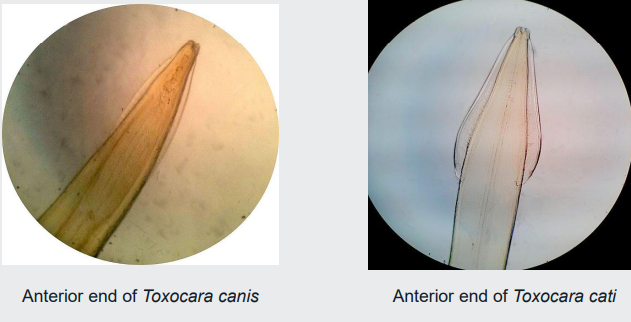
anterior ends
toxocara canis lifecycle
PPP:
larval ingestion of eggs or larvae = 4-5 weeks
Pre-natal infection = 2-3 weeks
Also infection by paratenic hosts which ingest eggs, L3 travel to tissues where they encyst
Eggs take 11-14 days to embryonate at 25-30oC
TP infection from 42nd day pregnancy
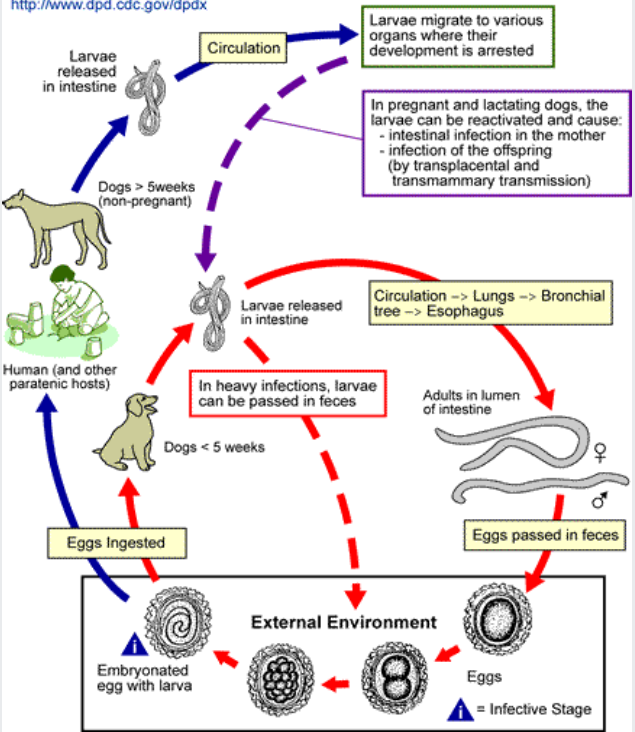
paratenic host
Couple of definitions:
1. Host in which no development of the parasite occurs
2. Hosts which are not necessary for the parasite’s life cycle but can act as a reservoir of infection
differences for T.cati and tx.leonina
T. cati
• Paratenic hosts (rodents, earthworms, birds etc.) very important
• Migratory if eggs ingested, non-migratory after transmammary infection or paratenic host ingestion
• Eggs hatch in stomach, migrate via liver, lungs, trachea back to stomach
• No prenatal infection
• PPP = 8 weeks
Tx. leonina
• Following ingestion, larvae enter intestinal wall, remain there for 2 weeks
• No migration of larvae
• PPP = 10-11 weeks
clinical consequences
All species
• Mild to moderate infections – no clinical signs
• May be potbelly, failure to thrive, vomiting,
diarrhoea, particularly in puppies & kittens
• Due to absorption of nutrients & damage to
the intestine lining
• Obstruction of intestinal lumen or
intussusception
T. canis & T. cati
• Larval migration → respiratory signs, nasal
discharge, pneumonia

diagnosis
• Eggs in faeces
• T. canis – pneumonic signs within 2 weeks of birth
• Coproantigen tests – immature & adult worms
• Small finger-like process on the tail of male T. canis but not Tx. leonina
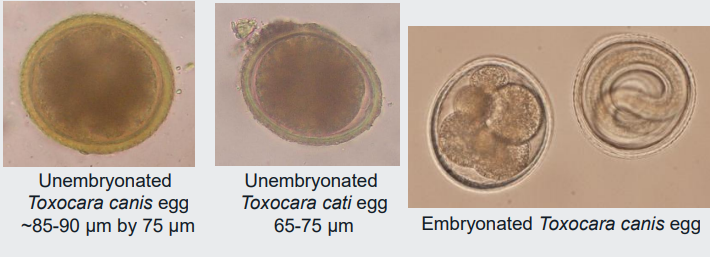
epidemiology - T.canis
Widespread due to:
• Female worms very fecund
• Eggs resistant to climatic extremes, can survive for years
• Wildlife reservoir
• Reservoir of infection in bitches – larvae in tissue not susceptible to
anthelmintics
• Highest infection rates in dogs <6 months, fewest worms in adults
• Prevalence can be 5-10% in adult dogs – continued shedding
epidemiology of t.cati and tx.leonina
T. cati
• Reservoir – larvae in tissue of dam & in paratenic hosts
• Patent infections more common in young cats
• Prevalence 10-20% in adult cats – continued shedding through life
of cat
Tx. leonina
• Infection mainly through eggs, but can occur through paratenic
hosts
toxocara in people
• Human exposure measured by antibody ELISA
• Seroprevalences of up to 86% (2-31% in Europe)
• Four clinical conditions (mainly in children):
1) Visceral larval migrans
2) Ocular toxocariasis – visual impairment
3) Covert toxocariasis
4) Cerebral toxocariasis
• Estimated that 50-60 clinical cases in Britain per year (??)

hookworms
Number of hookworm species infect dogs & cats:
Ancylostoma caninum, A. ceylanicum (Asia) - dog
A. tubaeforme - cat
Uncinaria stenocephala (temperate regions)-dog and cat
A. braziliense (tropical & subtopical regions)
• Worms up to 20 mm long
• Adults in small intestine
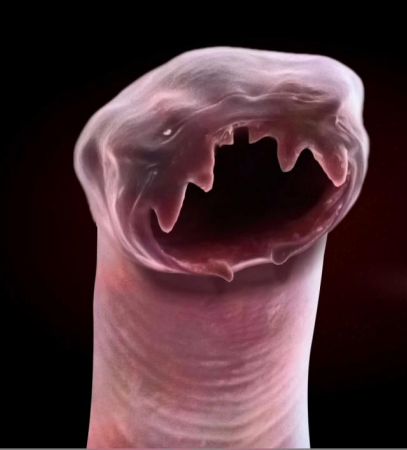
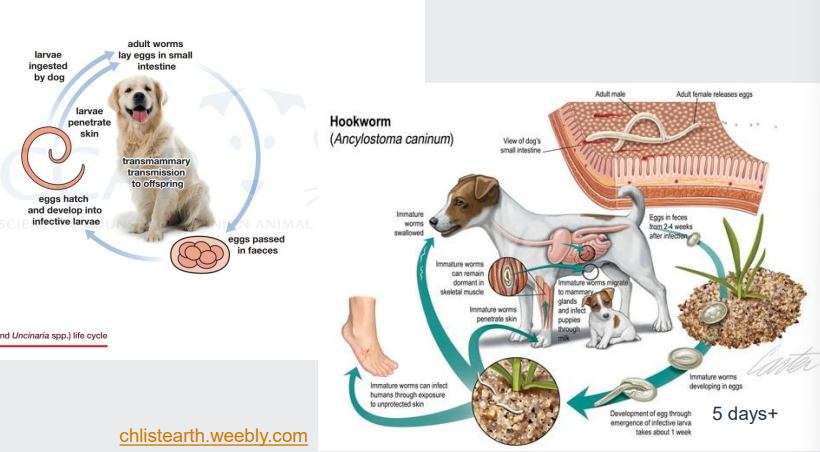
lifecycle
• Ancylostoma caninum and tubaeforme migrate via bloodstream to
the lungs and trachea where swallowed or may go directly to
intestine if larvae ingested
• Transmammary transmission for An. caninum
• Paratenic hosts may play a role in transmission
• Prepatent period 14-21 days
clinical consequences
• Diarrhoea, weight loss, hypoalbuminaemia and anaemia, may be acute or
chronic signs
• Ancylostoma caninum most serious
• Uncinaria stenocephala not a voracious blood-feeder but can cause protein
leakage into the gut
• Disease most common in younger animals
epidemiology and diagnosis
• Uncinaria stenocephala & A. tubaeforme more common in the
UK, A. caninum sporadic
• Young animals most affected, adults pass eggs in faeces
• Infections more common in animals kept outdoors
• Eggs develop to L3 larvae within 2-9 days, can survive for some
weeks in moist soil away from sunlight
• Diagnosis – clinical signs, haematology, coproantigen tests,
hookworm eggs in faeces
• In pups may be severe signs before eggs in faeces

hookworms in humans
• “Soil-transmitted helminth” (neglected tropical disease)
• >170 million people infected worldwide
• Associated with poor sanitation & hygiene
• Anaemia, abdominal pain, wasting & stunting in children

zoonotic hookworms
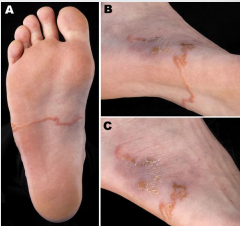
• Canine & feline hookworms infect humans → cutaneous larval migrans (particularly A. braziliense)
• Molecular analysis → patent A. ceylanicum & A. caninum infections in humans are common in Asia

dipylidium caninum

dipylidium caninum
• Adult worms – non-pathogenic
• Shed segments may cause anal discomfort & itching
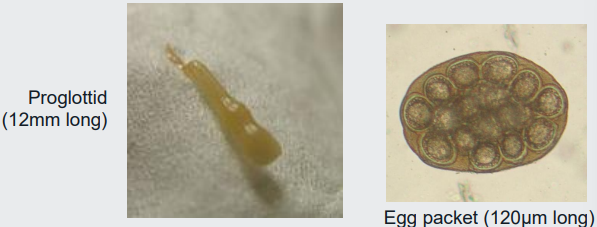
• Diagnosis – presence of segment (proglottid) on coat around peritoneum, can
break open & see egg packets under a microscope
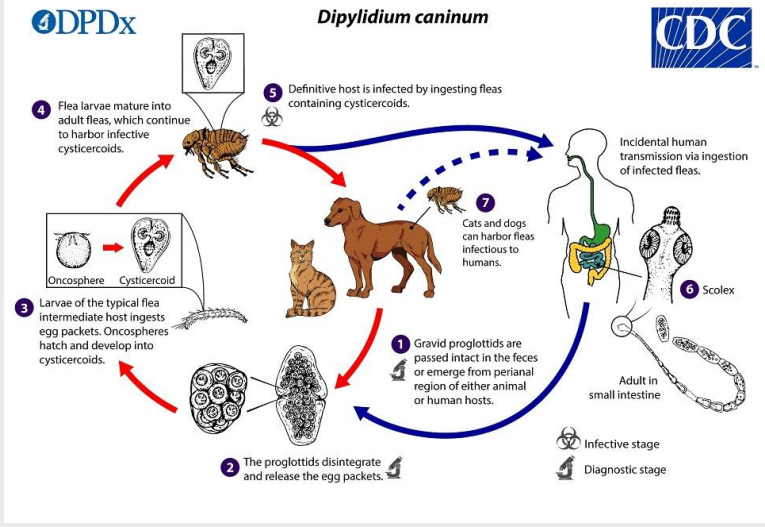
• Very common – requires presence of adult fleas or biting lice for transmission
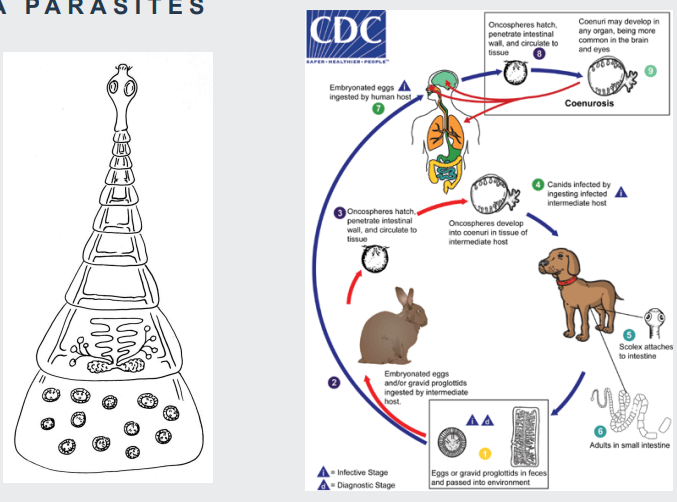
taenia parasites
taenia parasites

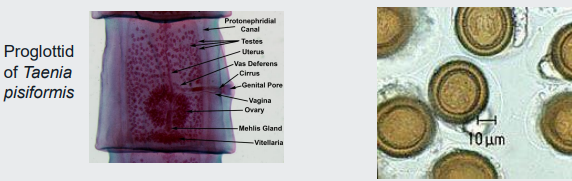
taenia in dogs and cats
• Infections generally asymptomatic
• Heavy infections – gut problems
• Diagnosis – presence of tapeworm segments in perianal area or proglottids, or eggs in faeces
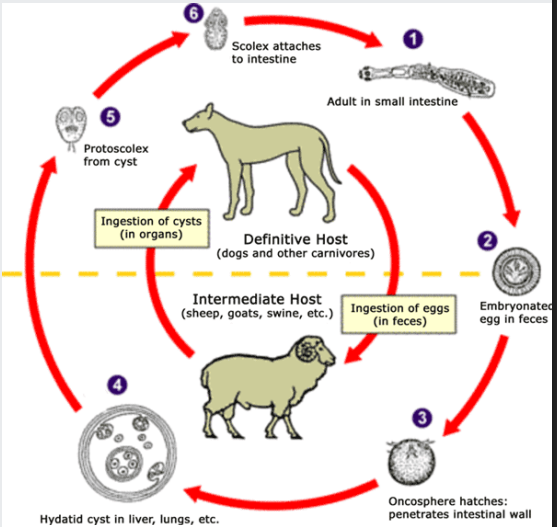
echniococcus
• Cestode parasite
• Two main species: Echinococcus granulosus and E. multilocularis
• E. granulosus - Worldwide distribution
• E. multilocularis - North America, Europe, Siberia and China (subartic)
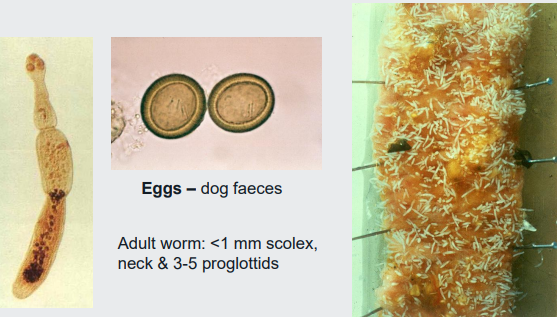
morphology
echinococcuss in definitive hosts
• Adult tapeworm causes little pathogenesis
• Can be 1000s of adults in canid without clinical signs
Diagnosis
• Finding proglottids and eggs in faeces can be difficult
• Copro-antigen ELISA
• Copro-PCR
• Observation of adult worms on necropsy
consdierations in control
Can I prevent transmission/reproduction?
• Prevent environmental contamination
• Prevent exposure to vector
• Prevent ingestion of infective stage
• Preventative dewormer
control of toxocara and hookworm
• Cannot eliminate infection, only reduce burden and prevent transmission to people
• Deworming of pets – risk-based approach and/or based on diagnosis (FECs)
• Picking up dog faeces
• Good hand hygiene
• Covering of sandpits
• Stray cat control?
• NB anthelmintic resistance in An. caninum is emerging in USA, Canada, Australia and Brazil

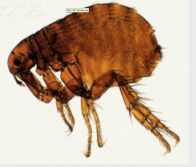
control of fleas and dipylidium
REVISION
• Treat animals with adulticide, may need to repeat at intervals
• Hoover everywhere, wash bedding, grooming equipment etc >60oC, can use
household chemical treatments if necessary (don’t overuse)
• Growth regulators and inhibitors, environmental insecticides targeting eggs,
larvae & pupae
• Treat in-contact animals, other pets in same household
control of echinococcus
• Regular treatment (praziquantel) in endemic areas
• Deworming frequency dependent on hunting/feeding
habits
• Found at meat inspection in abattoirs - risk based
assessment
• Prevention of access to offal/carcasses
• Vet must treat dog coming into Great Britain with
praziquantel or equivalent treatment effective against E.
multilocularis

responsible use of parasiticides
See “Parasitic Skin Diseases – II” lecture for details of the 5-point plan
RCVS guidance from Sept 2023:
“…before prescribing POM-Vs, you will have to carry out a clinical assessment.
You must always perform a physical examination in the following circumstances:
…when prescribing antibiotics, antifungals, antiparasitics or antivirals (unless
there are exceptional circumstances)….”
POM-Vs = prescription only veterinary medicines
risk-based approach to deworming
Factors to consider:
• Season & geography
• Age, pregnancy
• Multi-pet households
• Pet lifestyle – outside/inside, hunting/feeding
• Pet factors (fur length, size, breed)
But also
• Potential environmental impact of parasiticides, particularly spot-ons
• Public-health impact of parasite – zoonotic risk
summary
• Roundworms and tapeworms
• Can cause abdominal pathology and anaemia
• Toxocara spp. and canine hookworms are zoonoses
• Diagnosis – helminth eggs in faeces & coproantigen tests
• Risk-based approach to control
• Control options include anthelmintic treatment, flea control, disposal of
faeces & control access to ruminant carcasses, rodent control