Organic Chemistry Reagents and Reactions
 Call Kai
 Learn
Learn Practice Test
 Spaced Repetition
 Match
Match Flashcards
 Knowt Play
1/73

There's no tags or description
Looks like no tags are added yet.
Name | Mastery | Learn | Test | Matching | Spaced | Call with Kai | Chat |
|---|
No analytics yet
Send a link to your students to track their progress
74 Terms
ALKENE + HBr/X → ?
Markovnikov alkyl bromide/halide (Br goes to more substituted carbon)

ALKENE + HBr, ROOR → ?
Anti-Markovnikov alkyl bromide

ALKENE + H3O+/H2O,H2SO4/H2O,H+→ ?
Markovnikov alcohol; carbocation rearrangements possible

ALKENE + 1) Hg(OAc)2, H2O 2) NaBH4 → ?
Markovnikov alcohol; NO rearrangement

ALKENE + 1) BH3, THF 2) H2O2, OH− → ?
Anti-Markovnikov alcohol; SYN addition
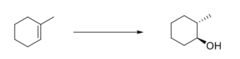
ALKENE + Br2 → ?
Vicinal dibromide; ANTI addition

ALKENE + Br2, H2O → ?
Halohydrin; ANTI addition; OH goes to more substituted carbon

ALKENE + mCPBA or 1) Br2, H2O 2) NaOH→ ?
Epoxide

ALKENE + 1) RCO3H 2) H3O+ → ?
ANTI diol

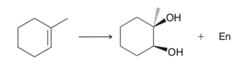
ALKENE + OsO4, NMO → ?
SYN diol
ALKENE + H2, Pd → ?
Alkane; hydrogenation

ALKENE + 1) O3 2) DMS → ?
Aldehydes and/or ketones from oxidative cleavage of C=C

ALKENE + 1) Br2 2) excess NaNH2 → ?
Alkyne via double elimination

ALKENE + CH2I2, Zn(Cu) → ?
Cyclopropane; Simmons-Smith reaction

ALKYNE + excess H2, Pd → ?
Alkane; complete hydrogenation

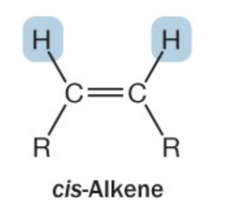
ALKYNE + H2, Lindlar catalyst → ?
CIS (Z) alkene; SYN addition
ALKYNE + Na, NH3(l) → ?
TRANS (E) alkene; ANTI reduction

ALKYNE + 1 equivalent HBr → ?
Vinyl bromide; Markovnikov addition

ALKYNE + 2 equivalents HX → ?
Geminal dihalide; both X atoms end up on same carbon

ALKYNE + 1 equivalent X2 → ?
Dialkylalkene

ALKYNE + 2 equivalents X2 → ?
Tetrahalide

ALKYNE + HgSO4, H2SO4, H2O or Hg(OAc)2,H3O+ → ?
Ketone; Markovnikov hydration

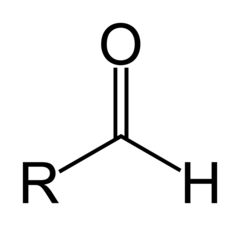
TERMINAL ALKYNE + 1) R2BH 2) H2O2, OH−, H2O → ?
Aldehyde; anti-Markovnikov hydration
ALKYNE + O3, H2O → ?
Carboxylic acids from oxidative cleavage; terminal carbon can become CO2

TERMINAL ALKYNE + 1) NaNH2 2) primary R-X → ?
Longer alkyne; NEW C-C bond formed

ALCOHOL + HBr → ?
Alkyl bromide (tertiary = Sn1; primary/secondary = Sn2)

ALCOHOL + HCl, ZnCl2 → ?
Alkyl chloride (primary, secondary, tertiary); Lucas reagent

ALCOHOL + SOCl2, pyridine → ?
Alkyl chloride (primary and secondary)

ALCOHOL + PBr3 → ?
Alkyl bromide (R-Br)

ALCOHOL + TsCl, pyridine → ?
Alkyl tosylate (R-OTs); converts OH into a good leaving group

ALCOHOL + conc. H2SO4, heat → ?
Alkene via dehydration

ALCOHOL + 1) TsCl, pyridine 2) strong base → ?
Alkene via E2 elimination
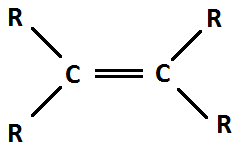
1° ALCOHOL + PCC, CH2Cl2 → ?
Aldehyde; oxidation stops at aldehyde

2° ALCOHOL + PCC, CH2Cl2 → ?
Ketone

1° ALCOHOL + DMP (Dess-Martin periodinane), CH2Cl2 → ?
Aldehyde

2° ALCOHOL + DMP (Dess-Martin periodinane), CH2Cl2 → ?
Ketone

1° ALCOHOL + SWERN: 1) (COCl)2, DMSO, −78 °C 2) Et3N → ?
Aldehyde

2° ALCOHOL + SWERN ( 1) (COCl)2, DMSO, −78 °C 2) Et3N) → ?
Ketone

1° ALCOHOL + JONES: CrO3, H2SO4, H2O (acetone solvent) → ?
Carboxylic acid; strong oxidation

2° ALCOHOL + JONES: CrO3, H2SO4, H2O (acetone solvent) → ?
Ketone
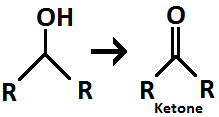
1° ALCOHOL + CHROMIC ACID: H2CrO4, H2O → ?
Carboxylic acid

2° ALCOHOL + CHROMIC ACID: H2CrO4, H2O → ?
Ketone

ALCOHOL + TMSCl, Et3N → ?
TMS-protected alcohol (R-OTMS)

R-OTMS + TBAF → ?
Deprotected alcohol (R-OH)

R-OTMS + H3O+ → ?
Deprotected alcohol (R-OH)

ALDEHYDE + NaBH4 → ?
1° alcohol

KETONE + NaBH4 → ?
2° alcohol

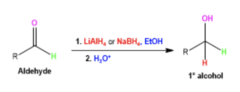
ALDEHYDE + 1) LiAlH4 2) H3O+ → ?
1° alcohol
KETONE + 1) LiAlH4 2) H3O+ → ?
2° alcohol

ALDEHYDE + 1) RMgX 2) H3O+ → ?
2° alcohol + NEW C-C bond; formaldehyde is the exception

FORMALDEHYDE + 1) RMgX 2) H3O+ → ?
1° alcohol + NEW C-C bond

KETONE + 1) RMgX 2) H3O+ → ?
3° alcohol + NEW C-C bond

ESTER + 1) LiAlH4 2) H3O+ → ?
Primary alcohol(s); ester is strongly reduced

CARBOXYLIC ACID + 1) LiAlH4 2) H3O+ → ?
Primary alcohol

ESTER + 1) excess RMgX 2) H3O+ → ?
3° alcohol + TWO additions of the Grignard reagent

ALKANE + Br2, hν → ?
Alkyl bromide + HBr via free-radical bromination
initiation step: Br2 + hν → 2 Br•; light causes homolytic cleavage of the Br-Br bond
propagation step 1: Br• + R-H → HBr + R•; bromine radical removes H to create a carbon radical
propagation step 2: R• + Br2 → R-Br + Br•; carbon radical forms the C-Br bond and regenerates Br•
termination step: Two radicals combine; examples include Br• + Br• → Br2, R• + Br• → R-Br, or R• + R• → R-R

ALKANE + Cl2, hν → ?
Alkyl chloride + HCl via free-radical chlorination; less selective than bromination and can give a mixture of products
initiation step: Cl2 + hν → 2 Cl•; light causes homolytic cleavage of the Cl-Cl bond
propagation step 1: Cl• + R-H → HCl + R•; chlorine radical removes H to create a carbon radical
propagation step 2: R• + Cl2 → R-Cl + Cl•; carbon radical forms the C-Cl bond and regenerates Cl•
termination step: Two radicals combine; examples include Cl• + Cl• → Cl2, R• + Cl• → R-Cl, or R• + R• → R-R

ALLYLIC C-H + NBS, hν → ?
Allylic bromide; Br replaces an allylic H while the alkene remains

BENZYLIC C-H + NBS, hν → ?
Benzylic bromide; Br replaces a benzylic H while the aromatic ring remains

homolytic cleavage

addition to pi bond

hydrogen abstraction

halogen abstraction

elimination

coupling

Why is bromination more selective than chlorination?
the first step of bromination is endothermic, so it occurs much slower. The TS is closer to intermediates in energy, so the stability of the intermediate is more important in bromination than chlorination
radical scavengers/inhibitors
molecules that undergo hydrogen abstraction to find a radical that would otherwise initiate autooxidation; used as antioxidants
Can H2 Pt be used as a reducer?
Yes, but high heat required so not frequently; also will protonate any double bonds
when an unsymmetrical molecule is produced through reduction, what is the stereochemistry of the product?
racemic
why do we need to use protecting groups?
grignard reagents are good bases so they can deprotonate any alcohols present if they aren’t protected
phenol + chromic acid

what types of alkyl halides can williamson ether synthesis occur on?
primary and methyl only bc sn2
acid promoted cleavage: tertiary r group mech
Sn1
acid promoted cleavage: aryl/vinyl mech
substitution does not occur; the -OR will become an alcohol and the R group will bind to halide (RX)