CFA Vol-5 Equity Valuation
 Call Kai
 Learn
Learn Practice Test
 Spaced Repetition
 Match
Match Flashcards
 Knowt Play
1/46

There's no tags or description
Looks like no tags are added yet.
Name | Mastery | Learn | Test | Matching | Spaced | Call with Kai | Chat |
|---|
No analytics yet
Send a link to your students to track their progress
47 Terms
Going-Concern Value
Şirketin öngörülebilir gelecekte faaliyetlerine devam edeceği, mal ve hizmet üretmeye devam ederek varlıklarını değer maksimizasyonu yapacak şekilde kullanacağı varsayımı altındaki değeridir.
Fair Market Value
Bilgilendirilmiş, istekli ve üzerinde herhangi bir zorlama bulunmayan bir alıcı ile satıcı arasında varlığın el değiştireceği fiyattır.
Conglomerate discount reasons (three)
a) inefficiency of internal capital markets (i.e., companies’ allocation of investment capital among divisions does not maximize overall shareholder value);
b) endogenous factors (i.e., poorly performing companies tend to expand by making acquisitions in unrelated businesses);
c) research measurement errors
Dividends grow indefinitely at a constant rate.

P0/E1 (price future earnings ratio)
(burada b yi alirken current degil expected ratioyu almaliyiz)

P0/E0 (price current earning ratio)
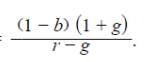
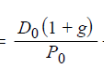
r from Gordon growth ratio
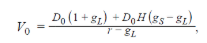
The value of the dividend stream in the H-model is
H= Half life in years of high growth period
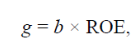
The expression to calculate the sustainable growth rate is (G, ROE ve b li formul)
FCFF (Free Cash flow to the firm) (from net income)
= Net income available to common shareholders (NI)
Plus: Net noncash charges (NCC)
Plus: Interest expense × ( 1 − Tax rate)
Less: Investment in fixed capital (FCInv)
Less: Investment in working capital (WCInv).

FCFF (Free Cash flow to the firm) (from cash flow)
= Cash flow from operations
Plus: Interest expense × ( 1 − Tax rate)
Less: Investment in fixed capital,
IFRS and US GAAP treatment of interest and dividends:
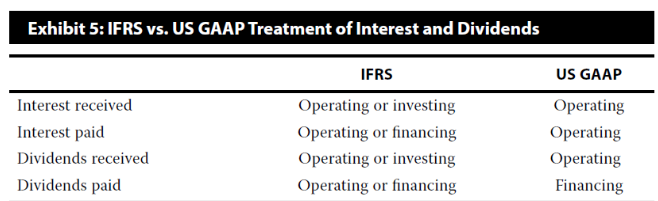
COMPUTING FCFE FROM FCFF
= Free cash flow to the firm
Less : Interest expense × ( 1 − Tax rate)
Plus : Net borrowing,
COMPUTING FCFE FROM Net Income

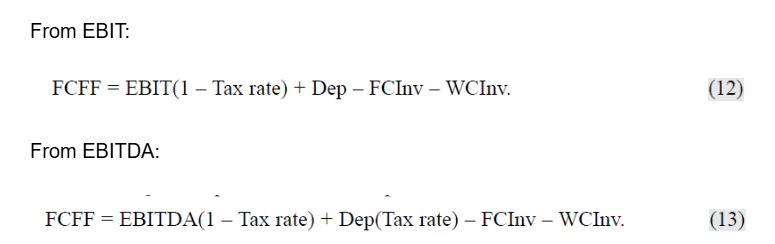
FINDING FCFF FROM EBITA and EBITDA
Pairs trading
involves buying an undervalued stock and shorting an overvalued stock in the same industry.
P/E‑to-growth (PEG) ratio
The PEG ratio is calculated as the stock’s P/E divided by the expected earnings growth rate (in percentage terms)
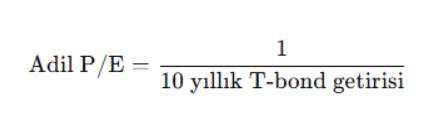
Adil (justified) P/E
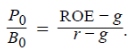
The expression for the justified P/B based on the most recent book value (B0)
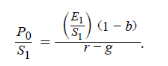
In terms of the Gordon growth model, we can state P/S as
where E1/S1 is the business’s forward-looking profit margin
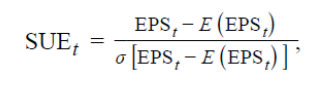
Standardized unexpected earnings (SUE). The SUE measure is defined as:
The equity charge:
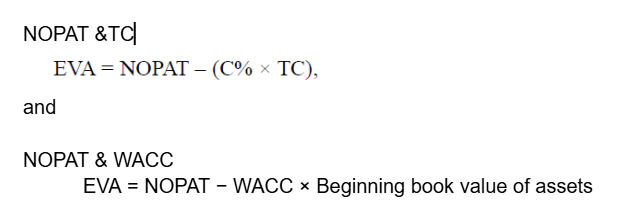
NOPAT & TC (Total Capital)
NOPAT (Net Operating Profit After Taxes): Düzeltilmiş faaliyet kârından vergiler düşüldükten sonra kalan net faaliyet kârı.
C% (Cost of Capital): Şirketin ağırlıklı ortalama sermaye maliyeti (WACC).
TC (Total Capital / Toplam Sermaye): Şirketin faaliyetlerine yatırılmış toplam sermaye (Borç + Özkaynak).
Mantık: Şirketin yarattığı net faaliyet kârından, o sermayeyi kullanmanın toplam maliyetini (C%×TC) çıkarır.
NOPAT & WACC (Bilanço/Varlık Odaklı Gösterim)
WACC: Ağırlıklı Ortalama Sermaye Maliyeti.
Beginning book value of assets: Dönem başı toplam varlıkların defter değeri.
Mantık: Bir önceki formülün aynısıdır; sadece sermaye maliyeti kalemi doğrudan WACCXDönem Başı Varlıklar olarak ifade edilmiştir.

One example of several competing commercial implementations of the residualincome concept is economic value added EVA (formula NOPAT &TC and NOPAT % WACC)?
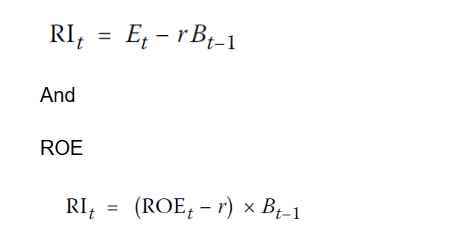
RI (Residual Income / Kalıntı Gelir) Formülleri
Equity (Net Kâr Odaklı Gösterim)
RI: t dönemindeki Kalıntı Gelir.
(Net Income / Earnings): dönemindeki Net Kâr.
(Cost of Equity): Özkaynak maliyeti (Gerekli getiri oranı).
B_{t-1}(Beginning Book Value of Equity): döneminin başındaki (yani t−1 sonundaki) özkaynak defter değeri.
Mantık: Hissedarlara kalan Net Kârdan (Et), hissedarların yatırdığı sermaye karşılığında beklediği asgari getiriyi (rBt−1) çıkarır.
ROE (Özkaynak Karlılığı Odaklı Gösterim)
ROE (Return on Equity): t dönemindeki Özkaynak Karlılığı
r: Özkaynak maliyeti.
B_{t-1}</strong></span>Do¨nembas\cıo¨zkaynakdefterdeg˘eri.</p></li><li><p><strong>Mantık:</strong>I˙lk<span>RI formülünde E_t</span>yerine<span>\text{ROE}_t \times B_{t-1}</span>yazılarakeldeedilir.S\cirketino¨zkaynakkarlılıg˘ı(<span>\text{ROE}</span>),hissedarınbekledig˘igetiriden(<span>r$) yüksek olduğu sürece pozitif kalıntı gelir yarattığını gösterir.
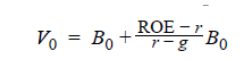
According to the residual income model, the intrinsic value of common stock
can be expressed as follows:
V0 = value of a share of stock today (t = 0)
B0 = current per-share book value of equity
Bt = expected per-share book value of equity at any time t
r = required rate of return on equity investment (cost of equity)
Et = expected EPS for period t
RIt = expected per-share residual income, equal to Et – rBt–1

The single-stage (constant-growth) residual income model
ROE > Maliyet ise: Şirket, defter değerinin (Book Value) üzerinde bir değerle işlem görür.
ROE = Maliyet ise: Şirketin değeri defter değerine eşittir.
ROE < Maliyet ise: Şirket "Artık Kazanç" (Residual Income) yaratamaz ve defter değerinin altında bir değerle fiyatlanır (bu durumda varlıkların tasfiyesi gündeme gelebilir).
Market Value added
Market value added = Market value of capital − Total capital
A discount for lack of control (DLOC)
involves a deduction from the pro rata share of 100% of the value of an equity interest to reflect the absence of some or all powers of control.

A discount for lack of marketability (DLOM)
is a deduction from an ownership interest’s value to reflect the relative absence (compared with publicly traded companies) of a liquid market for a company’s shares.
The build-up method is the
sum of the equity risk premium (6%), small-cap stock premium (2%), company-specific premium (1.5%), and industry risk premium (1%), or 10.5%.
Reinvestment rate

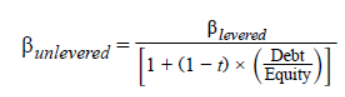
We “unlever” beta as follows.
An absolute valuation model is a model that specifies an asset’s
Intrinsic value
The justified leading P/E
P/E1
(Earning of next year)
P/E hesaplamasinda (basic or dillited EPS)?
Dilluted
The Fed model considers the equity market to be undervalued when the market’s current earnings yield is (greater/lower?) than the 10-year Treasury bond yield.
Greater
The Yardeni model incorporates the consensus xx-year earnings growth rate forecast for the market index, a variable missing in the Fed model.
Five
Harmonic mean formula
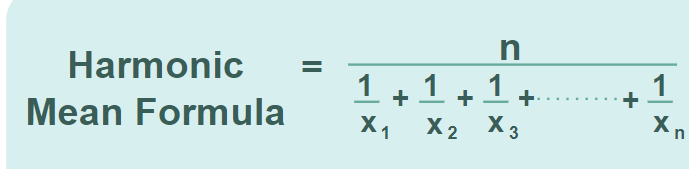
The harmonic mean tends to mitigate the impact of (large/small/both) outliers.
Large
Market value of the firm

Capitalisation rate
WACC - Long term growth
Calculation of H for 8 years
Half-life of the initial higher growth stage (8 x ½ = 4)
Present value of growth opportunities per share (PVGO) formula
where
V0 is the value of the stock
P0 is the price of the stock
E1 is the 1 period forward earnings of the company
PVGO is the Present Value of the Growth Opportunities

Market value added
Market value of the company – Book value of total capital of the company
= (Market value of equity + Market value of debt) – (Book value of equity + Book value of debt)
Lower persistance factore menas higher/lower accruals?
Higher
Finite-horizon multistage residual income model

Expected increase in dividends formula
(Expected earnings × Target payout ratio − Previous dividend) × Adjustment factor