KAAP 447 Strength & Conditioning Exam 1
 Call Kai
 Learn
Learn Practice Test
 Spaced Repetition
 Match
Match Flashcards
 Knowt Play
1/90

There's no tags or description
Looks like no tags are added yet.
91 Terms
Specificity
Method where an athlete is trained in a specific manner to produce a specific adaptation or training outcome
Specificity components
muscles involved, movement patterns, nature of muscle action
SAID principle
Specific adaptation to imposed demands
Concept of SAID
Type of demand dictates type of adaptation
Overload
Assigning to a workout or training regimen of greater intensity than the athletes is accustomed to
When gradual progression of increasing loads is properly applied....
overtraining is avoided and desired training adaptations will occur.
Program Design Variables
Needs Analysis, exercise selection, training frequency, exercise order, training load & repetitions, volume, rest periods
Needs Analysis
Evaluation of the requirements and characteristics of the sport, alongside assessment of the athlete.
Components within Needs Analysis
Physiological/biomechanical profile, common injury sites, position-specific attribute, training status, physical testing & evaluation, primary goal of training.
Beginner (untrained)
2-3 sessions per week
Intermediate (resistance trained)
3-4 sessions per week
Advanced (well resistance trained)
4-7 sessions per week
Offseason frequency
4-6 sessions/week
Preseason frequency
3-4 sessions/week
In-season frequency
1-3 sessions/week
Post season frequency
0-3 sessions/week
Circuit training
circuit of exercises, one exercise to another with 20-30 seconds of rest in between
supersets
two sequentially performed exercises that stress two opposing muscle areas
example of a superset
bicep curl + tricep extension
Compound set
sequentially performing two different exercies for the same muscle group
example of compound set
chest press + push up
Strength training goal
85% or more 1RM/load
6 or less reps
2-6 sets
2-5 min rest
Power single effort training goal
80-90% 1RM/load
1-2 reps
3-5 sets
2-5 min rest
Power multiple effort training goal
75-85% 1 RM/load
3-5 reps
3-5 sets
2-5 min rest
Hypertrophy training goal
67-85% 1RM load
6-12 reps
3-6 sets
30s-1.5 min rest
Muscular endurance training goal
67% or less 1RM load
12 or more reps
2-3 sets
30s or less rest
Volume
total amount of weight lifted in a training session
5- point body contact
Head is placed firmly on the bench or back pad
Shoulders and upper back are placed firmly and evenly on the bench or back pad
Buttocks are placed evenly on the bench or seat
Right foot is flat on the floor
Left foot is flat on the floor
Standing upright position
feet slightly wider than hip-width, heels and balls of feet in contact with floor
Periodization
A theoretical and practical construct that allows for the systematic, sequential and integrative programming of training interventions into mutually dependent periods of time in order to induce specific physiological adapation that underpin performance outcomes
GAS
general adaptation syndrome
three stage response to stress
alarm, resistance, exhaustion
Alarm phase
stimulus is first recognized and performance decreases due to fatigue
Resistance phase
adaptation occurs, system returns to baseline or in most instances elevated above baseline
supercompensation phase
new level of capacity that occurs to response to adaptation in resistance
Overtraining phase
if stressors are too high, performance can be further suppressed and overtraining syndrome can occur
multiyear plan
2-4 years, A four year training plan is quadrennial plan
Annual training plan
1 year, can contain single or multiple macrocycles, is subdivided into various periods of training, including preparatory, competitive, transition, etc.
Macrocycle
several months to a year, some refer to as an annual plan, is divided into preparatory , competitive, and transition periods.
Mesocycle
2-6 weeks, medium-sized training cycle, block of training- most common durations is 4 weeks and consists of microcycles linked together
Training day
1 day that can include multiple training sessions is designed in the context of the particular microcycles its in
Training session
several hours, consists of several hours of training, if workout includes more than 30 mins of rest it would be considered multiple sessions.
Periodization periods
Preparatory period, first transition, competitive period, second transition period
Preparatory period
Off-season,
hypertrophy/strength endurance
Basic strength
Hypertrophy/strength endurance phase
low to moderate intensity
50-75% of 1 RM
High volume
8-20 reps
3-6 sets
Basic Strength
High intensity
80-95% of 1 RM
Moderate to high volume
2-6 reps
2-6 sets
First Transition period
preseason, strength/power phase
Strength/power phase
low to very high intensity
87-95%
30-85% of 1RM
Low volume
2-5 reps
2-5 sets
Competition
In-season, Peaking or maintenance phases
Peaking phase
very high to very low intensity
50% to 93% or more of 1Rm
very low volume
1-3 reps
1-3 sets
Maintenance
moderate to high intensity
85-93% of 1 RM
low to moderate volume
3-6 repetitions
2-5 sets
Second transition period
post season, active rest, recreational activities may not involve resistance training
Triphasic
accumulation, transmutation,realization
Accumulation
Aerobic Endurance, Maximal Strength
30 +/- 5 days
Transmutation
Anaerobic Glycolytic Endurance- 18+/-4 days
Strength Endurance- 15+/- 5 days
Realization
Maximal Speed- 5 +/- 3 days
Athleticism
Incorporates many physical abilities some of which are more amenable to training than others, such abilities may be called components of athletic performance
Agility
considered ability to start, stop and change direction of whole body rapidly
Two factors of agility
speed in changing directions
cognitive factors (like anticipation)
Revised Agility
considered ability to start, stop and change direction of whole body rapidly in response to a sports specific stimulus
Speed
movement distance per unit time and is typically quantified as the time taken to cover a fixed distance.
10 yds- acceleration
40 yds- max speed
Body composition
refers to the relative proportions by weight of fat and lean tissue
Order of testing
1) Nonfatiguing (vertcali jump, sit and reach)
2) Agility (T-Test)
3) Maximum power and strength (1rm bench/power clean)
4) Sprint (40 yard dash)
5) Local Muscular Endurance (pushup, pullup, etc)
6. Fatiguing anaerobic capacity (300 yd shuttle)
7. Aerobic Capacity (1.5 mile run, yo-yo)
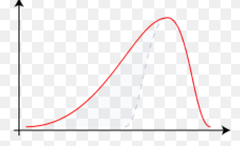
Negative skew plot
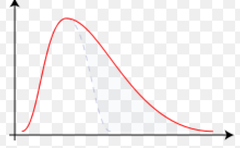
Positive skew
Descriptive statistics
provides a summary of data, is a starting point for analyzing monitoring data
inferential statistics
allows one to use a random sample taken for a population to make inferences about that population
Nominal
used to group athletes into categories
Interval
Equal interval or units, no absolute zero; negatives are possible
ratio
possesses an absolute zero, is based on order and has equal distance between points
Ordinal
referred to as rank order scale, rank scores rather than providing any indication of the magnitude of difference
mean
average of the scores
median
middle score when a set of scores is arrange in increasing order of magnitude
Mode
Score that occurs with the greatest frequence
effect size
most useful statistics for practitioners, good for reporting changes in monitoring variables and highlights the practical significance of any changes (more similar to a field than lab)
Line graphs

bar graph

Histogram

scatter plot

Field test
a test performed outside of a laboratory environment in the athletes natural training or competition setting
Max power/strength test
1 RM squat
Anaerobic/max muscular power test
Vertical jump
Fatiguing anaerobic capacity test
Windgate, 300 yd shuttle
Aerobic capacity test
yo-yo intermittent, 1.5 mile run
Agility test
Pro agility, 505 agility
In a 300 yard shuttle how many times down and back for what distance?
down and back 6 times (12 total single), 300 total yards with 50 yards in one down and back.
microcyle
several days to 2 weeks, small sized training cycle, most common is 1 week, composed of multiple workouts
Aerobic Endurance & Maximal Strength duration
30 +/- 5 days
Anaerobic Glycolytic Endurance duration
18 +/- 4 days
Strength Endurance duration
15 +/- 5 days
Maximal speed duration
5 +/- 3 days