Ch. 8 Memory
 Call Kai
 Learn
 Practice Test
 Spaced Repetition
 Match
 Flashcards
 Knowt Play
1/50

There's no tags or description
Looks like no tags are added yet.
51 Terms
What is memory?
a set of processes used to encode, store, and retrieve information over different periods of time
3 Basic functions of memory
Encoding, Storage, and Retrieval
Encoding
the input of information into the memory system
automatic processing
encoding of details like time, space, frequency, and the meaning of words
usually done unconsciously
Effortful processing
encoding of details that takes time and effort
learning new skills
Semantic encoding
encoding of words and their meanings
attaching meaning to information makes it easier to recall later
Visual encoding
encoding of images
words that create a mental image, such as car, dog and book
Acoustic encoding
encoding of sounds
Serial Position Effect
The order of information during encoding can play a role in how well you remember when retrieving it
more likely to remember the first and last information on a list and forget the middle
Context-Dependent Learning
Easier to recall memories that were created in similar contexts
external environment
location
State-Dependent Learning
Easier to retrieve memories that were created in similar states of consciousness
State of consciousness
Mood/emotion
Storage
Our brains take the encoded information and place it in storage
Sensory memory
Short-term memory
Long-term memory
Atkinson-Shiffrin (AS) Model of Memory
Information passes through three distinct stages in order for it to be stored in long-term memory
Sensory memory——Short-term/working memory——Long-term memory
Sensory Memory
Storage of brief sensory events, such as sights, sounds, and tastes
stored for up to a couple of seconds
If the information isn’t important, it is discarded
if the information is valuable, then it moves into out short-term memory
Short-Term Memory (STM) vs Working Memory
STM is a component of working memory
Working memory is any information you are holding for a short period of time and actually working with or manipulating
Short-Term Memory
A temporary storage system that processes incoming sensory memory
Lasts about 15-30 seconds
Memory consolidation: transfer of short-term memory to long-term memory
Rehearsal
the conscious repetition of information to be remembered
How much info can our STM handle?
research found that people can retain between 5 and 9 items
magic number 7 ± 2
Long-Term Memory (LTM)
The continuous storage of information
No limit
Explicit Memory
memories of facts and events we can consciously remember and recall
Semantic Memory
Knowledge about words, concepts and language; facts
Ex: who was the first Black President of the United States
Episodic Memory
information about events we have personally experienced
the what, where, when of an event
Ex: your 5th birthday party
Implicit Memory
memories that are not part of out consciousness
formed through behaviors, habits, skill practice
Procedural
stores information about how to do things; skills and actions
how to ride a bike, tie your shoelaces
Priming
Stimulus affects response to another stimulus
Emotional Conditioning
Ex: fear of spiders, songs that evoke an emotional response
Retrieval
The act of getting information out of memory storage and back into conscious awareness
Recall
being able to access information without cues
Used for an essay, short answer, fill-in-the-blank
Recognition
being able to identify information that you have previously learned after encountering it again
used for multiple-choice test
Relearning
Learning information that you previously learning
relearning different languages
Amnesia
The loss long-term memory that occurs as the result of disease, physical trauma, or psychological trauma
Retrograde Amnesia
loss of memory for events that occurred prior to the trauma
Lose episodic memory; loss of autobiographical memory
Anterograde Amnesia
inability to remember new information after point of trauma
Hippocampus is usually affected
Causes inability to transfer information from STM to LTM
Construction
formulation of new memories
Reconstruction
process of bringing up old memories
when we retrieve memories, we tend to unintentionally alter and modify them, resulting in inaccuracies and distortions
Suggestibility
The effects of misinformation from external sources that leads to the creation of false memories
plays a role in eyewitness testimonies
Eyewitness Misidentification
Eyewitness testimonies can lead to inaccurate and wrongful convictions
Misinformation effect paradigm
after exposure to additional and possibly inaccurate information, a person may misremember the original event
Forgetting
The loss of information from long-term memory

Retroactive Interference
newer info impacts retrieval of older info

Proactive Interference
older info impacts retrieval of newer info
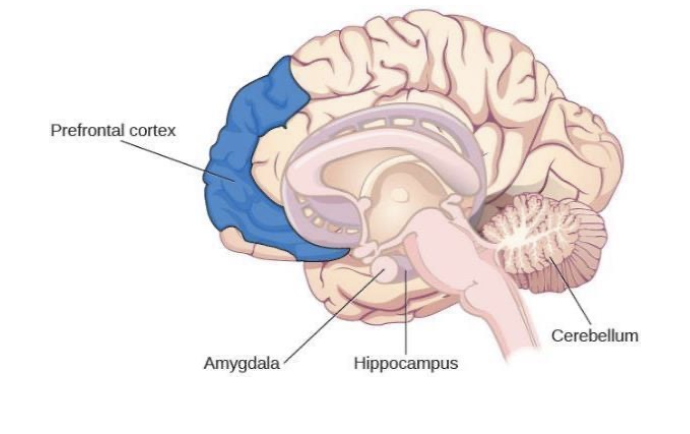
Amygdala
involved in emotion-based memories (fear)
encoding is deeper when an event is emotionally arousing
Flashbulb memory
an exceptionally clear recollection of an important event
Hippocampus
associated with explicit/declarative, recognition, and spatial memories
involved in memory consolidation
Damage to the Hippocampus
Leads to an inability to process new declarative memories
Cerebellum
Plays a role in processing implicit/procedural memories (how to play the piano)
Damage to Cerebellum
Prevents classical conditioning such as eye-blink in response to puff of air
Prefrontal Cortex
Involved in remembering semantic tasks
encoding is associated with left frontal lobe activity
retrieval is from the right frontal lobe
Chunking
grouping information into units
phone numbers
Mnemonics
memory aids that help us organize information for encoding
“PEMDAS”
“ROYGBP" color of rainbow
Elaborative Rehearsal
transferring information from STM to LTM by making that information meaningful in some way
ex: putting it in your own words, connecting it to your life somehow