a level chem: basic organic
 Call Kai
 Learn
 Practice Test
 Spaced Repetition
 Match
 Flashcards
 Knowt Play
1/22

There's no tags or description
Looks like no tags are added yet.
23 Terms
aliphatic
organic compound containing C chains and branches (no benzene rings)
aromatic
organic compound containing one or more benzene rings
alicyclic
organic compound containing C rings (not aromatic/benzene rings)
structural isomers
molecules with the same molecular formula but a different structural formula
stereoisomers
molecules with the structural formula but a different spatial arrangement of atoms
types of structural isomers
chain isomers
position isomers
functional group isomers
chain isomers
isomers that have different carbon chains (e.g. butane and methylpropane)
position isomers
isomers that have the functional group in different positions (e.g. propan-1-ol and propan-2-ol)
functional group isomers
isomers that have a different functional group to each other (aldehydes and ketones, carboxylic acids and esters, alkenes and cycloalkanes)
aldehydes
-al
with the functional group -CH=O
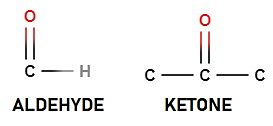
ketones
-one or oxo-
with the functional group -C=O-

alcohols
-ol or hydroxy-
with the functional group -OH
nitrile
-nitrile
with the functional group -C≡N

amine
-amine or amino-
with the functional group -NH2
mechanisms
curly arrows that show the movement of electrons in organic reactions. can be single-headed or double-headed
heterolytic fission
one of the atoms in a covalent molecule takes both electrons to break the covalent bond
homolytic fission
each of the atoms in a covalent molecule take one electron to break the covalent bond
elimination reaction
a small molecule is removed from a larger one
electrophile
an atom/compound that is an electron pair acceptor (attracted to electrons; starts out with missing electrons (cation), then gains electron pair(s))
an electrophilic reaction is a reaction where the attacker is an electrophile
nucleophile
an atom/compound that is an electron pair donor (attracted to positive nuclei; starts out negative, then donates electron pair(s))
a reaction is nucleophilic if the ‘‘attacker’’ is a nucleophile
rules for drawing mechanisms
arrow goes from higher electron density to lower electron density
arrow starts where the electrons come from (lone pair from an atom OR middle of a covalent bond)
arrow ends where the electrons end up (an atom if they become a lone pair OR area between two atoms where it forms a bond OR a single bond where it forms a double bond)
draw the mechanisms in the electrophilic addition reaction between chlorine and ethene to form 1,2-dichloroethane

draw the mechanisms in the nucleophilic substitution reaction between a source of OH- ions and chloromethane to form methanol and a chlorine ion
