ZOO 4343C Salamander/Caecilian Lab Quiz
 Call Kai
 Learn
 Practice Test
 Spaced Repetition
 Match
 Flashcards
 Knowt Play
1/22

There's no tags or description
Looks like no tags are added yet.
23 Terms
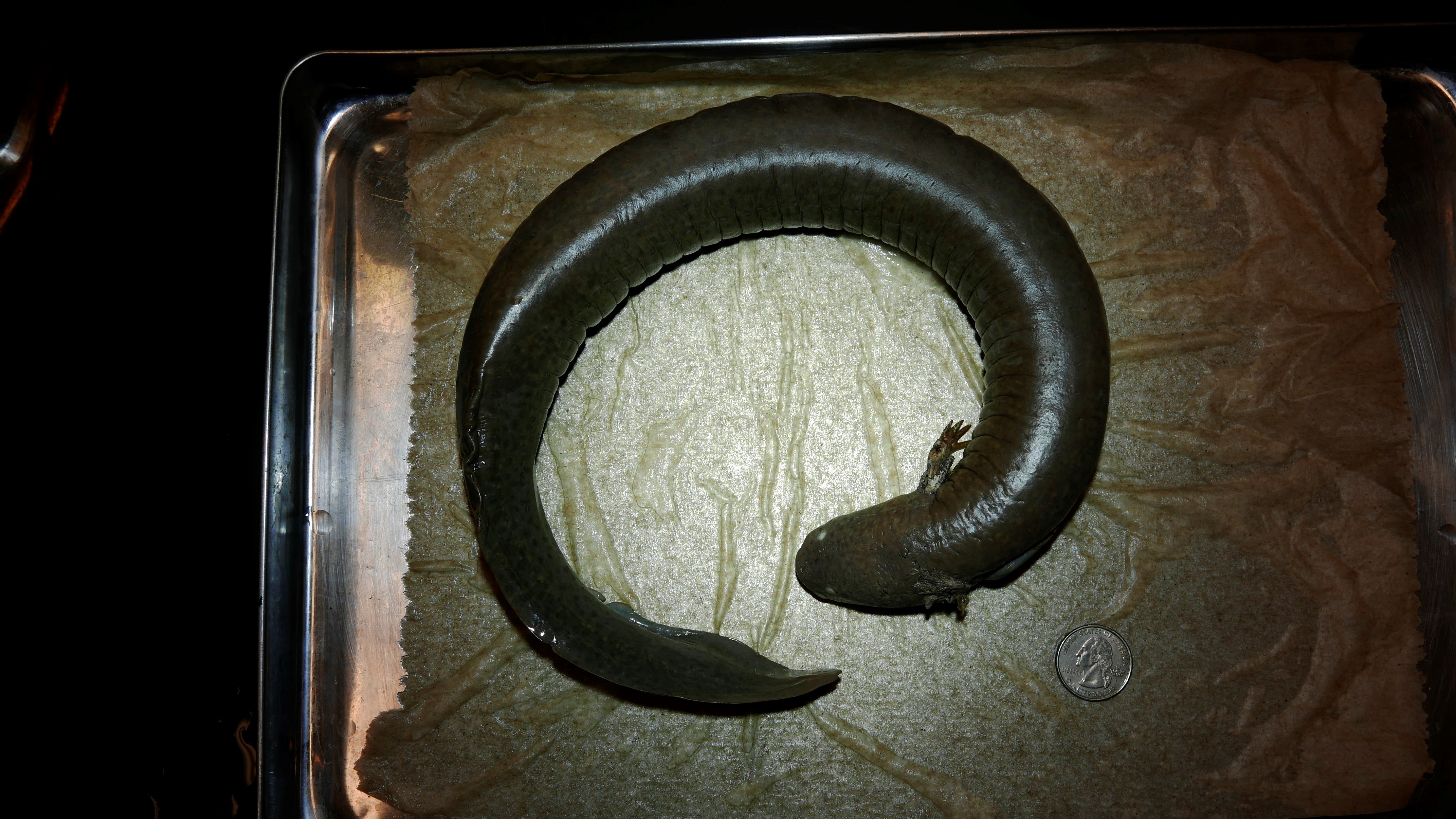
This is Siren lacertina, The Greater Siren, family Sirendiae. It has a long eely body, no rear limbs, and external gills. You can identify this species by its large size (the largest siren) and its four little toes on the front feet.
What is the full scientific name of this salamander and what family is it from?
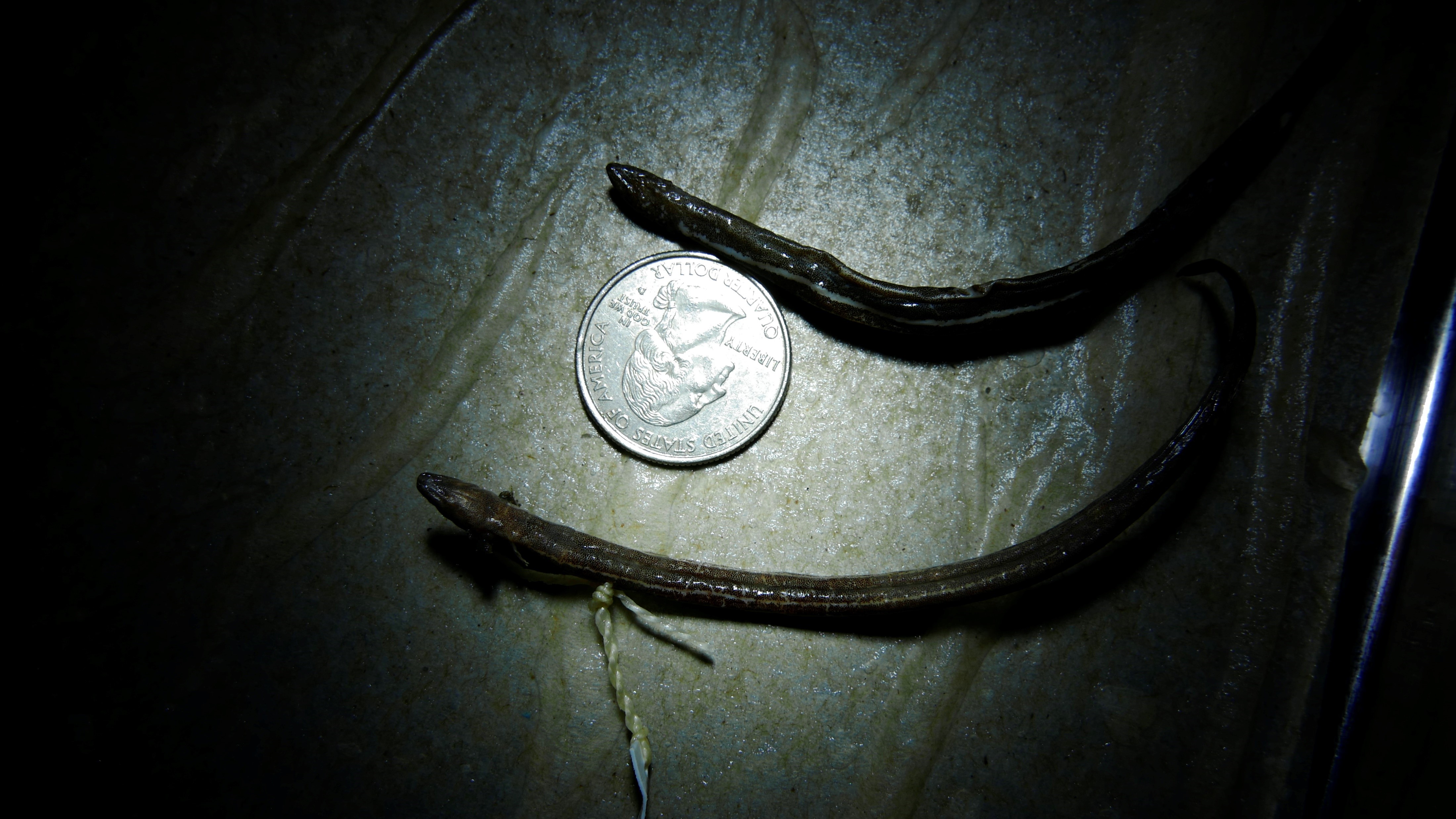
This is Pseudobranchus axanthus, The Southern Dwarf Siren, family Sirenidae. It has an eely body, absent hindlimbs, and feathery external gills. You can identify this species from its very miniscule size and by its three little toes which the Siren genus does not have.
Identify this species and what family its from
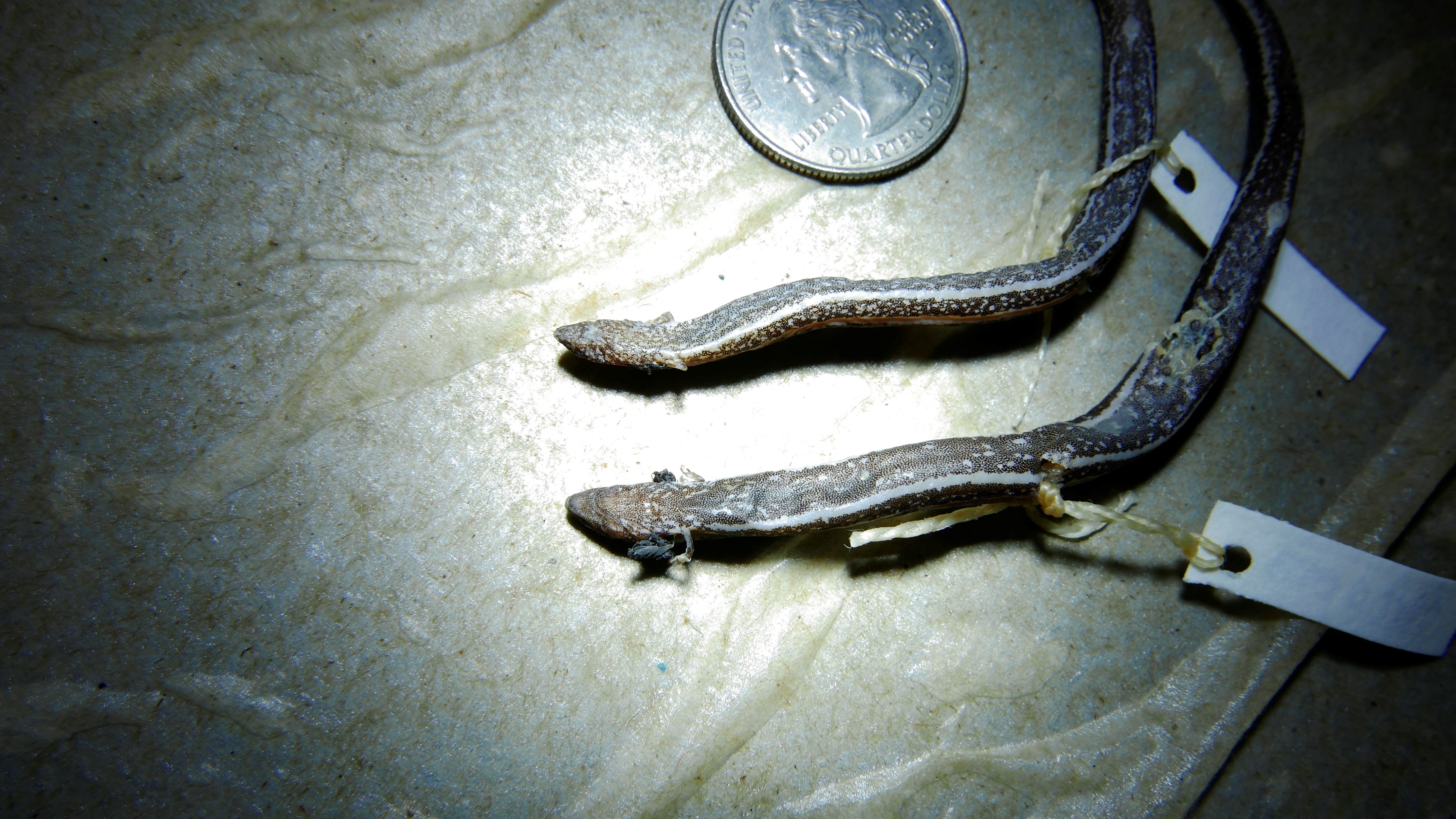
This is Pseudobranchus striatus, The Northern Dwarf Siren, family Sirenidae. You can tell its in the family Sirenidae because of its eely body, absent hindlimbs, and feathery external gills. This species is very similar to the Southern Dwarf Siren with three toes instead of four.
Identify this species and what family its from
This is Siren intermedius, The Lesser Siren, family Sirenidae. It has an eely body, absent hindlimbs, and feathery external gills. The species can be identified because it is of intermediate size between a greater siren and dwarf siren. You can tell it is part of the Siren genus because of its 4 little toes instead of the pseudobranchus's 3 toes.
Identify this species and what family its from
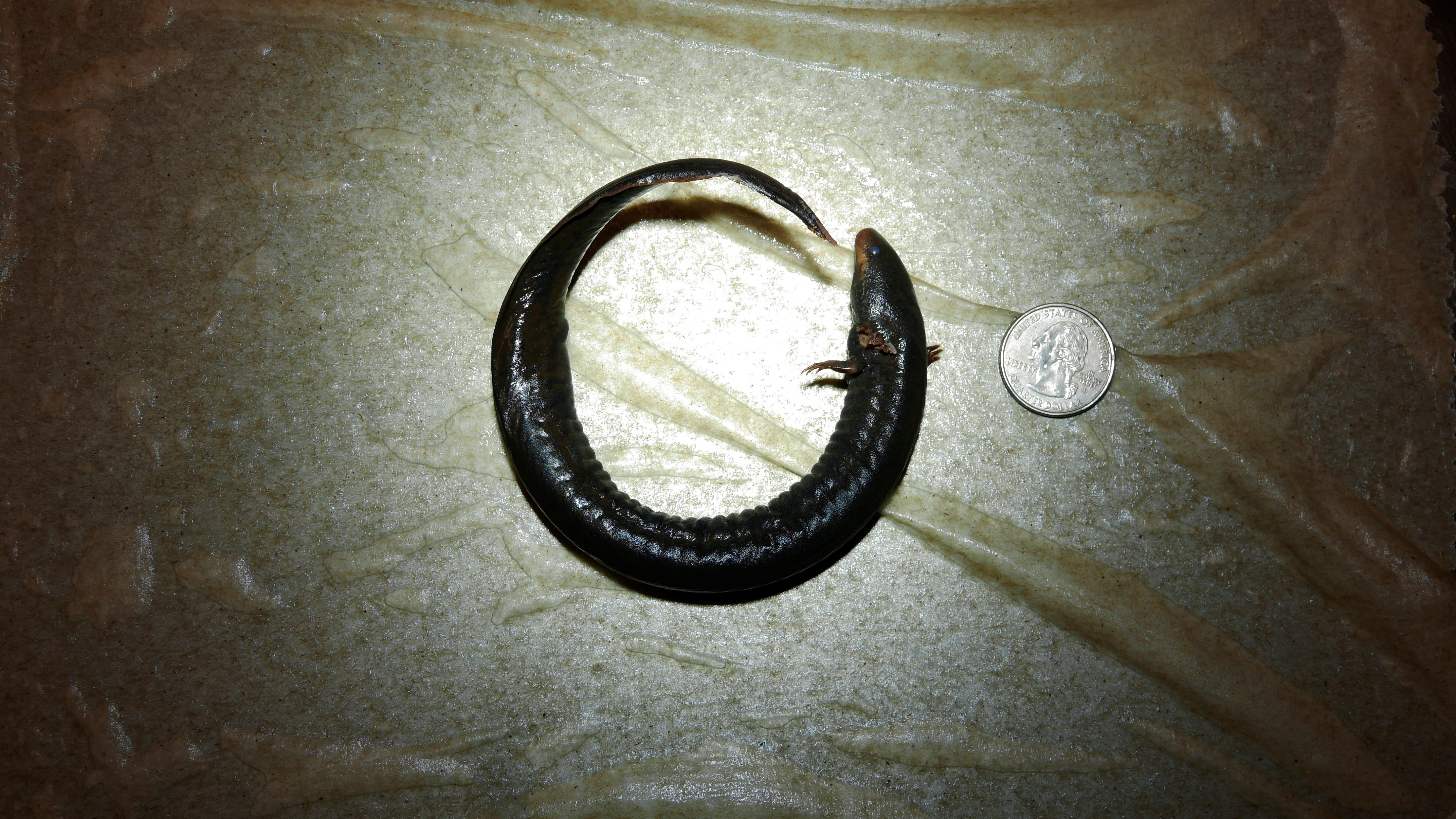
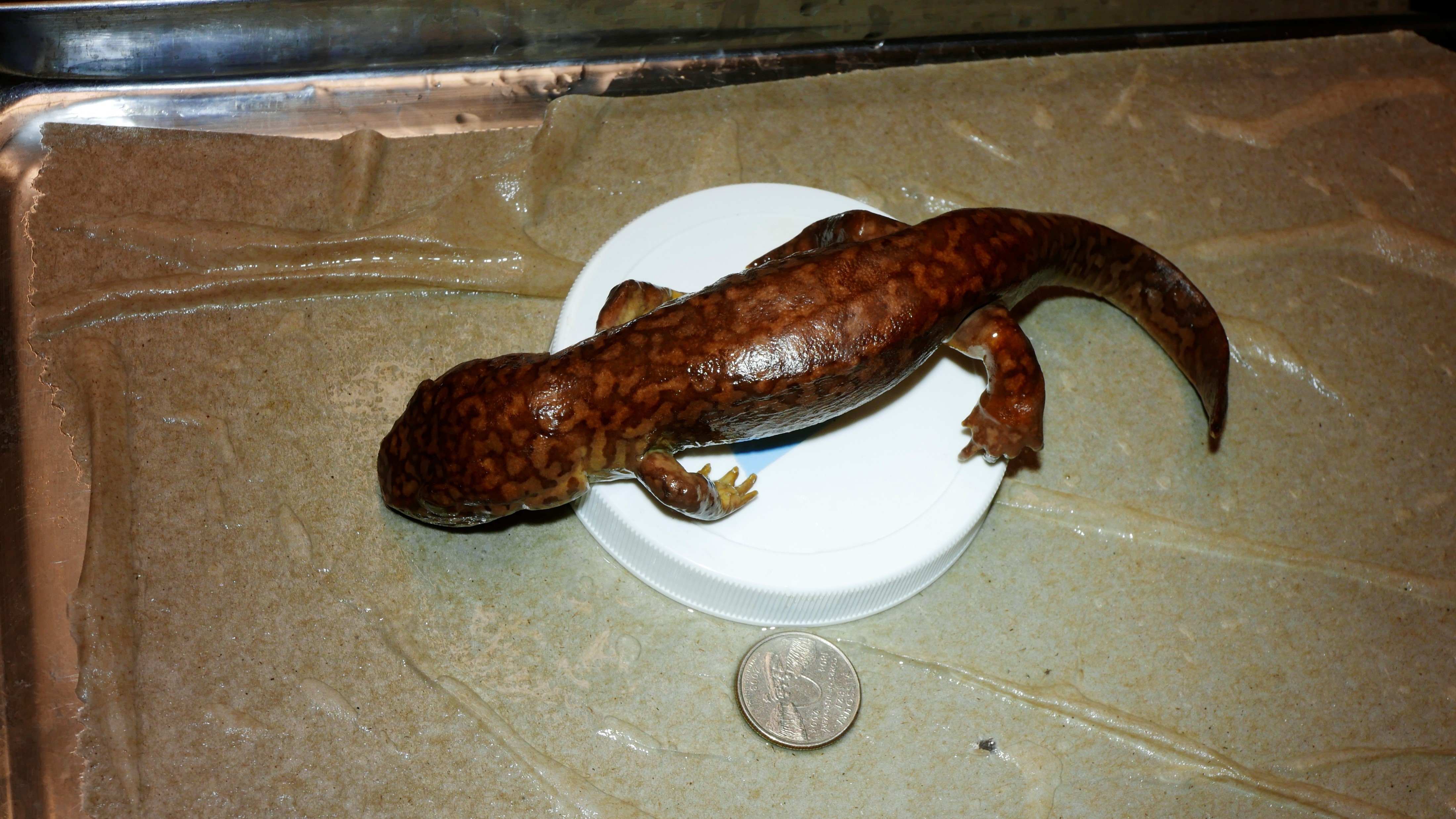
This is Amphiuma means, the Two Toed Amphiuma, family Amphiumidae. It has no external gills and vestigial hindlimbs. This species can be identified by its titular "two toes". It is also really big and has a face reminiscent of a sock puppet.
Identify this species and what family it is from
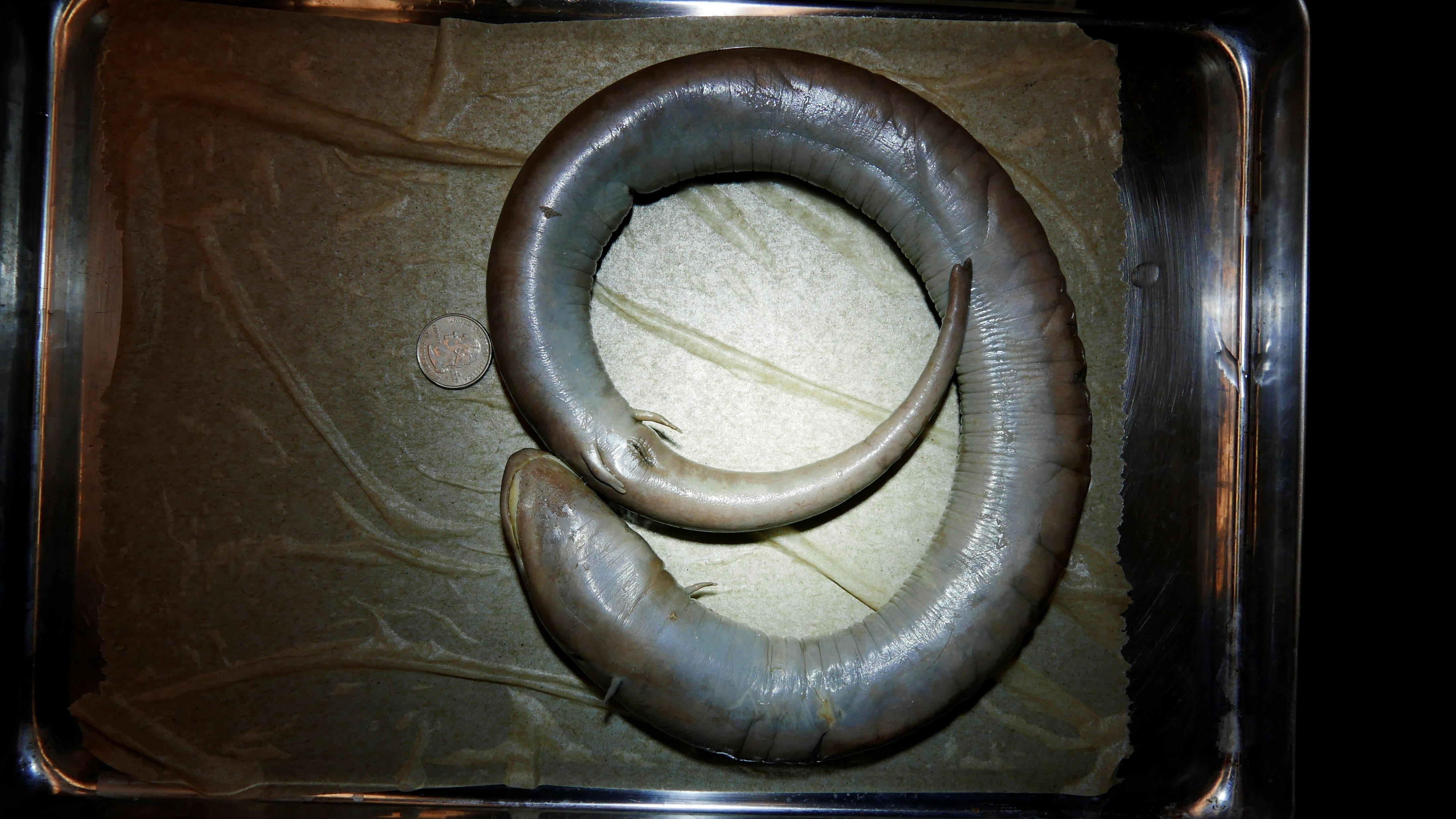
This is Amphiuma pholeter, the One Toed Amphiuma, family Amphiumidae. It has no external gills and vestigial hindlimbs. You can Identify this species by its titular "one toe" and by its significantly reduced size (8.5 in compared to means' 34.5 in).
Identify this species and what family it is from
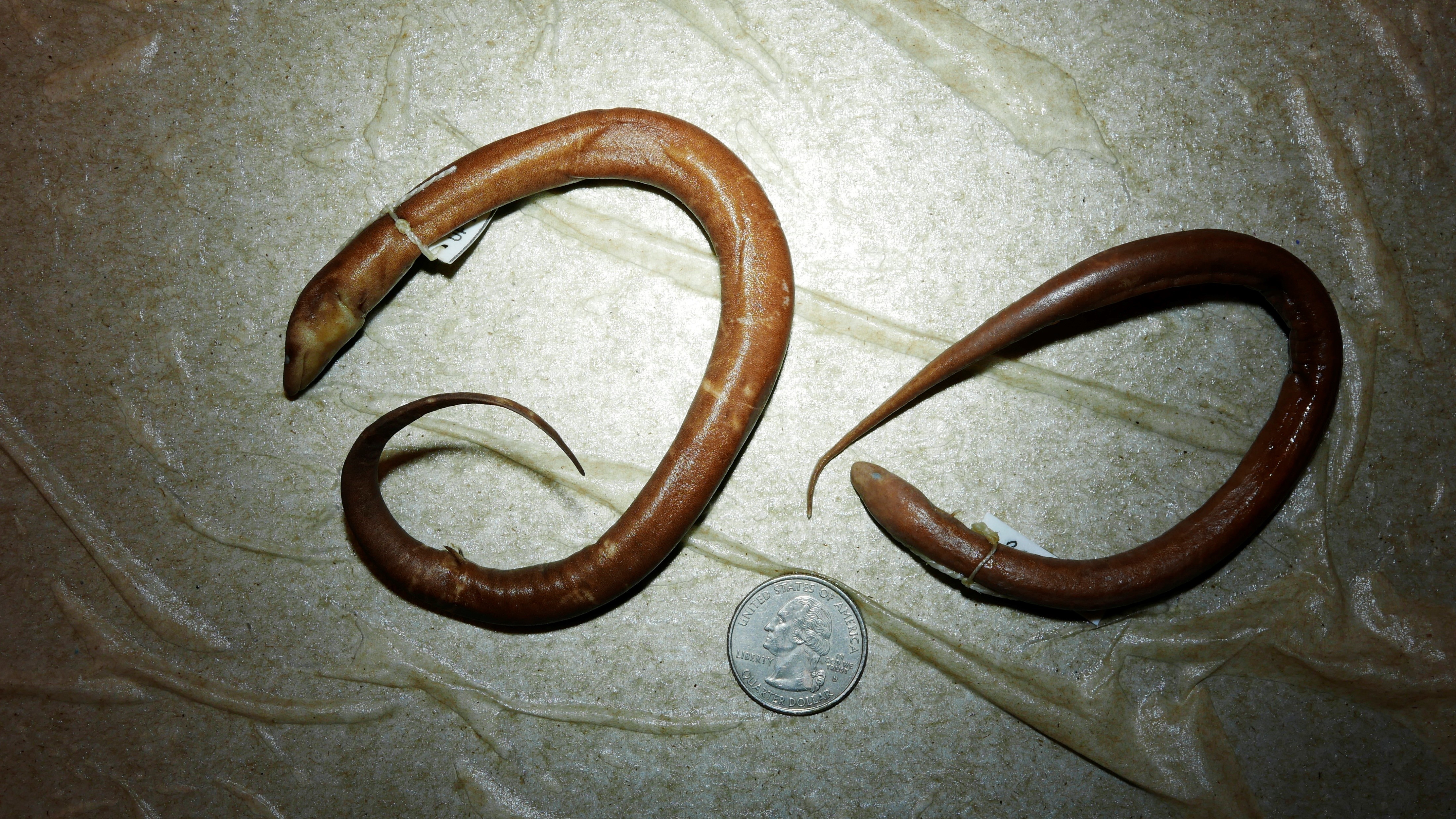
This is Notopthalamus viridescens, the Central Newt, family Salamandridae. It has no costal grooves or gills. They also have 4 fingers and 5 toes and are very toxic. This species is more spotted than others in the family.
Identify this species and what family it is from
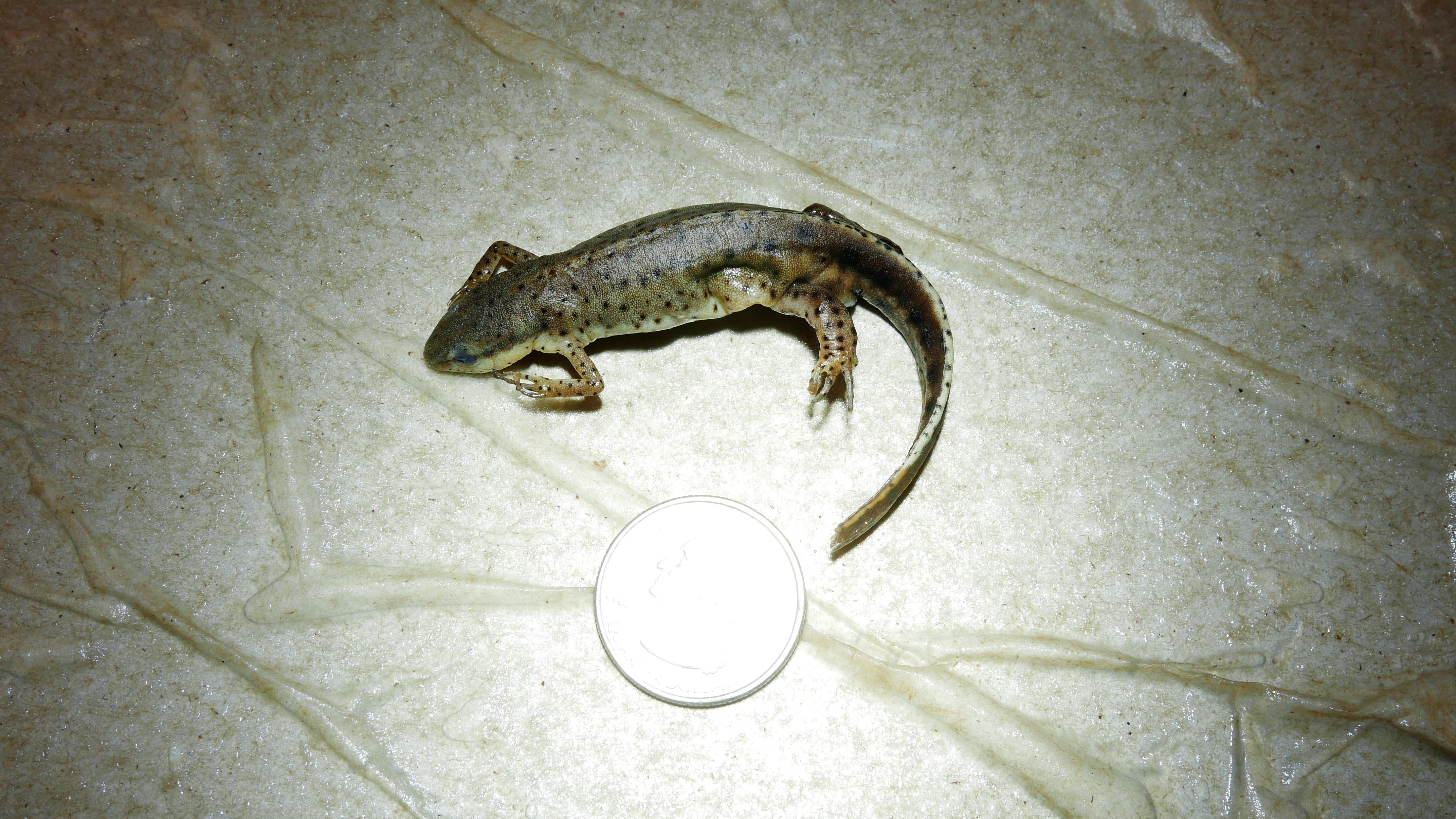
This is Ambystoma talpoideum, the Mole Salamander, family Ambystomatidae. It has 4 fingers and 5 toes like a newt, but it has deep costal grooves. They can appear with gills or as a terrestrial adult.
Identify this species and what family it is from
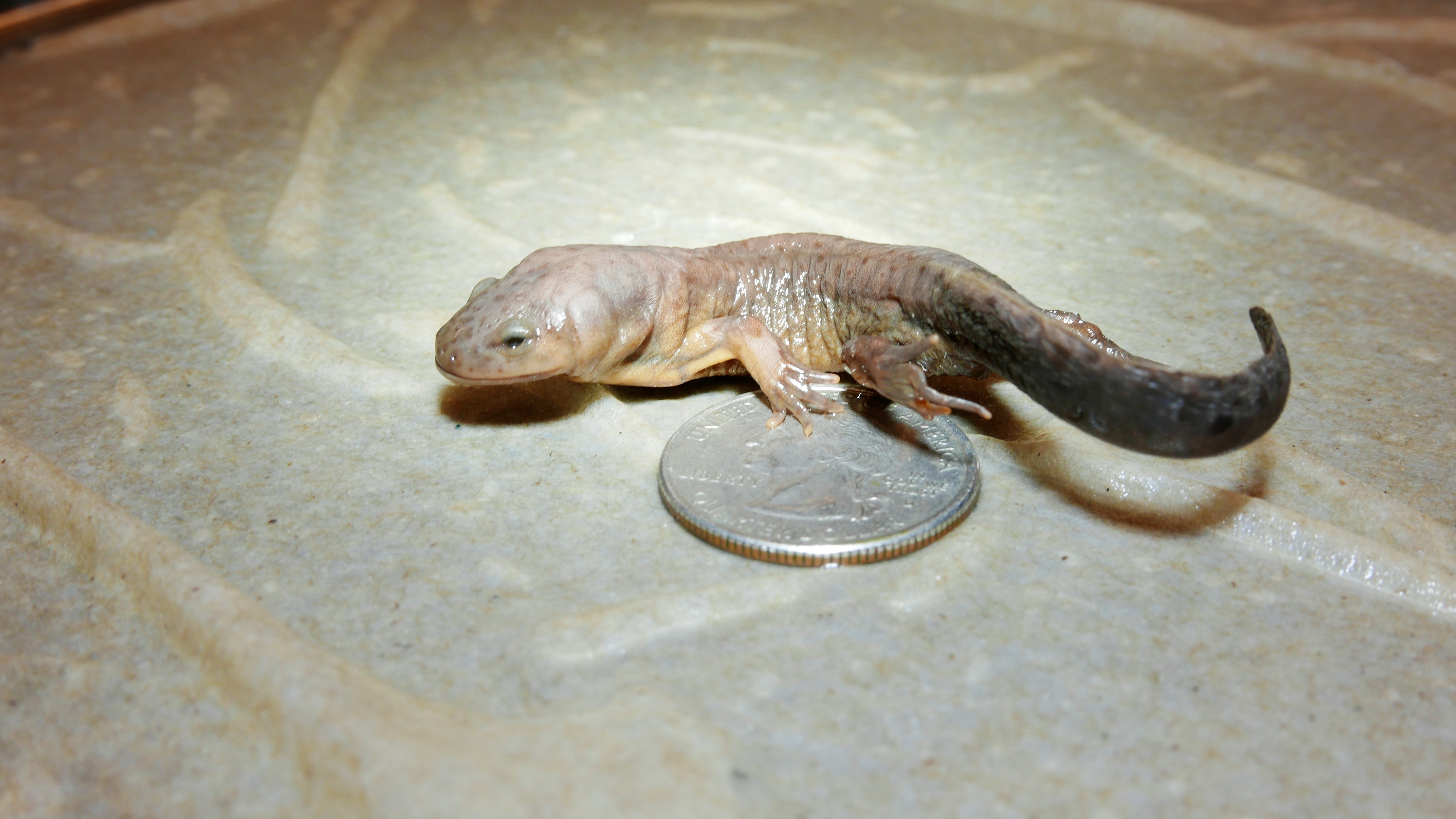
This is Ambystoma tigrinum, the Tiger Salamander, family Ambystomatidae. It has 4 fingers and 5 toes but has deep costal grooves. It has brown thin splotches on a black dorsal body and a light brown ventral side. The Tiger Salamander is memorable not only for its flashy pattern, but also as the state amphibian of Illinois.
Identify this species and what family it is from
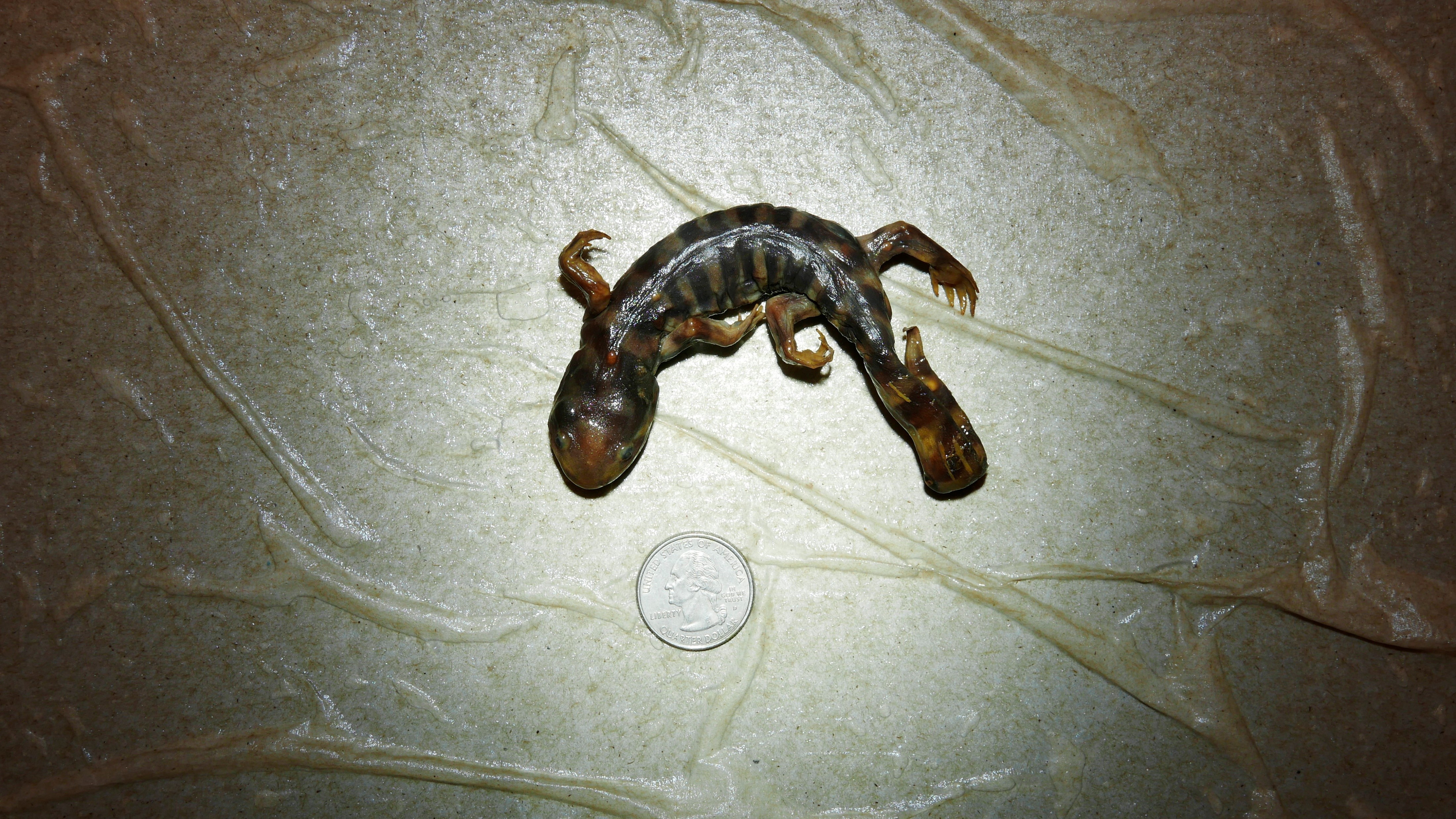
This is Ambystoma opacum, the Marbled Salamander, family Ambystomatidae. It has 4 fingers and 5 toes but has deep costal grooves. It has large, irregular patches of darker coloration on a lighter-colored body on both dorsal and ventral sides.
Identify this species and what family it is from
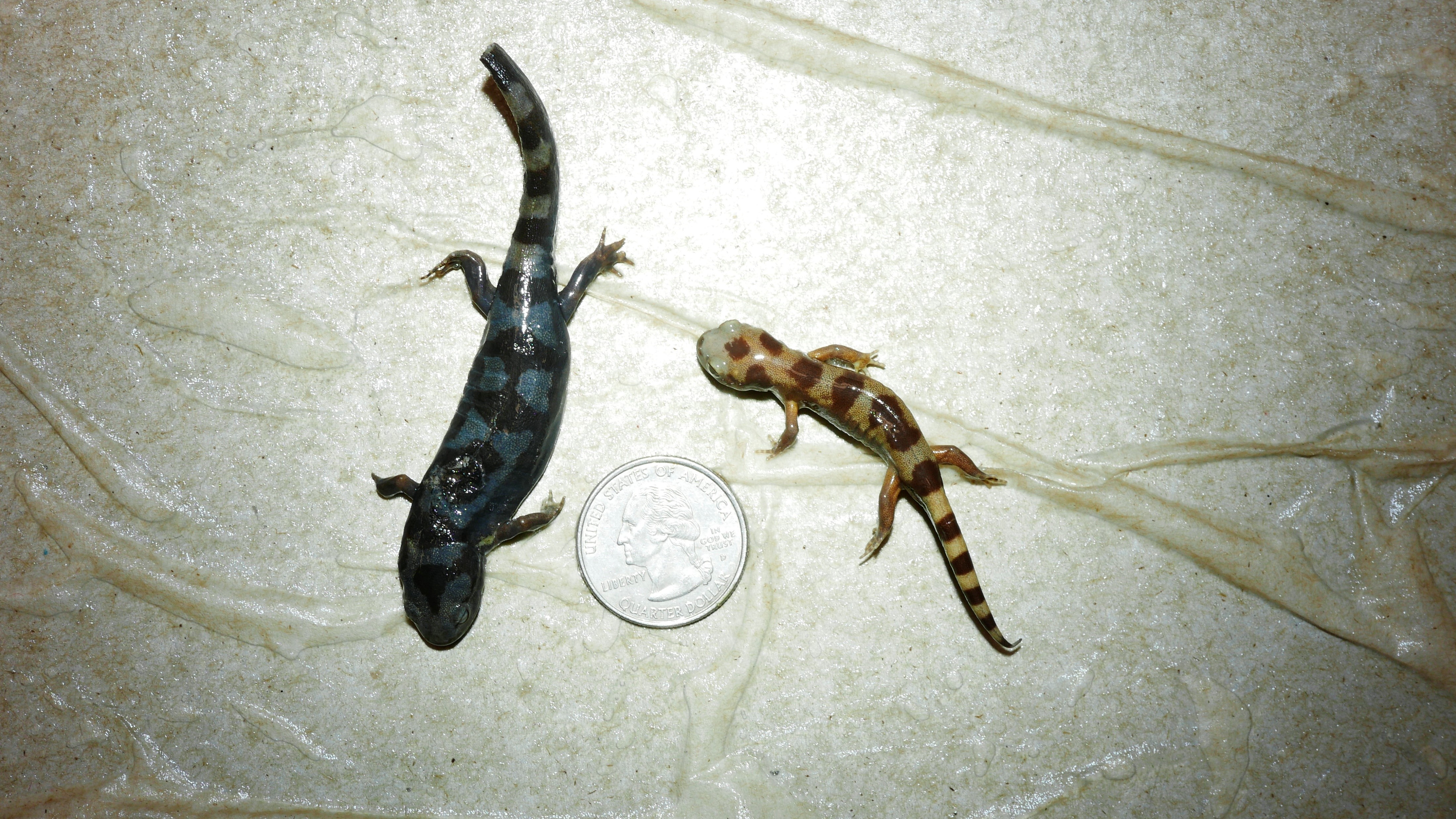
This is Necturus alabamensis, The Alabama Waterdog, family Proteidae. It has big feathery external gills and four present limbs. This species, Necturus Alamabensis, has four toes and is of medium (5.5-9in) size.
Identify this species and what family it is from
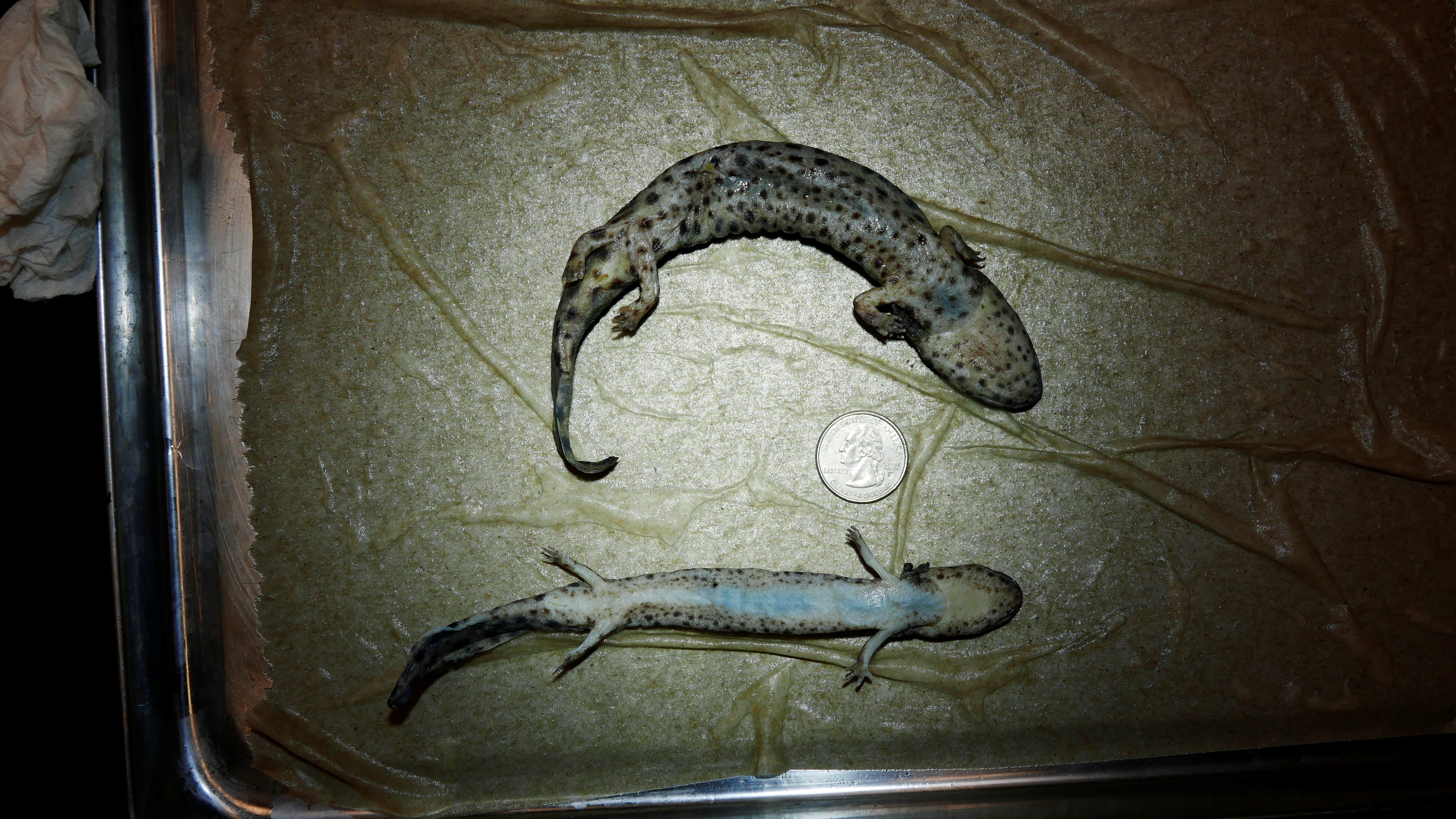
This is Hemidactylum scutatum, the 4 toed Salamander, family Plethodontidae. It is small and has four front toes, costal grooves, and has a thin pointed tail. This is also the only group with a present nasolabial groove. They are fairly small, less than 4 inches, and have a somewhat grainy, salt-and-pepper, appearance. This species also has a distinct impression at the base of their tail (a little dip).
Identify this species and what family it is from
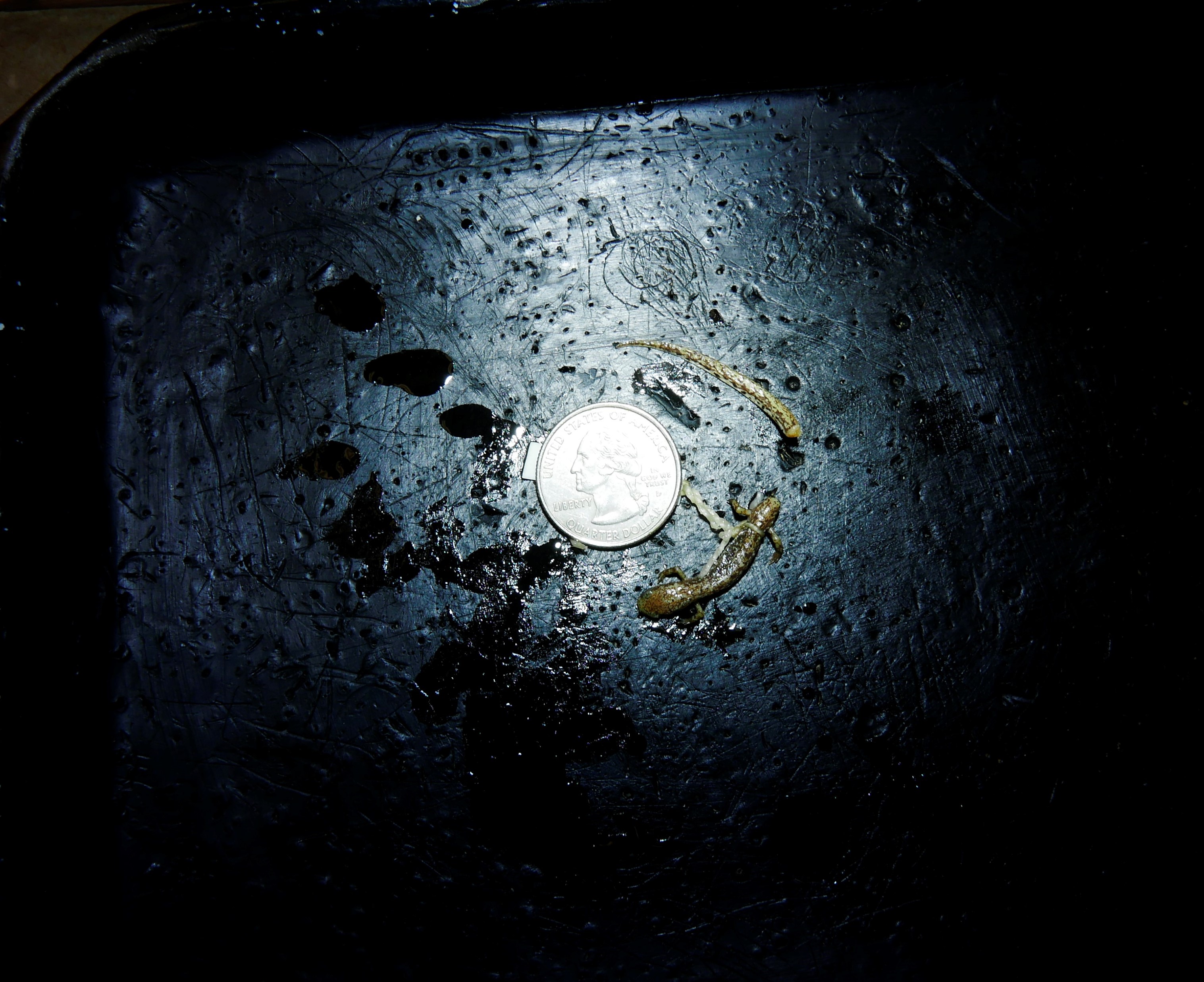
This is Eurycea quadradigitata, the Southeastern Dwarf Salamander, family Plethodontidae. It is small, has four front toes, costal grooves, and has a thin pointed tail. This is also the only group with a present nasolabial groove. This species is especially small at only about 2 inches.
Identify this species and what family it is from
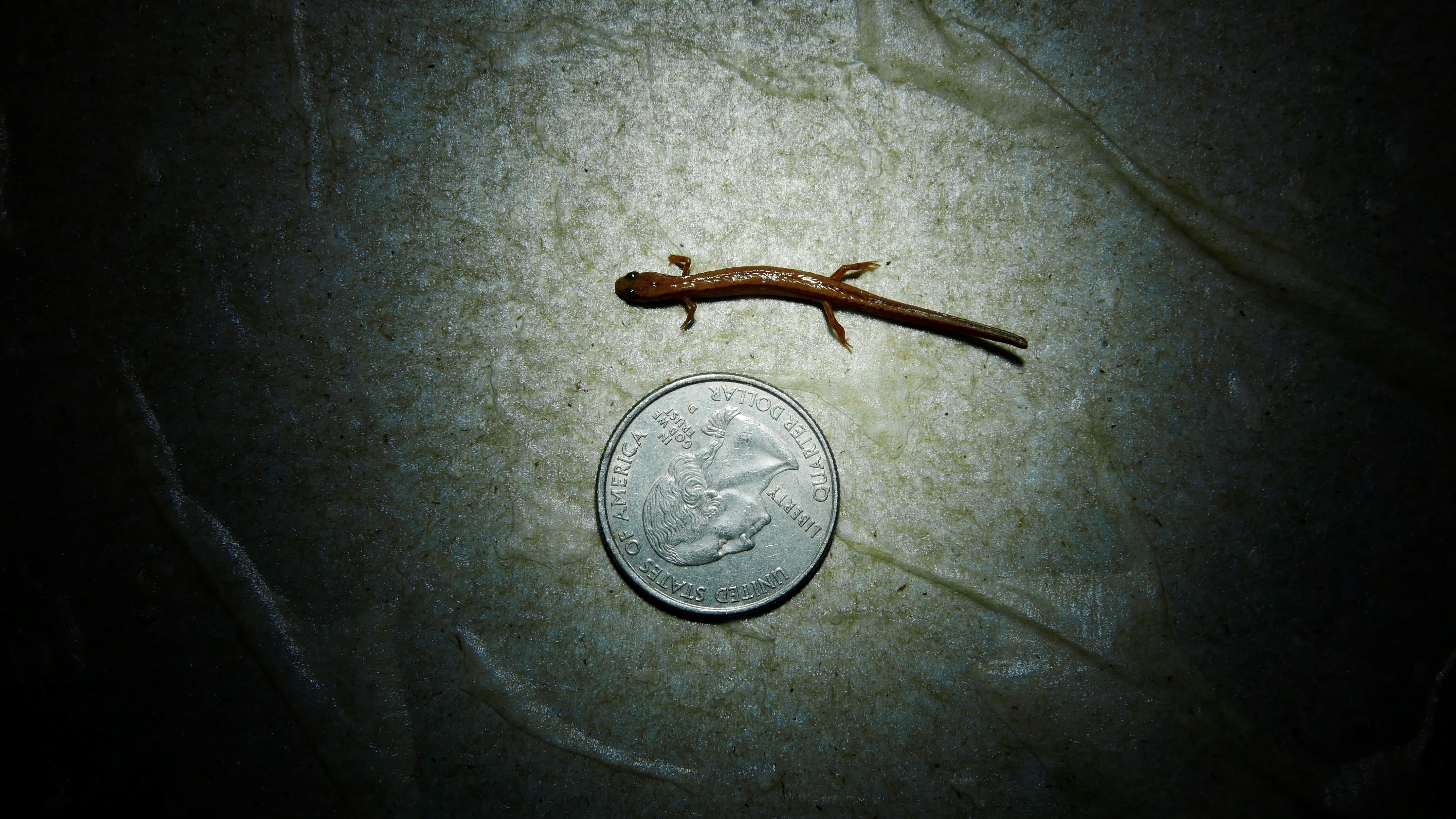
This is Desmognathus apalachicole, The Apalachicola Dusky Salamander, family Plethodontidae. It is small, has four front toes, costal grooves, and has a thin pointed tail. This is also the only group with a present nasolabial groove. They are fairly small, around 4 inches.
Identify this species and what family it is from
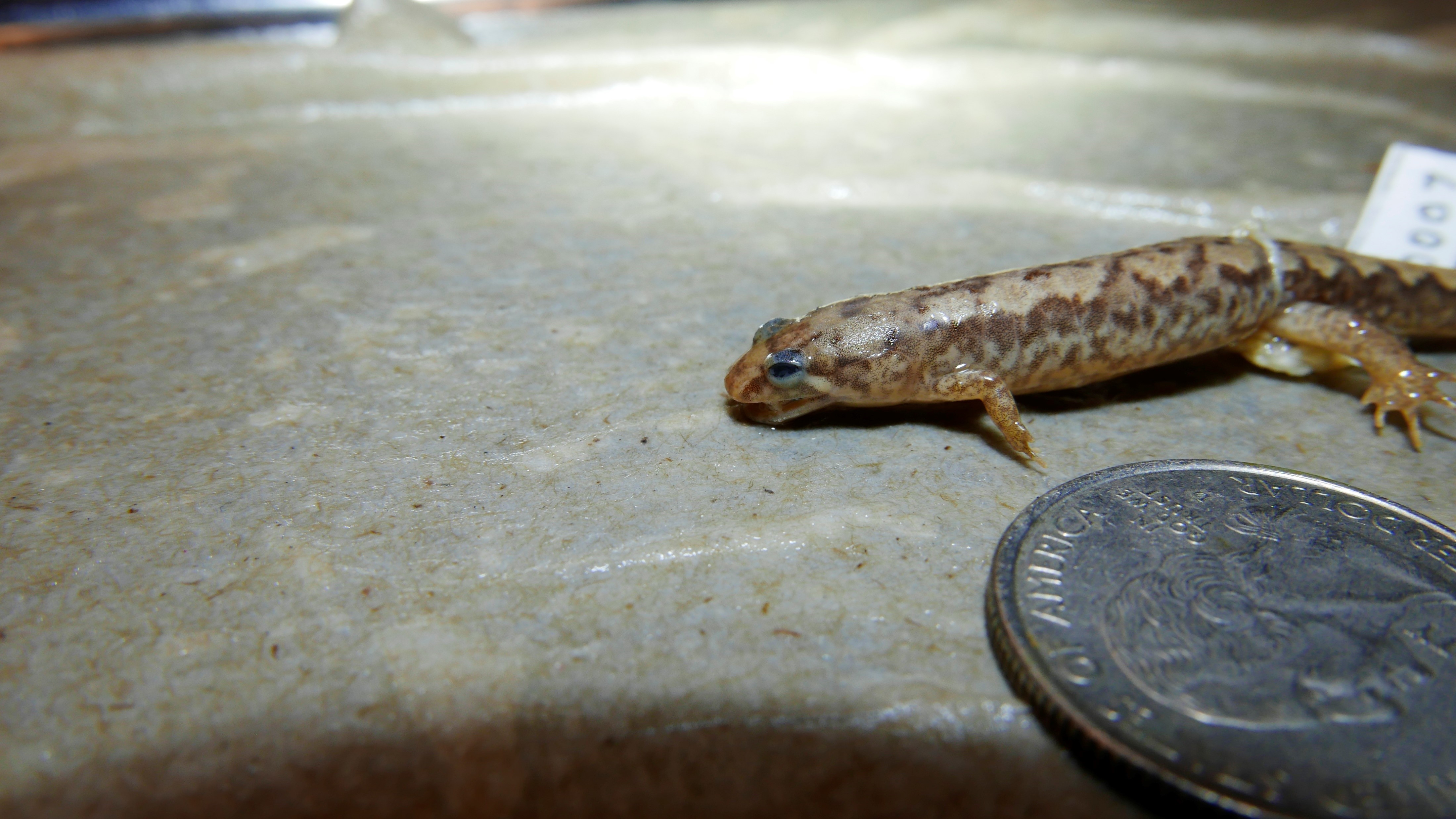
This is Desmognathus conanti, the Spotted Dusky Salamander, family Plethodontidae. It is small, has four front toes, costal grooves, and has a thin pointed tail. This is also the only group with a present nasolabial groove. The spotted dusky and the apalachicola dusky look very similar but I though the spotted was a bit more dark and small.
Identify this species and what family it is from
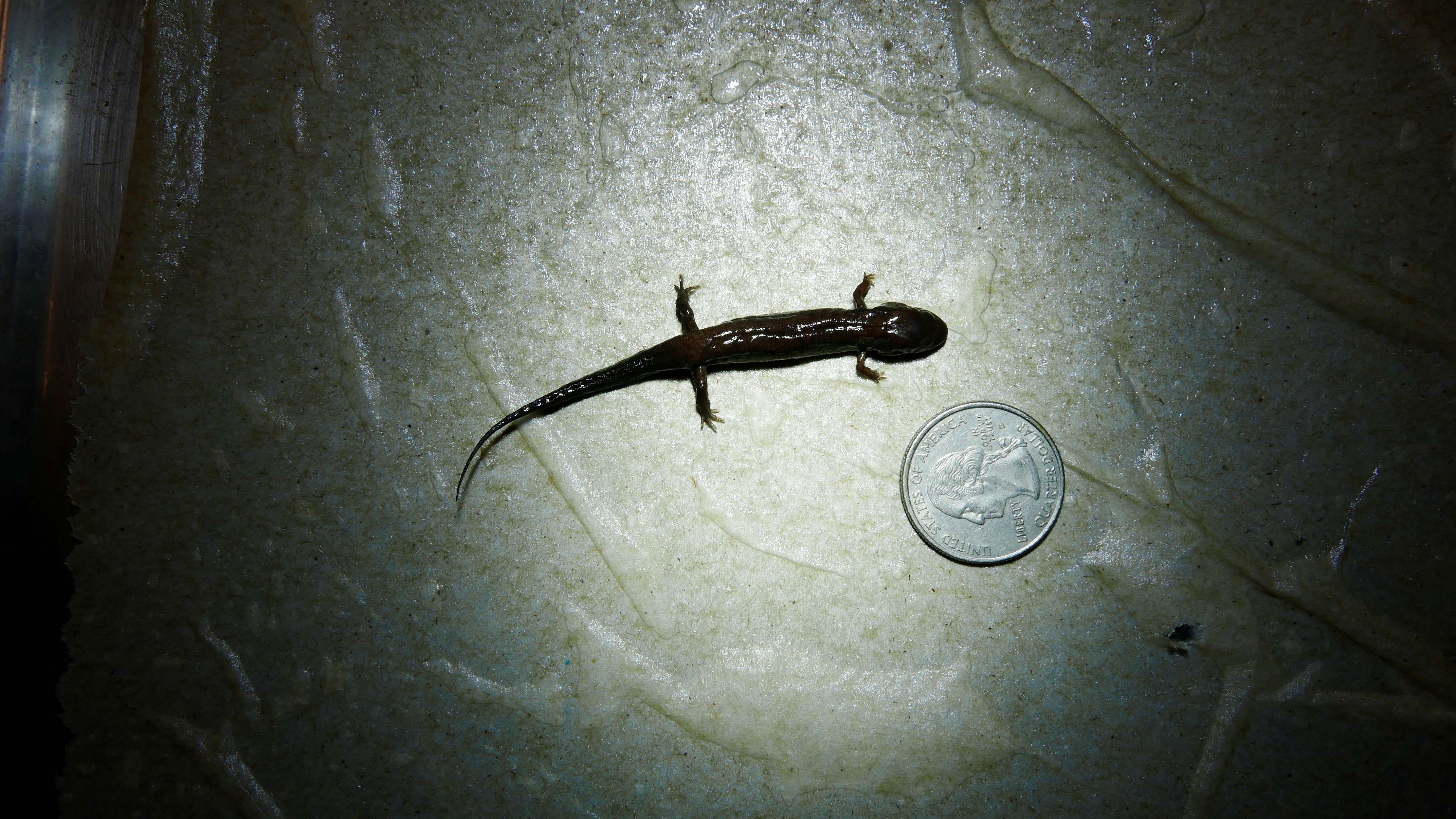
This is Desmognathus monticola, the Seal Salamander, family Plethodontidae. It is small, has four front toes, costal grooves, and has a thin pointed tail. This is also the only group with a present nasolabial groove. This species is the only plethodontid we have with 5 toes on the back foot. It is also much more puffy and bloated looking than the other desmognathus salamanders.
Identify this species and what family it is from
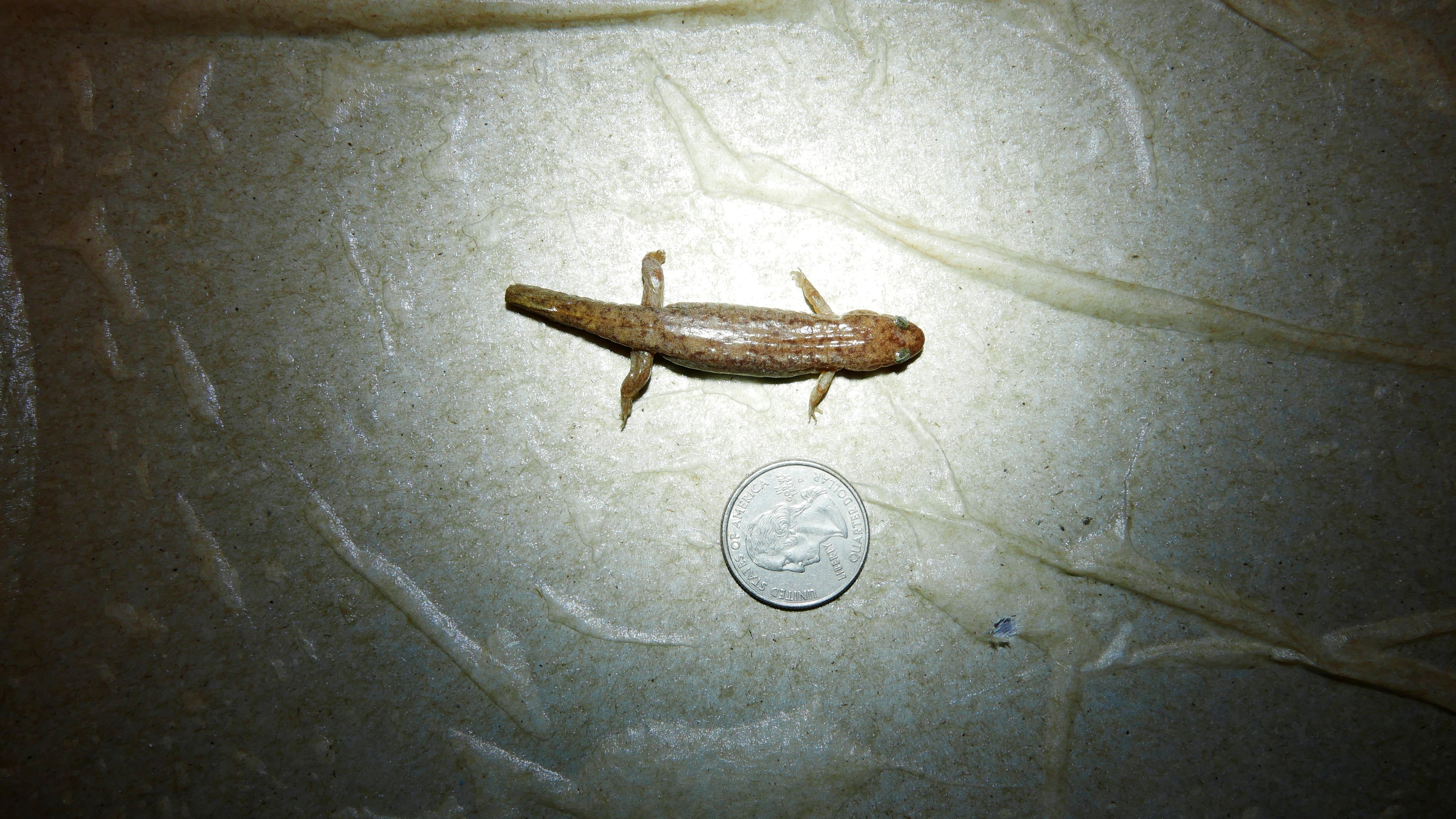
This is Stereochilus marginatus, the Many-lined Salamander, family Plethodontidae. It is small, has four front toes, costal grooves, and has a thin pointed tail. This is also the only group with a present nasolabial groove. This species is pretty small with a long torso. They have 4 front toes and 5 back toes so don't confuse them for ambystomatans. They have a much narrower face. They can be distinguished from other members of its family by its long body and series of dark lateral lines.
Identify this species and what family it is from
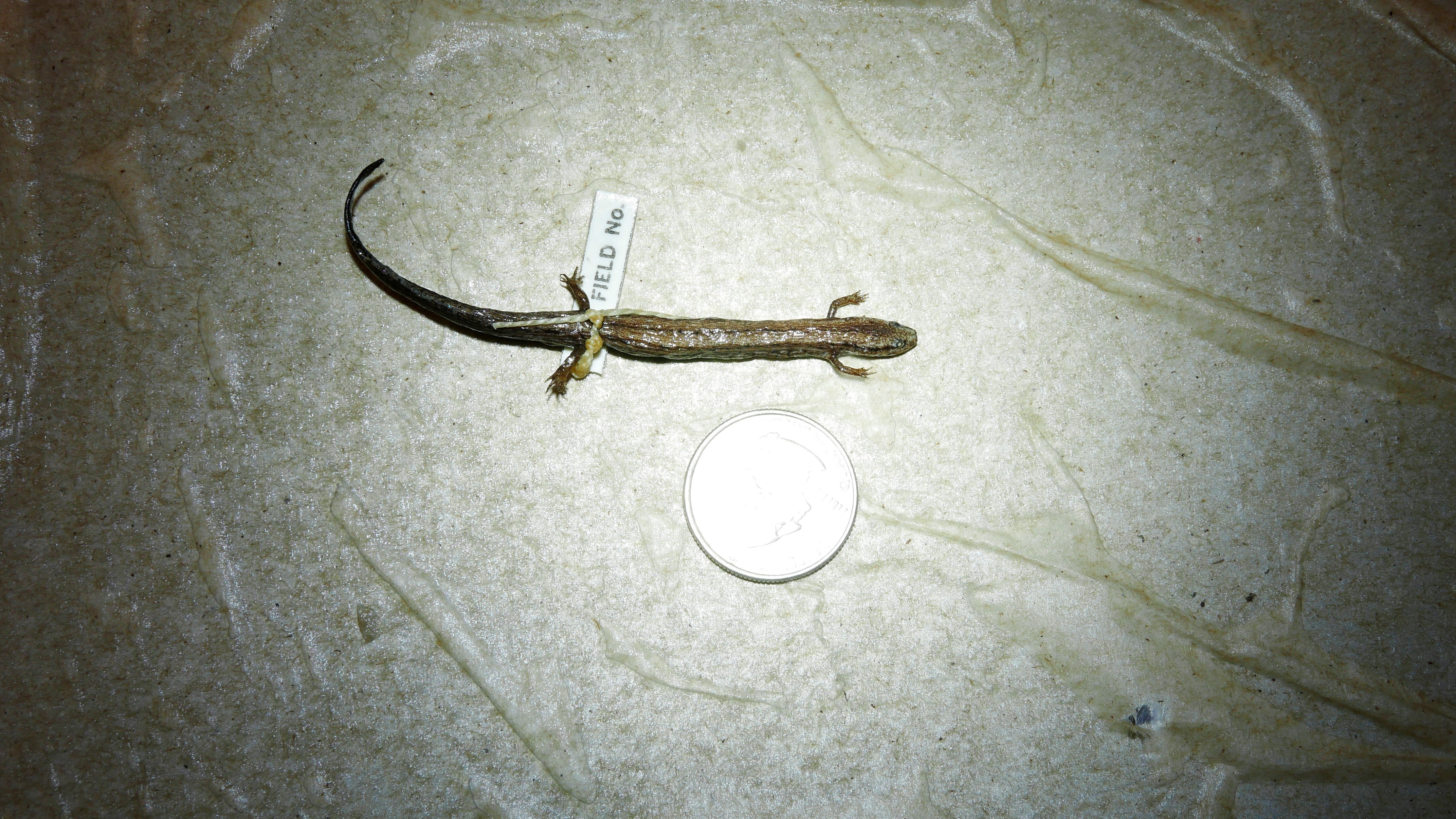
This is Desmognathus auriculatus, the Southern Dusky Salamander, family Plethodontidae. It is small, has four front toes, costal grooves, and has a thin pointed tail. This is also the only group with a present nasolabial groove. This species is also a dark dusky salamander similar to the spotted dusky, Desmognathus Conanti. A good way to tell them apart is by a dark spot by their eye explaining their name "Auriculatus" (outer ear).
Identify this species and what family it is from
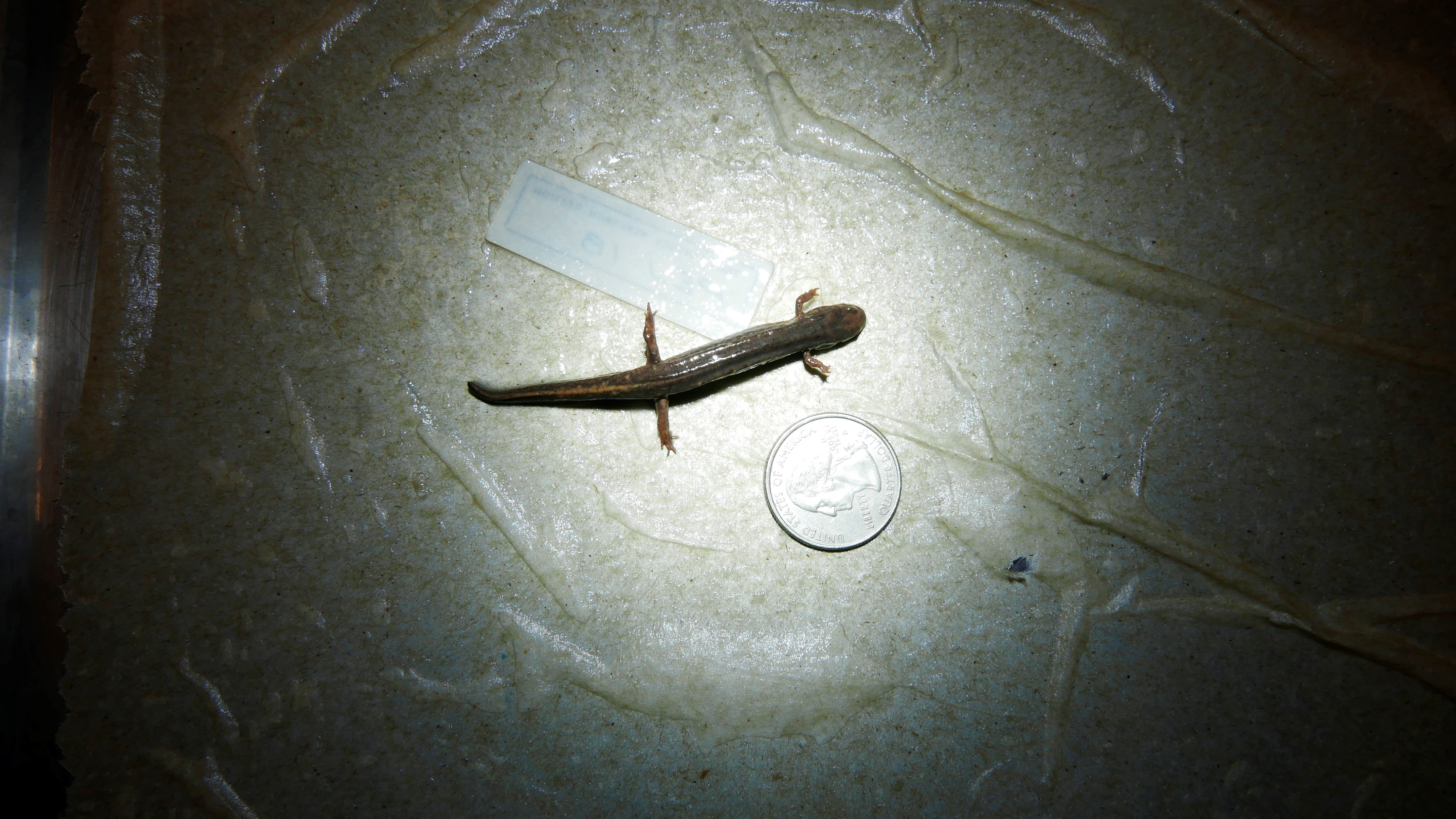
This is Pseudotriton ruber, the Southern Red Salamander, family Plethodontidae. It is small, has four front toes, costal grooves, and has a thin pointed tail. This species is unique in a lot of ways and should be easy to recognize. It may appear orange or leopardy colored but it is famous for being red, hence the name red salamander.
Identify this species and what family it is from
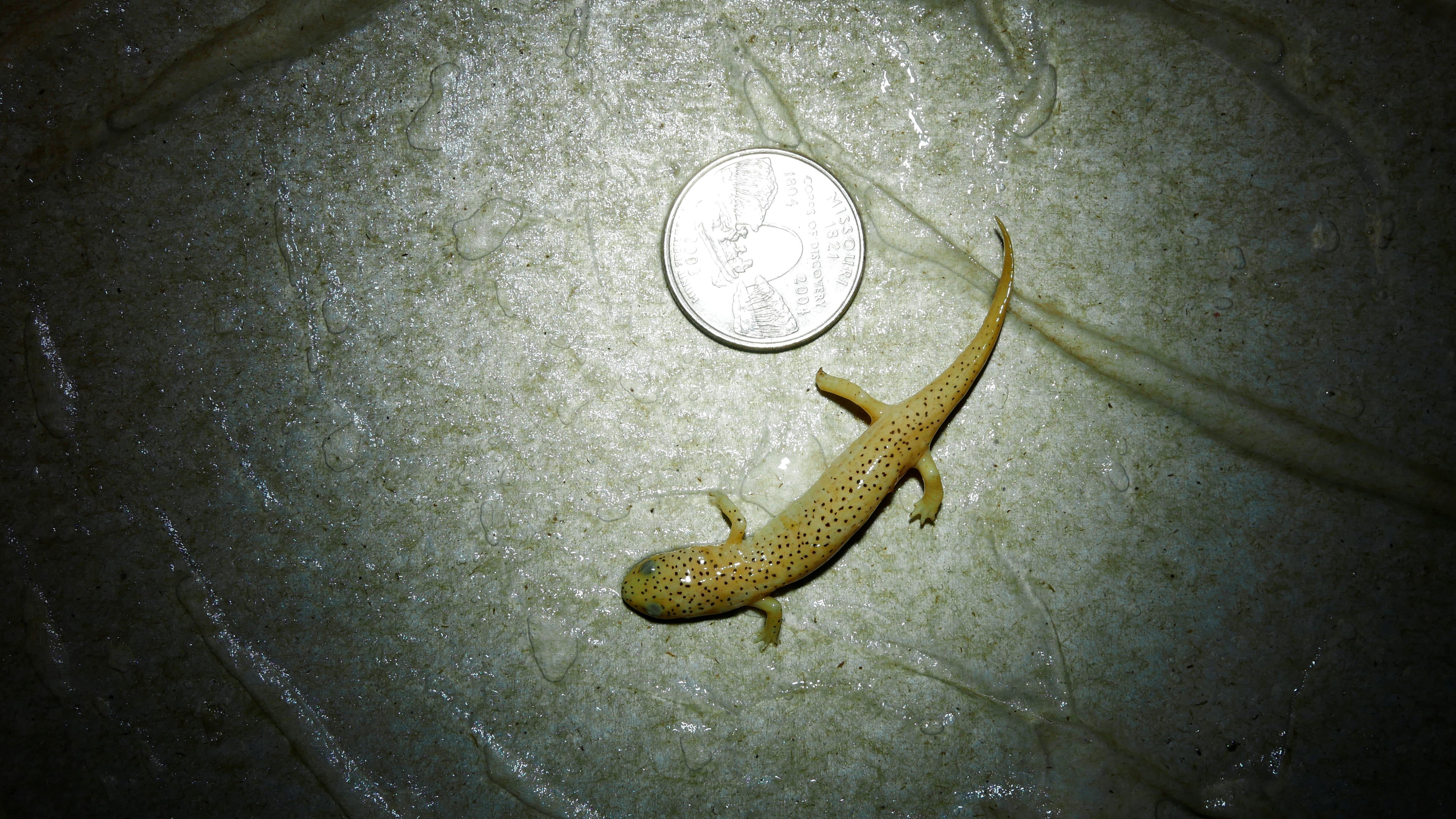
This is Plethodon grobmani, the Southeastern Slimy Salamander, family Plethodontidae. It is small, has four front toes, costal grooves, and has a thin pointed tail. This is also the only group with a present nasolabial groove. Arguably one of the largest plethodontidae specimens.
Identify this species and what family it is from
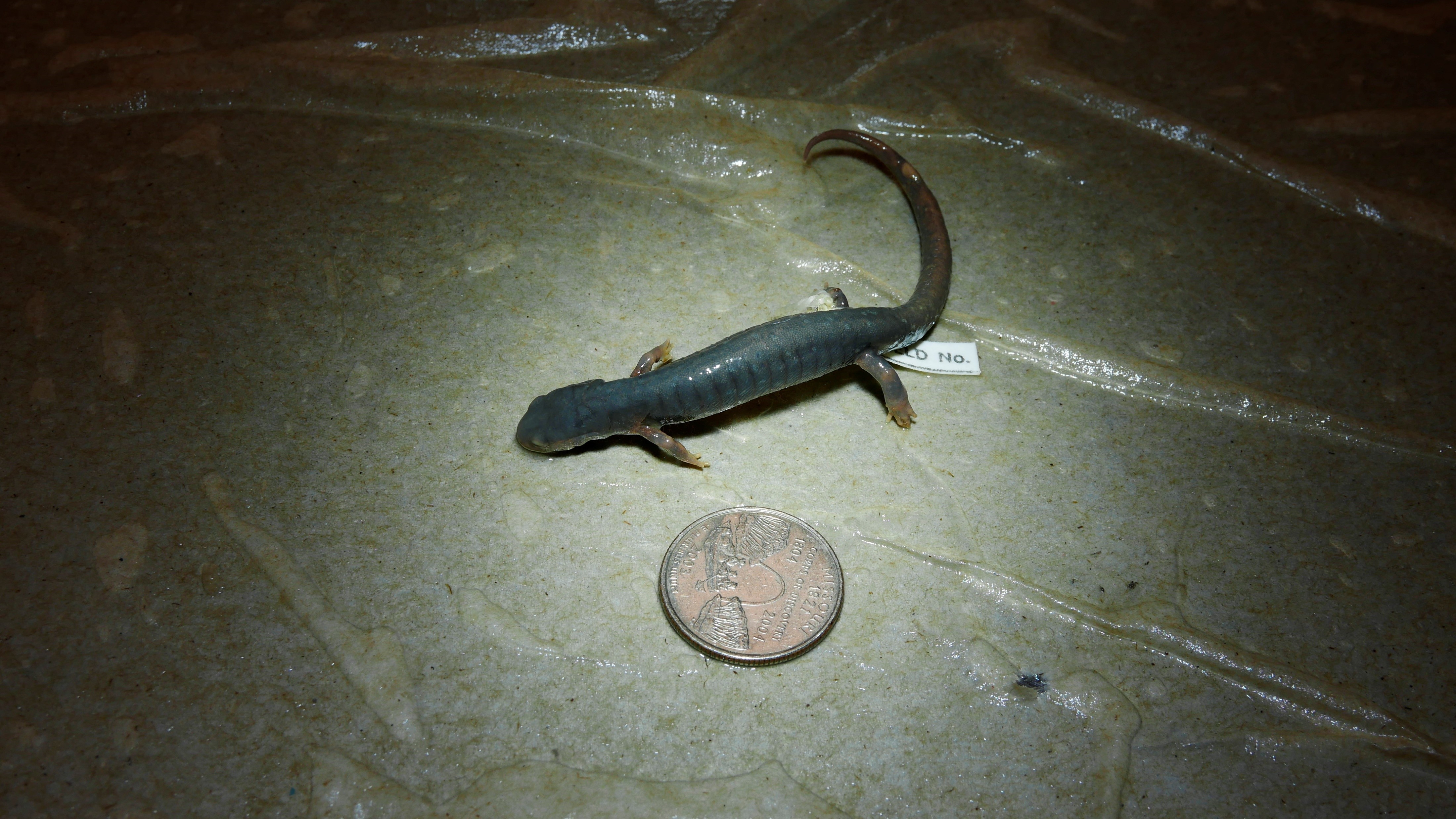
This is Eurycea guttolineata, the Three-Lined Salamander, family Plethodontidae. It is small, has four front toes, costal grooves, and has a thin pointed tail. This is also the only group with a present nasolabial groove. The three tan lines on its black body are unmistakable.
Identify this species and what family it is from
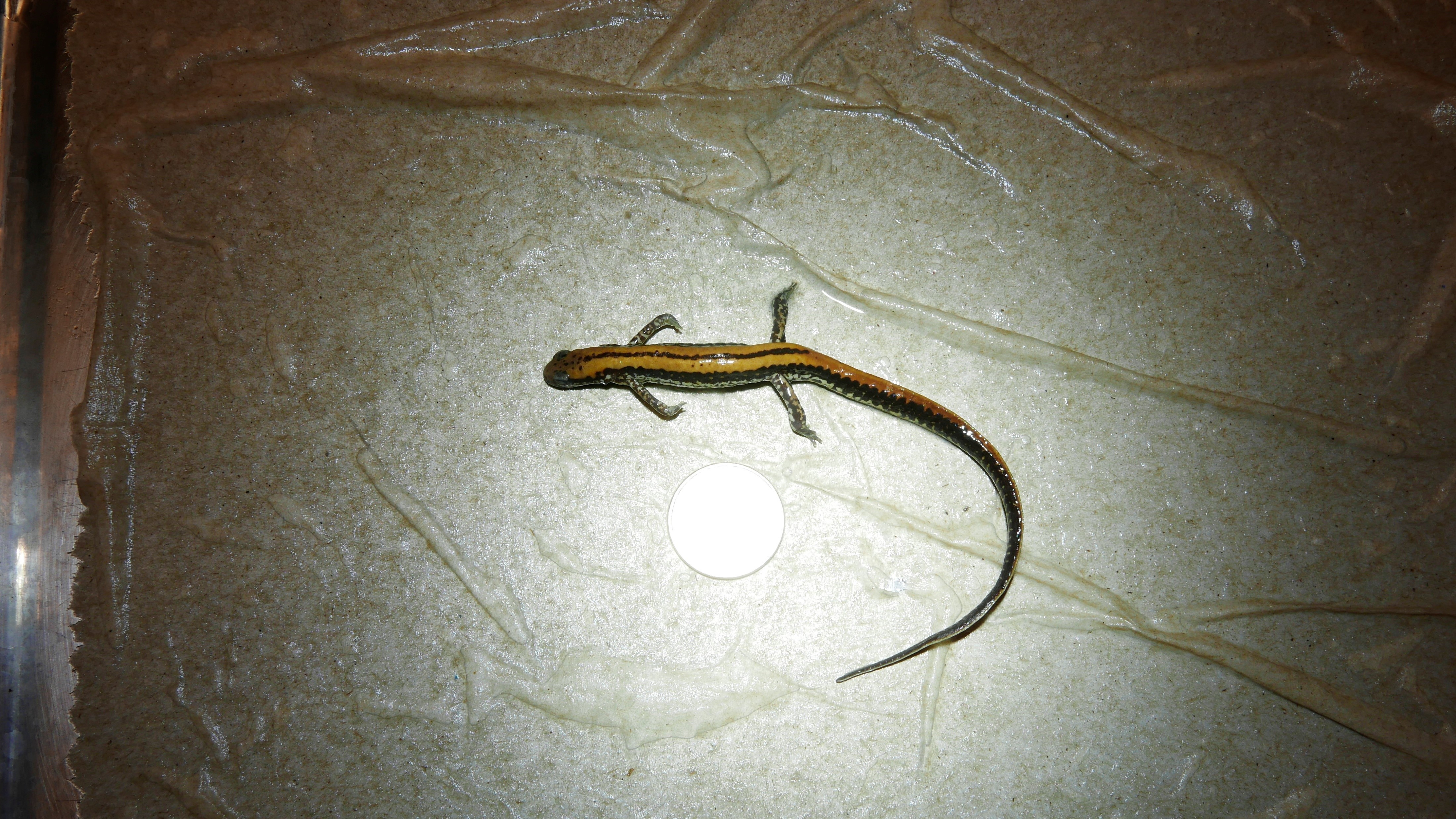
This is Eurycea cirrgera, The Southern Two-Lined Salamander, family Plethodontidae. It is small, has four front toes, costal grooves, and has a thin pointed tail. This is also the only group with a present nasolabial groove. The pattern is easy to recognize as it look very similar to the tree-lined salamander but with a predominantly yellow body with two black lines.
Identify this species and what family it is from
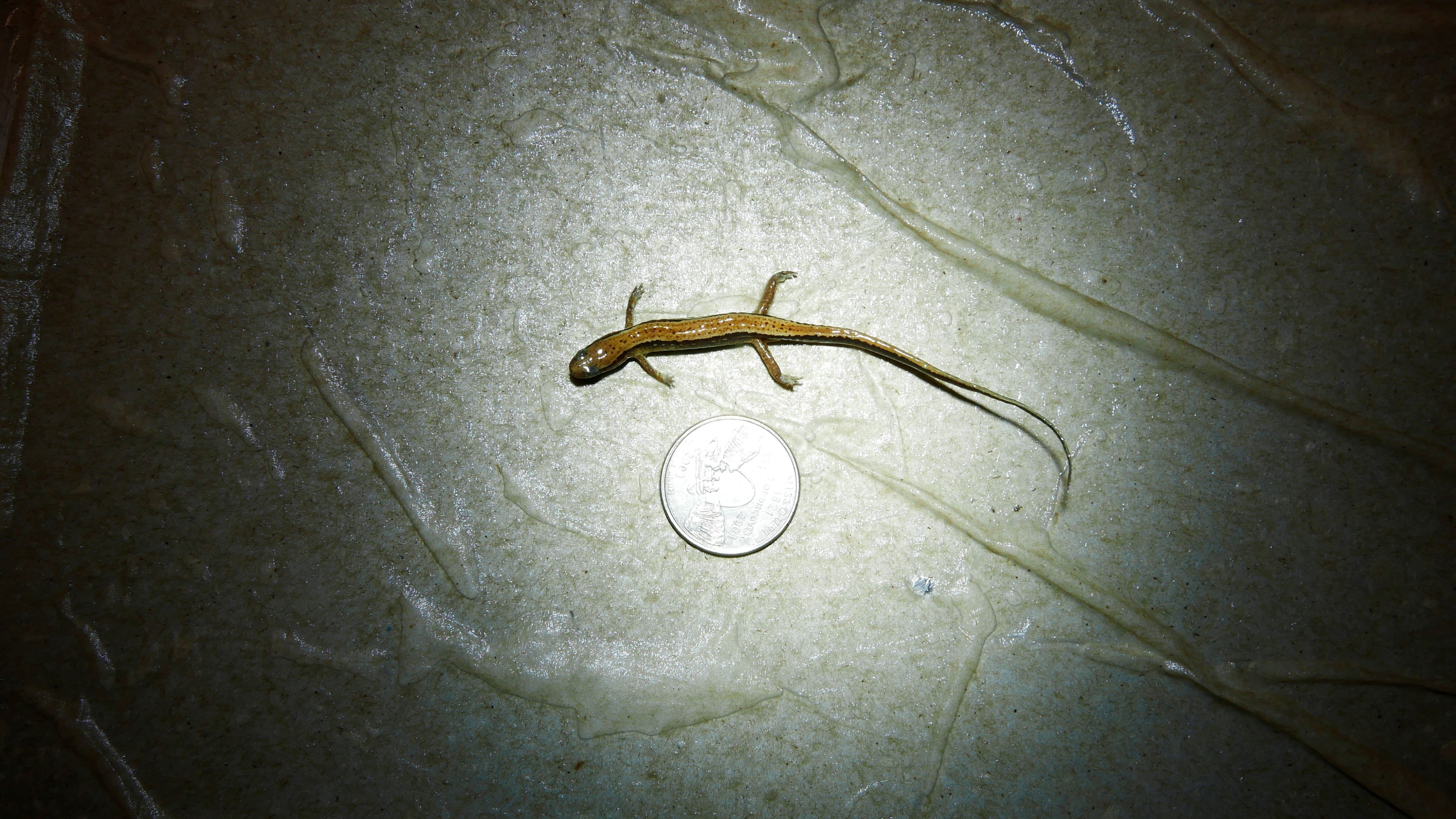
This is Dicamptodontidae, known only by its family. It is large with very different proportions (wide body) from other specimens and orange in coloration, with four fingers and five toes.
Identify this species and what family it is from