Bio 201 Chapter 9: Joints
 Call Kai
 Learn
 Practice Test
 Spaced Repetition
 Match
 Flashcards
 Knowt Play
1/44

There's no tags or description
Looks like no tags are added yet.
45 Terms
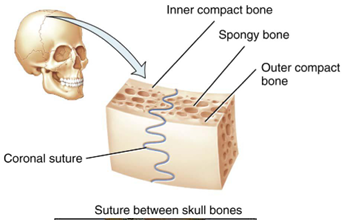
fibrous joint
lack synovial cavity
lack cartilage, instead have dense irregular connective tissue
little or no movement
ex. sutures, syndesmoses, interosseous membranes
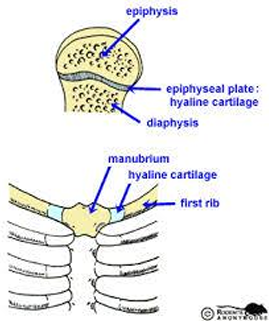
cartilaginous joint
no synovial cavity
hyaline cartilage or fibrocartilage
little or no movement
ex. synchondrosis, symphyses, epiphyseal plates
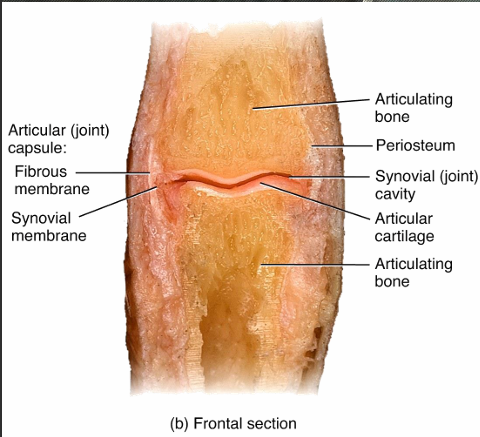
synovial joint
ligaments form a synovial cavity
1: articular cartilage covers bone
2: articular capsule
3: synovial fluid
4: accessory, bursa (not always present), disc (meniscus) and labra
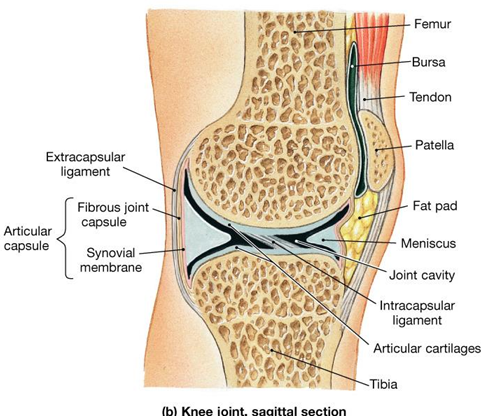
articular capsule
2 layers:
1: fibrous membrane (outer)
2: synovial membrane (inner)
occasionally contains fat pads
synovial fluid
contains hyaluronic acid and interstitial fluid
reduces friction and absorbs shock
supplies oxygen and nutrients to cartilage, removes waste
accessory ligaments
dense regular connective tissue
outside or inside capsule
holds joint in place
articular disc
also known as labrum
lip extended from socket
deepens ball and socket
bursa
saclike structure filled with fluid
reduces friction

torn meniscus
torn cartilage
wear can occur overtime
can be treated by surgery

sprain
stretched or torn ligament that does not dislocate bone
treated with PRICE (protection, rest, ice, compression, elevation)

bursitis
inflamed bursa
treated with anti-inflammatory or corticosteroid

gliding
back and forth and side to side movements
flat bones
intercarpal and intertarsal

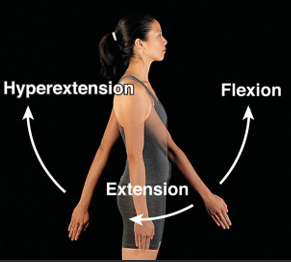
flexion
decrease angle

extension
increase angle
lateral flexion
trunk moved laterally

hyperextension
beyond extension
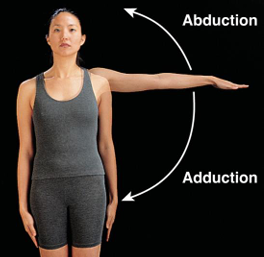
abduction
away from midline
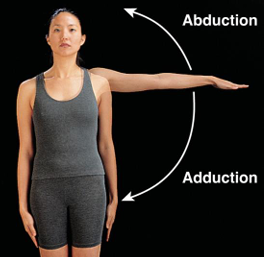
adduction
toward midline

circumduction
move in circular motion
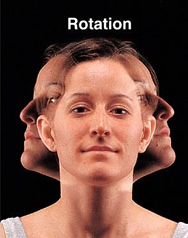
rotation
movement on longitudinal axis
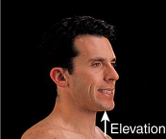
elevation
upward movement

depression
downward movement

protraction
anterior movement in transverse (horizontal) plane

retraction
posterior movement in transverse plane
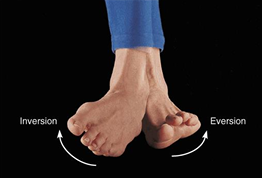
inversion
sole of foot turns inward
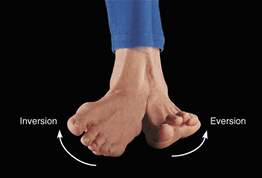
eversion
sole of foot turns outward
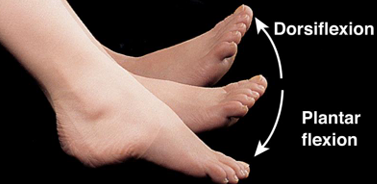
dorsiflexion
foot bends up

plantarflexion
foot bends down

supination
palm turns to face upward

pronation
palm turns to face downward

opposition
thumb crossing the palm
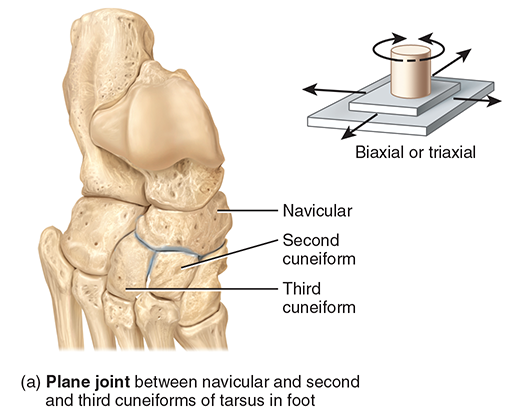
plane joint
back and forth and side to side movements (gliding)
can be biaxial or triaxial

hinge joint
open-close, flexion and extension only
uniaxial

pivot joint
rotation
uniaxial
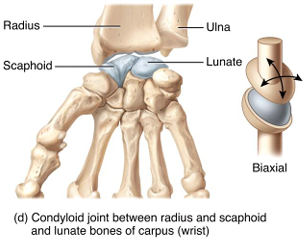
condyloid joint
biaxial
flexion/extension or abduction/adduction

saddle joint
saddle shaped surface
flexion/extension or abduction/adduction

ball and socket joint
rotates on any axis
triaxial
arthritis
inflammation of joints
gout
improper breakdown of uric acid, crystal formation in synovial fluid
synarthroses
no movement
synchondroses
immovable cartilaginous joint
syndesmoses
slight movement
ligament connects two bones
symphyses
slight movement
fibrocartilaginous pad connects two bones
amphiarthrosis
slightly movable joint connected by fibrocartilage or dense CT
diarthrosis
freely movable joint, aka synovial joint