Lecture 1 Exam | PTAP-130: Therapeutic Modalities
 Call Kai
 Learn
Learn Practice Test
 Spaced Repetition
 Match
Match Flashcards
 Knowt Play
1/87

Earn XP
Description and Tags
based off lecture 1 exam study guide!
Name | Mastery | Learn | Test | Matching | Spaced | Call with Kai | Chat |
|---|
No analytics yet
Send a link to your students to track their progress
88 Terms
What is the clinical definition of pain (as defined by the IASP)?
“An unpleasant sensory & emotional experience which follows actual or potential tissue damage or is described in terms of such”
What is nociception?
The neural process of encoding a noxious stimulus (mechanical, chemical, or thermal) that is intense enough to potentially damage a body tissue
It’s the process of our body figuring out what is painful/harmful
Think of your reaction to casually bumping into a table vs. touching a hot stove
Most never results in consciously perceived pain
What are the 3 stages in the Vicious Pain Cycle?
Pain → spasm → ischemia
What are the stages in the Persistent (Chronic) Pain Cycle?
This is just a more detailed Vicious Pain Cycle
Pain → muscle guarding → restricted ROM → muscle weakness & atrophy → decreased function → psychological stress

What’s the difference between acute vs. chronic pain? (These are not the same as acute/chronic tissue healing!)
What is the cause? Timeframe?
Acute:
short-term
caused by trauma/infection/post-surgical
first 6 weeks
Chronic:
long-term
cause uncertain or not correctable; medical treatments have been ineffective
longer than 3-6 months
What is hyperalgesia?
Cause?
Excessive sensitivity to pain, which may be caused by nerve damage

What is allodynia?
Provide an example
Pain due to stimulus that does not normally provoke pain
(ex. light touch hurts)

What is analgesia?
Provide an example
Absence of pain/sensation in response to a stimulus that would normally be painful, usually due to an interruption in the nervous system pathway between the painful area & the brain
(ex. after surgery, around the scar, some people don’t feel pain due to nerve ending damage)
What is referred pain?
Pain you feel in one part of your body while the actual source of the problem/injury is elsewhere in the body
What is visceral referred pain?
Pain arising from deep body structures (organs) that can be difficult to locate, & at times, can be felt at another distant site
(ex. shoulder pain caused by a heart issue)
What is a trigger point?
What are 4 characteristics of a trigger point?
A focus of hyper irritability in a tissue that’s usually palpable
when compressed, it’s locally tender
prevents full lengthening of muscle
weakens the muscle
gives rise to referred pain
What is the Gate Control Theory?
Where in the body does this theory occur? What is used to “close the gate”?
Non-painful sensory input can inhibit (“close the gate”) the transmission of pain signals at the spinal cord level
The dorsal horn is where nociceptive input gets regulated by non-nociceptive input (touch, cold, heat) — physical agents use this to help “close the gate”
Pharmacological pain management:
This is the first line of treatment for moderate-severe acute pain!
What are the 3 goals of it?
What are the 6 different types?
Provide common examples of the different types of medications
Control pain by modifying inflammatory mediators at the periphery; Alter pain transmission from the periphery to the cortex (brain); Alter the central perception of pain
NSAIDS, Analgesics w/o anti-inflammatory, Opioids, sometimes antidepressants & anticonvulsants, sometimes local injections of corticosteroids or anesthetic for local inflammation
NSAIDS = ibuprofen, aspirin, naproxen sodium; Analgesics w/o anti-inflammatory = acetaminophen (Tylenol); Opioids = morphine, fentanyl, oxycodone
Non-pharmacological pain management:
What are the 5 goals of it?
What does the acronym RICE stand for?
What does each component of RICE do for pain management?
Control inflammation; Inhibit nociception; Provide clear guidelines for activities that encourage appropriate stress on the tissues; Teach rest & relaxation; Repeatedly reassure the patient
Rest, ice, compression, elevation
Rest = allows damaged tissues to heal; Ice = reduces inflammation → reduces peripheral sensitization in the tissues; Compression & elevation = reduce edema
What are dermatomes?
A skin area supplied by one dorsal (sensory) nerve root

What area of skin is dermatome C2?
Posterior head


What area of skin is dermatome C3?
Posterolateral neck


What area of skin is dermatome C4?
AC joint


What area of skin is dermatome C5?
Lateral arm

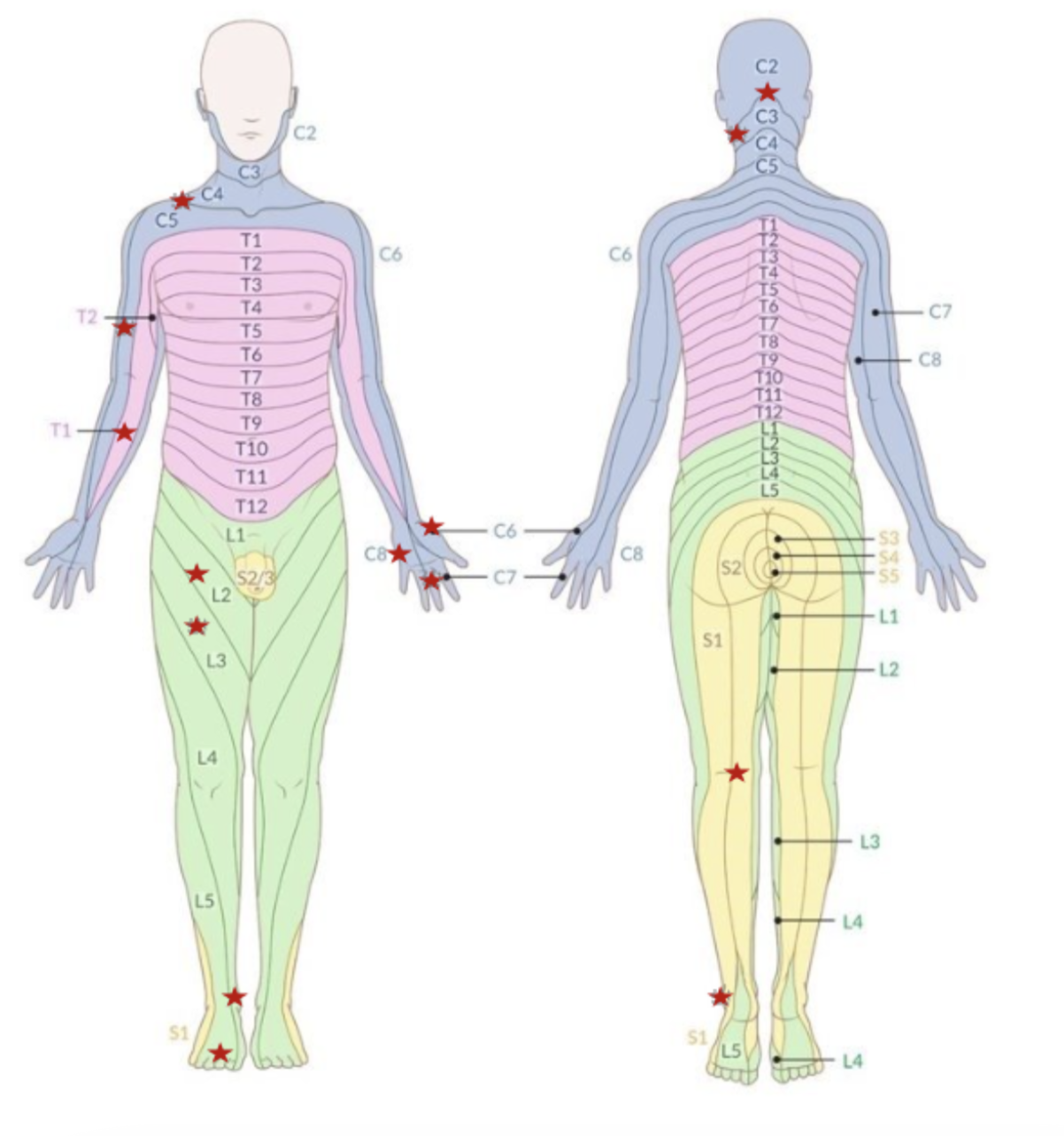
What area of skin is dermatome C6?
Lateral forearm & thumb


What area of skin is dermatome C7?
Distal phalanx of the middle finger
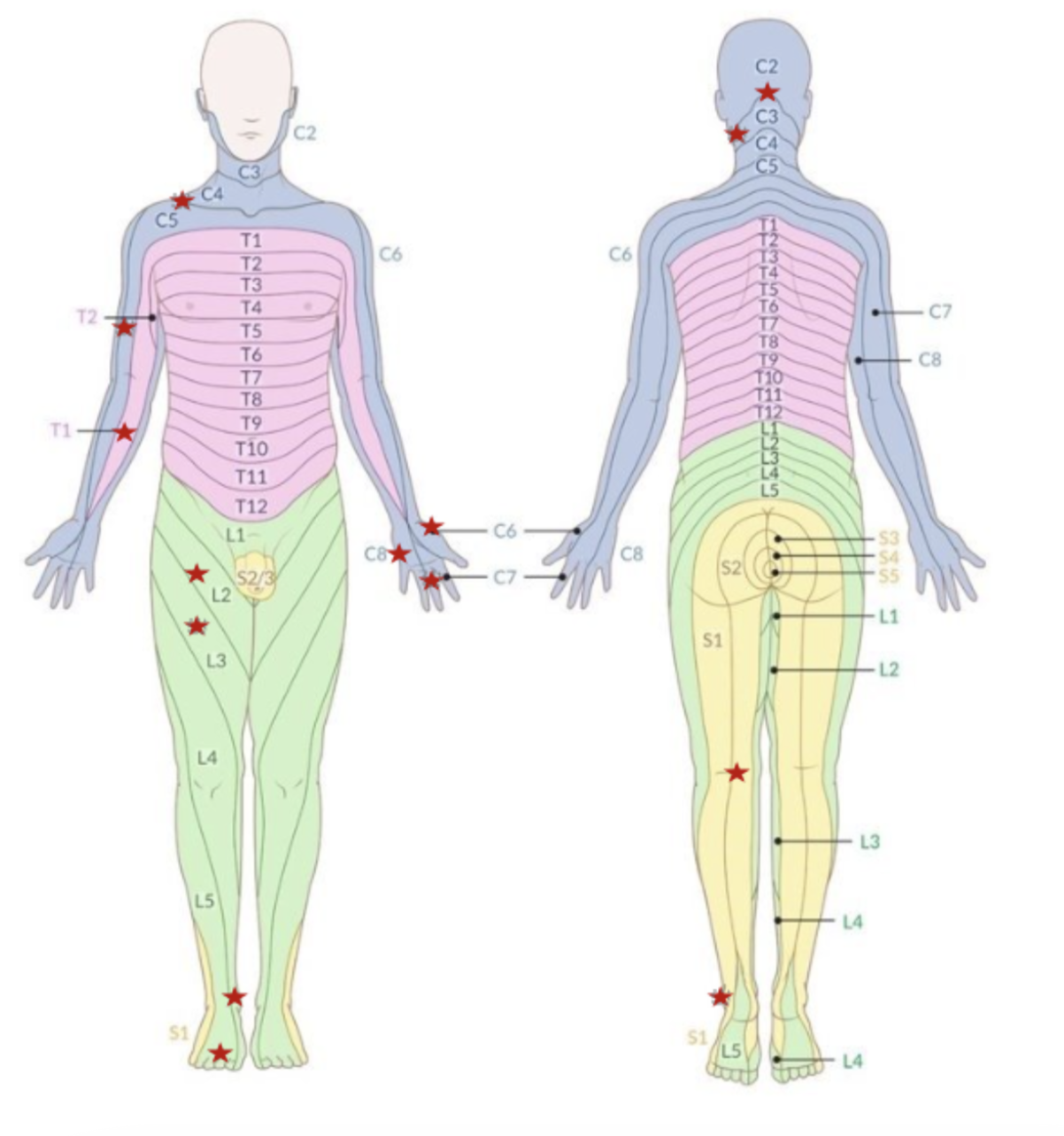

What area of skin is dermatome C8?
Little finger & ulnar border of hand

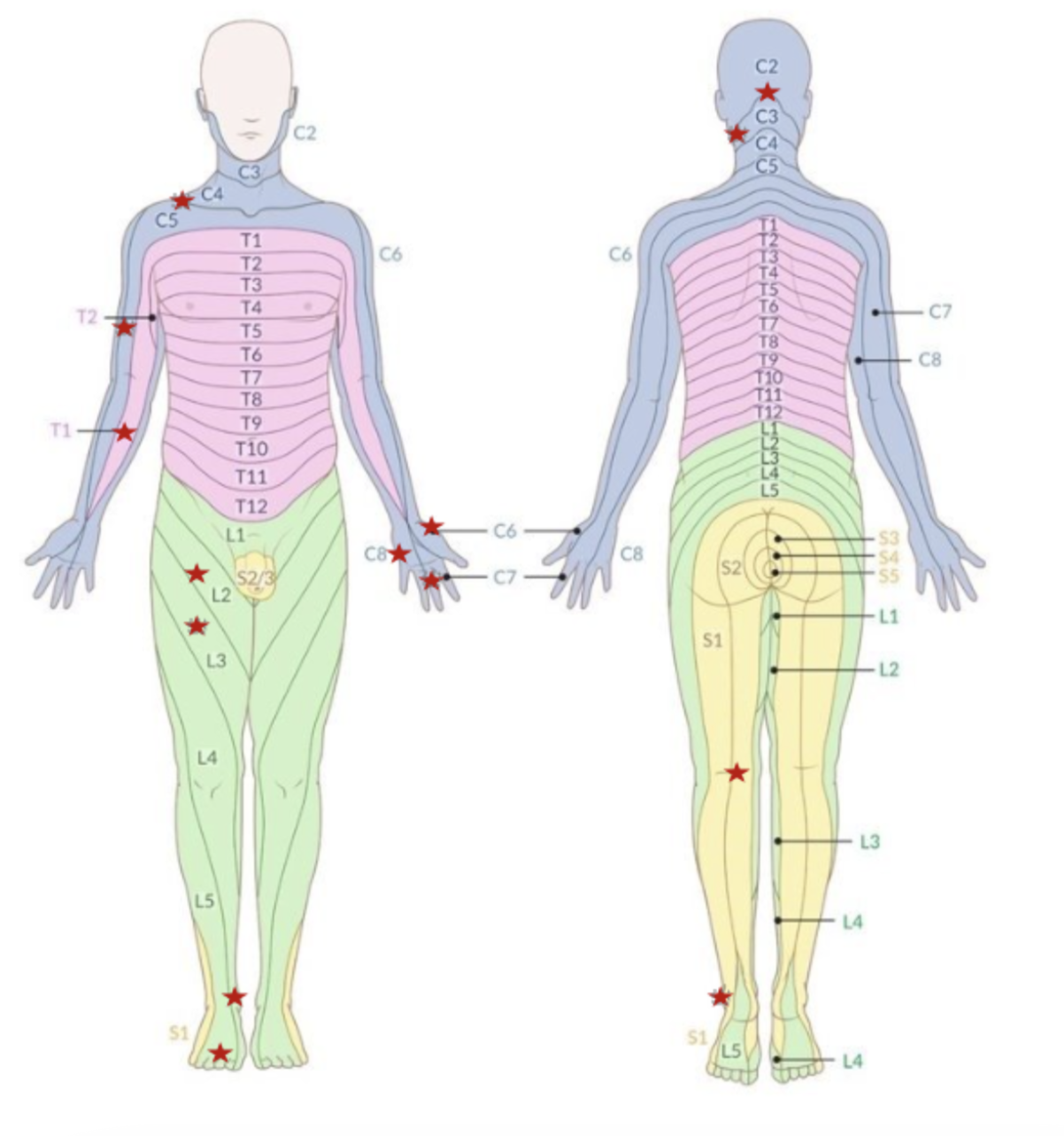
What area of skin is dermatome T1?
Medial forearm

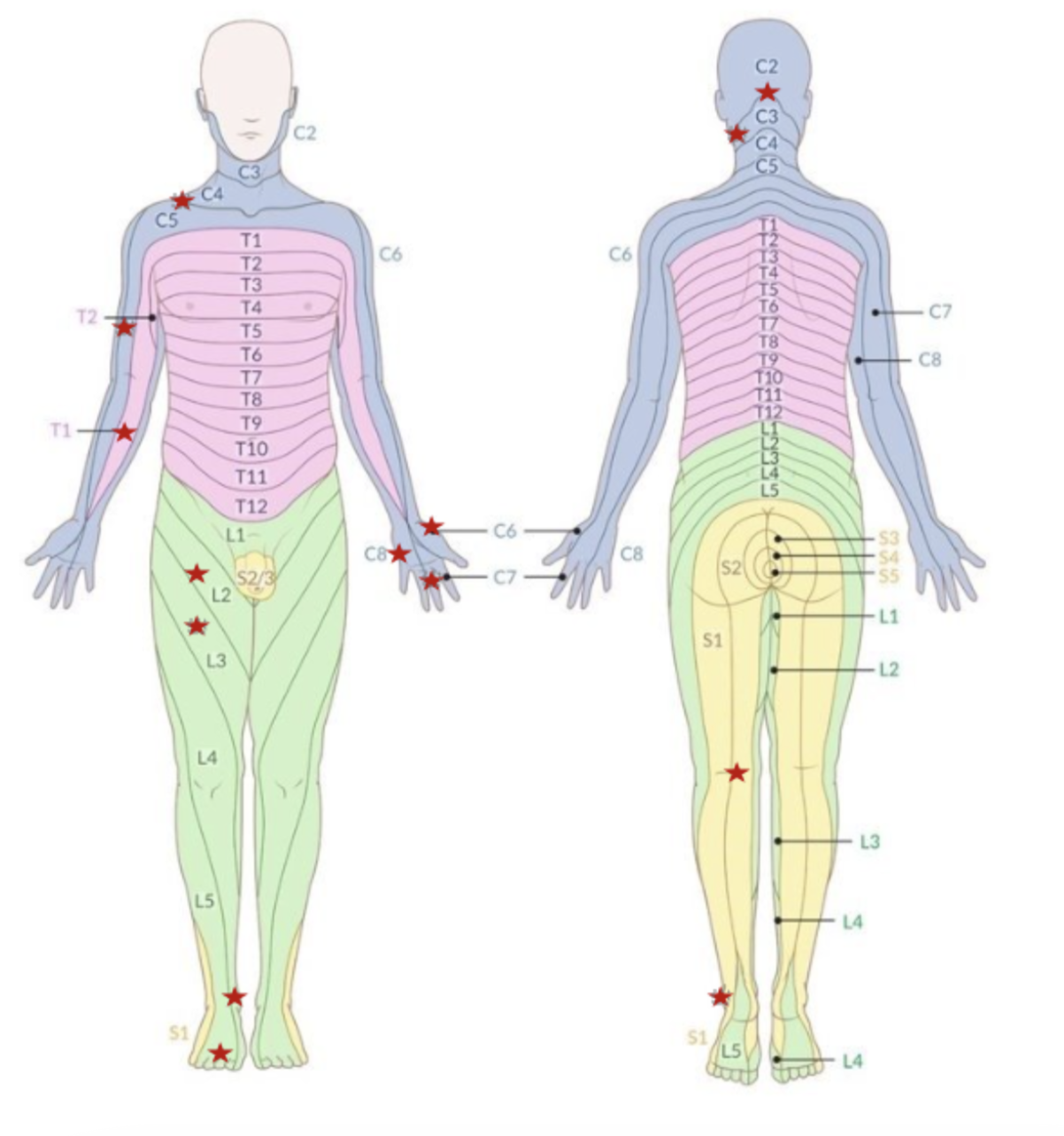
What area of skin is dermatome L2?
Anterior proximal thigh

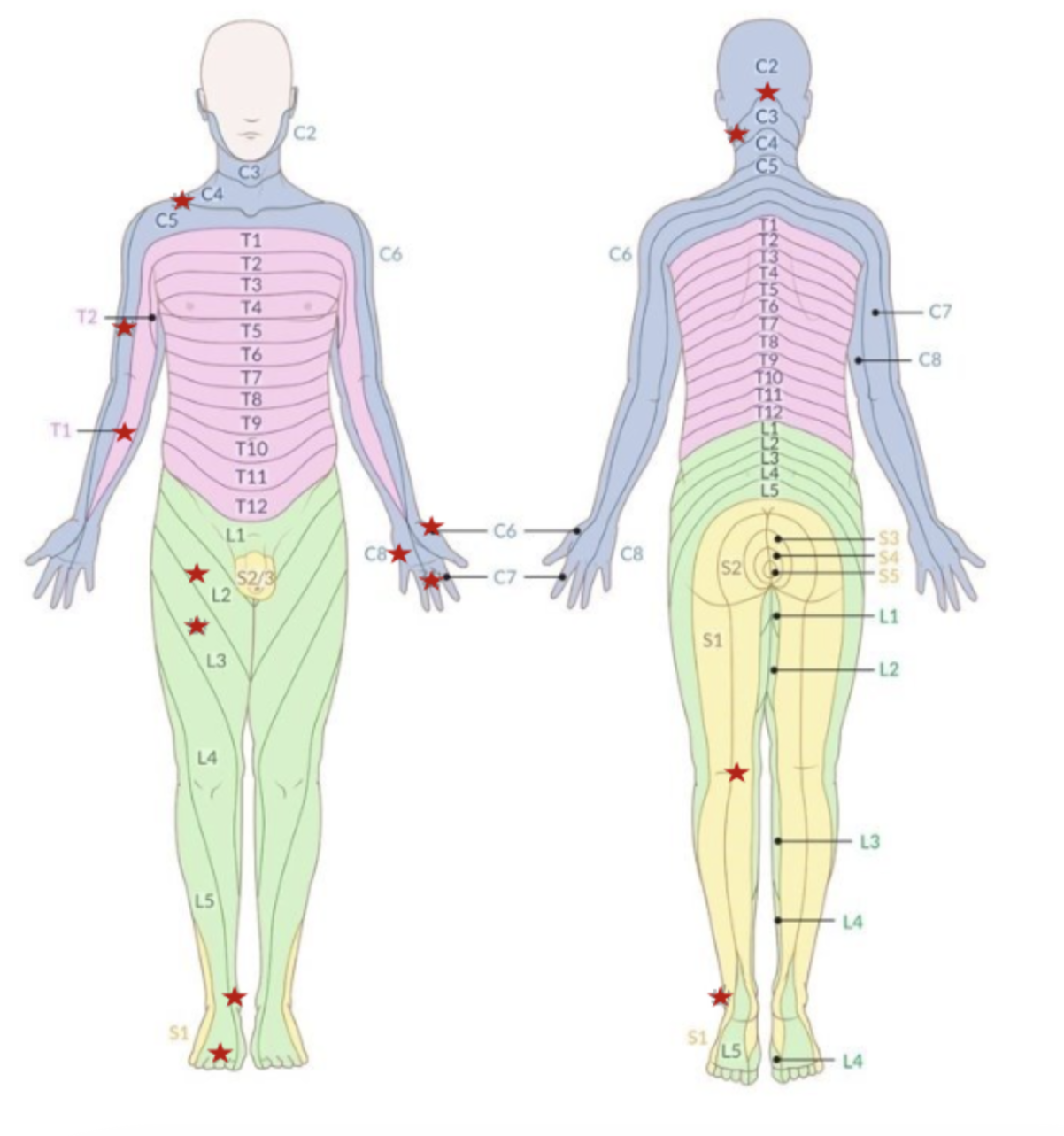
What area of skin is dermatome L3?
Middle third of anterior thigh

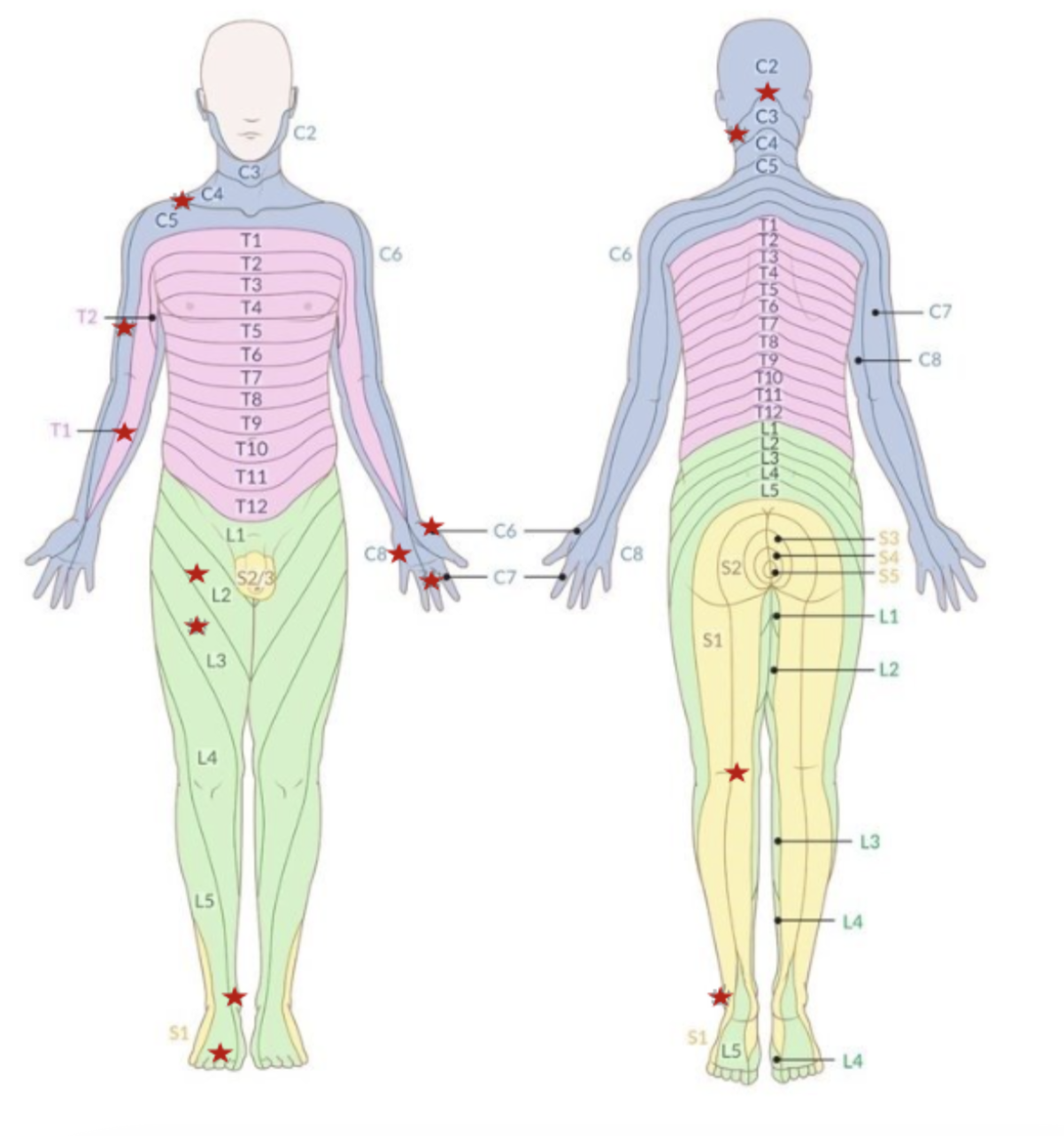
What area of skin is dermatome L4?
Patella & medial malleolus


What area of skin is dermatome L5?
Fibular head & dorsum of foot


What area of skin is dermatome S1?
Lateral & plantar aspect of foot


What area of skin is dermatome S2?
Medial aspect of posterior thigh

What are myotomes?
The group of muscles primarily innervated/controlled by a single motor nerve group
What are the 5 cardinal signs of inflammation?
Include the Latin terminology!
Heat (calor)
Redness (rubor)
Swelling (tumor)
Pain (dolor)
Loss of function (functio laesa)

What are the 3 stages of tissue healing & their rough timelines?
Inflammation (days 1-6)
Proliferation (days 3-20)
Remodeling/Maturation (days 9-onwards; could be 1-2 years)
Inflammation Phase:
What starts the inflammation phase?
What are the 2 goals of acute inflammation?
What cells are involved & what do they do to prepare the tissue for healing?
What happens if no inflammation occurs?
When the normal physiology of a tissue is altered by disease or trauma
Restore function by eliminating the pathological or physical insult; Replace the damaged or destroyed tissue & promoting regeneration of normal tissue structure
Platelets = coagulate to block off the injured area; Neutrophils = fight infection; Macrophages = remove any dead cells
Healing can’t take place
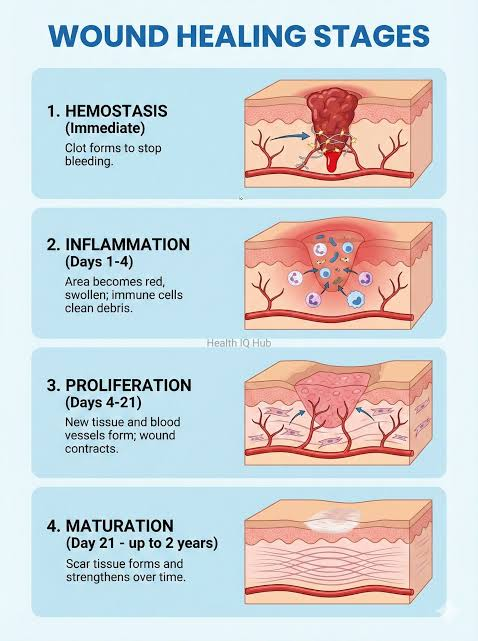
Proliferation Phase:
What are the 2 goals?
What’s happening during this phase and how does it happen?
What is the relationship between collagen & strength during proliferation?
Cover the wound; Provide strength to the injury site
Injured tissue gets replaced by newly formed tissue; Fibroblasts = make collagen, which makes new connective tissue; Neovascularization = new capillaries form through angiogenesis (new vessels come from pre-existing ones)
During this phase, the injured area has the greatest amount of collagen, yet its tensile strength can be as low as 15% of that of normal tissue

Remodeling/Maturation Phase:
What is the goal of this phase?
What 2 things are happening to the newly-formed scar tissue?
What physical signs show that remodeling is still occurring?
To restore prior function to the injured site
Fiber orientation begins to mimic that of pre-injured tissue; Improves balance of collagen synthesis & lysis
The scar will appear redder/darker than the surrounding tissue
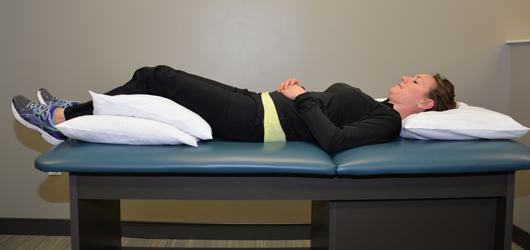
How do you position a pt for short-term supine?
Pillow under head
Pillows or bolster under the knees
This minimizes excessive lumbar lordosis!
How do you position a pt for short-term prone?
Pillowcase inside cutout of table
Pillow or bolster under the shins
Pillow under stomach/hips

How do you position a pt for short-term side-lying?
Pillow under head
Small towel roll under the waist (not-typical)
Pillow between the knees w/ pt hugging another pillow

How do you position a pt for short-term sitting?
Small bolster or towel roll behind small of back; Can also place a pillow
Hips flexed to 90° by elevating feet w/ a stool or lowering the table to the ground

What are the 5 types of energy transfer?
Describe them & provide an example
Convection — direct contact (ex. moist heat pack)
Conduction — movement of air, matter, or liquid (ex. fluidotherapy)
Conversion — energy transforms from one form into another (ex. ultrasound)
Radiation — transfers heat through air (ex. infrared lamp)
Evaporation — transformation of liquid to gas (ex. vapocoolant sprays)
Physiological Effects of Thermotherapy:
What are the 3 different levels (temperatures) of heat?
Mild = 104°F
Vigorous = 104-111.2°F
Damage = greater than 111.2°F
What are the 6 indications of thermotherapy?
Pain reduction & management
Reduce muscle guarding
Increase soft tissue extensibility
Increase ROM
Osteoarthritis
Rheumatoid arthritis
What are the 7 contraindications to thermotherapy (heat)?
Impaired sensation
Impaired mentation
Malignant tumor (cancer)
Recent or potential hemorrhage (bleeding)
Peripheral vascular disease (PVD; narrowing, blockage, or spasms in a blood vessel → blood can’t get to peripheral areas of the body)
Thrombosis (formation of a blood clot inside a blood vessel → blood flow is obstructed)
Infrared radiation of the eyes
What are the 10 precautions to thermotherapy (heat)?
Acute injury/inflammation
Pregnancy
Impaired circulation
Poor thermal regulation (body can’t maintain normal internal temperature)
Edema
Cardiac insufficiency
Metal/jewlery in the area
Open wounds
Over areas where topical counterirritants have recently been applied
Demyelinated nerves (damage to myelin sheath → slows or stops electrical impulses)
What are 5 superficial heating agents (methods/types)? What are 2 deep heating agents (methods/types)?
Superficial:
Moist heat packs
Air-activated heat wraps
Warm whirlpool
Fluidotherapy
Paraffin wax
Deep:
Continuous, uninterrupted ultrasound
Continuous, shortwave diathermy
What are the treatment times for thermotherapy (moist heat, fluidotherapy. & paraffin)?
Moist heat packs = 10-20 minutes (10 minutes for achieve maximum skin temperature change)
Fluidotherapy = 10-15 minutes
Paraffin wax = 15-20 minutes
What are the 5 physiological effects of cryotherapy (cold)?
Vasoconstriction of superficial blood vessels
Reflex vasconstriction (when blood vessels involuntarily vasoconstriction is response to smooth muscle contraction)
Reduce blood flow
Reduce metabolic rate
Decrease elasticity
What are the 5 indications for cryotherapy (cold)?
Pain reduction
Reducing muscle guarding
Reducing muscle spasticity
Reduce inflammation
Reduce edema
What are the 6 contraindications for cryotherapy (cold)?
Hypersensitivity to cold
Raynaud’s disease (temporary narrowing of small blood vessels in fingers & toes → hands & feet become cold)
Cryoglobulinemia (blood proteins clump together in cold temperatures → blood vessels get blocked → inflammation)
Paroxysmal cold hemoglobinuria (exposure to cold temperatures triggers immune system to destroy its RBCs)
Peripheral vascular disease (PVD; narrowing, blockage, or spasms in a blood vessel → blood can’t get to peripheral areas of the body)
Over an area of circulatory compromise
What are the 5 precautions for cryotherapy (cold)?
Over the superficial main branch of a nerve
Over an open wound
Hypertension (vasoconstriction makes the heart work harder than it already has to)
Poor sensation or mentation
Very young & very old pts
With cryotherapy, what tissue temperature may result in thermal damage to tissue?
50°F or below
What are the 5 different methods/types of cryotherapy (cold)?
Ice massage
Game Ready (cold w/ compression)
Gel ice packs
Cold baths
Vapocoolant sprays
What are the treatment times for cryotherapy (ice massage, Game Ready, gel ice packs)?
Ice massage = 5-10 minutes for 10×15 cm area (can go up to 20 minutes)
Game Ready = 10-30 minutes (depends on temperature)
Gel ice packs = 10-15 minutes
Patient response to treatment:
When performing a skin assessment prior to applying heat/ice, what 3 characteristics are you looking for?
What are the 2 types of pigmentation you can observe? What are they indications of?
Color (pigmentation), continuity (presence of wounds, blisters, or rashes), temperature
Pale or bluish = decrease in blood flow (frostbite); Pink or red = increase in blood flow (burn or inflammation)
Patient response to treatment:
What is blanching?
How do you perform a Capillary Refill Test? What do the results tell you?
When a reddish/colored area of skin temporarily turns white/pale when you press on it
Apply pressure to the skin → area of skin turns white/pale → pigmentation should reappear within 3 seconds; Longer response time may indicate impaired circulatory function or possible increased sensitive to heat/cold if scar tissue is present

Patient response to treatment:
What is erythema?
What is pallor?
What is mottling of the skin? What can this be an indicator of?
Redness of the skin caused by hyperemia (increased blood flow)
Paleness, ashen/gray, yellowish skin
Spotty patches of erythema that occur after application of thermal agents; Can be a warning sign of potential inability of the tissue to respond appropriately/adequately to the thermal agent

Patient response to treatment:
What 3 changes occur after heat application?
What 2 changes occur after cold application?
Local vasodilation, erythema, & possible perspiration
Vasoconstriction, then reflex vasodilation after 8 minutes of application
Patient response to treatment:
What are contraindications for heat/cold related to temperature of the area to be treated?
Red & warm = pt may have infection or inflammation
Cooler & pale = pt may have impaired circulation (vascular insufficiency)
What are 3 thermal & 4 non-thermal purposes for using ultrasound?
Thermal Purposes:
Heats deep tissue
Increase tissue extensibility
Heating tendons, ligaments, joint capsules, & fascia
Non-thermal Purposes:
Accelerate body’s natural healing process
Increase cell membrane permeability
Promotes function of various types of cell
Particularly effective during inflammatory phase of tissue repair
What are the 8 indications for using ultrasound?
Soft tissue shortening
Pain control
Tendon & ligament injuries
Introduction of medication through phonophoresis (topical agent application using US)
Dermal ulcers
Surgical skin incisions
Carpal tunnel syndrome
Tissue with high collagen content & tissue boundaries
What are the 9 contraindications for ultrasound?
Malignant tumor (cancer)
Pregnancy
Central nervous system tissue
Joint cement
Plastic components
Pacemaker/implantable cardiac rhythm device
Thrombophlebitis (blood clot blocks 1 or more veins)
Eyes
Reproductive organs
What are the 4 precautions for ultrasound?
Acute inflammation = heat can exacerbate this
Epiphyseal plates = high-dose US w/ intensities greater than 0.5 W/cm2 shouldn’t be applied over growing epiphyseal plates
Fractures = low-dose US can accelerate Fx healing, but high-intensity can cause pain & may impair Fx healing
Breast implants = heat may increase pressure inside, causing it to rupture
What is indirect ultrasound?
What makes it different from direct ultrasound? How is the sound head oriented in relation to the involved body part? Generally, what intensity should be used?
When water is used as a coupling agent instead of gel typically for uneven surfaces (ex. hands/fingers or feet)
The involved body part & sound head of the US device are submerged in a plastic container of water
The sound head is held 1-2 cm away from the body part
Intensity must be increased by 50% (0.5) compared to direct
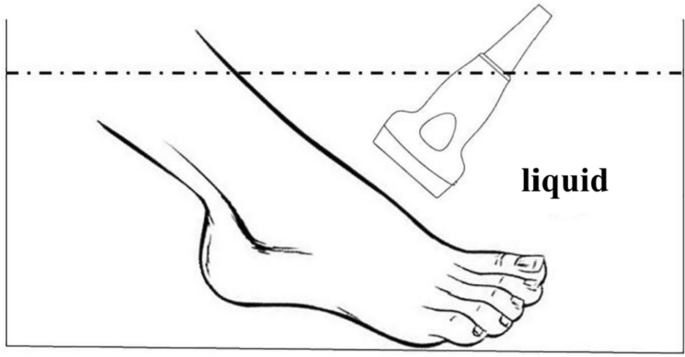
What is the difference between pulsed and continuous ultrasound?
How are they written on the ultrasound machine? What general patient conditions are they used for? What intensities are used for each?
Duty factor parameters (aka the percentage of on time/(on + off time))
Pulsed:
20% (most common) or 50% duty cycle
used for acute pain & non-thermal effects
0.3 - 1.0 W/cm2 intensity
Continuous:
100% duty cycle
used for chronic pain & thermal effects
0.5 - 2.0 W/cm2 intensity
What are the 5 parameters for ultrasound?
Frequency (MHz)
Intensity (W/cm2)
Duty Cycle (continuous or pulsed)
Size of Treatment Area
Duration
What are the 2 different frequencies used for ultrasound? When would you use them?
1 MHz = DEEP tissues (2.5 - 5 cm)
3 MHz = SUPERFICIAL tissues (1 - 2 cm)
Patient response to treatment:
What can the pt expect to feel with ultrasound?
Normally, the pt should not feel anything aside from the ultrasound gel & the sound head on their skin
Depending on the treatment, the sound head may get warm
Pt should inform if it gets too hot or yields a stinging sensation
What are the 4 indications for cervical traction?
Osteoarthritis
Radiculopathy (radiating nerve pain that “shoots down” their body)
Disc herniation (when the soft center of a spinal cushion pushes through & presses on nearby nerves)
Tension headaches
What are the 3 indications for lumbar traction?
Low back pain
Radiculopathy (radiating nerve pain that “shoots down” their body)
Disc herniation (when the soft center of a spinal cushion pushes through & presses on nearby nerves)
What are the 11 contraindications for traction?
Any motion that is contraindicated (pts are prescribed to not move in certain directions)
Acute injury or inflammation
Joint hyper mobility or irritability
Peripheralization of symptoms with traction
Uncontrolled hypertension
Spinal infections
Rheumatoid arthritis
Osteoporosis
Cancer of the spine
Fractures
Hernias, hemorrhoids, aneurysms
What are the 8 precautions for traction?
Disc protrusions
If pain resolves immediately after traction
Displaced annular fragment
Pregnancy
Claustrophobia
Inability to tolerate prone/supine position
Disorientation
Acute injury or ligament strains
What is the friction coefficient? What is the standard?
Why is this used? When is it used?
An amount that tells you how much of your traction pulling force gets “eaten up” by friction between the table and the pt’s body during lumbar traction; Standard is 0.5 (50%)
Used to account for the friction between the pt & the table when pulling on a pt for lumbar traction; Also takes into account whether the pt has a thoracic harness or not & if there is a split table
Only used in the absence of a split table; Considers the pt being pulled w/o the thoracic harness & w/ the thoracic harness
What is the difference between static & intermittent traction?
Static:
low force & shorter treatment duration usually used for initial/acute phase
force is consistently held throughout the total treatment time
Intermittent:
greater force & longer treatment duration
force is held at max for a hold time, then released to the min force for a relax time
What are the parameters for cervical traction?
Include goal of treatment, total force, hold/relax time, & total treatment time
Initial/Acute Phase:
7-9 lbs
static
5-10 min
Joint Distraction:
20-29 lbs; 7% of body weight
15/15 sec
20-30 min
Decreased Muscle Spasm:
11-15 lbs
5/5 sec
20-30 min
Disc Problems or Stretch of Soft Tissue:
11-15 lbs
60/20 sec
20-30 min
What are the parameters for lumbar traction?
Include goal of treatment, total force, hold/relax time, & total treatment time
Initial/Acute Phase:
29-44 lbs; 25% of body weight
static
5-10 min
Joint Distraction:
50 lbs; 25-50% of body weight
15/15 sec
20-30 min
Decreased Muscle Spasm:
25% of body weight
5/5 sec
20-30 min
Disc Problems or Stretch of Soft Tissue:
25% of bodyweight
60/20 sec
20-30 min
Patient response to treatment:
What is radicular pain? What is centralization? What is peripheralization?
Radiating nerve pain
Symptoms move back towards the spine (good sign)
Symptoms spread further away from the spine (bad sign)
What is manual traction?
When is it used?
Traction before by the clinician using their hands or extensions (belts/harnesses)
used before attempting mechanical traction to determine whether symptoms centralize or peripheralize
What are the indications (mechanical, 4, & physiological, 5, effects) for myofascial release & STM?
Mechanical Effects:
Stretch intramuscular CT
Enhance tissue repair & scar formation
Break up adhesions
Increases ROM
Physiological Effects:
Reflexive = Sedation (reduces BP & HR, reduces anxiety & stress)
Relieves tension
Increases blood flow
Reduces pain
Increases lymphatic & blood flow
What are the 6 contraindications for myofascial release and STM?
Fever = may be a sign of acute inflammation or systemic distress
Acute inflammation = massage may spread inflammation
Skin conditions = anything contagious or that could be worsened by applying pressure
Blood poisoning & infections = massage increases circulation in both the lymphatic & circulatory systems
Malignancy (cancer) = massage increases circulation in both lymphatic & circulatory systems
Bleeding & bruising = possible disruption of tissues already damaged
What are the 8 precautions for myofascial release & STM?
Recent surgery = contact physician + be careful where & how much pressure you apply
Burns = skin is extremely fragile
Recent fractures = stability of the fracture site will need to be discussed with the physician
Decreased sensation = pt may not be able to provide accurate feedback
Increased sensitivity to touch = be aware of pt’s reaction to massage & adjust accordingly
Cardiovascular disorders = pts may be on medications & increased circulation may/may not be desired
Edema = some may be indication, while others may be contraindications/precautions
Osteoporosis = bones are brittle & fracture more easily
What are the 8 techniques used for myofascial release & STM?
Effleurage
Petrissage
Tapotement
Myofascial skin rolling
Myofascial spreading technique
Scar mobilization
Trigger point release
Transverse Friction (Cross-Friction)

What is effleurage?
Include technique, why it’s used, & what it’s effects are
Slow, repetitive strokes applied by sliding & gliding hands over body commonly used to being/end or to transition
Has the mechanical effect of stretching muscle & fascia; increases venous & lymphatic circulation

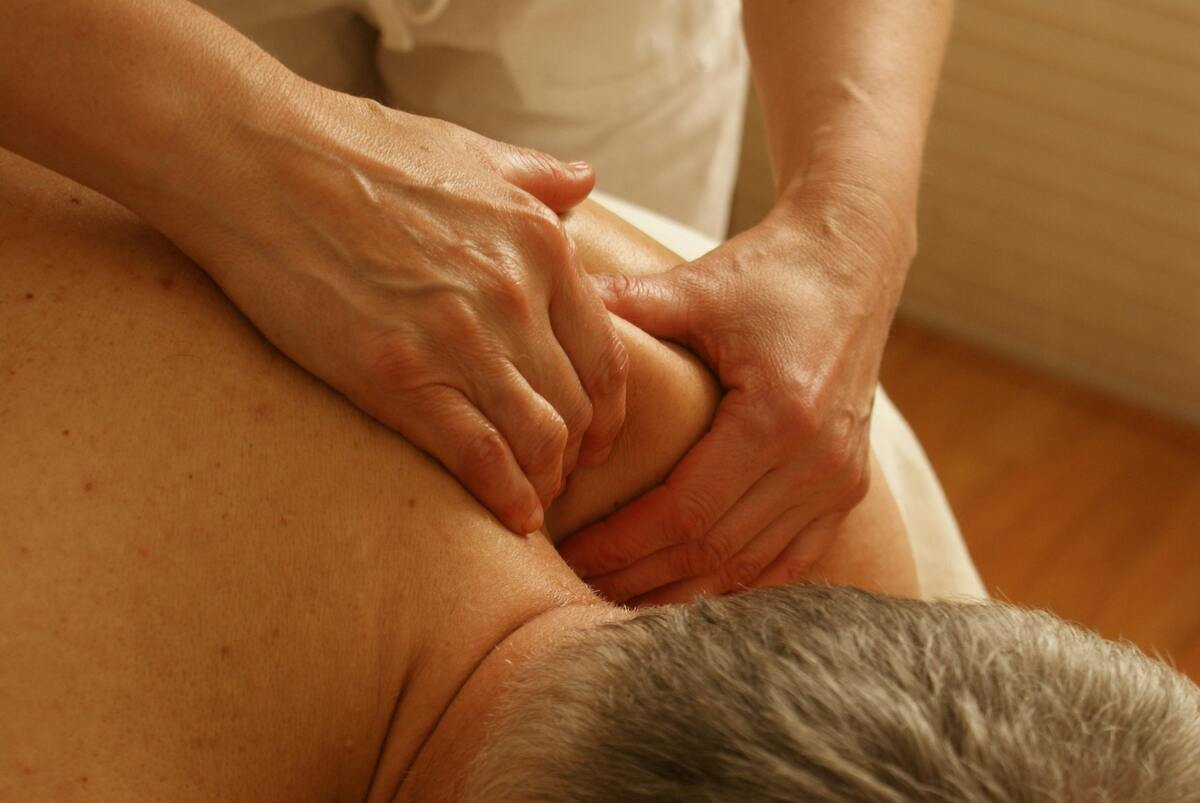
What is petrissage?
Include techniques & effects
After effleurage; includes kneading to break adhesions
Pressing, rolling, squeezing to improve mobility in superficial & deep muscle fascia
Improves circulation & cellular nutrition


What is tapotement?
What are the 3 techniques?
Percussion movements performed in a rapid, alternating matter w/ minimal force
Hacking = hands neutral & facing each other, striking w/ ulnar side of wrist/hand (don’t hack over the kidneys!)
Rapping = uses a lightly closed & loosely held fist
Cupping = hands cupped & thumb held against 1st metacarpal; light force creates a hollow sound

What is myofascial release?
What are the 2 types?
A set of soft tissue techniques aimed at relieving soft tissue from the abnormal grip of tight fascia; Relieves mobility restrictions & pain
Myofascial skin rolling technique
Myofascial spreading technique

What is scar mobilization?
What are the different techniques? What are the effects?
Various massages techniques to separate tissues & break up adhesions created by skin scarring
lifting, broadening, & applying shear forces
may lead to increased skin, muscle, & joint flexibility


How do you perform Trigger Point Release?
What does trigger point release do?
Pressing firmly on a trigger point for 20-60 seconds, gradually increasing pressure to the point that the pt reports discomfort
causes the sarcomeres to lengthen


What is Transverse Friction (cross-friction) technique?
How long should this be performed?
What conditions is this technique indicated for?
Repetitive, specific, non-gliding technique that produces movement between the fibers of the CT (2-3 cycles per second for 5-20 minutes)
Used for any condition where mobility has been compromised by irregular tissue remodeling (ex. sprains, strains, tendinitis, tensynovitis, plantar fasciitis)
