Dr. Dolan: Microbiology Lab Exam 3
 Call Kai
 Learn
 Practice Test
 Spaced Repetition
 Match
 Flashcards
 Knowt Play
1/58

There's no tags or description
Looks like no tags are added yet.
59 Terms
Amoeba proteus
Proper name of organism: Amoeba proteus
General type of microorganism: Protozoan
Primary taxonomic group: Sarcodina
Characteristic traits:
Moves using pseudopods ("false feet")
Changes shape as it moves
Cytoplasm flows into bulges to move the cell forward
Diseases caused: Amoeba proteus itself is non-pathogenic and does not cause disease in humans.

Balantidium coli
Proper name of organism: Balantidium coli
General type of microorganism: Protozoan
Primary taxonomic group: Ciliophora (Ciliates)
Characteristic traits:
Moves using cilia, which are short, hair-like structures that beat rhythmically
Among the fastest microorganisms due to ciliary movement
Has a complex cell structure, including a macronucleus and micronucleus
Capable of both asexual reproduction (binary fission) and sexual reproduction (conjugation)
Diseases caused:
Causes balantidiasis, an intestinal infection

Candida albicans
Proper name of organism: Candida albicans
General type of microorganism: Fungus
Primary taxonomic group: Ascomycota
Characteristic traits:
Produces sexual spores in asci (sacs)
Can grow as yeast or filamentous hyphae (dimorphic)
Part of the normal flora in humans (especially mouth, gut, and genitals)
Opportunistic pathogen
Diseases caused:
Candidiasis (includes oral thrush, vaginal yeast infections, diaper rash, and systemic infections)

Coprinus comatus
Proper name of organism: Coprinus comatus
General type of microorganism: Fungus
Primary taxonomic group: Basidiomycota
Characteristic traits:
Produces sexual spores on basidia located on gills under the mushroom cap
Recognized by its shaggy cap and tendency to deliquesce (liquefy into black ink-like substance) as it matures
Commonly found in grassy areas and disturbed soils
Considered edible when young, before it turns black and inky
Diseases caused:
None known — Coprinus comatus is not pathogenic to humans; it is more notable as a saprophytic decomposer than a disease-causing organism

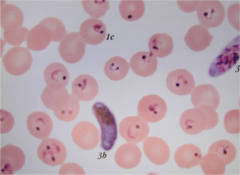
Plasmodium falciparum
Proper name of organism: Plasmodium falciparum
General type of microorganism: Protozoan
Primary taxonomic group: Apicomplexa
Characteristic traits:
Contains a specialized organelle called an apicoplast, used to pierce and enter host cells
Nonmotile in most life stages, except for flagellated sexual gametes
Parasitic lifestyle — must infect host cells to survive and reproduce
Complex life cycle involving both mosquito and human hosts
Diseases caused:
Malaria, specifically the most severe and deadly form
Rhizopus stolonifer
Proper name of organism: Rhizopus stolonifer
General type of microorganism: Fungus
Primary taxonomic group: Zygomycota
Characteristic traits:
Produces a zygotic structure when mating
Forms zygospores that are released from fruiting bodies
Grows as fuzzy or cottony mold, especially on bread and baked goods
Asexual spores can also be produced in sporangia
Diseases caused:
Can cause mucormycosis
Common bread mold — not typically harmful to healthy individuals, but can spoil food

Trypanosoma cruzi
Proper name of organism: Trypanosoma cruzi
General type of microorganism: Protozoan
Primary taxonomic group: Mastigophora (Flagellates)
Moves using a flagellum
Belongs to the "flagellates" group
Has a complex life cycle involving an insect vector (triatomine bug/"kissing bug") and a mammalian host
Found in blood and tissues
Reproduces asexually in human hosts
Diseases caused:
Chagas disease (also known as American trypanosomiasis)
Can cause long-term heart and digestive system complications

Spirogyra species
Proper name of organism: Spirogyra species
General type of microorganism: Algae
Primary taxonomic group: Charophyta
Characteristic traits:
Green algae found in freshwater environments
Has spiral-shaped chloroplasts (which give it its name)
Reproduces through fragmentation and sexual reproduction via conjugation
Non-motile (doesn't move on its own)
Performs photosynthesis
Diseases caused:
None directly (Spirogyra is non-pathogenic), but overgrowth can contribute to algal blooms that may affect water quality

Volvox globator
Proper name of organism: Volvox globator
General type of microorganism: Algae
Primary taxonomic group: Chlorophyta
Characteristic traits:
Colonial green algae made up of hundreds to thousands of cells arranged in a spherical structure
Each cell has two flagella used for coordinated swimming
Exhibits both asexual and sexual reproduction
Lives in freshwater environments
Performs photosynthesis
Shows a basic form of cellular differentiation—some cells are for movement, others for reproduction
Diseases caused:
None; Volvox is non-pathogenic and does not cause disease

Chondrus crispus
Proper name of organism: Chondrus crispus
General type of microorganism: Algae
Primary taxonomic group: Rhodophyta (Red algae)
Characteristic traits:
Commonly called Irish moss
Appears red to purple in color
Grows in marine environments, especially along rocky coasts
Rich in carrageenan, a substance used as a thickener in food and cosmetics
Performs photosynthesis
Has a branched, cartilaginous texture
Diseases caused:
None; Chondrus crispus is non-pathogenic and does not cause diseases

Ascaris lumbricoides
Proper name of organism: Ascaris lumbricoides
General type of microorganism: Helminth
Primary taxonomic group: Nematoda (roundworm)
Characteristic traits:
Has a round, elongated, unsegmented body
Belongs to the roundworms
Parasitic—lives in the intestines of the host
Reproduces sexually; females can produce thousands of eggs daily
Eggs are passed in feces and can contaminate food or water
Diseases caused:
Ascariasis

Clonorchis sinensis
Proper name of organism: Clonorchis sinensis
General type of microorganism: Helminth
Primary taxonomic group: Trematoda (flukes)
Characteristic traits:
Belongs to the flatworms (Platyhelminths)
Has a nonsegmented, flat body
Parasitic; infects the liver and bile ducts of humans
Life cycle includes multiple hosts, often involving snails and freshwater fish
Transmitted by eating undercooked or raw freshwater fish
Diseases caused:
Clonorchiasis

Dipylidium caninum
Proper name of organism: Dipylidium caninum
General type of microorganism: Helminth
Primary taxonomic group: Cestoda (tapeworms)
Characteristic traits:
A flatworm (Platyhelminth)
Has a segmented body, typical of tapeworms
Commonly found in dogs and cats, but can infect humans, especially children
Transmitted by ingesting fleas that carry the larval stage
Adult worm lives in the intestines and releases segments containing eggs
Diseases caused:
Dipylidiasis

Taenia saginata
Proper name of organism: Taenia saginata
General type of microorganism: Helminth
Primary taxonomic group: Cestoda (tapeworms)
Characteristic traits:
A flatworm (Platyhelminth)
Has a segmented, ribbon-like body
Commonly known as the beef tapeworm
Can grow several meters long inside the human intestine
Transmitted through undercooked or raw beef containing cysticerci (larval cysts)
Diseases caused:
Taeniasis

Trichinella spiralis
Proper name of organism: Trichinella spiralis
General type of microorganism: Helminth
Primary taxonomic group: Nematoda (roundworms)
Characteristic traits:
A roundworm (Ashelminth)
Unsegmented, cylindrical body shape
Parasitic and typically found in undercooked pork or wild game
Larvae encyst in muscle tissue, where they can remain for years
Adults live in the intestines, while larvae migrate through the bloodstream and encyst in muscle
Diseases caused:
Trichinosis (or trichinellosis)

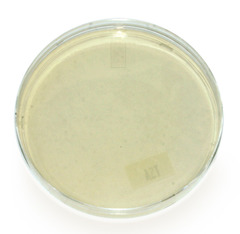
What is TSA?
- Tryptic Soy Agar
- General Purpose Medium
What is MAC?
- MacConkey Agar
- Selective and Differential
- Bile Salts, Crystal Violet, Lactose
- Identifies gram- Enterobacteriaceae
- PINK: Lactose fermenting coliforms
- COLORLESS: Enterobacteriaceae
- NO GROWTH: Not gram- Enterobacteriaceae

What is MH?
- Mueller Hinton
- General Purpose
- Used for drug resistance (Kirby Bauer Test)

What is BA?
- Blood Agar
- Blood
- Grows everything; routine culture.
- ALPHA: Muddy Green.
- BETA: Yellow Halo
- Gamma: Grey.

What is CNA?
- Columbia Nalidixic Acid
- Colistin, Naladixic Acid, Blood
- Used for Gram+ bacteria.
- ALPHA: Muddy Green.
- BETA: Yellow Halo
- Gamma: Grey.

What is MHT?
- Modified Hoyle's Tellurite
- Identifies diphtheroids
- Tellurite
- GROWTH: Shiny Black Colonies = diphtheroids present
- NO GROWTH: No diphtheroids

What is KF?
- Kenner Fecal
- Identifies Enterococci
- Azide
- GROWTH: Pink = Enterococcus
- NO GROWTH: Not Enterococcus

What is EMB?
- Eosin Methylene Blue Agar
- Eosin + Methylene Blue
- Selective and Differential
- Identifies gram- Enterobacteriaceae
- PINK + BLACK: Lactose Fermenting Coliforms
- METALLIC GREEN: E. coli

What is MSA?
- Mannitol Salt Agar
- Selective + Differential
- Mannitol + NaCl
- Identifies Pathogenic/Non-Pathogenic Gram+ Staphylococcus
- YELLOW: medium turns yellow when pathogenic

What is a chemotherapeutic agent?
A chemical used to treat a medical condition.
What is an antimicrobial agent?
A chemotherapeutic agent that targets infectious microorganisms.
What is the difference between broad-spectrum and narrow-spectrum antimicrobial agents?
- Broad-spectrum: Effective against a wide range of microbes.
- Narrow-spectrum: Effective against a limited group of microbes.
What is the Kirby-Bauer test used for?
To determine the susceptibility of bacteria to various antimicrobial agents using the disk diffusion method
What type of agar is used in the Kirby-Bauer test?
Mueller-Hinton agar.
What is the "zone of inhibition"?
A clear area around an antimicrobial disk where bacteria failed to grow, indicating the effectiveness of the drug.
What three categories are used to interpret Kirby-Bauer results?
Resistant, Intermediate, and Susceptible.
Why is the Kirby-Bauer method important today?
Because of the rise of multi-drug resistant pathogens, it's essential for selecting effective treatment plans.
What does a large zone of inhibition indicate?
The bacteria are more sensitive to the antimicrobial agent.
What does the broth dilution assay determine?
It determines the lowest concentration of an antimicrobial agent needed to inhibit bacterial growth (MIC).
What does MIC stand for?
Minimum Inhibitory Concentration — the lowest concentration of an antimicrobial that prevents visible bacterial growth.
How is the MIC observed in a broth dilution assay?
It is the last tube in the dilution series that shows no visible growth after incubation.
Why are progressively lower concentrations of antibiotic used in the broth dilution assay?
To find the smallest amount of drug that can still stop bacterial growth (the MIC).
What is the MBC?
Minimum Bactericidal Concentration — the lowest concentration of an antimicrobial that kills the bacteria.
How is the MBC determined?
By transferring samples from the clear tubes (no growth) into fresh broth with no antibiotic and seeing if bacteria regrow.
If bacteria grow in the new broth after being transferred from a clear MIC tube, what does that mean?
The antibiotic only inhibited the bacteria; it did not kill them.
What does it mean if no bacteria grow in fresh broth after being transferred from a MIC tube?
The bacteria were killed, indicating that the concentration used was at or above the MBC.
What's the difference between MIC and MBC?
MIC = stops growth
MBC = kills the bacteria
What are fungi classified by and their four major groups?
- By the nature of their sexual spores.
- Ascomycota, Basidiomycota, Zygomycota, and Chytridomycota.
What structure holds the spores in Ascomycota fungi?
Spores are held in sacs called asci (singular: ascus).
Each ascus often contains four products of meiosis, useful for studying genetic inheritance
Where are spores produced in Basidiomycota fungi?
On the gills under mushroom caps, released from structures called basidia
What special structure forms during mating in Zygomycota?
A zygote, which produces many zygospores.
Causes mold on bread.
What is unique about Chytridomycota spores?
They are flagellated, allowing movement.
What is the main way protozoa are classified, and what are the four groups?
- By their method of locomotion.
- Ciliophora, Mastigophora, Sarcodina, Apicomplexa
How do members of Ciliophora move?
They use cilia — small, hair-like structures that beat to help them swim.
What's the movement method of Mastigophora?
They move using flagella, so they're called flagellates.
How do Sarcodina protozoa move?
Using pseudopods (false feet), like amoebae.
What is unique about Apicomplexa?
They have apicoplasts to pierce and enter host cells.
They are generally nonmotile, except some flagellated gametes.
What are the two main body types of helminths?
Flatworms (Platyhelminths) and roundworms (Ashelminths).
What group do roundworms belong to?
Nematoda, which includes both parasitic and free-living species.
What are cestodes commonly known as?
Tapeworms, due to their flat, segmented bodies.
Which flatworms are not segmented?
Trematoda — also called flukes.
Which group does Spirogyra belong to?
Charophyta
Which group does Volvox belong to?
Chlorophyta
Which group does Chondrus (a red algae) belong to?
Rhodophyta