4: Genetic information, variation and relationships between organisms
 Call Kai
 Learn
 Practice Test
 Spaced Repetition
 Match
 Flashcards
 Knowt Play
1/32

There's no tags or description
Looks like no tags are added yet.
33 Terms
what is a gene and locus
a gene is a section of DNA containing the coded information for making polypeptides and functional RNA. The coded information is a specific sequence of bases along the DNA molecule
Locus is the particular point that a gene is located on a chromosome
features of the genetic code
degenerate- most amino acids are coded for by more than one triplet
non overlapping- each base is read only once
universal- each triplet codes for the same amino acid in all organisms
the first amino acid in a chain is always methonine , which is later removed, so the start of a DNA sequence coding for a polypeptide is always the same
stop codes are triplets that do not code for any amino acid and mark the end of a polypeptide chain
a triple is made of 3 DNA bases and is read in one particular direction along the DNA strand
chromosomes in eukaryotes
only eukaryotic cells have chromosomes because the DNA molecules are have to be associated with histones (protein). The DNA in mitochondria and chloroplasts contains DNA that is short, circular and not associated with proteins, like in prokaryotic DNA
each human cell has 46 chromosomes
chromosome structure
dna double helix coils around proteins called histones to from a DNA-histone complex
DNA-histone complex coils up to from chromatin and is packed into the chromosome
each chromosome has one molecule of DNA with lots of genes along its length

homologous chromosomes
sexually produced organisms such as humans are produced by the fusion of an egg and sperm to contribute one complete set of chromosomes to the offspring
one chromosome in each pair is from the mother’s egg(maternal chromosomes) and one is from the father’s sperm(paternal chromosomes)
this forms a homologous pair. A homologous pair always carries the same genes but not necessarily the same alleles for the genes e.g the 23rd chromsome has the gene for sex in humans but father has XY alleles and mother has XX
the tota number of chromosomes is the diploid number(2n) and it is 46 in humans, so we have 23 homologous pairs
haploid number (n) number is the number of chromosomes in gametes

alleles
an allele is an alternative form of a gene. e.g gene=eye colour, allele 1=brown eyes, allele 2=blue eyes
Each allele has a different base sequence, so therefore different amino acid sequence, so produces a different polypeptide
changes in the base sequence of a gene are called mutations and they produce a new allele of that gene
sometimes this different protein may not function properly or at all e.g. an enzyme with a different shape active site
define genome, proteome and complete proteome
genome: full set of genes in a cell
proteome: full range of proteins produced by the genome
complete proteome: proteins produced by a given type of cell under a certain set of conditions
transcription
RNA polymerase breaks hydrogen bonds between complementary bases, separating a gene and creating a template srand
RNA free nucelotides form hydrogen bonds to the bases via complementary base paring e.g C and G, U and A
RNA polymerase catalyses the codensation reaction to form phosphodiester bonds between nucelotides in the sugar-phosphate backbone. This is pre-mRNA
pre mRNA undergoes splicing to remove introns(genes that don’t code for proteins, only in eukaryotes) and reform the functional exons
mRNA leaves the nucleus via a nuclear pore
translation
happens free in the cytoplasm in both prokaryotes and eukaryotes, only at ribosomes attached to rough ER in eukaryotes to decode mRNA to build a polypeptide chain
ribosome attaches to mRNA strand at the start codon(3 base pairs complementary to 1 DNA triplet)
a tRNA molecule with complementary anti-codons binds to the mRNA strand carrying a specific amino acid
second tRNA binds to the next codon. it also has complementary anticodons and a specific amino acid
the amino acids are linked by a peptide bond. this requires energy so ATP is required
only 2 tRNA can attach to a ribosomes at a time, so for another tRNA to join, the first must detach leaving its amino acid behind, and finds another aminoacid elsewhere
ribosome moves along mRNA and repeats until it reaches the stop codon and then the polypeptide chain detaches from ribosomes and folds into a specific shape or joins other polypeptides

gene mutations
gene mutations are changes to nucelotide bases or a change in the sequence of bases in DNA
substitution:
when one nucleotide in a Dna molecule is replaced by another nucleotide with a different base.
this may lead to one amino acid being different in the polypeptide produced→different folding→different shape so not function properly or if enzyme active site doesn’t fit substrate
However bc genetic code is generate, the amino acid produced might be the same bc multiple codons/triplets code for the same amino acid
deletion:
a gene mutation by deletion is when a nucelotide is lost. This means alll the triplets are read differently bc each has been shifted to the left by one base
chromosome mutations
polyploidy-changes in whole sets of chromosomes occur when organisms have 3 or more sets of chromosomes instead of 2, mostly in plants which causes larger fruit and a higher yeild
non-disjunction:changes in the number of individual chromosomes bc sometimes they fail to separate in meiosis( so a gamete has either one more or one less chromosomes e.g. down syndorme
mutagenic factors
increase the chance of mutations.
ionising radiation:directly damage DNA or cause base changes
carcinogenic chemicals: interfere w base pairing or cause structural damage during replication
meiosis
after S phase
meiosis I: prophase I, metaphase I, anaphase I and teleophase I and cseparates homologous pairs, crossing over, independent assortment
meiosis II: pmat II,, centromere is broken to separate chromatids

how meiosis produces genetic variation
in meiosis 1, so each gamete is unique
crossing over:
the chromatids of each pair become twisted around each other. the point where they cross is called the chaisma
twisting creates tensions so portions of the chromatids break off
broken portions rejoin with the chromatids of its homologous partner-recombination
usually the equivelent portions of homologous chromosomes are exchanged, creating new genetic combinations of maternal and paternal alleles
independent segregation/random ass ortment
in metaphase I paris of homologologous chromosomes in bivalents line up along the equator of the cell
the oreintation of each pair is random(maternal/paternal can be on either side)

how to calculate the number of combinations after meosis and fertilisation
if n= number of homologous chromosomes
n2= number of possible combinations after meiosis
2n2= number of possible combinations after fertilisation
meiosis vs mitosis
mitosis: in every cell, 1 nuclear division to produce 2 genetically identical daughter cells, each with 46 chromosomes, for growth and repair of cells and to replace damaged tissue
meiosis: in ovaries and testes, 2 nuclear divisions to produce 4 unique daughter cells with 23 chromosomes , for production of gametes
what is genetic diversity
the total number of different alleles in a population
A population is a group of individuals of same species that live in the same place and can interbreed
Genetic diversity is increased when a species has more different alleles. This is because a wider range of alleles means a wider range of characteristics so there is a greater probability that some individuals possess a characters that suits it to the new environmental conditions, and allows natural selection to occur
natural selection
within any population there is a gene pool containing wide variety of alleles
random mutations of alleles within this gene pool can result in a new alleles which is usually harmful, but in certain environments may be advantageous
individuals in a population compete for resources and there are stressors (such disease, predators)
these individuals will be better adapted and therefore more likely to survive and reproduce passing their alleles on the next generation
over many generations the frequency of the new advantageous allele in the population increases whilst the non advantageous ones decrease
directional selection
selection favoring individuals that vary in one direction from the mean of the population. This changes the characteristics of the population
if the environmental changes then the phenotypes best suited to the new conditions are most likely to survive
individuals either side of the mean possess a phenotype more suited to the new conditions and are more likely to surive and reporduces, producing offpring iwht the same characteristics
over time the mean will move in the direction of them

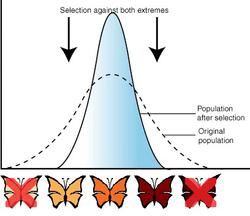
stabilising selection
if environental conditions remain stable the individuals with phenotypes closest to the mean are favoured. They are more likely to survive and reproduce passing their alleles to their offspring. Over generations, phenotypes at the extremes are eliminated.
aseptic techniques
used to avoid contamination of the sample from outside microorganisms, so data can be reliable and repeatable
wipe down surfaces with antibacterial cleaner before and after use
use a bunsen burner in the workspace so that convection currents draw microbes away from the culture
flame the wire hoop before using it to transfer bacteria
flame the neck of any bottles before using them to prevent any bacteria entering the vessels
don’t keep bacteria-containing vessels open for long
close windows and doors to limit air currents
culturing bacteria methods
Use the aseptic techniques
use a sterile wire loop or pipette to transfer bacteria to agar plate(petri dish containing agar jelly)
spread bacteria evenly over the plate using a sterile plastic spreader
use sterile forcepts to place a mult-disc antibiotic ring onto the plate or different discs containing antibiotics
lightly tape a lid on so oxygen can still enter and more harmful anaerobic bacteria can’t grow, invert (so water from condensation collects on lid not bacteria) and incubate at 25c (at 37c pathogens harmful to humans can grow bc body temp)for 48h
sterilise equipment used to handle bacteria and disinfect work surfaces
after incubation measure the diameter of the zoe of inhibition, but do not remove lid
work out the area d/2= r A=pi*r2
binomial naming, define speciews
Genus species - note uppercase G lower case s, underline when handwritting instead of italics
species- able to breed to produce fertile, living offspring
advantages of courtship behaviour
recognise members of their own species→mating only takes place between same species so they can produce fertile offspring
identify a male capable of breeding→so both partners are sexually mature, fertile and receptive to mating
form a pair bond→successful mating and raising offspring
syncronise mating→takes place when max probability of sperm and egg meeting
ensure female is during the fertile window→females are sometimes only receptive to mating around the time they produce eggs, so are more likely to produce offspring
what are the 2 main types of biological classification
artificial classifcation:
based on differences i.n features, such as colour, size, no of legs. Analogous characteristics have the same function, but not the same evolutionary origin for example wings in birds and butterflies both for flight not from same origin
phylogenetic classification:
evolutionary relationships between organisms and their ancestors
classifies species into groups using shared features derived from their ancestors
arranges groups into a hierachy where the groups are contained in larger composite groups with no overlap
phylogenetic trees can represent common ancestors between organisms
taxonomy
each group in the phylogenetic hierachy is called a taxon
did King Phillip come over for good soup
highest rank- domain:
domain kingdom, phylum, class, order, family, genus, species
what are the different domains
bacteria:
unicellular
murein cell walls
smaller 70s ribosomes
no membrane bound organelles e.g mitochondria or nuclei
circular DNA that is not associated with histones
archaea:
also prokaryotes, but their cell walls do not have murein
eukaryotes:
membrane bound organells e.g mitochondria or nuclei
linear DNA that is associated with histones
80s ribosomes except in mitochondria and chloroplasts
plants have cellulose cell walls, fungi have chitin, algae have celluose and/or glycoprotiens
define biodiversity, species diversity, genetic diversity, species richness,
biodiversity-the variety in the living world, including species, genetic and ecosystem diversity
species diversity- nuymber of different species and the number of individuals of each species in any one community
genetic diversity- the variety of genes possessed by the individuals that make up a population of a species
species richness- measure of the number of different species in a community
index of diversity
the relationship between the number of species in a community and the number of individuals in each species

human activities that reduce habitats and species diversity
deforestation: removal of trees to increase area of farmland→reduce no. and diversity of tree species, removal of habitat and food sources
hedgerow removal: increases area of farmland by removing hedges so seperate fields become one larger one, they also harbor pests which weed which can compete w crops
pesticides: kill pests to increase yeild, which reduces number of insect species and food source for organisms that eat the insects
herbicides: sprayed on weeds which could compete w crops for water, minerals ect, reucing plant diversity and food sources for organisms that feed on them
monocultures: only plant one species of plants, supports fewer organisms as a food source or habitat
conservation
give legal protection to endangered species to prevent destruction
creating protected area such as SSRIS in areas of high biodiversity
schmes to encourage farmers to replant hedgerows along field edges
stats test
chi squared: for discrete/categorical data
student’s t test: comparing the means between 2 data sets
spearmans rank correlation: testing the association between 2 covariables
standard deviation
investigating diversity
comparing base sequences of DNA:
done by auotomatic machines. due to mutations, the sequence of base nucleotides changes as new speciezs form→new species accumulates more differences in DNA→shows how closely related 2 species are
base sequence of mRNA:
mRNA is coded for by DNA, so the base sequences on mRNA are complementary to those from the strand of DNA it was made from
comparison of amino acid sequences in proteins:
determined by mRNA and therefore DNA, so more similar amino acid sequence for the same protein in 2 species means they are more similar
comparing observable characteristics:
this has lots of limitations because lots of observable things can be coded for by more than one gene, the same characteristic could have and some are a result of environmental factors.