MATH 1226 - Test 2
 Call Kai
 Learn
 Practice Test
 Spaced Repetition
 Match
 Flashcards
 Knowt Play
1/52

There's no tags or description
Looks like no tags are added yet.
53 Terms
00
Indeterminate
±∞±∞
Indeterminate
1∞
Indeterminate
∞0
Indeterminate
0⋅∞
Indeterminate
∞−∞
Indeterminate
00
Indeterminate
∞
Determinate
∞+∞
Determinate
−∞−∞
Determinate
0C[C=0]
Determinate
C0[C=0]
Determinate
Mx (Total Moment of the whole system about the x-axis)
Mx=m1y1+m2y2+⋯+mnyn
M_{x}=\frac{\rho}{2}\int_{a}^{b}f\left(x\right)^2\differentialD x
My (Total Moment of the whole system about the y-axis)
My=m1x1+m2x2+⋯+mnxn
M_{y}=\rho\int_{a}^{b}xf\left(x\right)\differentialD x
M (Sum of masses)
M =m1+m2+⋯+mn
The centroid
(x,y)
x
x=MMy
\overline{x}=\frac{\int_{a}^{b}\!xf\left(x\right)\,dx}{\int_{a}^{b}f\left(x\right)\differentialD x}
y
y=MMx
\overline{y}=\frac{\int_{a}^{b}f\left(x\right)^2\differentialD x}{2\int_{a}^{b}f\left(x\right)\differentialD x}
If f is continuous on [a, ∞), then
\int_{a}^{\infty}f\left(x\right)\differentialD x=\lim_{t\to\infty}\int_{a}^{t}f\left(x\right)\differentialD x
If f is continuous on (-∞, b], then
\int_{-\infty}^{b}f\left(x\right)\differentialD x=\lim_{t\to\infty}\int_{t}^{b}f\left(x\right)\differentialD x
If f is continuous on (-∞, ∞), then
\int_{-\infty}^{\infty}f\left(x\right)\differentialD x=\int_{-\infty}^{c}f\left(x\right)\differentialD x+\int_{c}^{\infty}f\left(x\right)\differentialD x
For p > 1
CONVERGES
For p ≤ 1
DIVERGES
If f is continuous on (a, b], but not continuous at a, then:
\int_{a}^{b}f\left(x\right)\differentialD x=\lim_{t\to a^{+}}\int_{t}^{b}f\left(x\right)\differentialD x
If f is continuous on [a, b), but not continuous on b, then:
\int_{a}^{b}f\left(x\right)\differentialD x=\lim_{t\to b^{-}}\int_{a}^{t}f\left(x\right)\differentialD x
If f is continuous on [a, c) ∪ (c, b], but not continuous on c in (a, b), then:
\int_{a}^{b}f\left(x\right)\differentialD x=\int_{a}^{c}f\left(x\right)\differentialD x+\int_{c}^{b}f\left(x\right)\differentialD x
Every continuous random variable has a probability density function, f(x), satisfying (2):
f(x)≥0
\int_{-\infty}^{\infty}f\left(x\right)\differentialD x=1
The probability that a continous random variable X lies b/w x=a and x=b is given by:
P\left(a\le x\le b\right)=\int_{a}^{b}f\left(x\right)\differentialD x
Big formula for probability density function
0\le\int_{a}^{b}f\left(x\right)\differentialD x\le\int_{-\infty}^{\infty}f\left(x\right)\differentialD x=1
Direct Comparison Test
If f(x) ≥ g(x) ≥ 0, then:
\int_{a}^{b}f\left(x\right)\differentialD x\ge\int_{a}^{b}g\left(x\right)\differentialD x\ge0
∫1∞xp1; CONVERGES if p>1, DIVERGES if p≤1
Simpson’s Rule Formula
Sn=[f(x0)+4f(x1)+2f(x2)+4f(x3)+⋯+2f(xn−2)+4f(xn−1)+f(xn)]
∫a2+u2du
a1arctan(au)+C
a = constant
u = variable
∫a2−u2du
arcsin(au)+C
a = constant
u = variable
∫uu2−a2du
a1arcsec(a∣u∣)+C
a = constant
u = variable
Condition for balance
m1d1 = m2d2
m = weight of mass
d = distance from the fulcrum (point where bar is being balanced on)
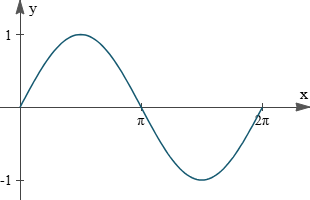
y = sinx (graph)
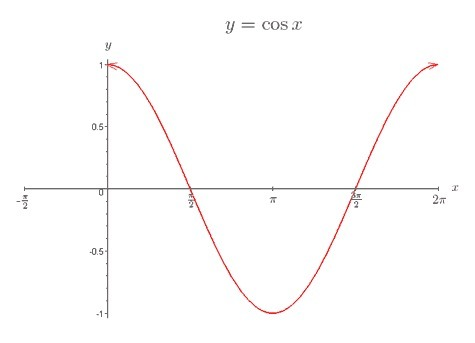
y = cosx (graph)
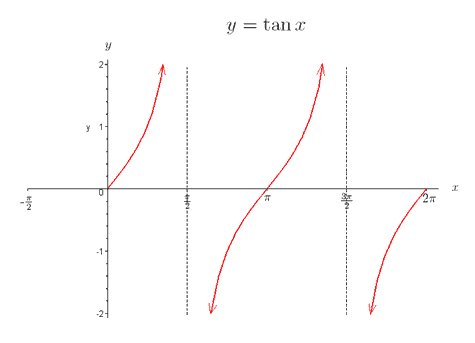
y = tanx (graph)
y = cotx (graph)

y = ln(x) (graph)

y = ex (graph)
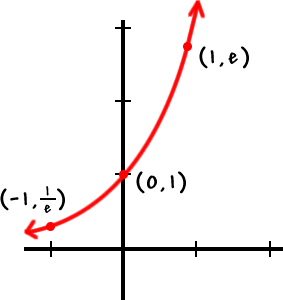
y = e-x (graph)

y = arctanx (graph)

y = secx (graph)

y = cscx (graph)

y = arcsecx (graph)

y = arccosx (graph)

y = arcsinx (graph)

Mean
μ=∫−∞∞f(x)⋅xdx, where x is the weight of each probability
Median
\int_0^{M}f\left(x\right)\differentialD x=\frac12, where M = Median
\int_{}^{}\sqrt{a^2-x^2}\differentialD x
x=asin(θ)
\int_{}^{}\sqrt{a^2+x^2}\differentialD x
x=atan(θ)
\int_{}^{}\sqrt{x^2-a^2}\differentialD x
x=asec(θ)