test 2: cahpter 5
 Call Kai
 Learn
 Practice Test
 Spaced Repetition
 Match
 Flashcards
 Knowt Play
1/38

There's no tags or description
Looks like no tags are added yet.
39 Terms
what are the four macromolecules
carbohydrate
lipids
protein
nucleic acid
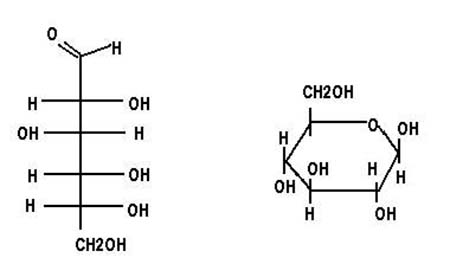
carbohydrate
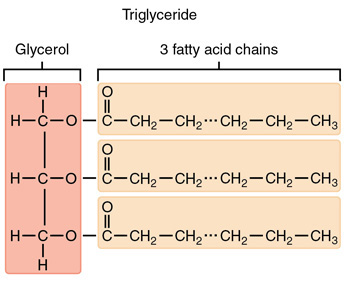
lipid - triglycerides

lipid - phospholipid

lipid - steroid

protein

nucleic acid
carbohydrates
sugars/saccharides
carbohydrates: structure
2 basic types - complex and simple
built with carbon, oxygen, hydrogen
can be linear or loop into rings
carbohydrates: function
helps cells with atp production
quick energy
build plant cell wall
build insect exoskeletons
monomer vs polymer - monomer
a building block of a molecule if complex form is built with repetition
building block for a complex molecule but the cpmplex molecule has to be built with repetition
monomer is also molecule
monomer vs polymer - polymer
complex form built through repeated addition of an unit
linked end to end with covalent bonds
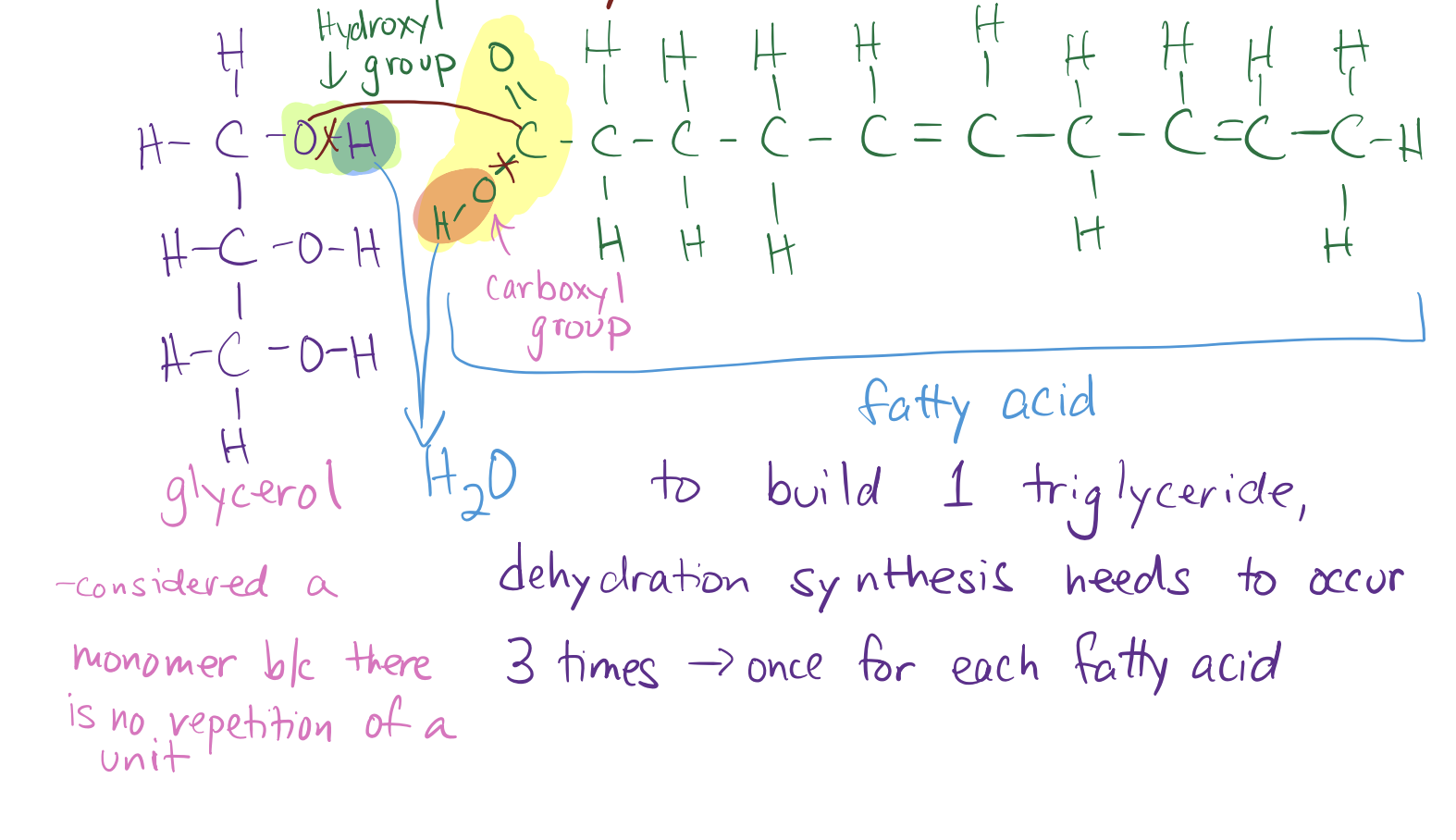
dehydration synthesis
when -OH from one molecule leaves and -H from another leaves to form one big fat H2O molecule. the 2 molecules then bond together to form 1 larger molecule

hydrolysis
OPPOSITE OF DEHYDRATION SYNTHESIS - reverses it
a larger molecule breaks into 2 smaller ones by adding pieces of H2O (-OH to one and -H to another) after breaking a bond within the mol
soooo hydrolysis is when water self inserts itself by breaking a larger molecule into two smaller ones and there is an extra -OH or -H in it
ex for triglyceride, it splits it apart back to its componenets (glycerol and its fatty acids)

carbohydrate: how can dehydration synthesis and hydrolysis can be used to build and break down carbs
dehydration builds carbohydrates because it removes a water molecule so a sugar link can form
hydrolysis breaks them down because it adds water to split the bonds soooo no more sugar links
lipids: structure
nonpolar
trans-fat
saturated fats
built with a lottt of carbon and hydrogen, a little oxygen
THREE TYPES
triglycerides
phospholipids
steroids
lipids: function
1 insulation
1 energy storage
1 cushions organs
3 chemical messengers
2 cell membrane structure (phospholipid bilayer)
1- triglyceride - energy stroage
2- phospholipids - cell borders
3- steroids - chemcal signals
lipids: triglycerides; what is glycerol
built by connecting 1 glycerol and 3 fatty acids
non polar - doesnt have polar hydroxyl groups so cant bond
glycerol
considered a monomer because there is no repetition of a unt
to build one triglyceride, dehydration synthesis needs to occur 3 times, once for each fatty acid
carboxyl group - O=C-O-H
hydroxyl - O-H
lipids: saturated vs unsaturated fats - saturated
saturated
straight and crammed together of hydrogen atoms, solid
all c to c bonds are single with max amount of h
no double bonds
solid at room temp
increased LDL and decreased HDL because they impact cells ability to absorb
LDL - low density lipoprotein
HDL - high density lipoprotein
lipids: saturated vs unsaturated fats - unsaturated
kink so hydrogen atoms cant pack together, more “liquid“
one or more C=C/ -=C and a deceased amount of H
double bond = lose hydrogen
double bond = kink
healthier
liquid at room temp
less “stackable“
polyunsaturated
goood for you, less hydrogen
3 or more C=C/C-=C bonds in fatty acid chains
hydrogenated
bad for you, more hydorgen
man made saturation of unsaturated fats by H bombardment that breaks C=C/C-=C
trans fat
when a cisisomer is altered and flattened, making its shape something the body can’t process
trans = hydrogen is across / opposite sides
phospholipids
made up of a phosphate group, glycerol, and fatty acid chain
r group has nitrogen atom
contain carbon, hydrogen, oxygen, phosphorus, and nitrogen
make up cell membrane
polar head and two non polar tails
phospahte group (head) is polar so likes water
fatty acid tail doesnt like water so hydrophobic region of cell membrane
kink is double bond and unsatured fatty acid
modified triglyceride because 1 chain is swapped
hydrophillic head → charge from choline and phosphate group that allow interactions with aqueous head
hydrophobic tail - fatty acid chains that are C/H annnd non polar

the red white thing is cell membrane
steroids
four rings
used as chemical messengers and structural component of cell membrane
cholestrol
fluidity of cell membrane
cortisol
stress = high cholestrol
estradiol (estrogen)
triglyceride storage ; brown fat vs white fat
location varies on sex, genetics and activites
adipose tissue with adipose cells/adipocytes
when fat increases, adipocytes increase in size
brown fat
extra blood vessels in babehs because they cant shiver so temp regulation
white fat
normal fat, used for energy storage
protein
amino acids are building blocks (monomer)
unfolds and loses shape due to changes in pH and temperature
can misfold
built with help from ribosomes
protein : function
structure = function
active transport
enzymes (catalyst)
signaling
repair
protein: The 3 different types of side chains and their impact on final shape
R GROUPS
nonpolar and hydrophobic
hate water
hide from water by bundling together tightly in the very center of protein
polar and hydrophilic
love water
push themselves to the outside surface of the protein so they can touch the watery surrounding, holding parts of shape togetehr like velcro
charged and hydrophilic
carry positive or negative elctrical charges
opposites attract. posoitve attract negative and loops of protein lock into place
protein: building a protein; structure again
has
amino group
carboxyl group
variable group
central carbon

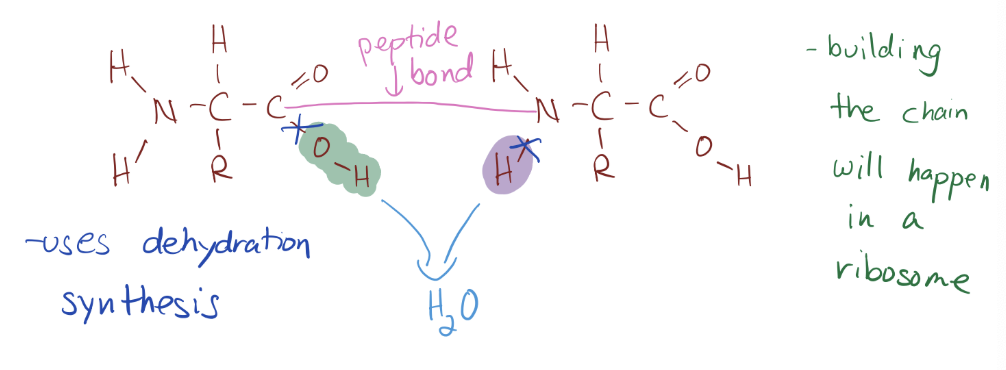
protein: hydrosynthesis
peptide bond forms
building the chain will happen in a ribosome
four levels of protein organization
primary
chain of amino acid
determined by dna
change one amino acid, entire protein fails
stabilized by peptide bonds. covalent bonds
secondary
repeating
shape are folds and helixes
stabilized by hydrogen bonds because polar r- group
tertiary
folded chain folds even more to an unique 3d shape
stabilized by
hydrogen bonds polar
ionic bonds charged
other van der waals any
disulfide bridges polar
hydrophobic interaction
quaternary
two or more tertiary polypeptides combined to form a functional protein with a unique 3d shape
chaperonin
protects an unfolded protein until it can fold into proper 3d shape
enzymes
enzymes are very specific, each enzyme only catalyzes one exact reaction
lock and key, enzyme is lock and molecule (substrate) is key
speed up chemical reactions
lower the energy required to make molecules react
build (anabolic)
break (catabolic)
as a protein, enzymes can unfold if pH or T changes
inhibitors - molecules turn anzymes off, block active site (the enzyme)
non inhibitors change shape of enzyme itself
nucleic acid
DNA
RNA
mRNA
tRNA
rRNA
nucleic acid: structure
base: c, t, g, a, u
monomer is nucleotide
single or double helix
sugar - deoxyribose vs ribose
backbone - phosphate group and sugar
built with help of enzymes
nucleic acid: functions
express genetic information - has instructions that allow for building of proteins

dna structure
double helix
a=t and c=g
a and g is purine nitrogenous base
c and t and u in rna are pyrimidines
antiparallel
one side is 5’-3’ and its partner is 3’-5’
hydrogen bonds
outer backbone is strong covalent bonds, bases in middle are bonded with weak hydrogen bonds
do this because think of the bases like a zipper, you can unzip it down the middle sooo cellular machinese can come and copy it