Sign Charts, S=d/t, and Fractions
 Call Kai
 Learn
 Practice Test
 Spaced Repetition
 Match
 Flashcards
 Knowt Play
1/109

There's no tags or description
Looks like no tags are added yet.
110 Terms
What is an expression?
What is the goal?
Expression:
no “=“ sign
Goal is to simplify things
What are the legal moves of an expression?
Multiply or divide the TOP AND BOTTOM by the same thing

What is an equation?
What is the goal?
Has an “=“ sign
Goal: to find a solution
A solution is any number plugged into an equation that makes the statement true (i.e 5=5)
What are the legal moves of an equation?
You MUST do the same thing on BOTH SIDES of an equation!

What are natural numbers?
Counting numbers (positive whole number integers)
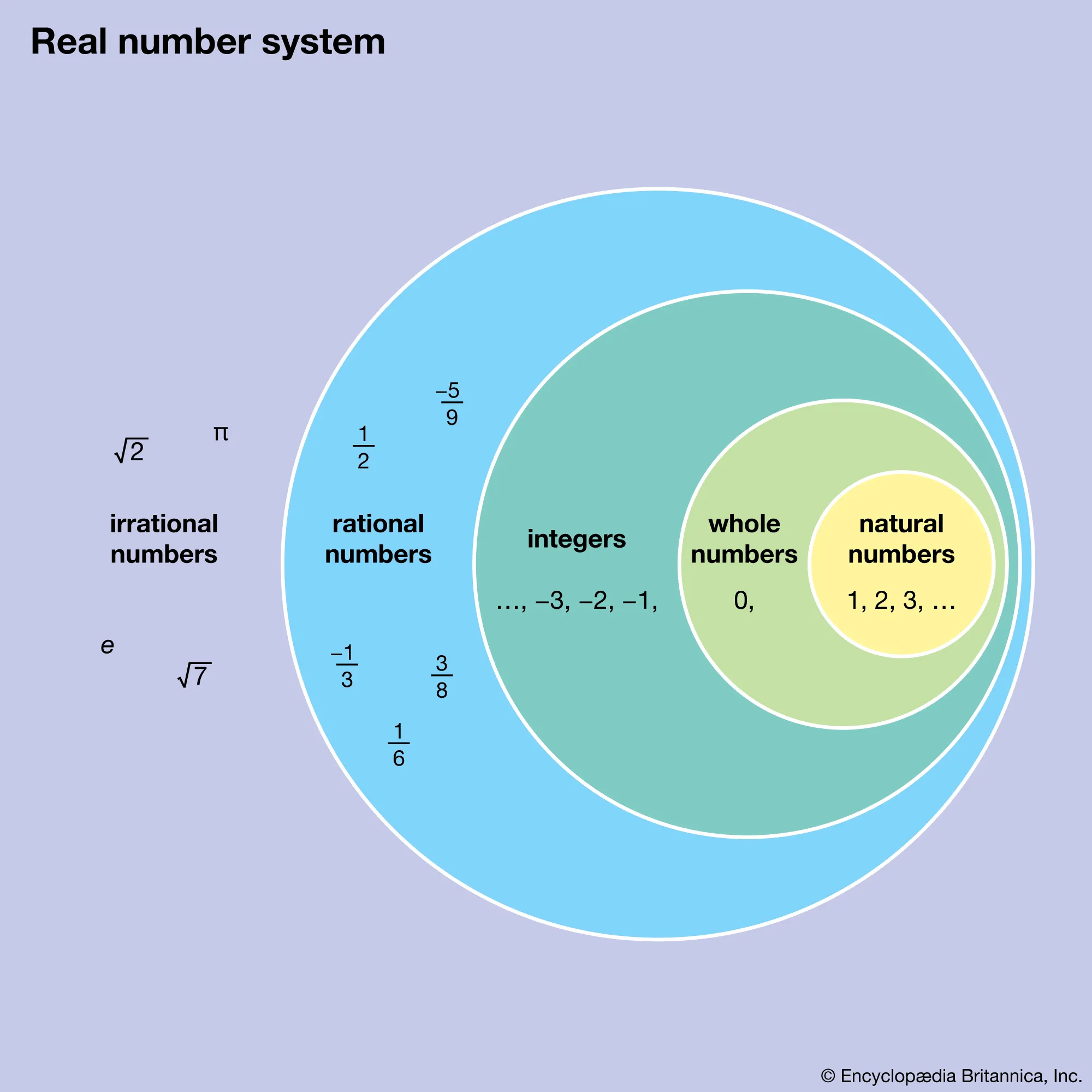
What are integers?
Positive whole numbers, negative whole numbers, and zero
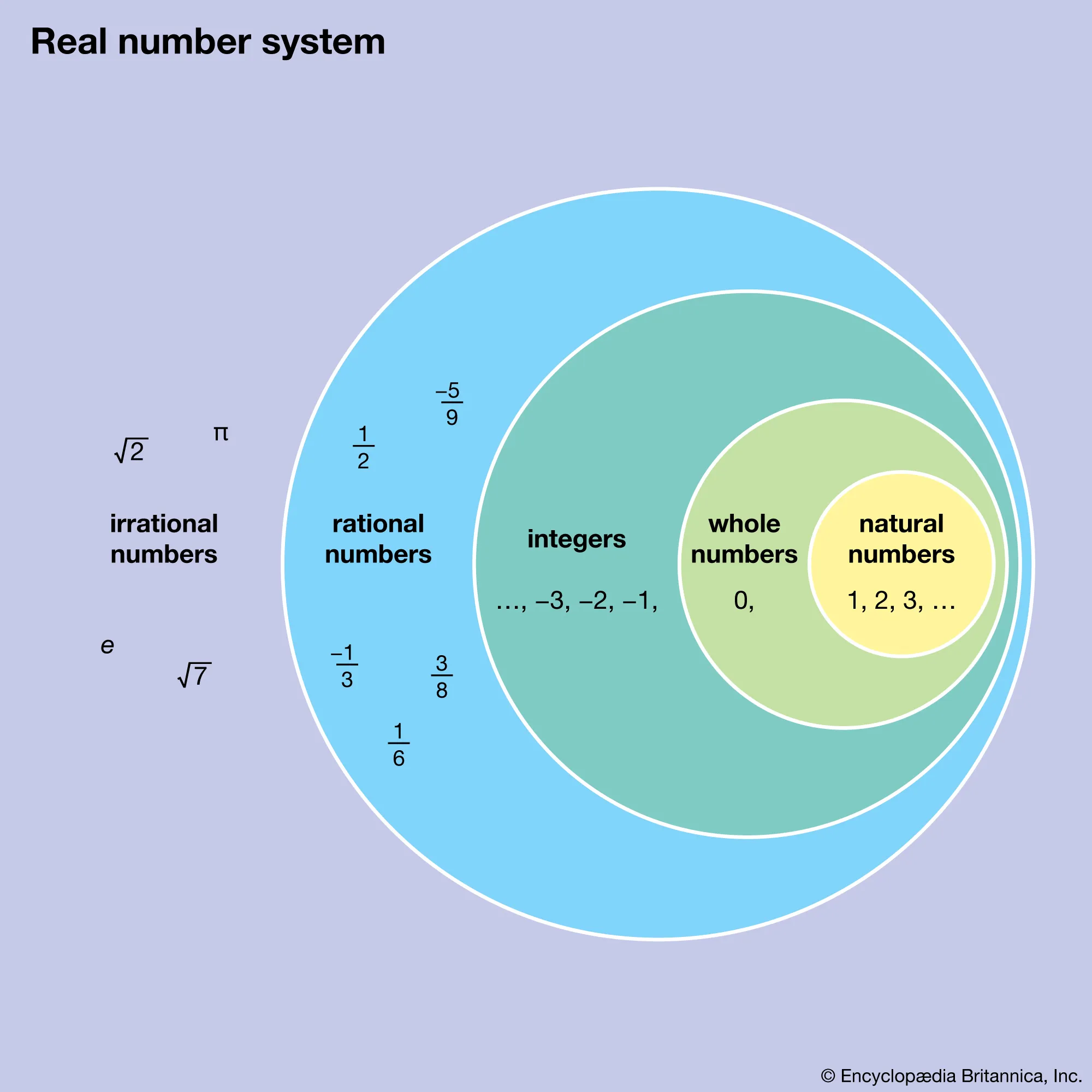
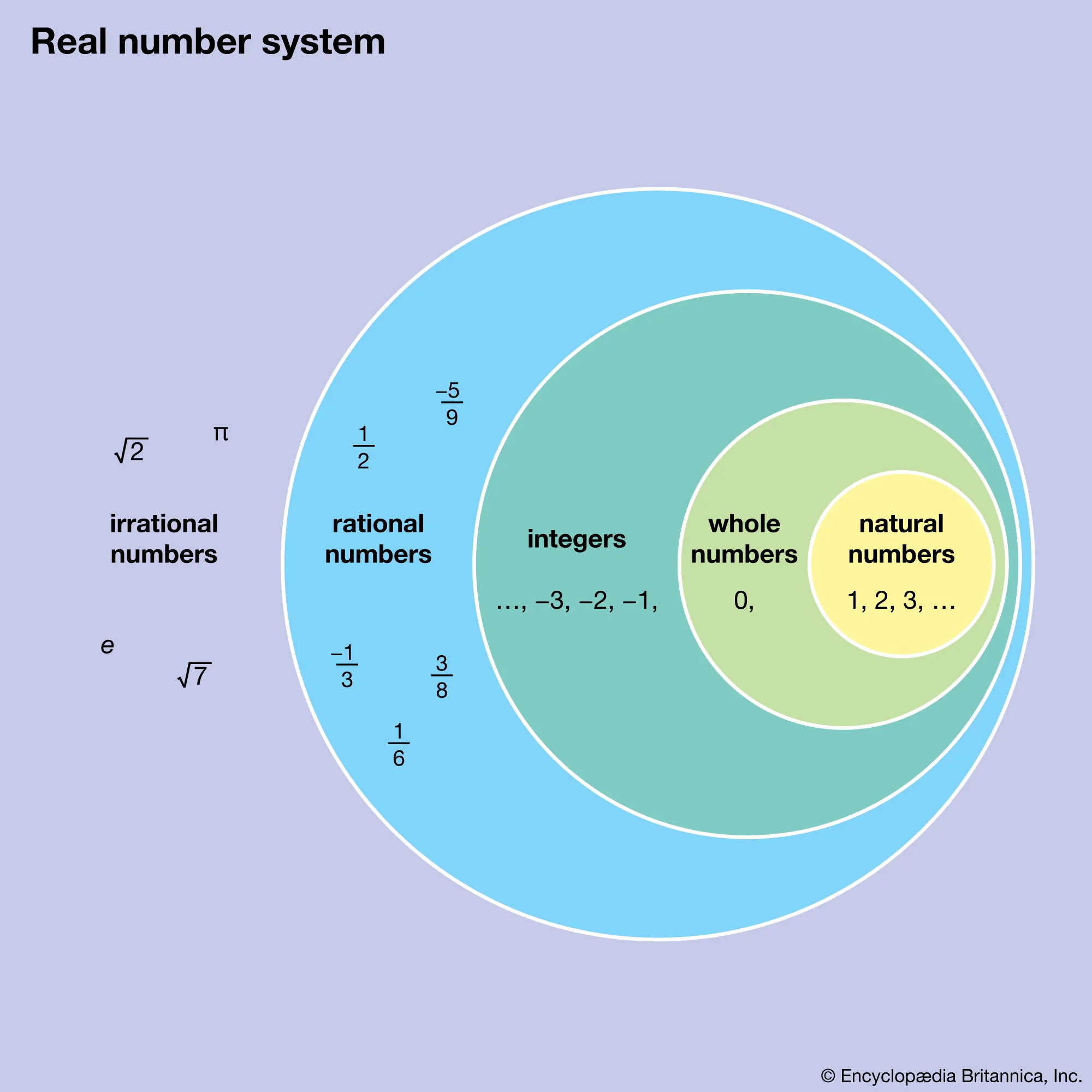
What are rational numbers?
Dividing two integers

How would you solve?
Get rid of the fraction
Find LCD (least common denominator)
→ In this case, the LCD is 30.
Multiply both sides by (30/1)
Solve algebraically


TIP! Do NOT distribute until the very end after cancelations!

***ALWAYS CHECK FOR EXTRANEOUS SOLUTIONS!!!
Big Idea: What are ways to solve a rational equation? LCD= least common denominator
) Eliminate fractions by multiplying both sides of the equation by the LCD. ** BEST WAY
) Move everything to one side and combine fractions using the LCD.
) Graph both sides of the equation and find the points) of intersection.

NOTICE!! When you cancel a fraction, you reduce it to 1.

To figure out if an answer is extraneous, look at the denominators. If your “solution” makes the equation undefined (the denominator is zero), then your answer is extraneous.

If you get a square root of a negative number, you can rewrite it in “i” form.
T/F:
-2/3 = -(2/3) = 2/-3

Always check for extraneous solutions!
Is this a perfect square?
9-n²
Yes! (3-n)(3+n)

When solving, you want it to always have a quadratic as the greatest. This means that you should always look to factor and simplify when possible.


What is the speed formula?
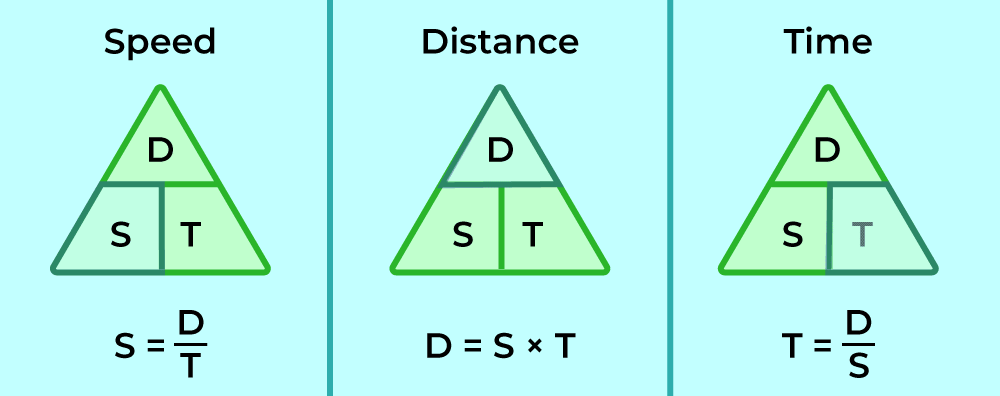
Now, replace speed with rate.
What does distance equal?
D = r * t
Distance = rate x time
What is this an example of?
70 mi/hr
Rate (AKA speed)
What is the rate formula?
R= d/t
Rate = distance / time
What is the time formula?
T= d/r
Time= distance/ rate
Distance = _____
Work
Work = distance
These are the same thing
If you are looking for rate, and your work remains the same, how would you solve?
Do NOT “double” the work.

When you solve W= r* t or something of the sort, make sure you only keep the answer that MAKES SENSE (you may get 2 answers. In this context, only one answer will make sense, and that is your correct answer).


Up stream vs down stream problem
***TRICK: Whatever you are given (D/r/t) will be what two variables you use [to set equal to the “unused” variable].
*Convert 3 days and 10 minutes to hours. KNOW HOW TO CONVERT ANSWERS/

“WORK TOGETHER” in a word problem normally indicates a ____question!!
Rate question
(Adding)

“IN THE SAME TIME” normally indicates _______
Time up = Time down
(d1/r1) = (d2/r2)

“Given a specific time” normally indicates________
Twith + Twithout = x hrs (x is given)

What is a sign chart?
A sign chart is a visual number-line tool used to track whether the output values (Y-values) of a function are positive (+) or negative (-)* across different intervals

**Sign charts are used to find the intervals of where the y-values are positive or negative or equal to zero.
What are the steps to finding a sign chart?
Set the whole inequality equal to zero
Factor
Find your zeros or vertical asymptotes
Plot your zeros and vertical asymptotes (if not i) on a number line
Test values in between and outside of the roots on your number line
Multiply the “signs” up to down for each factor

Vertical asymptotes (if not i) always use ______
Parenthesis
WHEN you have a >= sign or <= sign, you will put _____dots on your sign charts. Vice versa, WHEN you have a > sign or < sign, you will put _____dots on your sign charts!
Closed
Open

Anytime you square something, it will result in a ____value.
Positive

**FOR SIGN CHARTS, MAKE SURE YOU GET EVERYTHING TO ONE SIDE OF THE INEQUALITY FIRST!
The ____ axis separates positive y-values from negative y-values
X-axis
What are critical values?
Zeros/roots/x-intercepts, vertical asymptotes (if not i)
If the problem occurs, simplify (cancel out factors) before plotting critical values.
***when “graphing” sign charts, be sure to notice the multiplicities.
Do imaginary numbers show up as zeros on a graph?
→ Imaginary solutions are NOT critical values
No, imaginary solutions do not show up on the x-axis.

Note: imaginary “solutions” graphs do NOT show up on the graph’s x-axis. However, the factor that created that imaginary factor does go with the factors.

Notice the difference! On the bottom of the page, we include the zeros.
Do intervals include imaginary solutions?
No

If your whole graph consists of imaginary solutions, what will this look like in an x-y plane on desmos?
You will be unable to make a sign chart because you have zero critical values. Look at the a value.

If a quadratic graph f(x) is imaginary, and a>1, when is f(x)<0?
No solution


If you don’t have any “roots” (i.e imaginary graph), if asked for >=0, it is okay to ignore the = sign since there is not a case where the graph is equal to 0 (x-axis)

Are any imaginary values (vertical asymptotes or zeros) critical values?
IMAGINARY #s are NEVER critical values. (They only work as the factors in a sign chart)

If my graph has only imaginary solutions, what will the graph look like? (A>1)
what is the domain when y >=0?
(-∞,∞)


When lone x-values… {} is perferred.

Given this equation, what would the graph look like?
“Shooting star”

What is the vertical asymptote multiplicity trick

**Critical values (REAL) zeros and vertical asymptotes go on sign charts.

Remember about vertical asymptotes, the EBA, y-int, and zeros.
For sign charts, you can multiply all the signs to get your ± y places.
What happens if my sign charts results in an imaginary number?
The graph DOES NOT EXIST in that area


NOTICE!!!

Where is f(x)<0?
No solution


What are your factors? -16(x+3)(x-2)
-16x^0
(X+3)
(X-2)
What are your factors? X(x+3)(x-2)
X
(X+3)
(X-2)
What does the absolute value function look like?
Example: g(x) = lxl


When a factor on the sign charts, absolute values result in _____ signs!
positive
When a factor on the sign charts, square roots always result in _____ sign or ______!
Positive or undefined

What is the formal def of critical values?
The potential to flip signs

How would you solve using a sign chart? (Steps)
Move everything to one side
Combine fractions (LCD), but do NOT remove the denominators (this allows you to + or - fractions to combine)
Factor and simplify to find critical values


Know this
Solve algebraically=________
Solve using a sign chart
“Find the domain of each function algebraically”
Find the intervals (x-values) for y accordingly (could be >0, <0, ≥0, ≤0)

REMEMBER WHEN YOU FACTOR OUT A NEGATIVE FROM THE DENOMINATOR…
When does “SOLVE” mean?
Find x-intercepts/ roots/ zeros

What is a harmonic mean?
A type of average calculated by dividing the number of values in a data set by the sum of the reciprocals

(…)³ = squiggle
(…)^1= cut through
(…)^5= _____
(…)²= bounce
(…)^4
Squiggle
Bounce

****Absolute value varies on the graph and does not listen to the multiplicity rule!


Multiplicities stay when writing factors for sign charts


Absolute value is #special

***If you are unsure if a given graph has an asymptote or not, look at the equation YOURSELF!!!!!

Graphs NEVER cross your vertical asymptotes!

**remember to always get zero on one side for sign charts!

Yes, it’s a factor!