🫀 LAB PRACTICAL 1
 Call Kai
 Learn
Learn Practice Test
 Spaced Repetition
 Match
Match Flashcards
 Knowt Play
1/97

There's no tags or description
Looks like no tags are added yet.
Name | Mastery | Learn | Test | Matching | Spaced | Call with Kai | Chat |
|---|
No analytics yet
Send a link to your students to track their progress
98 Terms

Name the plane
mid-sagittal or median plane that divides the body into equal left and right halves.

Name the plane
para sagittal divides the body into left and right parts that are not equal.

Name the plane
frontal divides the body into anterior and posterior parts.

Name the plane
transverse divides the body into superior and inferior parts.

Name the plane
oblique

Name the cavity
cranial cavity, vertebral = spinal cavity
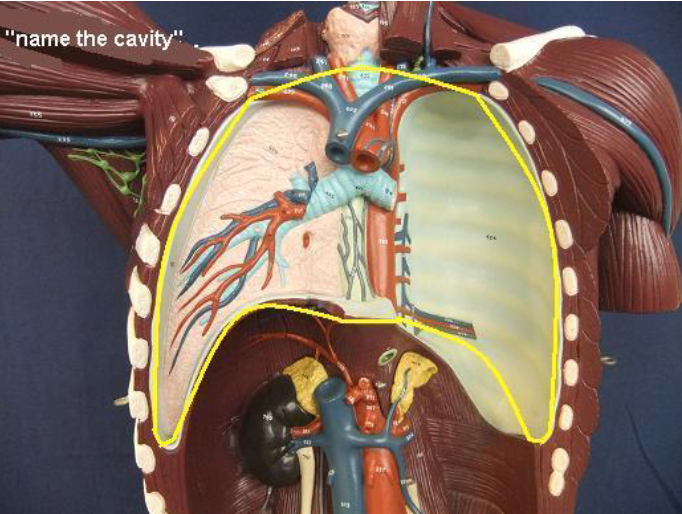
Name that cavity
thoracic cavity

Name that cavity
abdominopelvic cavity
Pericardial Cavity
surrounds the heart
Pleural Cavities
surround each lung
Mediastinum
cavity between the lungs that contains all the thoracic organs except the lungs themselves (heart, esophagus, trachea, thymus, and several large blood vessels)
Retroperitoneal
external to the lining of the abdominal portion of the abdominopelvic cavity. example: kidneys and pancreas.

Name each quadrant
Right Upper Quadrant, Left Upper Quadrant, Right Lower Quadrant, Left Lower Quadrant

Name that organ
brain

Name that organ
spinal cord

Name that organ
heart
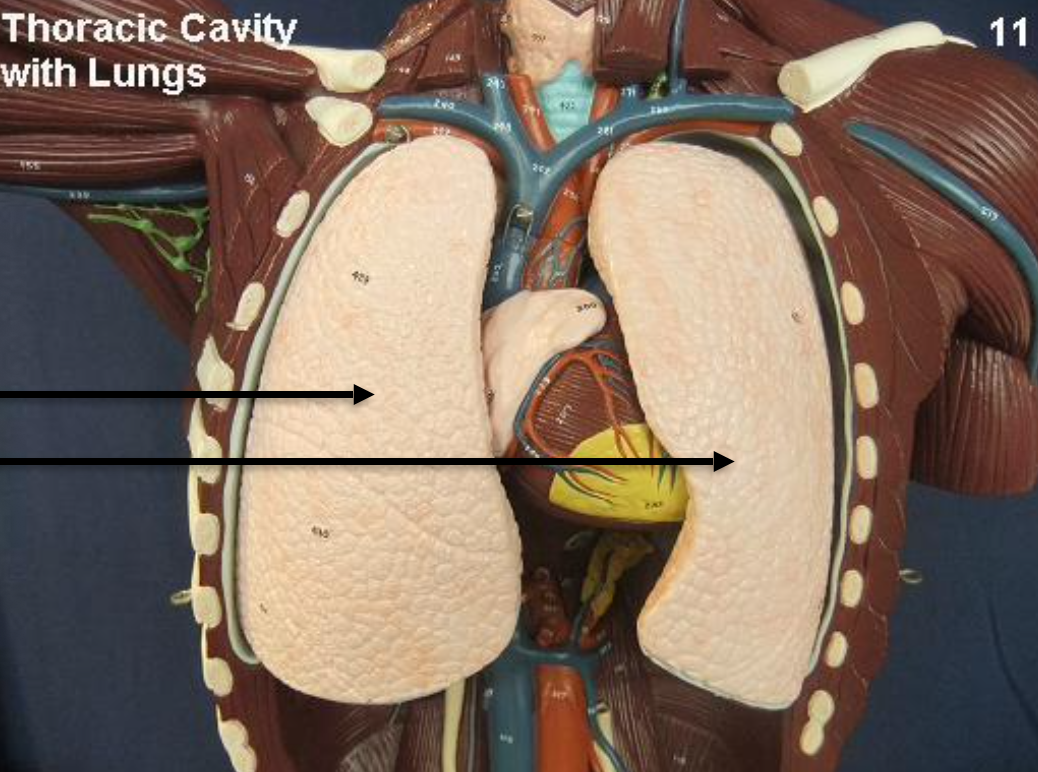
Name that organ
Lungs

Name that organ
Kidney, Urinary Bladder

Name that orgran
Pancreas, Large Intestine
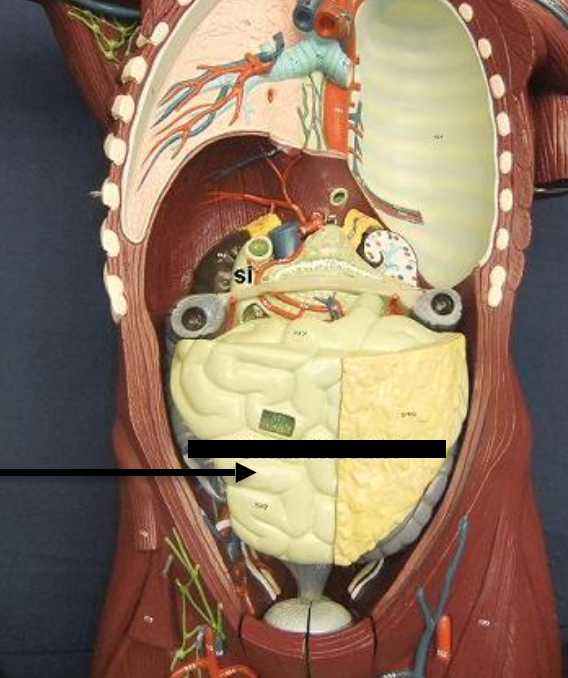
Name that organ
small intestine

Name that organ
stomach

Name that organ
liver

Name that organ
spleen
integumentary system organs
skin, hair, nails, sweat glands, oil glands

integumentary system functions
protects the body from injury, infection, and water loss, helps regulate temperature, provides sensation
skeletal system organs
bones, cartilage, ligaments, joints

skeletal system functions
Protects and supports body organs and provides a framework muscles use to cause movement. Forms blood cells and stores minerals.
muscular system organs
skeletal muscles

muscular system functions
produces body movement, facial expression, maintains posture, produces heat
nervous system organs
brain, spinal cord, nerves

nervous system function
as the fast acting control system of the body, it responds to internal and external changes by activating appropriate muscles and glands
endocrine system organs
pituitary gland, pineal gland, thyroid gland, thyroid gland, thymus, adrenal glands, pancreas, testes, ovaries

endocrine system function
produces hormones that regulate growth, metabolism, reproduction and nutrient use (metabolism) by body cells
cardiovascular system organs
heart, blood vessels
cardiovascular system functions
Blood vessels transport blood, which carries oxygen, nutrients, carbon dioxide, wastes, etc. the heart pumps blood
lymphatic system/immunity organs
red bone marrow, thymus, lymphatic vessels, lymph nodes, thoracic duct, spleen

lymphatic system/immunity functions
Picks up fluid leaked from blood vessels and returns it to the blood. Disposes of debris in the lymphatic stream. Houses white blood cells (lymphocytes) involved in immunity. The immune response mounts an attack against foreign substances within the body.
respiratory system organs
nasal cavity, pharynx, larynx, trachea, lung, bronchus/bronchi

respiratory system function
keeps blood constantly supplied with oxygen and removes carbon dioxide. These exchanges occur through the walls of the air sacs of the lungs
digestive system organs
oral cavity, esophagus, liver, stomach, small intestine, large intestine, rectum/anus

digestive system function
breaks down food into absorbable units that enter the blood for distribution to body cells. Indigestible foodstuffs are eliminated as feces
urinary system organs
kidney, ureter, urinary bladder, urethra

urinary system function
Eliminates nitrogenous wastes from the body. regulates water, electrolyte, and acid-base balance of the blood
Male Reproduction System organs
Prostate, penis, testis, scrotum, ductus deferens

Female Reproductive System organs
Mammary glands (in breasts), ovary, uterus, vagina, uterine tube

Reproductive System Function
The overall function is to produce offspring, Testes produce sperm and male sex hormones, and male ducts and glands aid in delivery of sperm to the female reproductive tract. Ovaries produce eggs and female sex hormones. The remaining female structures serve as sites for fertilization and development of the fetus. Mammary glands of female breasts produce milk.
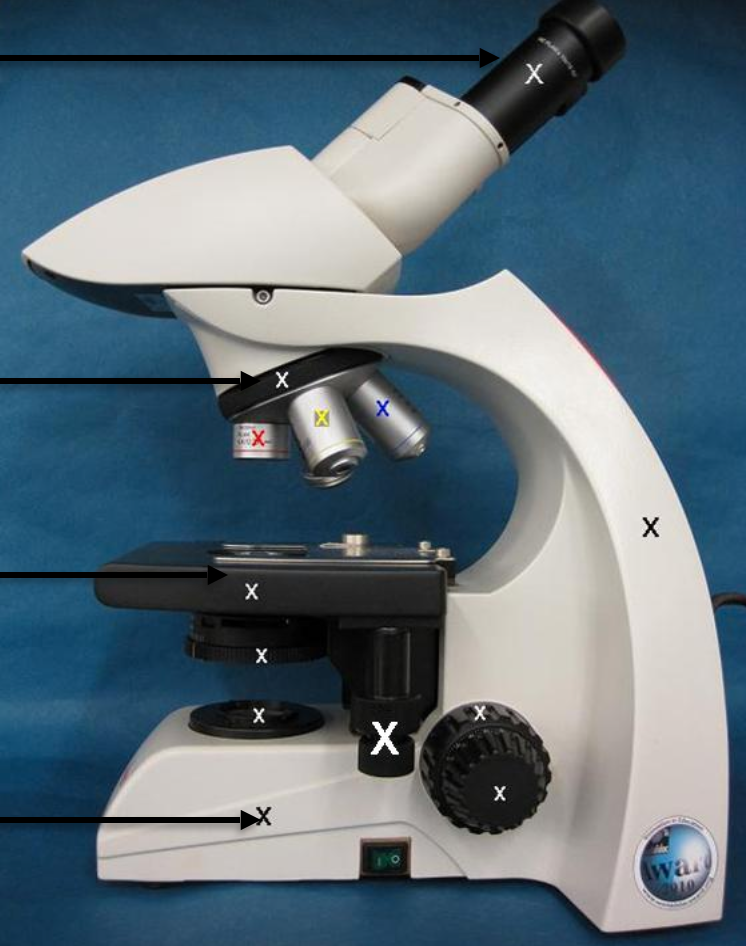
Name that microscope structure
Oculars, Revolving nosepiece, Stage, Base

Name that microscope structure
Scanning power objective, Arm, Diaphragm, Coarse Adjustment Knob

Name that microscope structure
Low power objective, High - Dry Power objective, Slide position Adjustment Knob, Fine Adjustment Knob

Name that animal cell structure
Mitochondria, Ribosomes, Plasma Membrane, Centrioles, Rough Endoplasmic Reticulum
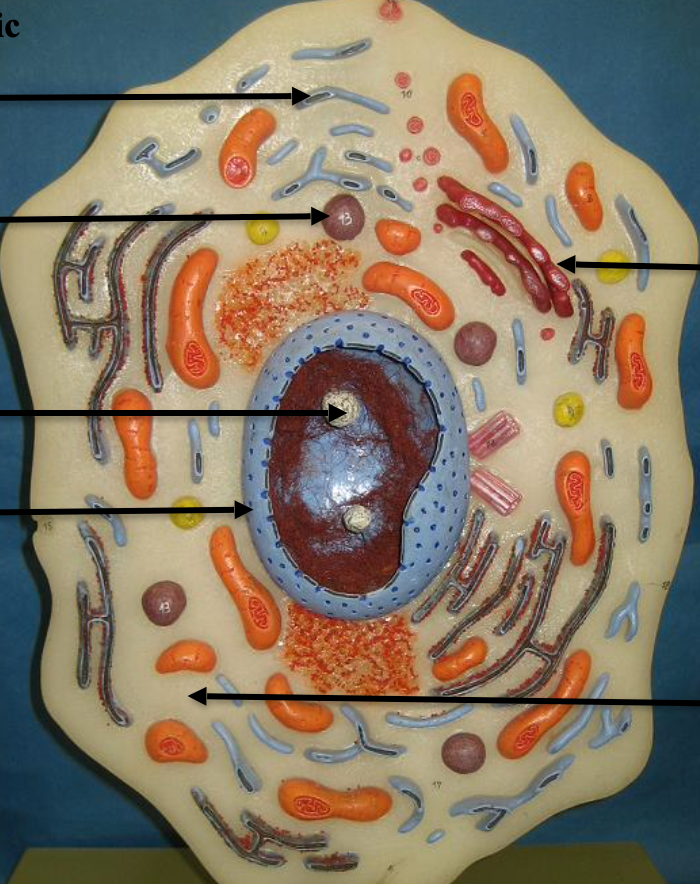
Name that animal cell structure
Smooth Endoplasmic Reticulum, Lysosomes, Nucleolus, Nucleus, Cytosol, Golgi Body
Plasma/Cell Membrane
The selectively permeable outer barrier of the cell. Controls what enters/exits the cell
Nucleus
Houses genetic information (DNA), controls cellular structure and functions
Nucleolus
Produces ribosomes
Ribosome
Site of protein synthesis
Cytosol
Fluid portion of the cytoplasm that surrounds the organelles
Rough Endoplasmic Reticulum
Network of flattened sacs that synthesize glycoproteins and phospholipids
Smooth endoplasmic reticulum
Network of tubules that synthesize lipids (fatty acids and steroids)
Golgi Body
Modifies, sorts, packages and transports proteins received from rough ER (“post-office”)
Mitochondrian
“Powerhouse” of the cell, generate energy or ATP
Lysosome
Contain digestive enzymes that break down a variety of molecules
Centrioles
Organizing center for growth of mitotic spindles (needed for cell division), and microtubules
Cytoskeleton
Network of protein filaments that extend through the cytosol

Number of Layers
Simple
one layer

Number of Layers
Pseudostratified
appears to have multiple layers but all its nuclei lay on the basement membrane making it simple
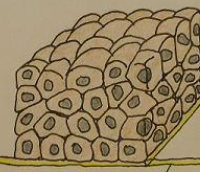
Number of Layers
Stratified
multiple layers
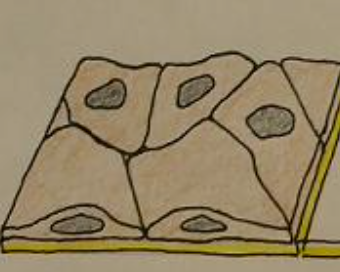
Name that cell shape
Squamous
Flat
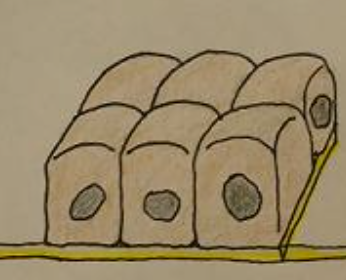
name that cell shape
cuboidal
roughly as tall as wide
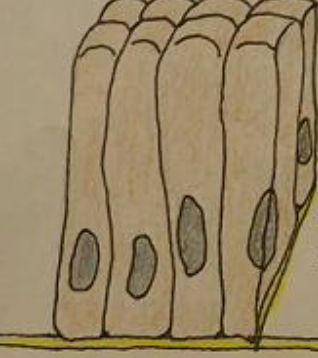
name that shape
columnar much taller than wide
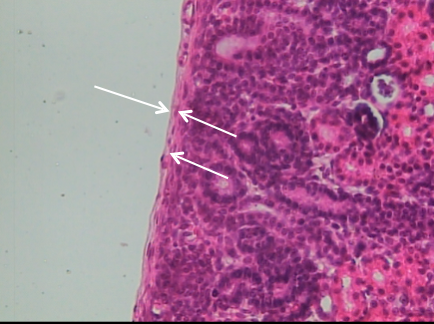
Name the tissue
Simple Squamous (Epithelial)
Function: Filtration, diffusion, rapid exchange of materials
Sample Locations: Air sacs of the lungs, Kidney filtration membranes, lining of blood vessels, Serous membranes
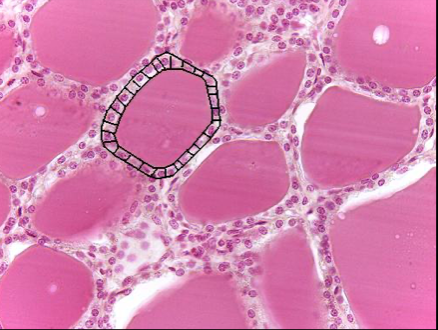
Name the tissue
Simple Cuboidal (Epithelial)
Function: Secretion
Sample locations:
Kidney tubules, glands

Name the tissue
Simple Columnar (Epithelial)
Function: Secretion, Absorption
Sample Locations: Lining of spinal cord and brain, lines GI tract, kidney ducts

Name the tissue
Pseudostratified Columnar (Epithelial)
Function: Secretion, may be ciliated/conciliated
Sample Location: Respiratory tract
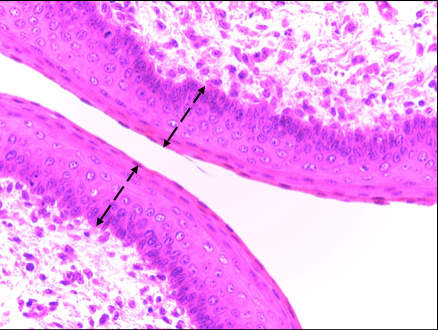
Name the tissue
Stratified Squamous (Epithelial)
Function: Protection (abrasion, water loss, UV radiation), 1st line defense against microbes
Sample Locations: Keratinized found in the superficial layer of skin (epidermis), Non-keratinize lines wet surfaces (mouth, esophagus)

Name the tissue
Transitional (Epithelial)
Function: Stretches to accommodate changes in volume
Sample Location: Lines portions of urinary system (ex: urinary bladder)
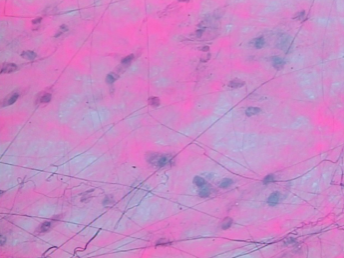
Name that tissue
Areolar (Loose Connective Tissue)

Name that tissue
Adipose (Loose Connective Tissue)
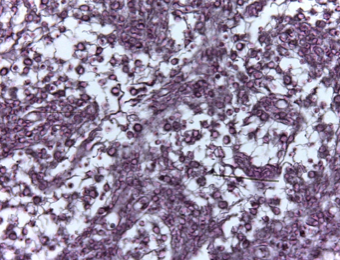
Name that tissue
Reticular (Loose Connective Tissue)
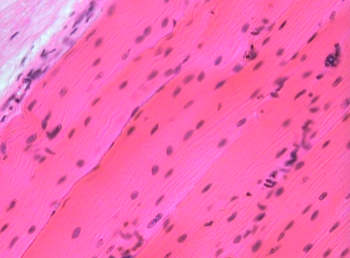
Name that tissue
Dense regular (Dense Connective tissue)

Name that tissue
Dense Irregular (Dense Connective tissue)

Name that tissue
Dense Elastic (Dense Connective tissue)

Name that tissue
Hyaline Cartilage (Cartilage)
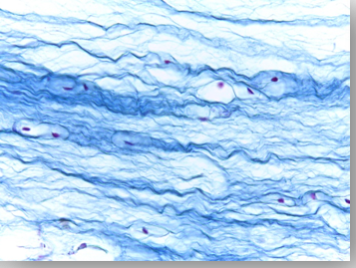
Name that tissue
Fibrocartilage (Cartilage)

Name that tissue
Elastic Cartilage (Cartilage)

Name that tissue
Compact bone

Name that tissue
Blood smear
Superior
Above; towards the head or upper part of a structure
Ex: the skull is superior to the breastbone (sternum)
Inferior
Below; away from the head or lower part of a structure
Ex: The stomach is inferior to the lungs
Anterior/Ventral
Front; nearer to or at the front of the body
Ex: The sternum is anterior to the heart
Posterior/Dorsal
Back; nearer to or at the back of the body
Ex: the spine is posterior to the sternum
Medial
Nearer to the midline
EX: the sternum is medial to the arms
Lateral
Farther from the midline
EX: the arms are lateral to the sternum
Proximal
Near to; if a limb, near to the point of attachment
EX: the elbow is proximal to the wrist
Distal
Farther from; if a limb, Farther from the point of attachment
EX: the ankle is distal to the thigh
Superficial/external
Toward or on the surface of the body
EX: the skin is superficial to the bone
Deep/internal
Away from the surface of the body
EX: bone is deep to the skin
Ipsilateral
On the same side of the body as another structure
EX: the liver is ipsilateral to the ascending colon
Contralateral
On the opposite side of the body from another structure
Ex: the liver is contralateral to the descending colon