Orgo 2 Midterm Carboxylic Acid Derivatives
 Call Kai
 Learn
Learn Practice Test
 Spaced Repetition
 Match
Match Flashcards
 Knowt Play
1/33

There's no tags or description
Looks like no tags are added yet.
Name | Mastery | Learn | Test | Matching | Spaced | Call with Kai | Chat |
|---|
No analytics yet
Send a link to your students to track their progress
34 Terms
Which have a higher boiling point? Carboxylic acids or alcohols?
Carboxylic acids
Which conditions are carboxylic acids produced in?
Acidic Conditions
Which conditions will a carboxylate ion be produced in?
Basic
If a carboxylic acid is treated with water, what will the product be?
A carboxylate ion
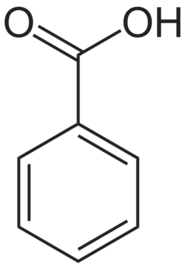
What is the Pka of this structure?
4.19

What is the Pka of this carboxylic acid?
4.76

What is the Pka of this carboxylic acid?
4.87
Does Pka increase or decrease with each additional chlorine substituent?
Decrease
Why do carboxylic acids undergo nucleophilic acyl substitution?
Because Z can be more readily converted into a good leaving group whereas H and R cannot
What are the methods that can be used to prepare carboxylic acids?
Na2Cr2O7/ H2SO4, H2O
H3O+/ heat specifically with RCN
Reaction of a grinard with CO2
Which reaction allows to go from an acid chloride to a ketone?
A Gilman Reagent (R2CuLi)
Which carboxylic acid derivative is the most reactive and why?
Acid halides because there is a lot of induction and resonance
Which carboxylic acid derivatives are the least reactive and why?
Amides because there is not a lot of induction or resonance
List the carboxylic acid derivatives most to least reactive.
Acid halides, Anhydrides, Esters, Amides
How can you prepare an acid chloride from a carboxylic acid?
SOCl2
How are carboxylic acids prepared from Acid halides?
H2O, pyridine
How can a reduction of an acid chloride be carried out?
Forms a primary alcohol:
Xs LiAlH4
Xs NaBH4
Forms a tertiary alcohol:
RMgBr
To stop the reduction at an aldehyde:
LiAl(OR)3H
How can symmetrical anhydrides be formed?
By heating carboxylic acids
How to prepare Anhydrides from carboxylic acids?
By reacting it with an acid chloride
What are acetic anhydrides used for?
to acetylate an amine or an alcohol to make an ester or an amide
What are the ways that esters can be prepared?
Carboxylate reacted with NaOH/ CH3I (or another alkyl halide) in an SN2 rxn
Fischer Esterification (reacting a carboxylic acid with an alcohol with an acid catalyst)
Treating an acid chloride with an alcohol (ROH/Pyridine)
How can esters produce a carboxylic acid?
Saponification (Esters undergo hydrolysis under basic conditions) (NaOH/H3O+)
H3O+
How can esters form amides?
Xs NH3
What are the ways to reduce esters?
To form two alcohols:
using LiAlH4
To control a reduction to form an aldehyde:
DIBAH
To produce a tertiary alcohol:
Grignard Reagents
How can the reduction of carboxylic acids happen?
LiAlH4
NOT NaBH4
BH3*THF
What can prepare amides?
Any of the other carboxylic acids
How can an amide form a carboxylic acid?
Under acidic conditions: H3O+ & Heat
Under basic conditions: NaOH, heat & H3O+
What is used in the reduction of Amides?
Xs LiAlH4
How can Nitriles be prepared?
Alkyl halide and NaCN
dehydration of a primary alcohol and then using SOCl2
How do Nitriles form Carboxylic Acids?
Nitriles in aqueous conditions first form amides and then are further hydrolyzed to yield a carboxylic acid
uses (H3O+/heat) twice
Nitriles in basic conditions use NaOH, H2O/ H3O+ to directly form a carboxylic acid
What is the difference in carboxylic acid formation under acidic vs basic conditions
In basic conditions a carboxylic acid will form a carboxylate ion so it needs H3O+ as a second reactant to form the carboxylic acid. In acidic conditions, the H3O+ only really needs to appear once.
How can a reduction of a nitrile occur?
Xs LiAlH4
How can a Nitrile a Ketone?
Using a Grignard Reagent

What is this reaction called?
Transesterification