pharm chem exam 2 Dr. Hu's lecture
 Call Kai
 Learn
 Practice Test
 Spaced Repetition
 Match
 Flashcards
 Knowt Play
1/311

There's no tags or description
Looks like no tags are added yet.
312 Terms
sequence of events after drug administration: oral administration
1. dosage form
2. dissolution
3. drug in solution form goes to GI tract
4. absorption
5. 1st pass metabolism in the liver
6. general circulation
7. distribution to the site of action
8. redistribution to storage sites
9. metabolism again
10. excretion
what can non-oral dosage forms bypass?
first pass metabolism
parenteral administration bioavailability
- IV: directly in blood, so 100%
- intramuscular; sq: bit lower than 100%
dissolution definition
- to break apart drugs and they must be in solution
most common dosage form
- oral administration (tablets, capsules, etc)
oral bioavailability
- % of drug that gets through the tract
- parts of the drug can get into stomach, intestine, and then absorption to general circulation
lipophilicity and hydrophilicity for oral bioavailability
- more lipophilic is greater bioavailability for oral
- due to mucosal membranes and phospholipid bilayers
- you still want it to be hydrophilic because the body is mostly aqueous environment
what is the body mostly made up of?
water; 60%
what feature do drugs need to have to get along with the body's environment?
- water solubility to navigate through water in the body
where does excretion occur for drugs
kidney
site of drug metabolism
- liver
- has the most metabolizing enzymes
where does biological activity of drug occur
site of action
fat as a drug storage site
- lipophilic drugs
proteins drug storage
- protein binding to drug
- albumin
each mol of drug is x molecules?
10^21
drugs in general circulation and metabolism relationship
- bidirectional between blood and liver
general circulation and site of action relationship
- bidirectional distribution between site and blood
metabolism and site of action relationship
- bidirectional between liver and site
circulation and storage site relationship
- bidirectional redistribution of drug molecules to and from circulation
large quantities of drug molecules and routes in the body
- when a tablet goes into the patient's system, there will be trillions of drug molecules going into their blood stream
- may not take the same type of route
- storage OR metabolism endpoint
barriers to drugs
- GI tract membranes
- conversion of inactive/toxic metabolite
- elimination before they reach the site of action
physiochemical properties that are related to drug action
- solubility
- degree of dissociation(pKa)
- partition coefficient, ratio of oil to water solubility
- resonance; induction
- hydrogen bonding
- chelation
- stereochemistry
- interatomic distance between functional groups
- isosterism
how important in Melting and boiling point compared to physiochemical properties for drugs?
- MP and BP not as important as physiochemical properties
high water solublity
drug's can't permeate across membrane
high lipid solubility
drug can't get through aqueous body
degree of dissociation (pKa)
- 90% of drugs are acids and bases
- in an aqueous environment, a strong base/acids completely dissociates into its ions
- weak base doesn't dissociate
- pKa important for how drug behaves
solubility and charge of drug
- if charged, lower solubility across membrane
Partition coefficient, ratio of oil to water solubility depends on
- surface area of intestines --> more area for reabsorption
- logP of water
what happens when acidic drug is put in stomach
- it stays ionized and is not lipophilic
- not well absorbed
logP>0
lipophilic
logP
hydrophilic
active transport
- uses energy
- polar, charges drugs
passive transport
- doesn't use energy
- most drugs (preferred mechanism of movement)
neutral molecules
- pass through lipid bilayer
charged molecules
- can't freely pass through lipid bilayer
what to look for in a drug molecule for structure
- atom species
- number of atoms
- spatial orientation of atoms
aspirin history and use
- 1899; over 100 years
- inflammation
aspirin formula and structure
- C9H5O4
- aromatic ring, OCOCH3 on 1 and COOH on 2

aspirin charge and can it pass through lipid bilayer?
- neutral
- yes, it can pass through lipid bilayer
what happens when you move COOH on aspirin?
- would become a different drug
- different effect compared to aspirin
drug-target interactions
- receptor or enzyme macromolecules interact
structurally nonspecific drugs
- don't require a specific site of action
- the biological effect of such drugs is closely related to their physio-chemical properties rather than their chemical structures
structurally nonspecific drugs examples
- osmotic diuretics: mannitol
- gastric antacids
- general anesthetics
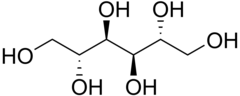
mannitol
- hydrogen bonds happen at the ends of the chains with the OH group
- stays in the kidney because of its high water solubility and inability to cross the membrane
- brings water with it which is why it is a good diuretic
gastric antacids
- neutralize stomach acid temporarily
- good for acid reflux
- fast biological activity
- NaHCO3, MG(OH)2, Al(OH)3, CaCO3
general anesthetics
- N2O: laughing gas
- increase BP, still volatile
- highly lipid soluble
- go quickly into brain/CNS and interfere with transmissions

structurally specific drugs
- specifically target receptor and enzyme to initiate/block signal transduction to observed biological response
- often called ligands(activators or inhibitors)
- certain structural features appear to have greater influence on the overall biological effects than their physio-chemical properties
ligands in receptor context
- antagonists (block activity)
- agonists (enhance activity)
examples of structurally specific drugs
- thymine/5-fluorouracil
- acetylcholine/carbachol
- epinephrine/isoproterenol
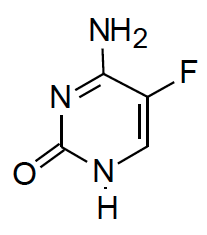
thymine/5-fluorouracil
- the F is a CH3 in thymine(biosynthesized)
- 5-fluorouracil is an anti-cancer drug and can mimic thymine and act like it in the body
acetylcholine/carbachol
- the R-COO group will be quickly hydrolyzed and inactivated if it is a simple ester group like in ACh
- not helpful for Alzheimer's disease
- the NH2 is added to enhance cholinergic activity because ACh alone will be metabolized quickly
- when using the NH2, carbamate cannot be further metabolized

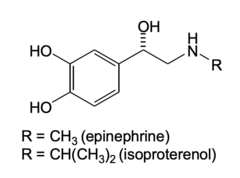
epinephrine/isoproterenol
- epinephrine works better in a1 receptor because of smaller R, increases hr and bp
- if no R group, then molecule becomes norepinephrine
- isoproterenol works on b receptors because of bigger R size and decreases hr and bp
- the OHs must be in certain places for hydrogen bonding for all of these molecules
role and types of chemical bonding interactions
- a biological response is the result of the interaction of a drug with a functional or organized group of molecules
- specific location for right interactions
- relatively weak forces, yet strong enough must be involved in the drug-receptor complex
- high degree of structural specificity with complimentary groups on the receptor
refer to quiz L10 to 11 deck for orders and definitions of bonds
refer to quiz L10 to 11 deck for orders and definitions of bonds
steric factors and pharmacological activity
- 3D structure (relative spatial arrangement of atoms) of a compound plays an important role in binding of a drug to the receptor
3 major types of steric factors influence pharmacological activity
- optical and geomtric isomerism
- conformational isomerism
- isosterism (bioisosterism)
thalidomide history
- made in the 1950s in Germany
- spread to other European countries
- intended for SLEEP
- 20K cases of babies born with disabilities
thalidomide structure
- 1 chiral center
- 2 isomers/enantiomers
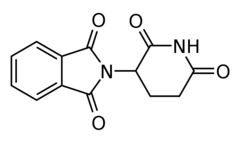
Thalidomide enantiomers
- S: levorotatory (polarized light left)
- R: dextrorotatory (polarized light right)
- racemate (1:1 ratio of the 2 enantiomers)
S enantiomer thalidomide
- produced teratogenic effects
- constrict blood vessels
- now used for multiple myeloma and leprosy for its anti-angiogenic properties
- lost of BBW: PREGNANT WOMEN CANNOT TAKE THIS DRUG BECAUSE EVEN 1 DOSE CAN HAVE EFFECTS
R enantiomer thalidomide
has sleep inducing property
why couldn't the S and R enantiomers be separated
- epimerization
- R turns into S in vivo
epimerization
- switching between enantiomers
fluoride uses
- to prevent tooth decay in toothpaste
- municipal water
Fluorine in municipal water
- H2SiF6
- Na2SiF6
- need a lot of F atoms in a big body of water to have an effect
- low concentration of 0.7 ppm
fluorine in toothpaste
- NaF
- Na2FPO3
- high concentration of 1000 ppm
- 3 mechanisms
dental fluorosis
- too much fluorine is not good
- when child eats toothpaste and they have white spots on their teeth because of too much F
mechanism 1 of toothpaste
- tooth remineralization by replacing the OH in hydroxyapatite with an F to make fluorapatite

mechanism 2 of toothpaste
make tooth stronger
mechanism 3 of toothpaste
inhibits bacteria in mouth that make acid, leading to less corrosion/cavities
iodine deficiency
- 30% of the world; lower in the US
- symptoms: goiter and leading cause of mental disability
iodine example
NaI
iodate example
NaIO3
iodine and iodate use
- added in table salt because iodine is not biosynthesized, yet it is needed for production of thyroid hormone T3 and T4
sources of iodine and iodate
- fish
- eggs
- seafood
- dairy
- table salt
antacids and acid reducers function
- OTC relief for heartburn and acid reflux
heartburn
- acid reflux disease or gastroesophageal reflux disease (GERD)
- if sphincter doesn't close enough, then HCl will climb up into esophagus and burn the area, causing chest pain
- caused by spicy food or issues with muscle for some patients
GERD
- heartburn more than 2 times per week
- medication or surgery may be needed
dyspepsia
- pain or uncontrollable feeling in the upper-middle part of stomach
- can lead to ulcers, cancer, and gastritis
gastritis
- inflammation of stomach lining
what happens when stomach lining is inflamed
- acid will interact with the cells BEHIND the lining and cause discomfort and corrosion
stomach ulcers
- stomach acid can cause pain and lesions in the stomach
antacids speed and duration
- fast action and quick relief
- temporary
- they are weak bases that neutralize the acid in the stomach by reacting with HCl
acid reducers
- take their time to work
- long term for GERD
aluminum hydroxide and magnesium carbonate
- antacid
- brand name: Gaviscon
calcium carbonate
- antacid
- brand names: Maalox Regular strength antacid, tums regular antacid, pepcid complete chewable tablets
calcium carbonate and magnesium hydroxide (milk of magnesia)
- antacid
- control the amount of acid, so that patients can get quick relief from heartburn
- brand: Mylanta Gelcaps, Rolaids Antacid tablets
magnesium hydroxide (milk of magnesia)
-antacid
- brand: Lax milk of magnesia stimulant free liquid laxative- Antacid, Phillips chewable tablets antacid-laxative stimulant free
sodium bicarbonate and citric acid reaction
3 bicarb + 1 citric acid forms C6,H5Na3O7 , 3 carbon dioxide and 3 waters
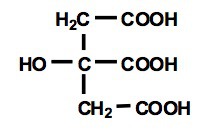
sodium bicarbonate and citric acid
- antacid
- brand: Alka-seltzer Heartburn relief
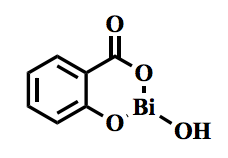
Bismuth subsalicylate
- antacid/weak base
- binds to toxins and kills bacteria
- anti-inflammatory hydroxybenzoic acid component
- balances fluid movement through intestines and helps with upset stomach
- brand: pepto-bismol, kaopectate, maalox maximum strength total stomach relief
Pepto-bismol coloring
- the drug is actually white
- pink is food coloring for branding
H2 blockers
- long term relief of heartburn symptoms
- used in GERD
- antihistamines reduce production of acids
cimetidine
- H2 blocker
- brand: Tagamet HB 200
famotidine
- H2 blocker
- brand: Pepcid AC
Ranitidine
- H2 blockers
- brand: Zantac 75
PPI
- proton pump inhibitors
- stop production of acids for long term relief, but you need to take it for a while before you see effects
- omeprazole (Prilosec OTC)
pepcid complete
- combination of famotidine, calcium carbonate, and magnesium hydroxide
oxidizing germicides definition
- killing bacteria relying on oxidation by getting inside the bacteria germ cells, producing proteins, and then their own activity to kill the bacteria
- substance with germicidal effect on most organisms through oxidation, which irreversible alter microbial proteins
- most have little or no action on bacterial spores
Germicide
- substance capable of killing a wide variety of microorganisms
- can be used as a disinfectant on surgical tools/instruments or as an antiseptic on humans