EX. 36 Respiratory System
 Call Kai
 Learn
 Practice Test
 Spaced Repetition
 Match
 Flashcards
 Knowt Play
1/111

There's no tags or description
Looks like no tags are added yet.
112 Terms
major role of the respiratory system
supply the body with oxygen and dispose of carbon dioxide. uses 4 processes called respiration:
pulmonary ventilation
external respiration
transport of respiratory gases
internal respiration
pulmonary ventilation
the tidelike movement of air into and out of the lungs that allows the gases to be continuously changed and refreshed.
breathing
external respiration
the gas exchange between the blood and the air-filled chambers of the lungs
transport of respiratory gases
the transport of respiratory gases between the lungs and tissue cells of the body using blood as the transport vehicle
internal respiration
exchange of gases between systemic blood and tissue cells

superior nasal concha and superior nasal meatus
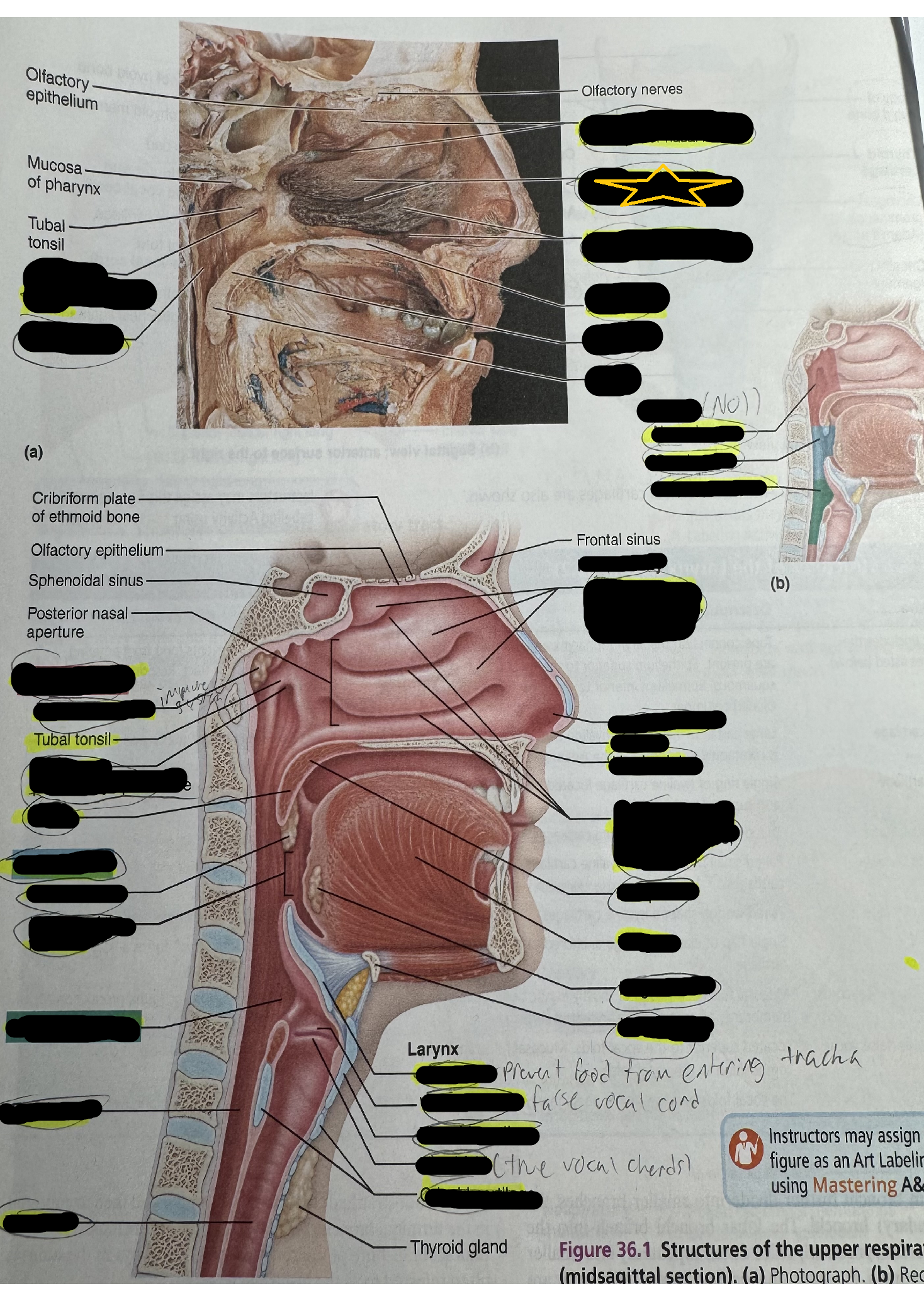
middle nasal concha and middle nasal meatus
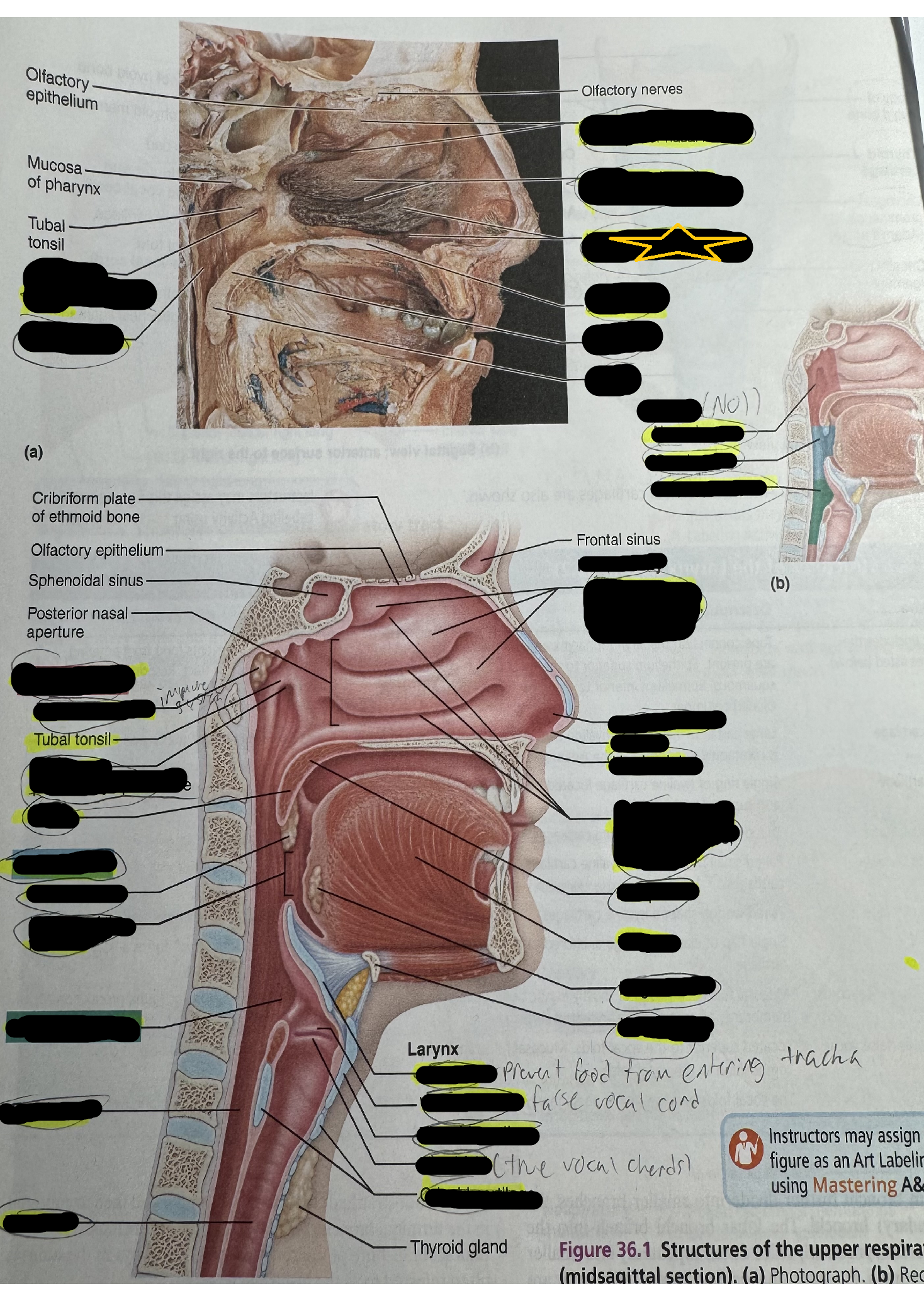
inferior nasal concha and inferior nasal meatus

hard palate

soft palate

uvula
goes backward and prevents food going into sinuses
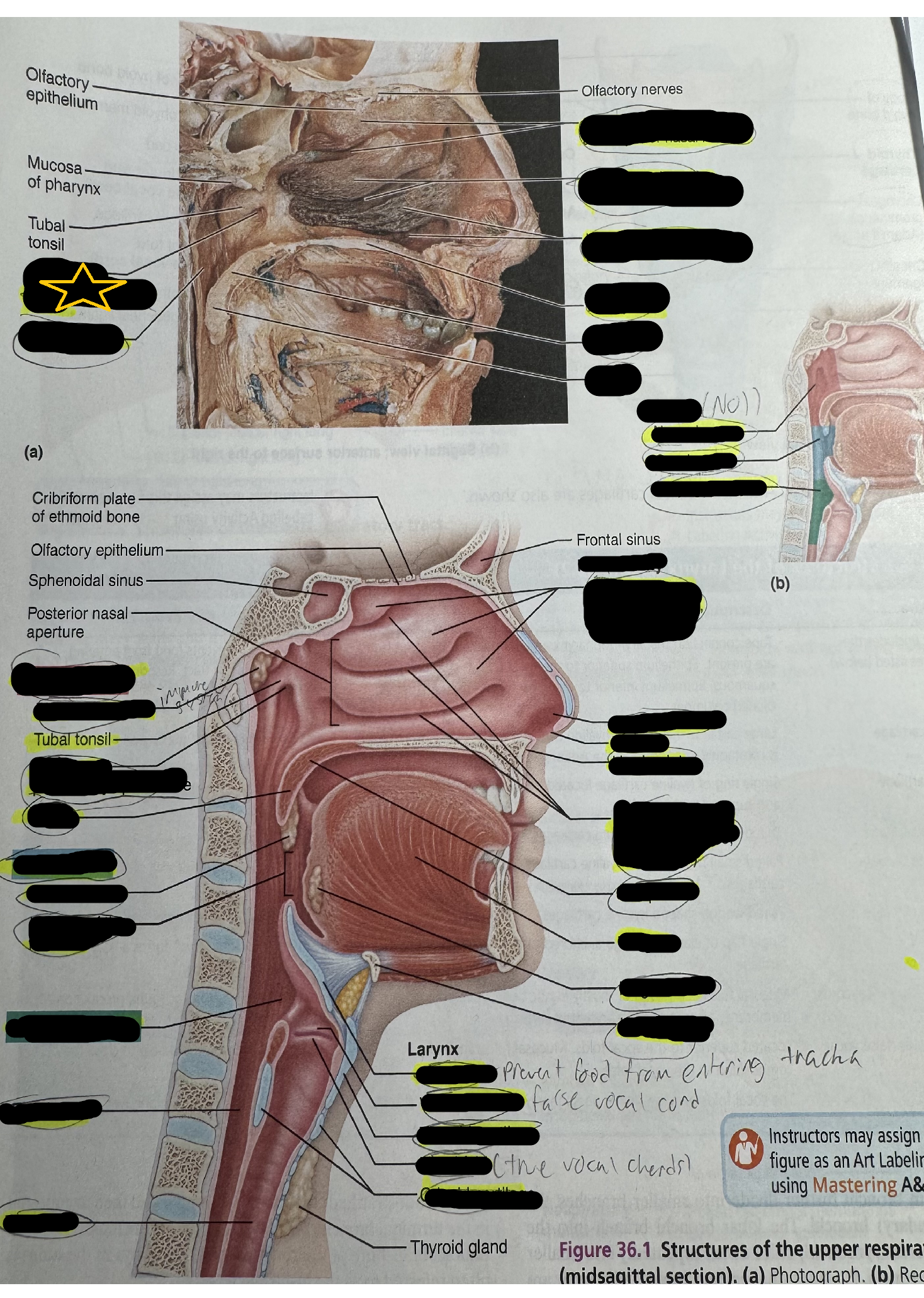
opening of pharyngotympanic tube

nasopharynx

pharynx (where food and air mix)

nasopharynx
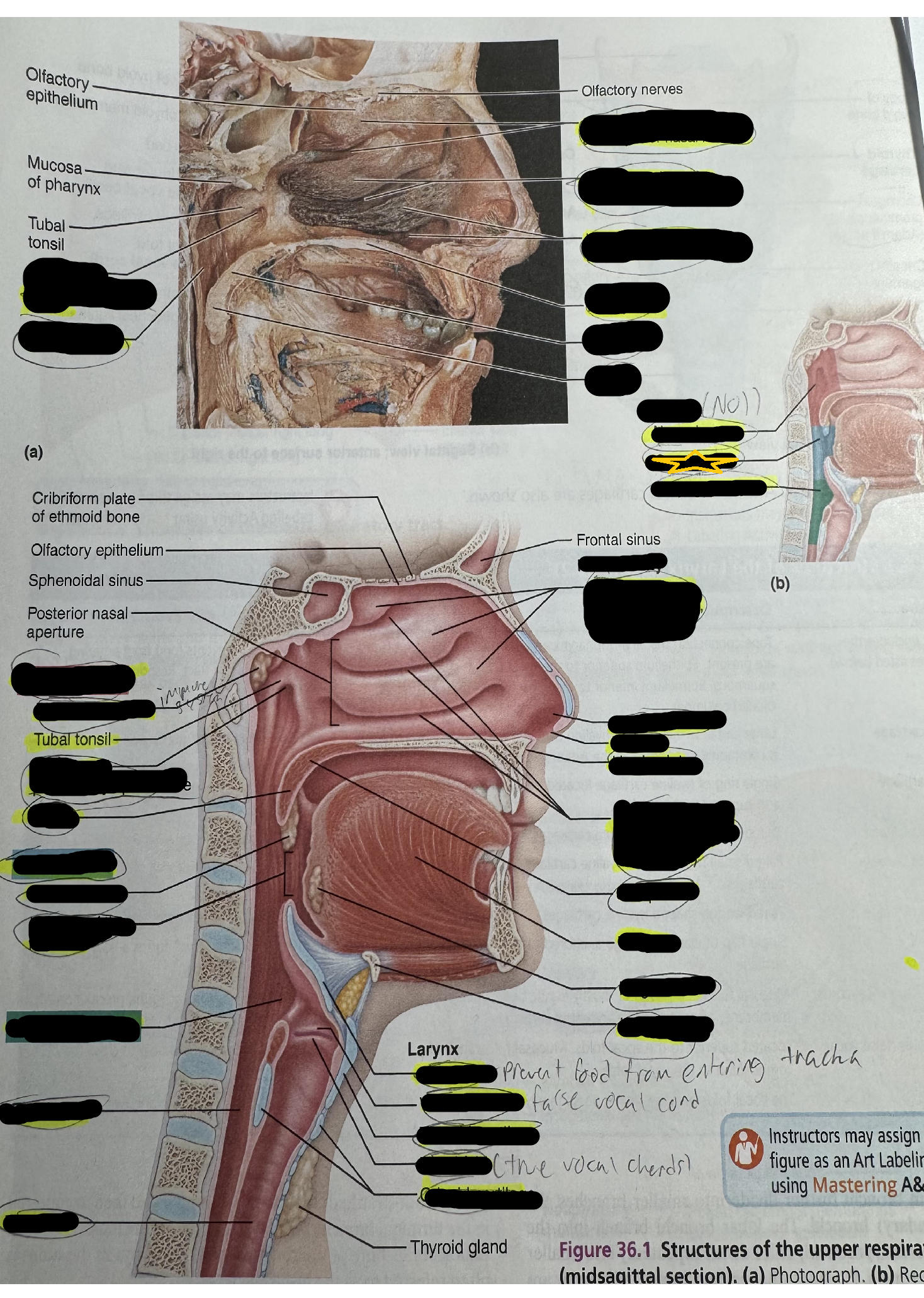
oropharynx

laryngopharynx

nasal cavity

nasal conchae (superior, middle, and inferior)
warm up air along w/ nose hair

nasal vestibule
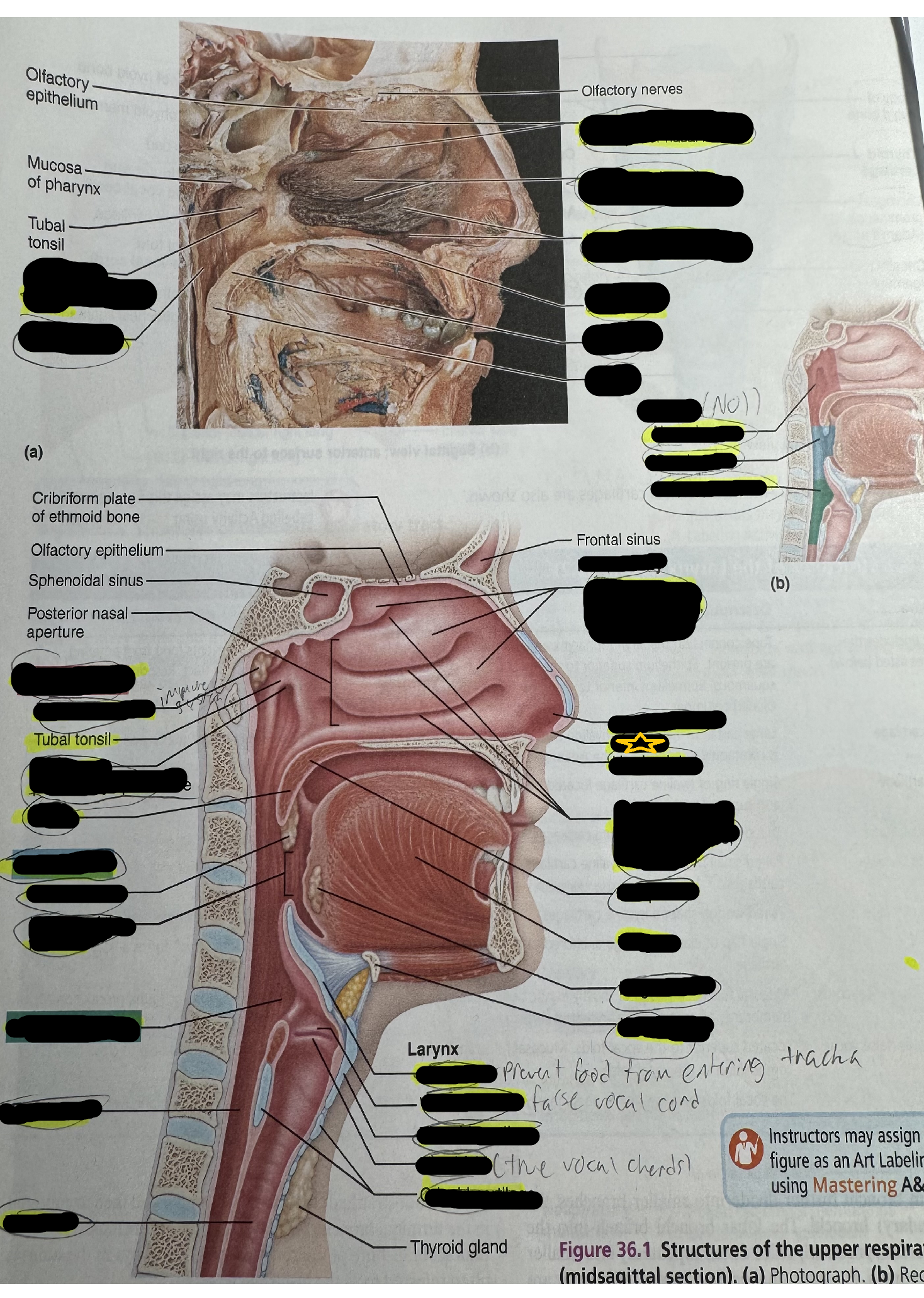
nostril

hard palate

nasal meatuses (superior, middle, and inferior)

soft palate

tongue

lingual tonsil
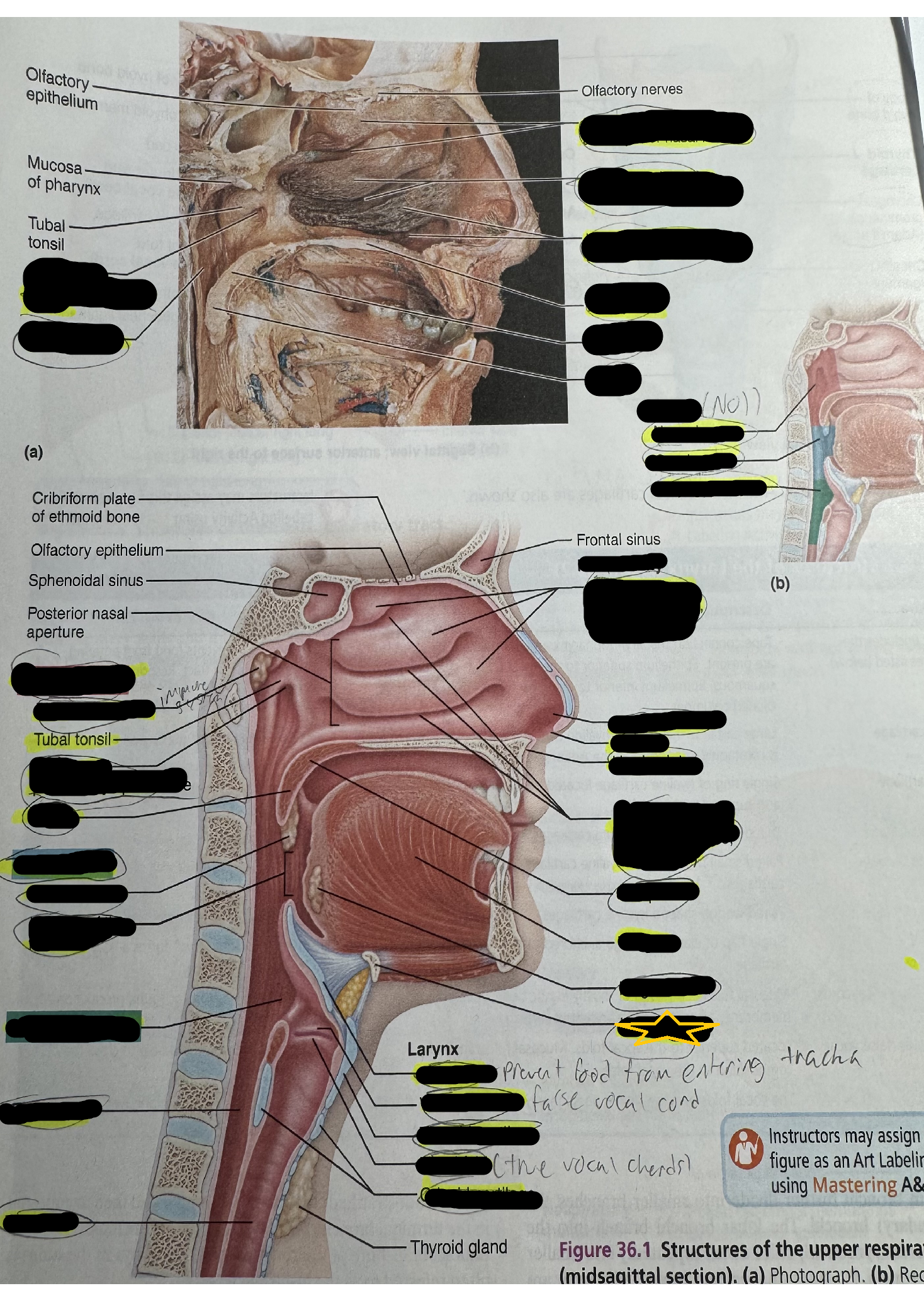
hyoid bone
anchor for tongue muscles

epiglottis
prevent food from entering trachea by closing

vestibular fold
false vocal cord
upper fold designed for extra protection from food in trachea

thyroid cartilage
hyaline

vocal fold
true vocal cord
tighten to make high pitched noises
loosen for lower pitched noises
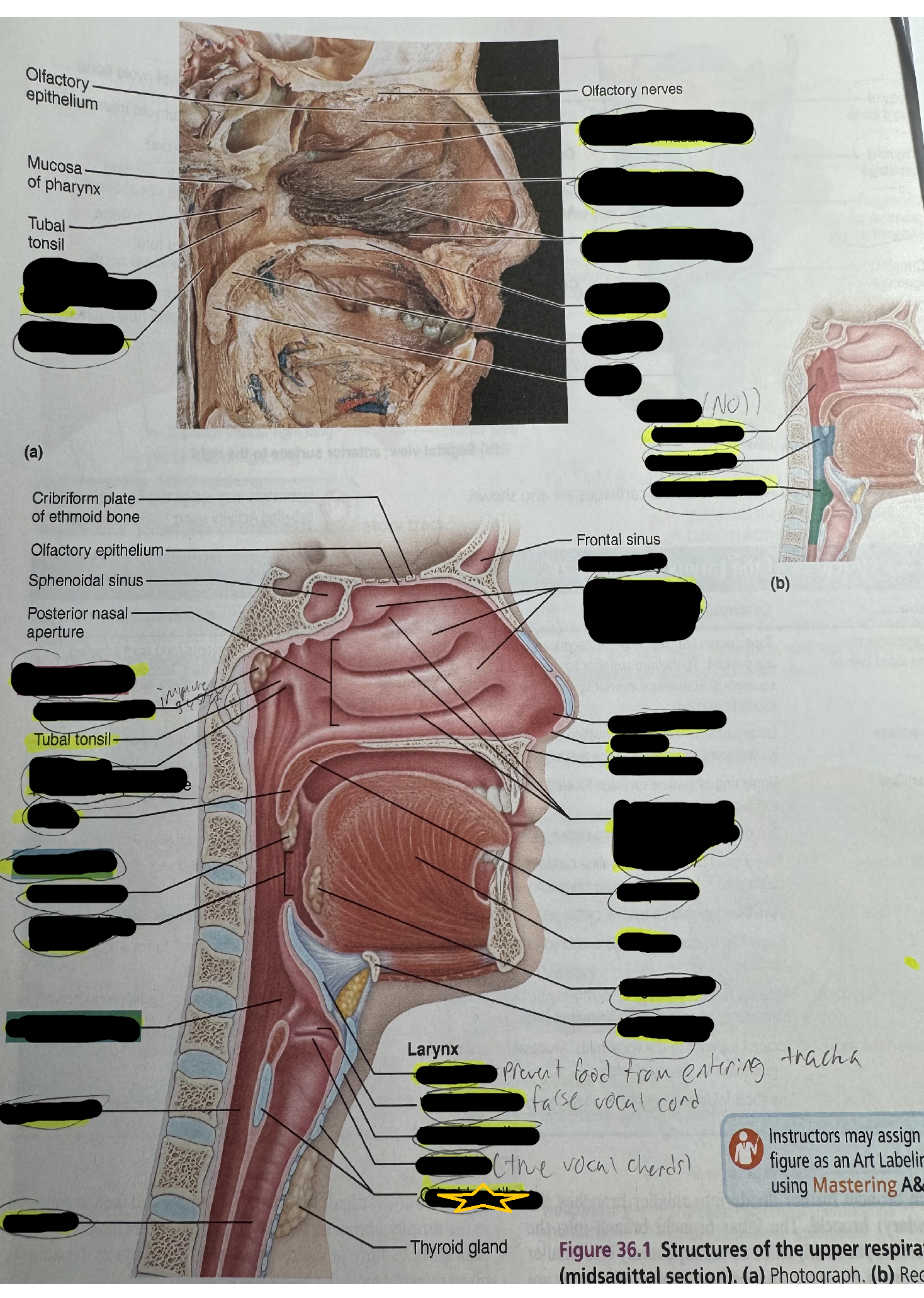
cricoid cartilage
hyaline

nasopharynx

pharyngeal tonsil
immune system
have crypts for bacteria
goes away with age

opening of pharyngotympanic tube

uvula

oropharynx

palatine tonsil
inflammed when sick

isthmus of the fauces
bridge

laryngopharynx

esophagus

trachea
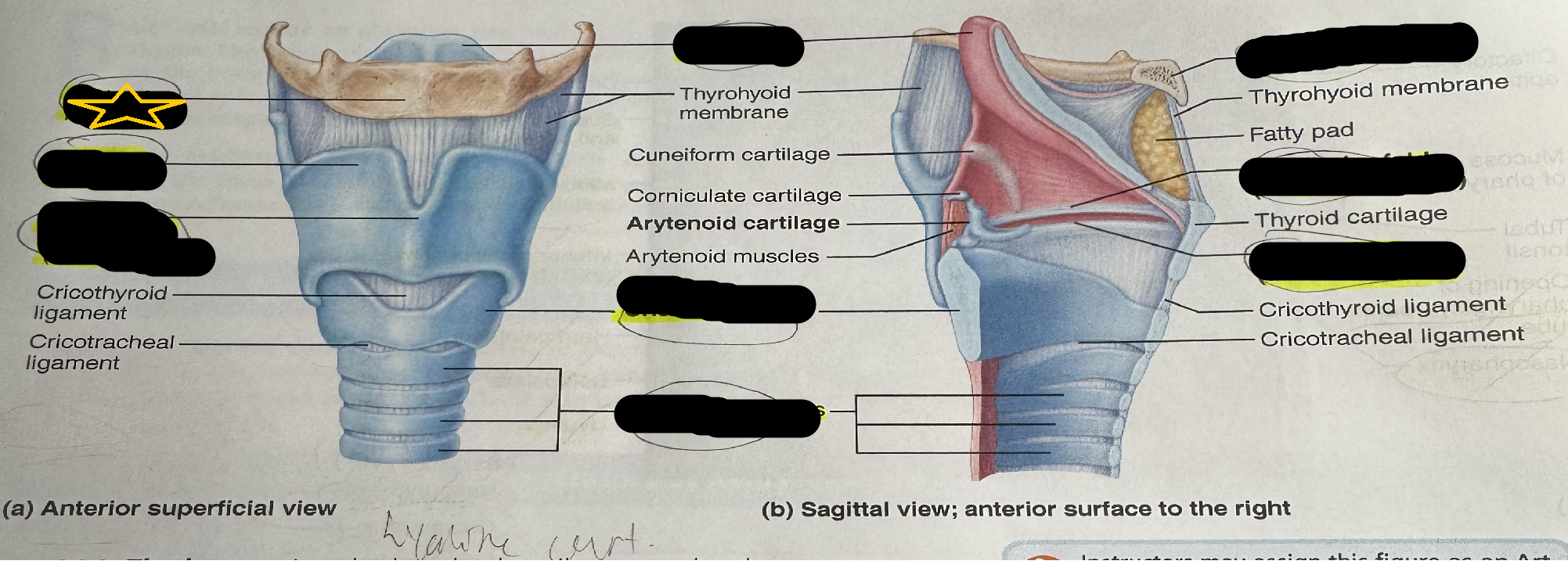
body of hyoid bone

thyroid cartilage
hyaline

laryngeal prominence (adams apple)

epiglottis
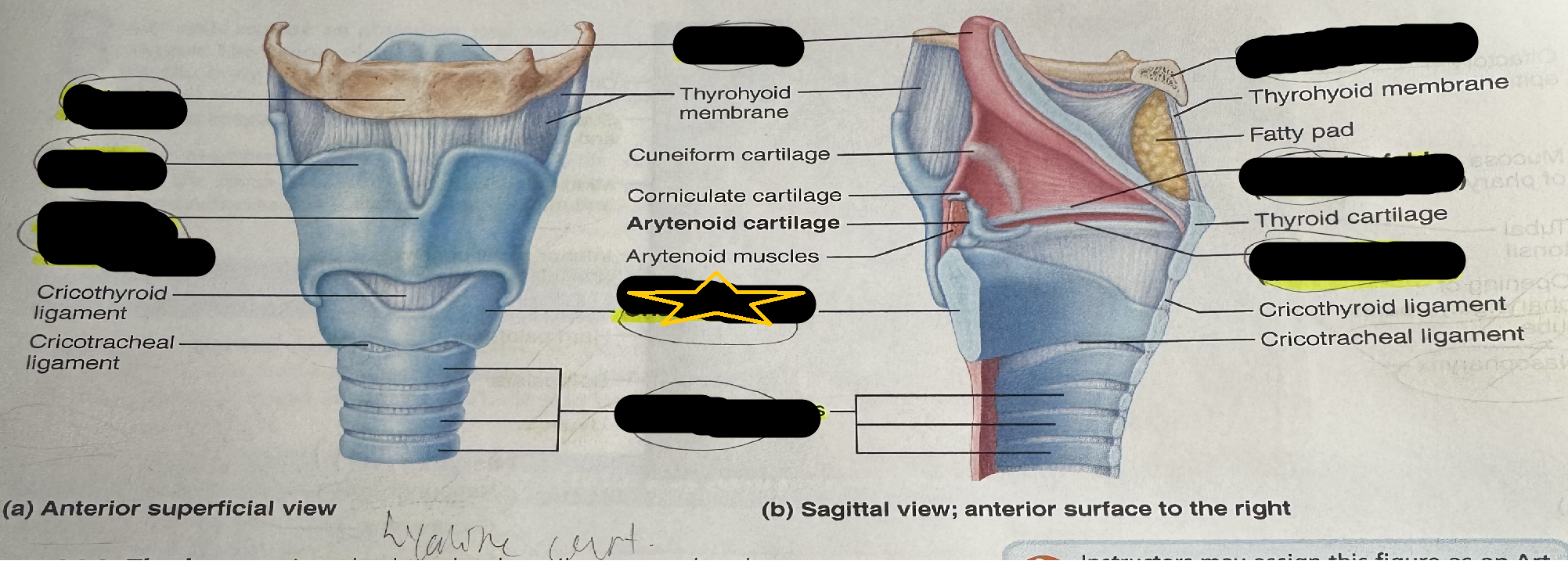
cricoid cartilage
hyaline

tracheal cartilages
prevent collapse of windpipe
hyaline

body of hyoid bone

vestibular fold
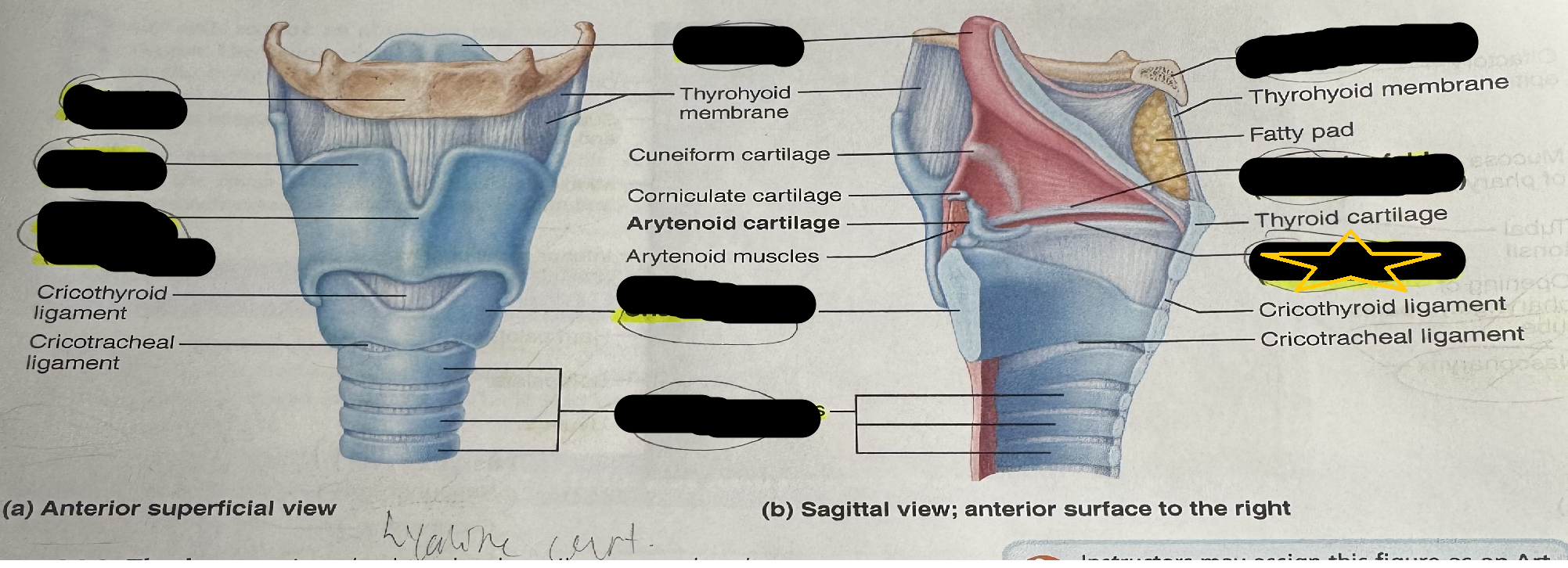
vocal fold
true vocal cord
tighten to make high pitched noises
loosen for lower pitched noises
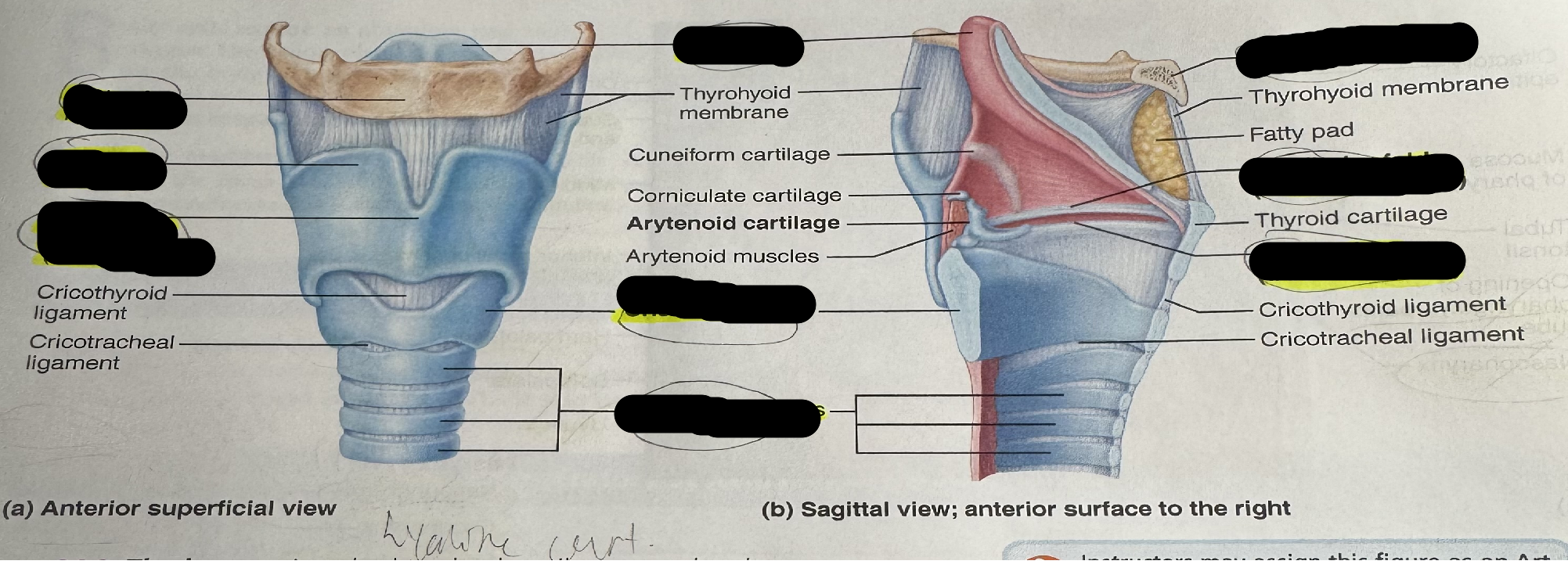
entire structure
larynx
voicebox

trachea
to bronchioles, lined with psuedostratified ciliated epi
mucus elevator

apex of lung

superior lobe of left lung

left main (primary) bronchus o1

lobar (secondary) bronchus o2
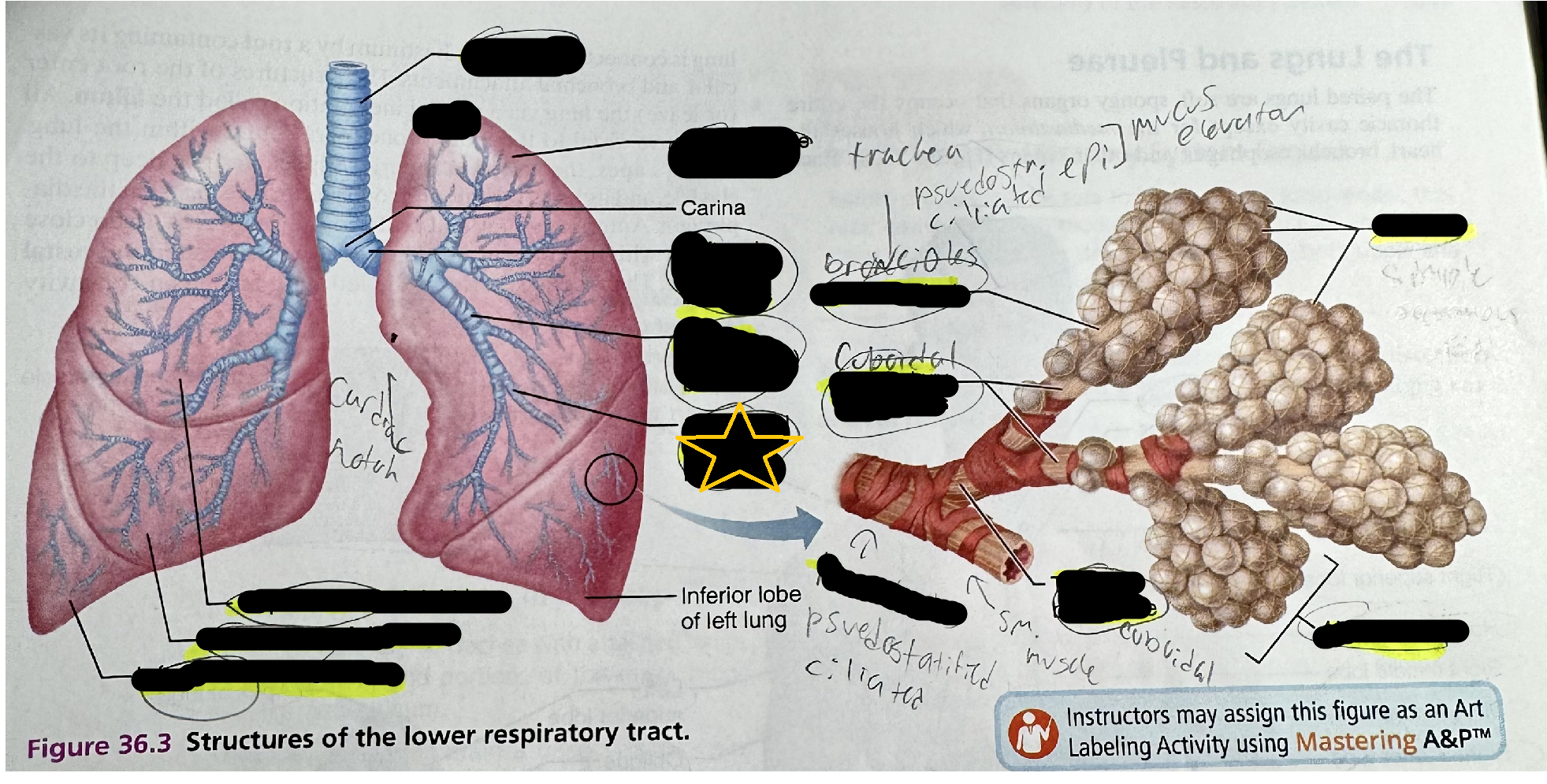
segmental (tertiary) bronchus,
leads into smaller bronchioles then alveoli (2nd picture)

superior lobe of right lung

middle lobe of right lung

inferior lobe of right lung

alveolar duct
just after respiratory bronchioles, alveolar ducts lead into alveoli

respiratory bronchioles
cuboidal
just after terminal bronchiole.
part of respiratory gas exchange

bronchioles
psuedostratified ciliated
just before alveoli and after bronchi

terminal bronchiole
cuboidal
last section before entering respiratory zone (area of actual exchange) structures, just at the end of the bronchioles (which are conducting zones, just carriers no exchange)

alveoli
simple squamous epithelium

alveolar sac
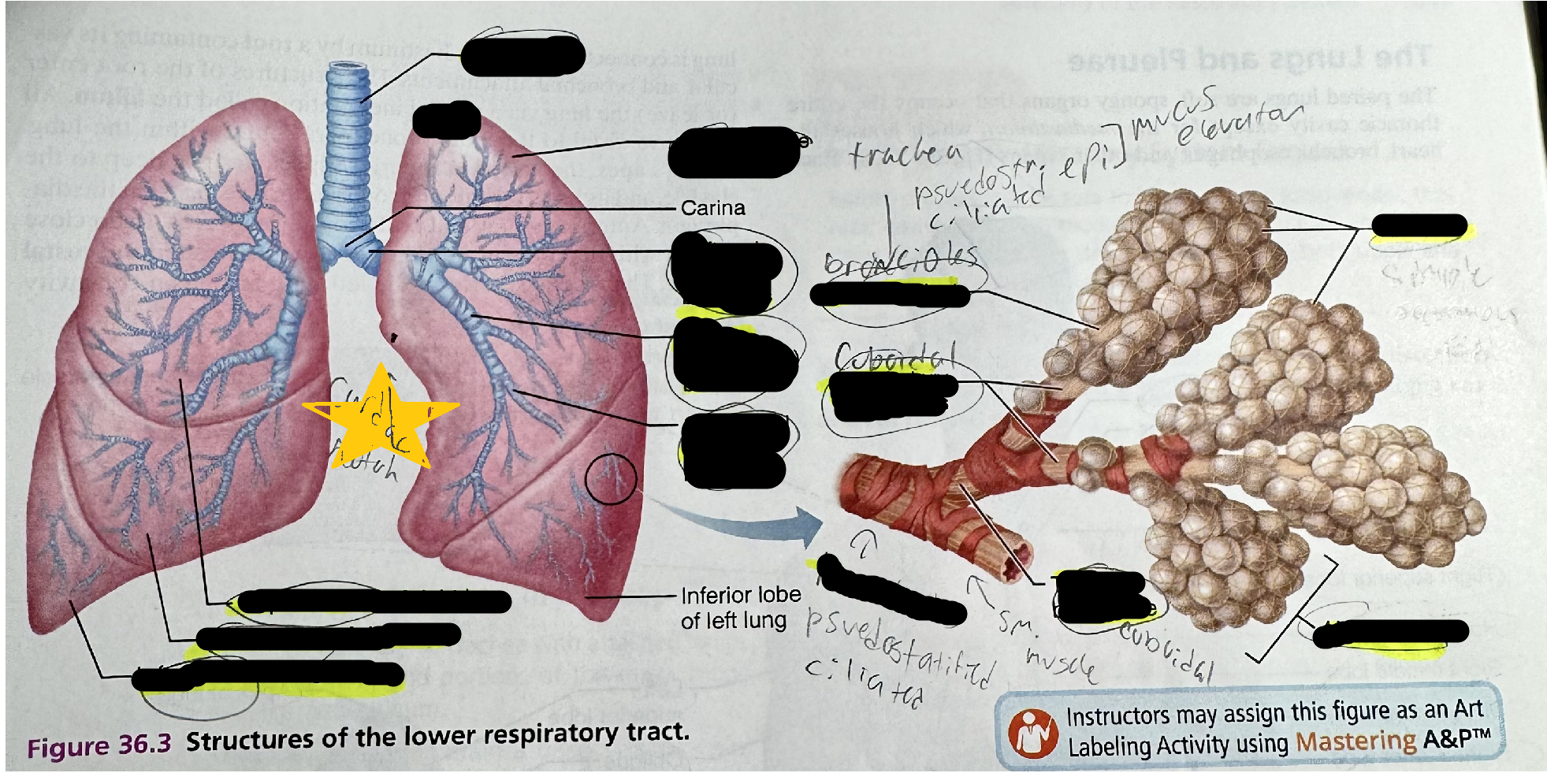
cardiac notch

alveolar macrophage
due to no mucus elevator in alveoli, macrophages keep alveoli clear
clean alveoli then come out thru the trachea

type I alveolar cell
simple sq. epi
allows oxygen to cross and enter capillary

alveolus (singular)
alveoli- gas filled air spaces

type II alveolar cell (secretes surfactant)
reduces surface tension, if not alveolus would collapse since moisture is attracted
babies dont have it, need it injected bc lungs would collapse

red blood cell in capillary
mucus elevator
in trachea
goblet cells secrete mucus
trachea lined with psuedostratified ciliated epithelium
cilia move debris/mucus upward out of the lungs to prevent pneumonia
respiratory zone
respiratory membrane, alveoli, alveolar ducts, and respiratory bronchioles
gas exchange does occur here
conducting zone structures
all other respiratory passageways (from the nasal cavity to the terminal bronchioles) simply serve as access or exit routes
no gas exchange happening
full respiratory pathway
conducting zone:
air goes into nasal area
pharynx (nasopharynx, oropharynx, laryngopharynx)
trachea
left and right main (primary) bronchi
lobar (secondary) bronchus
segmented (tertiary) bronchus
bronchioles
terminal bronchiole
______
respiratory zone:
respiratory bronchiole- cuboidal
alveolar duct
alveoli (sac)- simple sq. epi
pleura
serous membranes around lungs
made of simple squamous cells on top of areolar CT
lines cavity wall- parietal
touches lungs- visceral

pariteal pleura

visceral pleura

pleural cavity

esophagus in mediastinum

root of lung at hilum
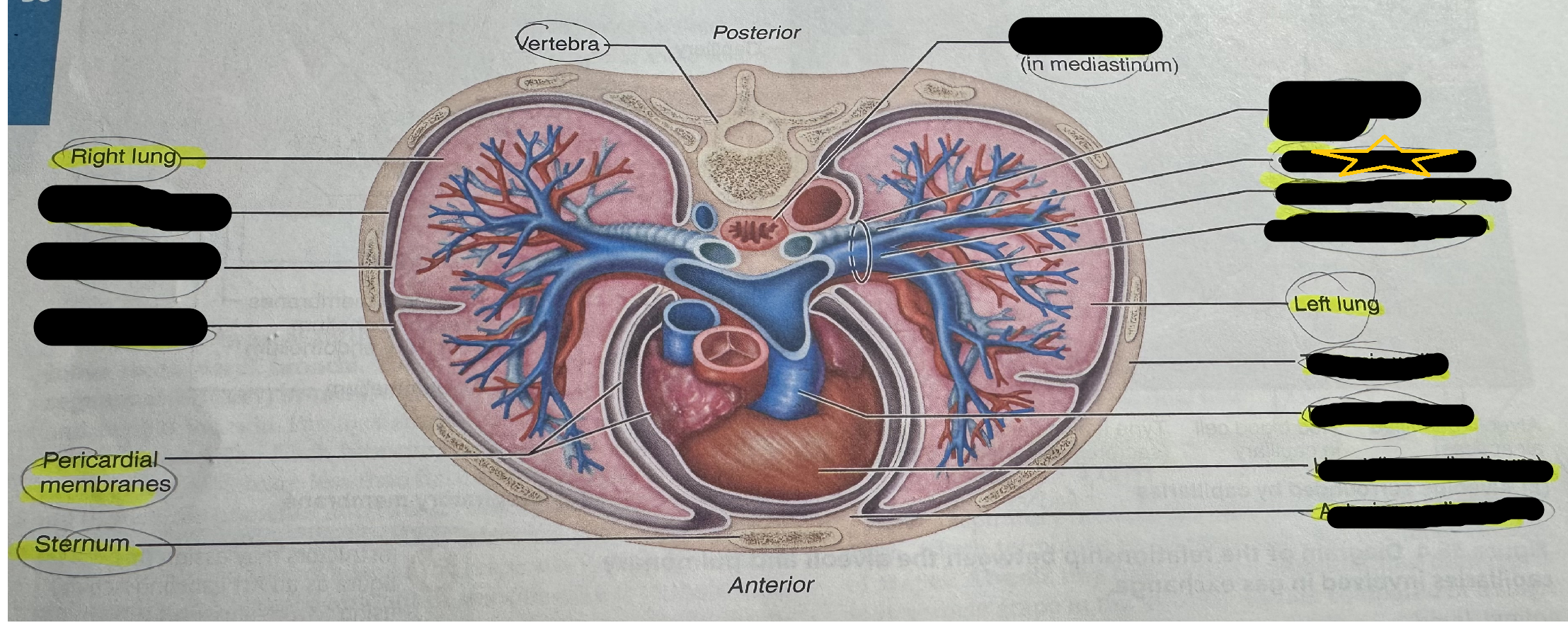
left main bronchus

left pulmonary artery

left pulmonary vein

thoracic wall

pulmonary trunk

anterior mediastinum

trachea
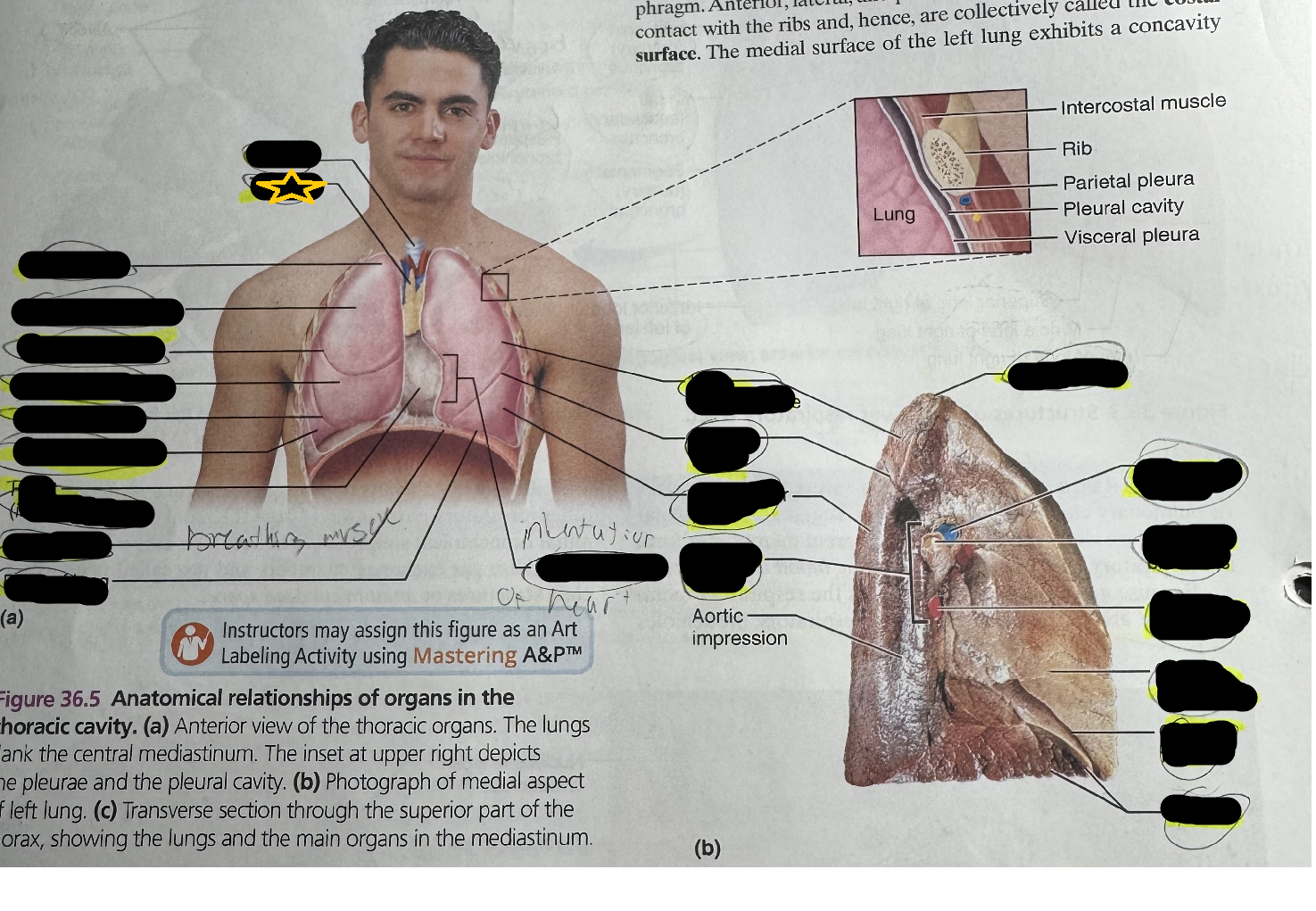
thymus
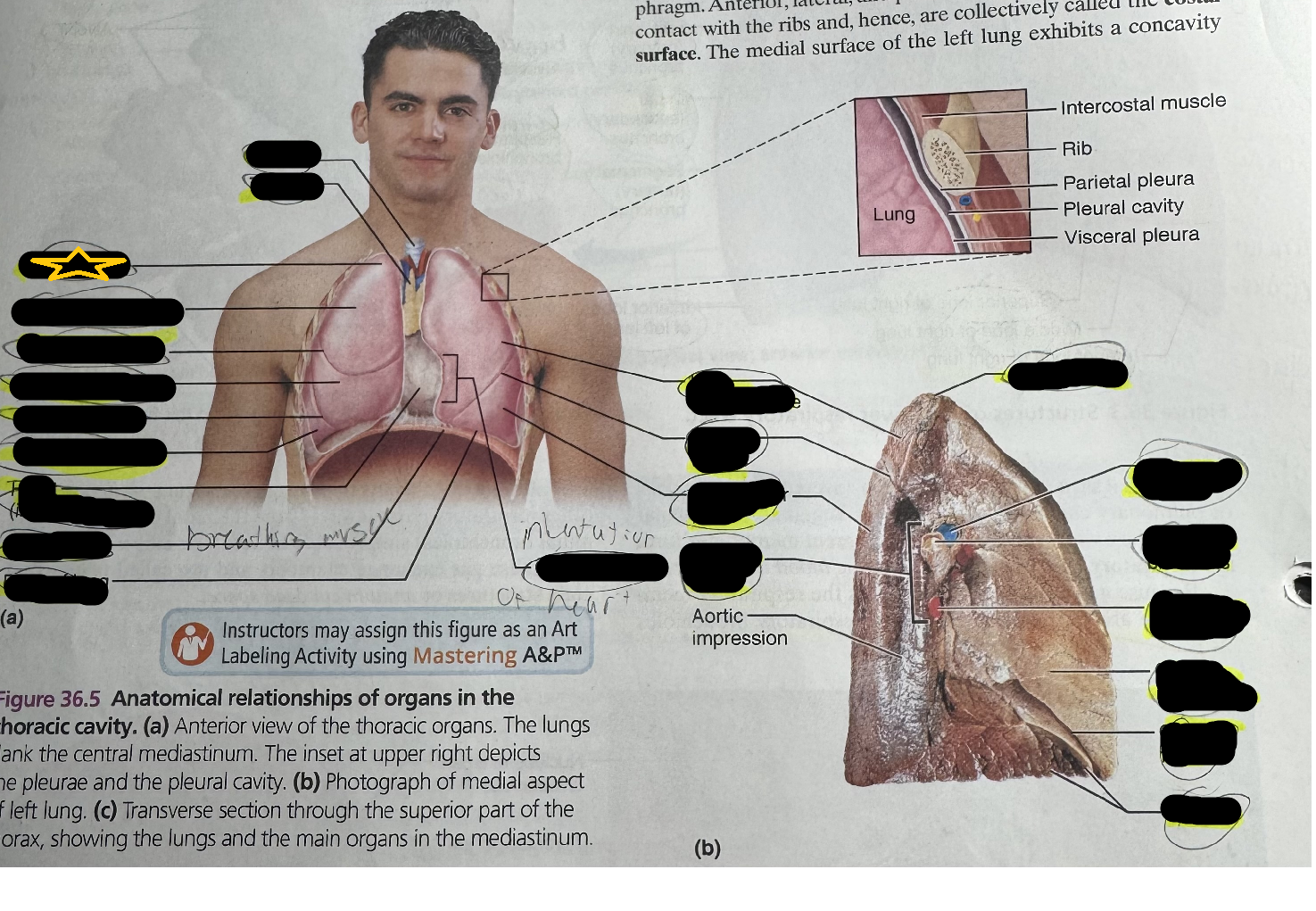
apex of lung

right superior lobe

horizontal fissure

right middle lobe

oblique fissure

right inferior lobe
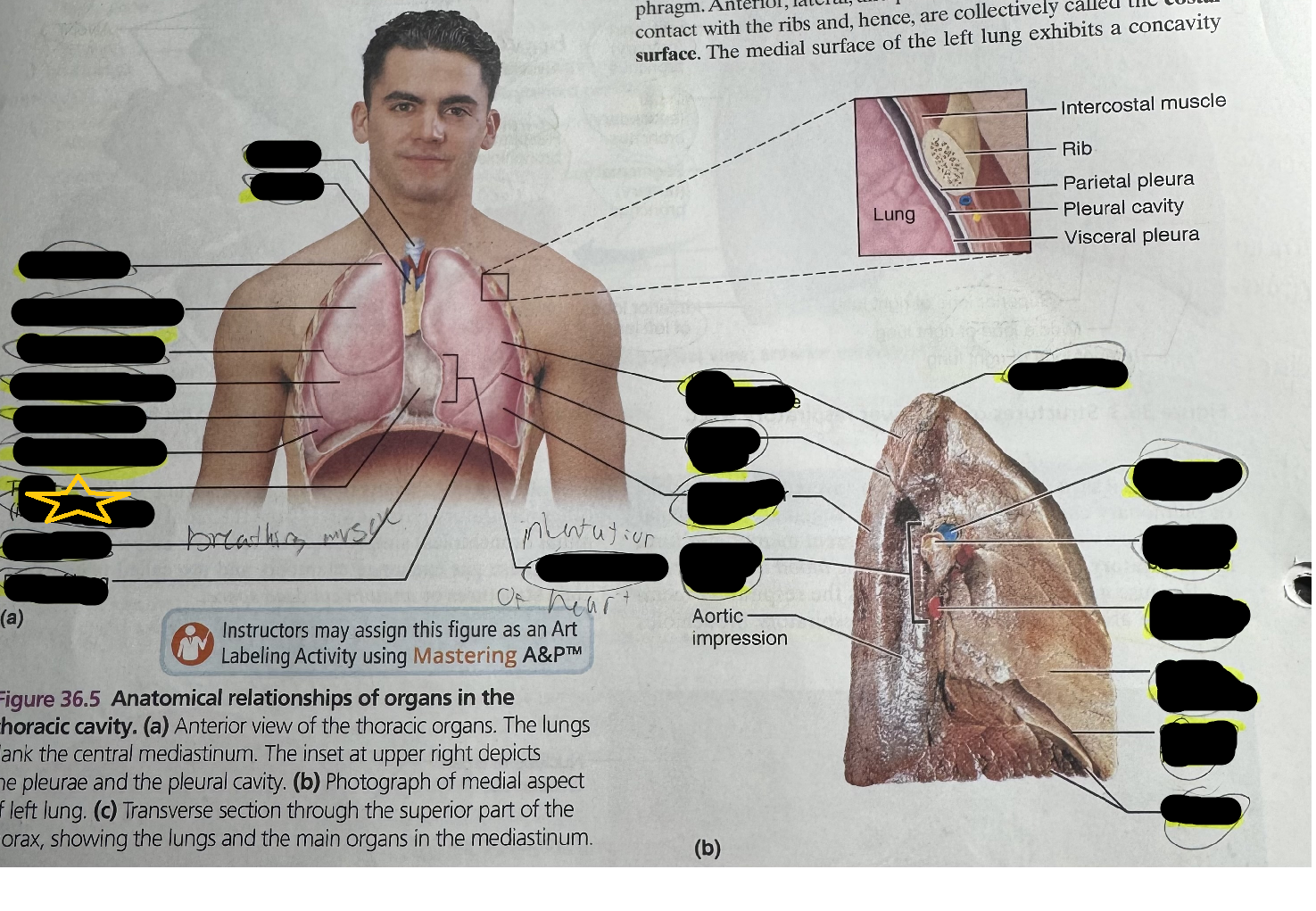
heart in mediastinum

diaphragm

base of lung/ diaphragmatic surface