KPE 220 CHAPTERS 1 + 2: CONCEPTS + THEORIES OF DEVELOPMENT
 Call Kai
 Learn
 Practice Test
 Spaced Repetition
 Match
 Flashcards
 Knowt Play
1/92

There's no tags or description
Looks like no tags are added yet.
93 Terms
Human development
the scientific study of age-related changes in our bodies, behaviour, thinking, emotions, social relationships, and personalities
the lifespan perspective
important changes occur during every period of development
changes must be interpreted with consideration for the culture and context in which they occur
the capacity for positive change, or plasticity (neuroplasticity), in response to environment demands is possible throughout entire lifespan
domains of developmental research
social
cognitive
physical
methodology
a “road map”
produced by epistemological, ontological, and theoretical perspectives
types of methodologies
quantitative
qualitative
types of qualitative research
ethnography
cross-cultural research
participatory action research
types of quantitative research
experimental
quasi-experimental
non-experimental
ethnography
detailed description of a single culture or context based on extensive observation
cross-cultural research
comparison of behaviours, values, beliefs, and social practices across different cultures/societies to identify what is universal versus culture-specific
importance of cross-cultural research to developmental psychology
identifies universal changes
identifies specific variables that explain cultural differences that can be used to improve people’s lives
participatory action research
priorities, perspectives, and engagement of the community members at the core of the research process
grounded theory
developing a theory to explain a phenomenon, process, or concept
phenomenology
how people make sense of an event
thematic analysis
ongoing examination of how the researcher’s perspectives, assumptions, and interactions within the data share the themes that emerge
point of conducting experimental research
cause and effect
features of experimental research
effects of two or more rival treatments or interventions are compared
randomly allocating participants or groups participant clusters to rival treatment
quasi-experimental research
compares treatments on dependent variables
intact/preexisting groups are exposed to rival treatments or treatment/no treatment
non-experimental research
relies on quantitative correlation, observation, and case studies
cross-sectional study designs
when groups of participants are selected at each of a series of ages
longitudinal study design
following the same individual over a period of time
sequential study design
begins w/ at least 2 age groups and tests each group over a number of years w/ 2 types of comparisons:
age-group comparisons
comparisons of each group to itself at an earlier testing point
methods
tools and techniques used in research (ex. interviews, observations, experiments, intervention, focus groups)
scientific method
particular research method that fits under positive paradigm to achieve 4 goals:
describe what happens during development
explain why particular events happen
predict testable hypothesis
influence scientific research to enhance individual development
common research guidelines
protection from harm
informed consent
confidentiality
knowledge of results
deception
purpose of theory
helps organize phenomena
predicts what will happen in new contexts
generate new avenues of research
criteria that predicts usefulness of a theory
vis testable predictions
heuristic value
solutions
explanation
formality
extent to which the components of the theory and relationships among them are specified clearly and in detail
scope
extent to which the components of the theory and the relationships among them are specified clearly and in detail
biological and evolutional theories
genetic and epigenetic factors interact with the environment to shape our health and wellbeing across the lifespan
types of biological and evolutionary theories
ethology
behaviour genetics
evolutionary psychology
ethology
genetically determined survival behaviours have evolved through natural selection
behaviour genetics
traits are said to be influenced by genes when related people are more similar than those who are unrelated
evolutionary psychology
the view that genetically inherited cognitive and social traits have evolved through natural selection
types of psychological theories
psychoanalysis
humanistic theories/alternatives
learning theories
cognitive (and social-cognitive theories)
psychoanalysis theories
believe that developmental change happens because of the influence of internal drives and emotions on behaviour
types of psychoanalysis theories
freud’s psychosexual theory
erikson’s psychosocial theory
freud’s psychosexual theory
behaviour is determined by both conscious and unconscious processes
personality has a structure w/ 3 parts that develop overtime:
Id
ego
superego
freud’s stages of development
oral
anal
phallic
latency
genital
erikson’s psychosocial theory
development results from the interaction between inner instincts and cultural demands
one must move through and successfully resolve eight “crises” or “dilemmas”
erikson’s stages of development
trust vs mistrust
autonomy vs shame and doubt
initiative vs guilt
industry vs guilt
identity vs role confusion
intimacy vs isolation
generativity vs stagnation
integrity vs despair
humanistic theories/alternative
most important internal drive is each individual’s motivation to achieve one’s potential
deficiency motive
drive to maintain homeostasis
being motives
desire to understand, give, grow, and achieve self actualization
behaviors that encourage self-actualization
make growth choices
be honest
situationally position yourself for peak experiences
give up defensiveness
let the self emerge
be open to experience
maslow’s self actualization
the ultimate goal in human life
innate goodness and motivation to reach full potential causes motives and needs
roger’s actualizing tendency
potential for personal growth
focused on the capacity of each of us to become “fully functioning person” without guilt or serious distorting defences
learning theories
focus on how experiences in the environment shape human behaviour
examples of learning theories
pavlov’s classical conditioning
BF skinner’s operant conditioning
behaviourism
pavlov’s classical conditioning
learning that results from the association of 2 stimuli
Skinner’s operant conditioning
learning to stop behaviours is the result of the consequences they bring
aspects of skinner’s operant conditioning
reinforcement
punishment
extinction
partial reinforcement
shaping
reinforcement
increases the probability of some behaviour being repeated because of the consequences that followed it
positive reinforcement
adding a pleasant consequence to an action to increase the probability of the action being continued
negative reinforcement
the removal of something “unpleasant” which results in the increase of the probability of the action occurring again
punishment
decreases the probability OR stops the behaviour being repeated because of the consequences that occurred
positive punishment
involves adding something unpleasant
negative punishment
the removal of something pleasant
extinction
decrease in behaviour after repeated non-reinforcement
partial reinforcement
when behaviour is reinforced SOMETIMES but not others
most common in the real world
shaping
when an individual learns a complex behaviour through the reinforcement of intermediate steps
when a child masters a step, reinforcement for the previous step is discontinued
cognitive (and social-cognitive theories)
emphasizes the mental aspects of development
piaget’s cognitive developmental theory
the idea that thinking i developed through schemes
overtime schemes are assimilated, accommodated, and equilibrated
scheme
internal cognitive structure that provides an individual with a procedure to follow in a specific circumstance
equilibration
process of balancing assimilation and accommodation to create schemes that fit the environment
assimilation
process of applying schemes to experiences
accommodation
involves changing the scheme as a result of new info
piaget’s cognitive-developmental stages
sensorimotor (birth-18 months)
preoperational (18 months to 6 years)
concrete operational (6 years to 12 years)
formal operational (12+ years)
piaget’s stage of sensorimotor (birth to 18 months)
understands world through senses and motor actions
begins to use simple symbols and pretend play
piaget’s preoperational stage (18 months to 6 years)
age 2: child can use symbols to both think and communicate
develops abilities to take others POVs, classify objects, and use simple logic
piaget’s concrete operational stage (6 years to 12 years)
logic develops new internal operations but is still tied to known world
can reason about simple “what if” questions
piaget’s formal operational stage (12+ years)
can manipulate ideas and objects
thinks hypothetically
adulthood: can easily manage a variety of “what if” questions
improves the ability to organize ideas and objects mentally
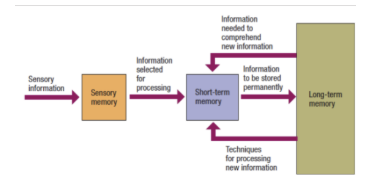
information processing theory
describes the process of the mind managing information as a computer model
cognitive (and social-cognitive theories)
piaget’s cognitive developmental theory
information processing theory
neo-piagetian
vygotsky’s sociocultural theory
stages of the computer model in the information processing theory
input
throughput: mental programs transform information
information is used to perform actions
sub-processes of memory
encoding
storage
retrieval
encoding sub-process of memory
organizing info to be stored in memory
storage sub-process of memory
keeps information
retrieval subprocess of memory
getting information out of memory
neo-piagetian
combining piaget’s cognitive-developmental theory and the information processing theory
vygotsky’s sociocultural theory
complex thinking has origins in social interaction
vygotsky’s concept of scaffolding
process of an adult or more skilled child structuring another child’s learning experience by guiding them
how to create an appropriate scaffold
gain and keep childs attention
model the best strategy
adapt the whole process to the child’s developmental level
vygotsky’s zone of proximal development
signifies tasks that are too hard for the child to do alone, but can be managed with guidance
bandura’s social cognitive theory’s observational model
learning from watching others
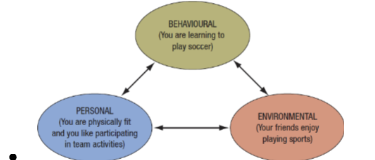
bandura’s reciprocal determinism
human development is based on personal, behavioural, and environmental factors
follows the social-cognitive model of human behaviour
bandura’s self efficacy
the belief in one’s own capacity to cause an intended event to occur or to perform a task
brofenbrenner’s biological systems theory
explains development in terms of the relationships between people and their environment over time
describes interrelationships between individual and contextual variables that affect development

brofenbrenner’s macrosystem
cultural context
contains values and beliefs of the culture in which a child is growing up
brofenbrenner’s exosystem
socioeconomic context
the institutions of the culture that affect’s a child’s development indirectly
brofenbrenner’s microsystem
immediate context
the variables people are exposed to directly (families, schools, religious institutions, neighbourhoods)
brofenbrenner’s mesosystem
interconnections
contains the interconnections of the microsystem
brofenbrenner’s individual context
the child’s genetic makeup and developmental stage
brofenbrenner’s model layers from outer to inwards
macrosystem
exosystem
mesosystem
microsystem
individual context