OChem Exam 4
 Call Kai
 Learn
 Practice Test
 Spaced Repetition
 Match
 Flashcards
 Knowt Play
1/22

There's no tags or description
Looks like no tags are added yet.
23 Terms
Alkene Halogenation
Br2 & CH2Cl2 that forms a bromonium ion intermediate than trans enantiomers through anti-addition

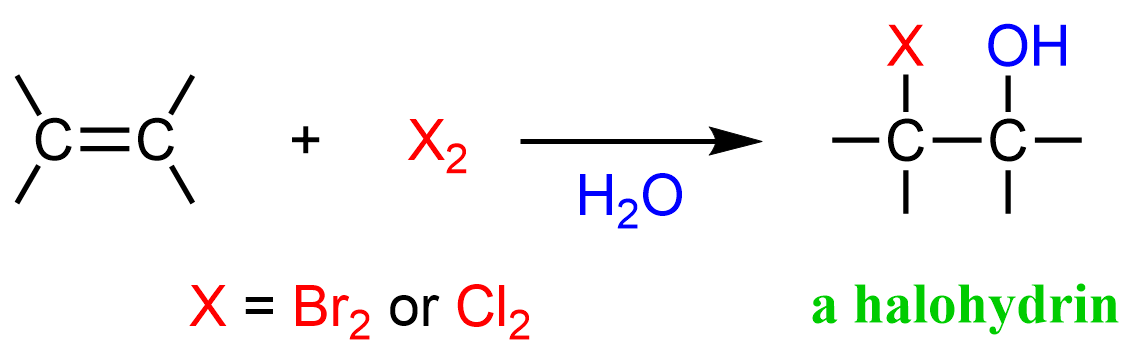
Alkene Halohydrin Formation
Br2 & H2O that forms a bromonium ion intermediate with excess water creating the non-symmetrical bromohydrin product through anti-addition
also can use NBS with water and DMSO and no UV light
Alkene Acid-Catalyzed Hydration
H2SO4/H2O & THF working best for 3o alcohols so the OH attacks the more substituted carbocation with the H on the other side of the double bond

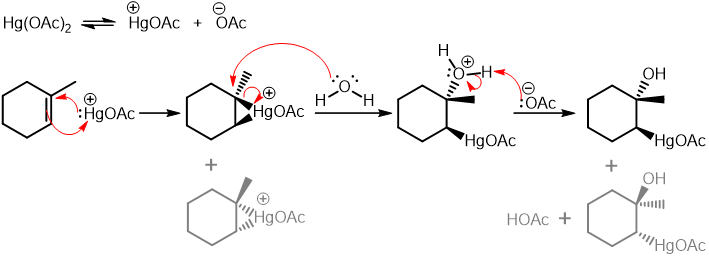
Alkene Oxy-Mercuriation Hydration
Hg(OAc)2 that forms a mercurinium mechanism in neutral conditions where the OH attacks the more substituted carbocation
Alkene Hydroboration
BH3 & THF where the B attacks the least substituted carbocation on the same side where the H will attack through a region specific, non-Markovnikov, SYN-addition

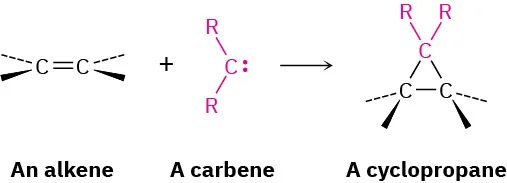
Alkene Carbene Addition
CH2 carbenes are added through a Simmons-Smith Reaction to form cyclopropanes in a one step, concentrated, stereospecific, SYN-addition mechanism with two enantiomers
Alkene Catalytic Hydrogenation
H2 in the presence of a platinum of palladium catalyst in a stereospecific, SYN-addition mechanism

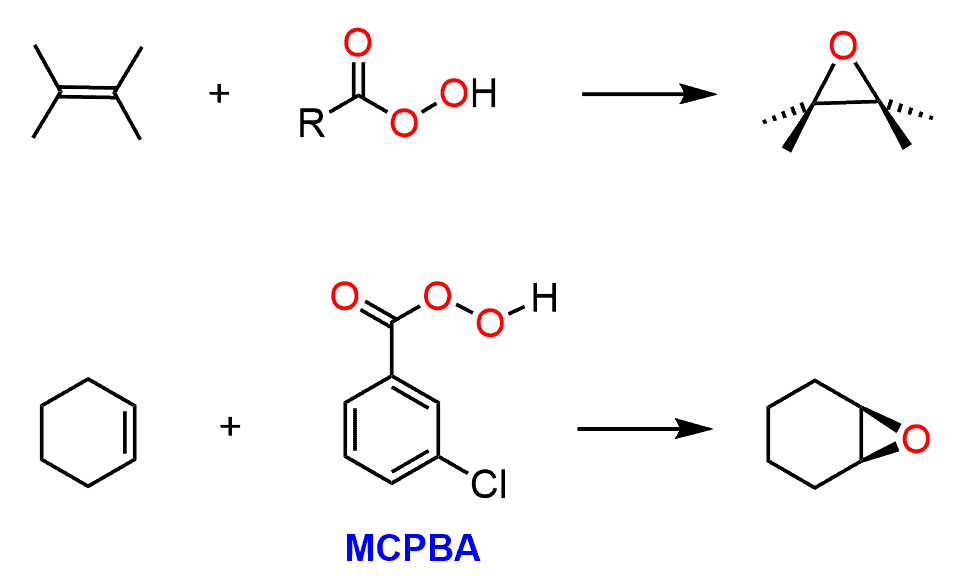
Alkene Epoxidation
peroxide and MCPBA helps convert into an epoxide in one step
Alkene Oxidative Cleavage
O3 cleaves the double bond to give two carbonyl compounds with Hs
KMnO4 cleaves the double bond to give ketones/carboxylic acids with OHs

Alkene Cis-1,2-Diol Formation
OsO4 forms an epoxide transition state that is cleaved by NaHSO3 to form the diol in a SYN-addition and can recycle the leftovers for another reaction

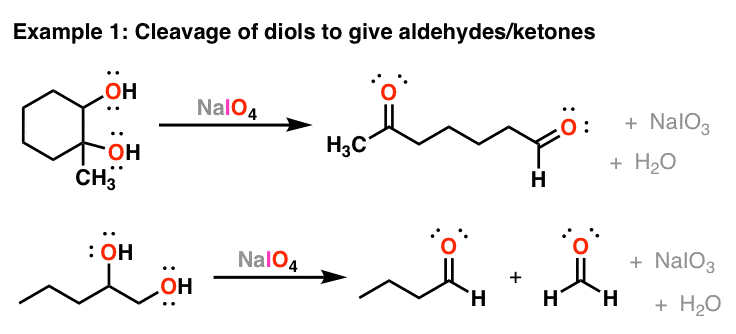
Alkene Cis-1,2-Diol Cleavage
HIO4 & water form an epoxide transition state that is cleaved by an oxidizing reagent but only with trans conformations
Stereochemistry of Achiral Alkenes
α = 0 and continues to be 0 when it transforms into a Racemic Conformer
Stereochemistry of Chiral Alkenes
α ≠ 0 and continues to not be 0 when it transforms into two Unequal Diastereomers
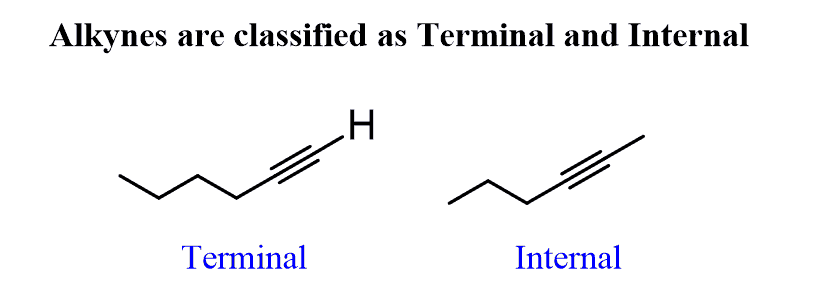
Terminal Alkyne
R - C -= C - H

Internal Alkyne
R - C -= C - R’
Alkyne Addition of Hydrogen Halide

Alkyne Addition of Halogen
Alkyne Oxy-Mercuriation Hydration
Alkyne Hydroboration
Alkyne Hydrogenation
Alkyne Oxidation
Acidity Comparison
alkyne > alkene > alkane
pKa = 25 > pKa = 44 > pKa = 60
Stability Comparison
acetylide > vinylic > alkyl