CC1- contamination of medicinal products: preservatives
 Call Kai
 Learn
 Practice Test
 Spaced Repetition
 Match
 Flashcards
 Knowt Play
1/18

There's no tags or description
Looks like no tags are added yet.
19 Terms
which type of drugs need to be completely sterile
ophthalmic e.g. anti-infectives, anti-inflammatory, lubricants, drugs used to treat manage or diagnose eye diseases
parenteral drugs ( drugs administered by injection or infusion )
what type of drug can be non sterile but with few limitation + what are those limitations ?

what are some of the risk factors of sterility
aqueous have increased risk of bacteria contamination

what organisms are the most-> least resistant to sterilising agets and processes
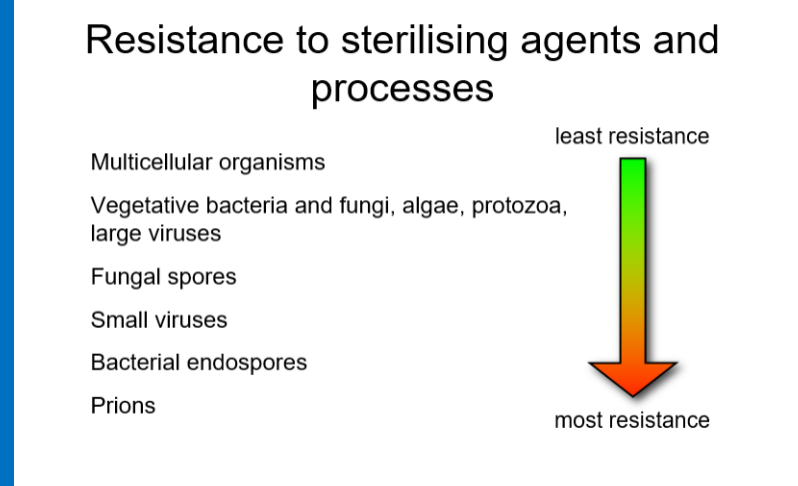
describe the medical relevance of biofilms in terms of sterilisation
they are highly resistant compared to just regular bacteria

what is bacterial sporulation
its a survival strategy when nutrients become exhausted
its used by some gram positive bacteria
the spores are very resistant to heat, radiation and chemical agents
and they can survive for many years
list the different types of microorganisms/ things that can cause contamination, the common ones
bacteria- positive and negative
biofilms- clusters of bacteria
bacterial spores- very resistant
fungi- yeast and moulds
what are the three rare types of contaminations
virus- found in some human or animal derived products
protozoa- found in improperly sterilised contact lenses
prions-found in blood products or medical equipment after surgery of patients ( very difficult to remove )
what are the consequences of microbial contamination

what are preservatives
they are substances used to lower the risk of microbial contamination throughout the products shelf life
they must be integral to the formulation design and and they can t be included to mask poor manufacturing processes
what are the ideal properties for preservatives
broad spectrum
rapid antimicrobial action
chemically stable
compatible with formulation
physically undetectable
cost effective
what are the two main classes of agents used for preservatives ( oral )
organic acids e.g. benzoic acid
parabens, esters e.g. propyl paraben
describe organic acids as preservatives
they are limited by Ph dependence so they work at pka values up to 4.2 for benzoic acids
so they are quite effective however their PKa value limits them
describe parabens as preservatives
they are effective preservatives and the overcome Ph dependence as they tend to have a high pka value of around 8-8.5
but they aren’t very soluble and act quite slowly
what are some of the positive factors about

how are preservative tested

whats another way of testing preservatives aside for the challenge test

what re the factors that affect the choice of preservative

what’s the most likely contaminating bacteria and fungi in oral products
