9/11 - Plant Toxicology Nervous
 Call Kai
 Learn
Learn Practice Test
 Spaced Repetition
 Match
Match Flashcards
 Knowt Play
1/20

There's no tags or description
Looks like no tags are added yet.
Name | Mastery | Learn | Test | Matching | Spaced | Call with Kai | Chat |
|---|
No analytics yet
Send a link to your students to track their progress
21 Terms
Buckeye
What plant, in the genus Aesculus, is also called the horse chestnut, red buckeye, and white buckeye? It contains saponins and alkaloids and is both a flower and a nut. Animals that ingest this (usually horses) will present with saw-horse stance, stagger, trembles, hyperesthesia, seizures, extensor rigidity, collapse, and self-limiting presentation.

Locoweed
What plant is in the genus Astragalus, and contains the alkaloid swainsonine? It also contains nitro-toxins and high levels of selenium. Chronic effects after ingestion last for weeks, as it causes a lysosome storage disease causing accumulation of oligosaccharides. Signs include ataxia, incoordination in horses, depression, staring as if the animal is blind, dropping head, slow and difficult chewing, violent behavior when restrained, weakness, depression, rough hair coat, weight loss, and solitary behavior.

Milkvetch
Which plant in the genus Astragalus contains 3-nitropropionic acid and 3-nitropropanol (miserotoxin)? It causes irreversible inhibition of mitochondrial succinate dehydrogenase, decreasing the energy available in the brain. Signs include abrupt onset, ataxia, recumbency, weakness, dazed behavior, difficulty breathing, and a clicking sound when the hooves strike the opposite rear leg. It occurs due to foci of necrosis in the brain, and treatment is with nursing care and alternative forage.

Crazyweed
What plant is in the genus Oxytropis, and causes the same problems as locoism (locoweed)? It contains swainsonine and causes competitive inhibition of a-mannosidase, preventing breakdown of oligosaccharides in lysosomes. Signs include depression, weight loss, stiff gait, exaggerated limb movement, anorexia, violent response to handling, and milk madness (transfers from dam to foal).

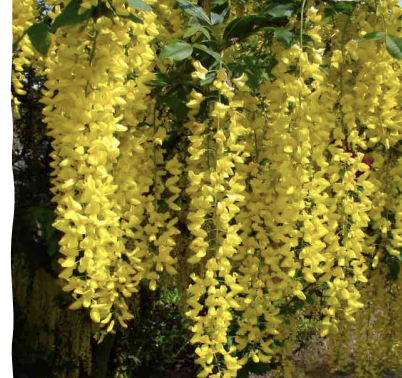
Laburnum
What genus of plants contains the species known as the golden chain tree? The leaves, legumes, and seeds are toxic, containing cytisine alkaloids and causing mild-moderate neurologic dysfunction. Signs include increased salivation, anorexia, tremors, and colic. Cattle will have knuckling of the fetlocks. Dogs will have abdominal pain, vomiting, and diarrhea. Treatment is with activated charcoal and support.
Pea
Lathyrus is a genus containing what ornamental plant (caley, wild winter, and everlasting types)? In poultry it causes angiolathyrism, presenting with dissecting aneurysms, and caused by aminopropionitrile. It inhibits lysyl oxidase, decreasing cross-linking of collagen. In other animals it causes neurolathyrism, presenting with acute lethal neurological syndromes or subacute-acute cases with neurological changes. In humans it causes spastic paresis, as the seeds contain amino acids which agonize the central glutamate-kainate and quisqualate excitatory receptors. Signs in horses include stiff gait, hyperexcitability, weakness, struggling to stand, flaccid paraplegia, paresis/paralysis of larynx with roaring. Sheep will have lethargy, anorexia, head pressing, pacing, increased salivation, and teeth grinding. Cattle will have similar signs to sheep and will stand with legs hunched under the body, and prefer to lie down. Horses have degeneration of motor neurons in the brain stem and demyelination. Treatment is with sedation and support.

Bracken Fern
What plant in the genus Pteridium causes depression, ataxia, inability to stand, loss of BCS, muscular twitching, and jerky movements of the head, neck, and tail in horses? Treatment is with thiamine (B1) parenterally.

Nightshade
What plant is in the genus Solanum, and causes crazy cow syndrome (tremors, ataxia, collapse, nystagmus, struggling to stand)? The field test involves raising and twisting the head for 1 minute, then releasing the head to watch it collapse (positive).

C. sativa
What species (full name) is also known as hemp, cannabis, or marijuana? It contains several cannabinoids, with THC the most important. It binds to cannabinoid receptors (CB1 and CB2). Clinical signs include depression, drowsiness, interspersed periods of arousal, bizarre actions, hyperactivity, tremors, and hyper-responsiveness. It can also cause glassy-eyed appearance, decreased body temperature, saw-horse stance, diarrhea, vomiting, increased excitement in cats, and recovery is usually within a few hours to 4 days.

Larkspur
What plant is in the genus Delphinium? It mainly affects cattle, and contains diterpenoid alkaloids, which causes curare-like competitive neuromuscular blocking effects? It causes a non-depolarizing neuromuscular blockade causing loss of motor function of the diaphragm and esophagus. The risk period is in flowering and early fruit formation. Signs include abrupt onset of episodic weakness, uneasiness, wide-legged stance, paralysis, recumbency, and bloat. Signs are usually 3-4 hours after ingestion, and fully developed after 5-8 hours. Respiratory difficulties can occur and death is due to respiratory failure, complicated by bloat.

Coyotillo
What plant is in the genus Karwinskia? It causes progressive polyneuropathy, with ascending systemic paralysis and flaccid quadriplegia. All parts are toxic, and the toxin disrupts axoplasmal transport, causing degeneration of the distal axonal segments of large motor peripheral nerves. Signs include gradual onset, hypersensitivity, tremors, dragging pelvic limbs, loss of motor control, and collapse. It causes degeneration of Schwann cells of large motor axons. Treatment is with supplementation of thiamine hydrochloride.

Senna
What genus of plants causes limb weakness, paresis, paralysis, muscle weakness, and recumbency? There will be lip/tongue abnormalities, and eating/drinking/swallowing difficulties.

Mesquite
What plant is in the genus Prosopis, and causes nervous excitement, difficulty in coordinating jaw/tongue movements, and the tongue often protrudes from the mouth?

Knapweed
What plant in the genus Centaurea is also called star-thistle? It causes equine parkinsonism or chewing disease. Signs include abrupt onset, impairment of feeding/drinking, hypertonicity of the muzzle/face, fixed facial expressions, paresis of lips/tongue, continuous chewing, protruding tongue, dehydration, and starvation. Neuronal damage is irreversible and euthanasia in severe toxicity is required.

Mimosa
What plant/tree is in the genus Albizia? It contains a structural analogue of vitamin B6, and antagonizes pyridoxine. Signs include exaggerated responses, seizures, labored respiration, paddling pelvic limbs, extended forelimbs, and seizures lasting 1-2 minutes and repeated after several minutes. Treatment is with pyridoxine hydrochloride supplementation.

Cicuta
What genus contains the poison hemlock plant? It has toxic and teratogenic effects, and contains several nicotine-like pyridine alkaloids. It is a GABA receptor antagonist. Signs include restlessness, twitching of lips/face/ears, grinding teeth, violent muscular activity, inability to stand, seizures, and death in 1-8 hours due to cardiopulmonary arrest. It also causes crooked calf disease, with skeletal contracture-type malformations and cleft palates, and is caused by maternal ingestion of toxins. There will be alkaloid-induced inhibition of fetal movement during specific gestational periods and susceptibility for cleft palate is 30-50 days, and multiple congenital contractures is 50-100 days.

Water
What type of hemlock is very similar to poison hemlock and is more toxic in the spring and in young plants? Signs occur within 15 minutes, with nervousness, twitching of facial muscles, ataxia, generalized tremors, frequent urination/defecation. These progress within hours to collapse, seizures, and death. It is worst in flowers and seeds, and contains cicutoxin, working on GABA receptors. There will be elevated CK, LDH, and AST.
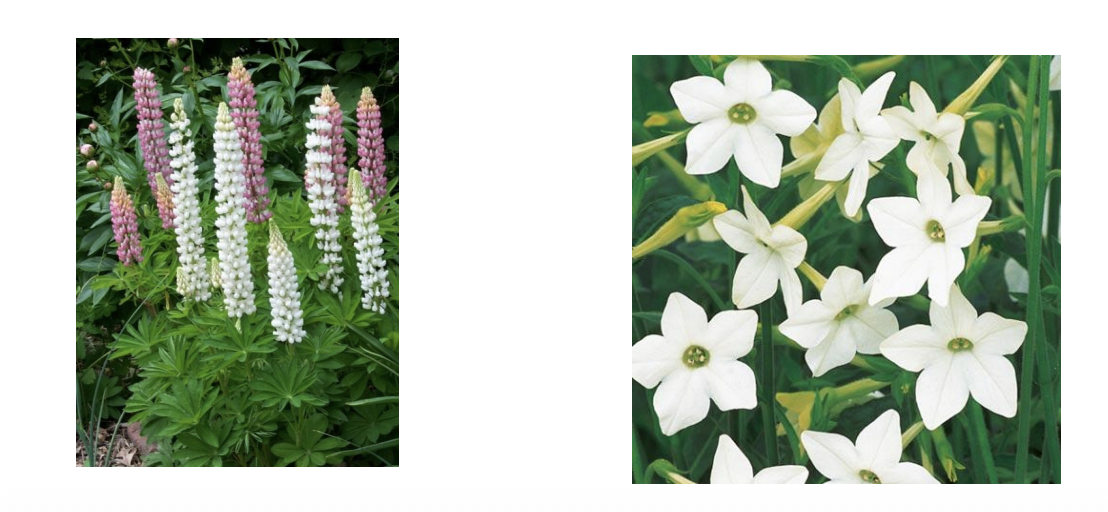
Lupines
What group of plants contain quinozolidine alkaloids and causes crooked calf syndrome? It is an agonist on nACh receptors. Nicotiana tabacum contains nicotine alkaloids but has similar signs. This plant is on the left, and N. tabacum is on the right. Signs include sensitivity in sheep, excitement followed by depression, ataxia, muscle weakness, twitching, and dyspnea. Treatment is supportive.
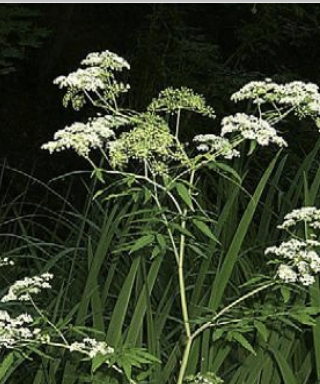
Trematone
What is the toxic substance in white snakeroot (A. altissima)? It interfers with glucose metabolism, is activated to a toxic form by CYP450, and is reported in many species. Drying the plant does not majorly diminish toxicity. Milk sickness in humans can result after consuming milk from intoxicated animals. Signs include weight loss, weakness, tremors, and reluctance to move. It involves elevated liver/muscle enzymes, hyperglycemia, and alkalosis. Treatment is with support, frequent milking, and activated charcoal/laxatives. Recovery is possible but can take weeks.

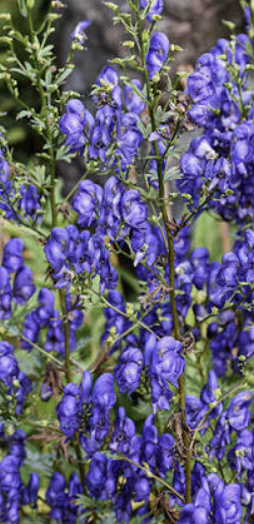
Aconitum
What genus contains plants known as devil’s helmet, queen of poisons, and blue rocket? The alkaloids are aconitine, hypaconitine, and mesaconitine, with high affinity binding to the open state of voltage-sensitive sodium channels, and persistent activation of the Na channels. There will be an increase in Ca due to acetylcholine release. Fatal poisoning is due to GI (nausea, diarrhea), muscle weakness, and CVS (hypotension, bradycardia, arrhythmias). Treatment is with atropine and support.
Chinaberry
What plant is in the genus Melia, and contains the toxin azadirachtin? Signs include salivation, retching, vomiting, diarrhea, paralysis, labored respiration, weakness, muscle spasms, ataxia, and seizures. Pathology is focal edema, inflamed stomach mucosa, and bloat. Treatment is with gastric lavage, sedation, and fluids.
