PSMA (PMOC) PT. 1
 Call Kai
 Learn
 Practice Test
 Spaced Repetition
 Match
 Flashcards
 Knowt Play
1/197

There's no tags or description
Looks like no tags are added yet.
198 Terms
Medicinal chemistry
is the science, which deals with the discovery and design of new and better therapeutic chemicals and development of these chemicals into new medicines and drugs
Medicinal chemists
can make new compounds
determine their effect on biological processes
alter the structure of the compound for optimum effect and minimum side effects
study uptake, distribution, metabolism and excretion of drugs
Random screening
this is an approach in drug discovery wherein there is already an existing drug that can be used to identify a new lead compound
Stereochemistry
space arrangement of the atoms or three-dimensional structure of the molecule
positioning the different functional groups in their sites of action
plays a major role in the pharmacological properites
any change in stereospecificity of the drug will affect its pharmacological activity
the isomeric pairs have different physical properties and thus differ in pharmacological activity
Isomers
same molecular formula but are arranged differently in space
Constitutional isomers
different sequence of bonds
Skeletal isomers
have different carbon skeleton
Functional group isomers
have different functional groups
Positional isomers
same functional groups but at different positions
Stereoisomers
same sequence of bonds but atoms oriented differently
Configurational isomers
can be interconvented only by breaking and making bonds
Conformational isomers
interconvertable by rotation around a single bond
Diastereomers
non-superimposable
non-mirror images
(chiral or achiral)
epimers
cis-trans or E/Z isomers
Enantiomers
non-superimposable
mirror images (chiral)
Optical isomers
are compounds that contain at least one chiral carbon atom
are compounds that differ only in their ability to rotate the polarized light
Enantiomers
can have large differences in potency, receptor fit, biologic activity, transport and metabolism
these differences result when the drug molecule has a asymmetric interaction with a receptor, a transport protein, or a metabolizing enzyme
Ascorbic acid
only the (-) isomer of ___ has antiscorbutic activity
alpha and beta glucose
only the D isomers of __ show high affinity for the red blood cell sugar transfer stem
alpha methyldopa
only the (-) isomer of ___ has hypotensive activity
chloramphenicol
only the D(threo) isomer of ___ has high anti-bacterial activity
Geometric isomerism (cis-trans isomerisms)
it occurs as a result of restricted rotation about a chemical bond, owing to double bonds or rigid ring system in the molecule
not mirror images
have different physicochemical properties and pharmacological activity
Conformational isomerism
also known as rotamers
these are non-superimposable orientation of a molecule which result from the rotation of atoms about single bonds
Optical isomerism
Classification of:
D and L forms
Mirror images
Geometric isomerism
Classification of:
cis and trans forms
Conformational isomerism
Classification of:
Eclipsed and staggered
Isosterism
any two ions or molecules having an identical number and arrangement of electrons
Bioisosterism
is the procedure of the synthesis of structural analogues of a lead compound by substitution of an atom or a group of atoms in the parent compound for another with similar electronic and steric characteristics
as the phenomenon by which compounds usually fit the broadest definition of isosteres and possess the same type of biological activity
Bioisosterism
important in medicinal chemistry because they maintain similar biological properties
resolved biological problems effectively
Procainamide
an amide, has a longer duration of action than procaine, an ester, because of the isosteric replacement of the ester oxygen with a nitrogen atom
Carbachol
the acyl methyl group has been replaced by an NH2
resistance to hydrolysis is due to the electronic effect of the carbamate group
chemical structure
variation in particle size
particle surface area
nature of crystal form
type of coating
type of tablet matrix
Factors of oral administration
to reach the target site
to alter the solubility of drug
act as metabolic precursor
used to enhance the absorption/to improve the membrane permeability of its active metabolite
4 Prodrug approach for oral administration
Olsalazine
used in ulcerative colitis
a dimer of the pharmacologically active mesalamine (5-aminosalicylic acid)
chloramphenicol + palmitic acid
__ + __ = chloramphenicol palmitate
Chloramphenicol palmitate
a prodrug that reduces drug solubility
menadione → vitamin K
an example of a prodrug that acts as metabolic precursor
Enalapril
Levodopa
Pivampicillin
Examples of prodrugs that is used to enhance absorption/to improve the membrane permeability of its active metabolite
Enalapril
ethyl ester of enalaprilic acid
an active inhibitor of angiotensin-converting enzyme
much more readily absorbed orally than the pharmacologically active carboxylic acid
Parenteral administration
bypass the intestinal barrier
common in patients who cannot tolerate or are incapable of accepting drugs orally
can be used to alter the solubility characteristics which can increase the flexibility in formulating dosage forms
prodrug can alter biodistribution and biological half-life
2 Prodrug approach for parenteral administration
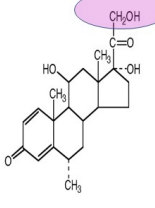
methylprednisolone
slightly water-insoluble
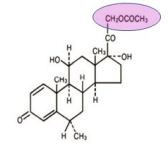
methylprednisolone acetate
water-insoluble, top. Oint & aq. susp (IM)
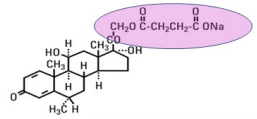
methylprednisolone sodium succinate
water-soluble, oral, IV, IM
methylprednisolone
methylprednisolone acetate
methylprednisolone sodium succinate
esterases
both the succiate and acetate esters hydrolyzed to the active methylprednisolone by?
methylprednisolone
methylprednisolone acetate
methylprednisolone sodium succinate
example of prodrug that can be used to alter the solubility characteristics which can increase the flexibility in formulating dosage forms
retinoic acid structure
etretinate
acitretin
example of prodrugs that can alter biodistribution and biological half-life
retinoic acid structure
used systemically to treat psoriasis, a nonmalignant hyperplasia
etretinate
has a 120-day “terminal” half-life after 6 months of therapy
acitretin
active metabolite
has a 33- to 96-hour “terminal” half-life
etretinate
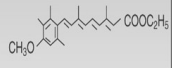
acitretin
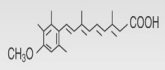
protein binding
drug + albumin → drug-albumin complex
can affect solubility, biodistribution, half-life in the body, and interaction of the drug with other drugs
limits access to certain body compartments
can prolong the drug’s duration of action
limits the amount of drug available for bio transformation and for interaction with specific receptor sites
suramin
large polar trypanocide remains in the body in the protein-bound form as long as 3 months (t1/2 = 50 days)
the maintenance dose: based on weekly administration
tissue depots
the more lipophilic the drug, the more likely it will concentrate in these pharmacologically inert depots
thiopental
ultra-short acting, lipophilic barbiturate
its concentration rapidly decreases below its effective concentration following administration
first pass effect
initial trip of the drug through the liver
lidocaine
nitroglycerin
morphine
meperidine
drugs that are extensively metabolized by the first pass effect
regioselectivity
denotes the selective metabolism of two or more similar functional groups, or two or more similar atoms that are positioned in different regions of a molecule
active sulfide metabolite
active metabolite of sulindac
6-mercaptopurine
active metabolite of azathioprine
azathioprine
designed to prolong the drug activity of its active metabolite
paracetamol
active metabolite of phenacetin
desipramine
active metabolite of imipramine
nortriptyline
active metabolite of amitriptyline
acyclovir triphosphate
active metabolite of acyclovir
4-hydroxycyclophosphamide
active metabolite of cyclophosphamide
cyclophosphamide
designed to mask the toxic side effects of its active metabolite
ampicillin
active metabolite of hetacillin
hetacillin
designed to increase the chemical stability of the active metabolite
carbenicillin
active metabolite of carbenicillin indanyl sodium
phase I metabolism
generally tends to provide a functional group or “handle” to the molecule
a new functional group introduced into the drug molecule or an existing functional group is modified making the drug more polar and more readily excreted
deactivation
activation
intoxication
altered pharmacologic activity
possible results of phase 1 metabolism
deactivation
decreased pharmacologic activity
activation
increased pharmacologic activity
intoxication
increased toxicity
n-demethylation
morphine → normorphine
dealkylation
iproniazid → isoniazid
isomerization
retinoic acid → 9-cis-retinoic acid
normorphine
has about one-fourth as active as morphine in producing analgesia but has a much lower physical dependence capacity
retinoic acid
acne tx, psoriasis
alitretinoin (9-cis-retinoic acid)
for eczema, sarcoma
isotretinoin (13-cis-retinoic acid)
cystic acne tx, neuroblastoma
oxidation
most common phase 1 of biotransformation
vast majority of this is catalyzed by a group or mixed function oxidases known as CYP450
acetaminophen
fluoroquinolones
imipramine
theophylline
these are metabolized by CYP1A
prostaglandin
metabolized by CYP4B
cyp2d6
responsible for genetic polymorphism
cyp3a4
most important cyp 450 isozyme
oxidative reactions
olefins - carbamazepine
alcohols and aldehydes
aromatic moieties
aromatic hydroxylation
phenylbutazone to oxybutazone
aniline to p-aminophenol (NADPH-dependent oxidative reactions)
deamination
amphetamine to phenylacetone
desulfuration
thiopental to pentobarbital
reduction
it has same goal as oxidation reaction to create polar functional groups that can be easily excreted
bacteria resident in the GI tract are also responsible for reductions of azo and nitro groups
carbonyl reduction
aldehyde reduction
ketone reduction
aldehyde reduction
chloral hydrate to trichloroethanol
acetohexamide
ketone reduction
prednisone to prednisolone
azo reduction
sulfasalazine
nitro reduction
chloramphenicol