Learn: Ap Psych Unit 2 Quiz
 Call Kai
 Learn
 Practice Test
 Spaced Repetition
 Match
 Flashcards
 Knowt Play
1/63

There's no tags or description
Looks like no tags are added yet.
64 Terms
Selective Attention
we hear and see the things that are the most relevant to us, at the expense of the rest of our perception
- distracted driving
Innatentional Blindness
we often miss details when focusing on the big picture + vise versa
-chicken+jumprope video
change blindness
Not noticing changes in the environment / visual stimuli
- casino video: the first guy picks something off the floor and the second guy stands up, the customer doesn't notice
cocktail party effect
Ability to concentrate on one voice amongst a crowd, but we are still able to detect important/relevant stimuli
- hearing the word "pingry" at a party in another state, you are going to notice even if it is not part of your current convo
bottom-up processing
analysis that begins with the sensory receptors and works up to the brain's processing
- sensory input to interpretation
top-down processing
information processing guided by higher-level mental processes, when we construct perceptions drawing on our experience and expectations
- knowledge to interpretation
- where inattentianal blindness occurs
- Ex. reading
gestalt processing
The brain applies automatic, predictable rules to organize chaos into meaning quickly
-closure
-proximity
-common region
-similarity
-continuity
-perceptual set
-apparent movement
-figure+ground
-invariance
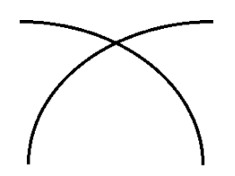
closure
the tendency to complete figures that are incomplete

proximity
when things are close together, we assume they are related

common region
tendency to perceive objects that are in a common area or region as being in a group (ex. in a shaded region)

similarity
the tendency to perceive things that look similar to each other as being part of the same group

Continuity
we perceive smooth, continuous patterns rather than discontinuous ones
perceptual set
a mental predisposition or readiness to perceive stimuli in a particular way based on previous experiences, expectations, beliefs, and context (might see the 13 as a B if focusing on the abc part)
A
12 13 14
C
apparent movement
the change in successive images makes thing seem like they are moving.
- interprutation based on context + visual input (bottom+top) to transofrm stationary visual input to 3d motion
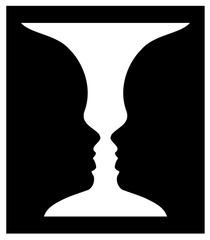
figure+ground
we see the figure first, then the background
Invariance
No matter how you present a choice, you should always have the same outcome
- the ability to recognize shapes no matter the size or orientation

binocular depth cues
clues about distance based on the differing views of the two eyes
retinal disparity
A binocular cue for perceiving depth by comparing images from the retinas in the two eyes, the brain computes distance—the greater the disparity (difference in size) between the two images, the closer the object.
Convergence
A binocular cue for perceiving depth; the extent to which the eyes converge inward when looking at an object

monocular depth cues
cues of depth perception that are available to each eye alone
-more general than binocular cues
relative clarity
a monocular cue for perceiving depth; hazy objects are farther away than sharp, clear objects
relative size
a monocular cue for perceiving depth; the smaller image is farther away
texture gradient
A monocular cue for perceiving depth: objects that are closer have more visible texture; objects further away are seen as smoother.
linear perspective
A monocular cue for perceiving depth; the more parallel lines converge, the greater their perceived distance.

Interposition
monocular visual cue where two objects are in the same line of vision, and one partially conceals the other, indicating that the object concealed is further away

executive functions
allow us to plan, focus attention, regulate emotions, multitask
- higher level processing
- goal directed + focused
- prefrontal cortex
Prototype
a mental image or the most common example of a category
- When asked to think of a dog, the most basic image/prototype of a dog pops into your head

schema
framework/network of knowledge that includes all concepts related to the topic (builds to a prototype)
-schema of a person: personality, preferences, etc
-social schema: say thank you, be respectful, etc
Assimilation
Fitting new information into preexisting schemas WITHOUT changing the framework
-grilled cheese w bacon fits into grilled cheese schema
accommodation
creating a new schema when new info is presented that does not align with what we already know
-chicken parm sandwich does nto fit into grilled cheese schema, need to make a new schema.
cognitive rigidity
the lack of flexibility in thinking about perspectives that are different from one's own
-funtional fixedness
-mental sets
functional fixedness
the tendency to think of PHYSICAL OBJECTS only in terms of their usual functions
-see a water bottle as a water bottle, not as a possible hammer
mental sets
a tendency to approach a problem in the same way that has worked in the past
- solved a math problem the long way, approaches all of the same typ eof problems the long way instead of seeing the easier way
Heuristics
mental shortcuts to make problem solving quick + efficient
- saves time
- comfortability, uses our own cognitive bias to make decisions
- can be wrong, but likely right
representative heuristic
a mental shortcut whereby people classify something according to how similar it is to a typical case
- initial though abt decision based on how it fits a stereotype
-BASED ON EXISTING PROTOTYPE / stereotype
-assume someone is good at math bc they have glasses
availability heuristic
making a decision based on the answer that most easily comes to mind
- scared of going on planes because you see plane crashes on the news
- automatically think starbucks is good because you see people getting it often
- BASED ON WHAT YOU HAVE SEEN
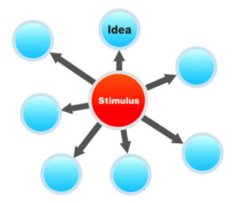
divergent thinking
brainstorming, takes a quesiton and comes up with many possible ideas/solutions
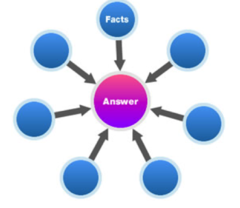
convergent thinking
narrows the available problem solutions to determine the single best solution
-takes info and puts it all together into a solution
creativity
The ability to generate new and original ideas, solutions, or connections
-works against biases, heuristics, functional fixedness
-divergent + convergent thinking
-assimilation and accommodation DIRECTLY leads to creativity
framing
contextualizing a decision, can change the outcome of a decision based on the context
-80% lean beef vs 20% fat beef --> customers are more liekly to get the first one bc of framing
gamblers fallacy
Belief that past events affect future probabilities.
"I have seen people win, therefore I can win"
sunk cost fallacy
a framing effect in which people make decisions about a current situation based on what they have previously invested in the situation
"I have already invested so much time/money, so I must continue"
components of memory
1. recall
2. recognition
3. relearning
4. encoding
5. storage
6. retrevial
automatic processing
instant processing of something, once you learned it became automatic and effortless
-reading
-riding a bike
implicit memory
retention of learned skills or classically conditioned associations independent of conscious recollection
- the memories associated with reading that allow you to read automatically
effortful processing / explicit memories
Encoding that requires attention and conscious effort
- learning to read = effortful
- effortful becomes automatic over time
-processing w a purpose
the stroop effect
the tendency to read the words instead of saying the color of ink
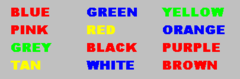
shallow encoding/processing
general appearance of things
- ex. how we learn letters by shape
deep encoding/processing
Encoding based on meaning + context
- leads to better retention
- not based on a words letters, but the context of the word in a sentence.
procedural memory
a type of implicit memory that involves motor skills and behavioral habits
- opening a. water bottle
emotional memory
memory of experiences linked to an emotion (heart pounding when you hear rattlesnake)
semantic memory
a network of associated facts and concepts that make up our general knowledge of the world
-facts you memorize
episodic memory
memory of personal expeariences/events
-halloweekend events recall
hippocampus
holds on to memories while awake
NREM3
- rehearses neural connections
-moves info from hippocampus to cerebral cortex
- sorting
REM
brain integrates new knowledge into existing pathways
- assimilation + accomidation
method of loci
A mnemonic technique that involves associating items on a list with a sequence of familiar physical locations
-"memory path" physical locations assigned to remember things
Hierarchical Organization
Organization of categories in which larger, more general categories are divided into smaller, more specific categories. These smaller categories can, in turn, be divided into even more specific categories to create a number of levels.

chunking
organizing items into familiar, manageable units; often occurs automatically
Peg-word association
a memory aid that involves linking words with numbers
Multi-store memory model
momory flows through 3 states: sensory memory, short-term memory, long-term memory
-Sensory holds for less than a sec
-short term holds up to 7 items for 20 mins
-long term is limitless
-iconic/echoic memory
iconic memory
a momentary sensory memory of visual stimuli, process for lsightly longer than a sec
echoic memory
a momentary sensory memory of auditory stimuli
Working Memory Model
more accurate model of STM,
central executive/ what we pay attention to [phonological loop] [episodic buffer] [visuospacial sketch pad]
LONG TERM MEMORY