MICROBIO LAB EXAM 1
 Call Kai
 Learn
Learn Practice Test
 Spaced Repetition
 Match
Match Flashcards
 Knowt Play
1/80

Earn XP
Description and Tags
started from midterm review, bottom up
Name | Mastery | Learn | Test | Matching | Spaced | Call with Kai | Chat |
|---|
No analytics yet
Send a link to your students to track their progress
81 Terms
What is lichen
relationship between fungus and green algae/cyanobacteria grown on branches
What is relationship with lichen
Relationship +/+
Fungus provides shelter
Green Algae/Cyanobacteria provides food
Commensalism
an association between 2 organisms in which one benefits and the other is not harmed nor benefited
Relationship +/0

what kind of test is this
Colisure Test

Which is negative, positive for coliform and positive for E.Coli
Negative: yellow
Positive: red, coliform
Positive: fluoresce, E.coli

What test is this and what does it do
E. C test in a compact dry, meant to find E.coli count
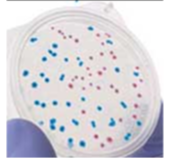
Which color is E.coli, which is Coliform
E.coli is blue Coliform is purple

what test is this
Eosine Methylene Blue

what is present in the top left, top right, then bottom quadrant
coliform, e. coli, non-coliform

what test is this called
Catalase Test

which is positive and which is negative
bubbles is positive negative has no bubbles

which will show positively enterococcus faecium or staphylococcus spp
staphylococcus spp
What tests use the media Mueller Hinton Agar
Kirby Bauer Test, E-Test
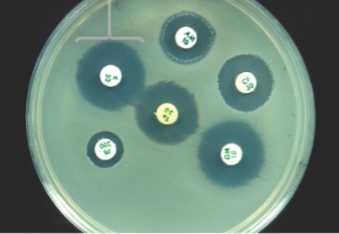
What test is this called
Kirby Bauer

what is the area around the patches called in a Kirby Bauer Test
Zone of inhibition

What does alcohol do as a degerming agent
1. dissolves lipids
2. denature proteins

Which one is halotolerant and which one is halophile

which is hypertonic, isotonic, hypotonic
left is hypertonic, middle is isotonic, right is hypotonic

examples of a culture is the osmolarity
1 S. saprophyticus
2 Escherichia coli
3 halobacterium
do slide 15 of 23 plxzplzpzlpzl
Acidophiles (mostly fungi)
optimum pH 0-5.5
Basophiles (Thiobacillus, archaea)
optimum pH 8.5-11.5
Neutrophiles (most bacteria)
optimum pH 6.5-7.5

What culture is in this vile
S. epidermidis
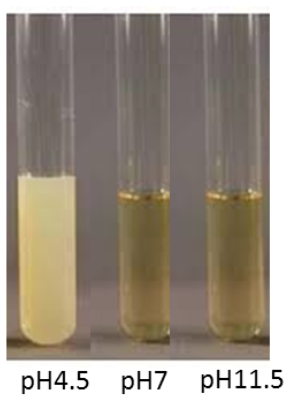
What culture is in this vile, pH=4.5
S. cerevisiae
Obligate aerobes
need O2 to grow
Obligate anaerobes
can’t grow with O2
Facultative Anaerobes
can grow without O2, but grows better with O2
Aerotolerant anaerobes
don’t require O2, same growth with or without O2
Microaerophiles
requires low O2 to grow
Classifications of effects of temperature on growth
Psychrophiles, Mesophiles, Thermophiles
Psychrophiles
organisms can grow at low temperature (5’C or below)
Mesophiles
organisms can grow at mid-range temperature (30’C-37’C)
Thermophiles
organisms can grow at high temperature (above 50’C)
Hyperthermophiles
grow at higher than 70’C
Spread Plating Steps
1. Sample (0.1mL) poured onto solid medium
2. Dipping cell spreader in alcohol
3. Burning off excess alcohol
4. Cool the cell spreader down
5. Spread sample evenly over the surface
6. plate incubated until bacterial colonies grow on the surface of the medium

#what dis
Fungi: Rhizopus
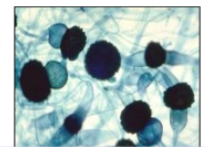
#whatdis
Fungi: Zygomycota Rhizopus
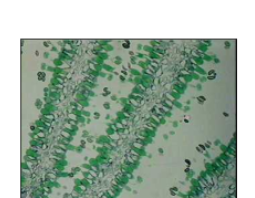
#whatdis
Fungi: Coprinus
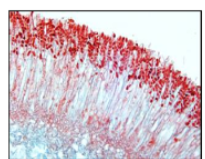
#whatdis
Fungi Peziza

#whatdis
Fungi: Ascus
Which group of fungi reproduces sexually
Rhizopus, Coprinus, Peziza, Ascus, Zygomycota
Which group of fungi reproduces asexually
Penicillium spp., Mold, Yeast, Aspergillus, Condiophore

#whatdid
Fungi: Penicillium spp.
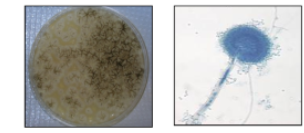
#whatdis
Fungi: Aspergillus

#whatdis
Fungi: Mold
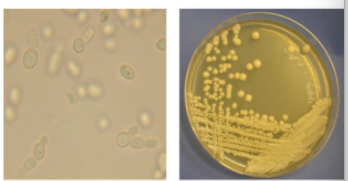
#whatdis
Fungi: Yeast

#whatdis
Condiophore

what kinda stain is this
Endospore Staining

what kinda stain is this
acid fast

what kinda stain is this
Negative staining
Gram Positive is
purple!
Gram Negative is
Pink!
Gram positive will show on
staphylococcus spp. bacillus megaterium
Gram Negative
Escherichia coli, Pseudomonas fluorescens/P. putida

#whatdis
Gram negative bacilli
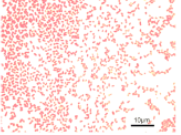
#whatdis
Gram negative cocci

#whatdis
Gram positive cocci

#whatdis
gram positive bacillus
KNOW THE STEPS AND PROCESSES FOR GRAM STAIN
slide 9/23 or a lecture, don’t forget about which stains are what
Gram positive cell wall characteristics
presence of thick peptidoglycan layer and one inner membrane
Gram negative cell wall characteristics
presence of thin peptidoglycan layer, one inner membrane and one outer layer
Gram Stains → Stains
Crystal violet, Iodine, Alcohol 95% (decolorizer), Safranin
Crystal violet stain
is the primary stain
Iodine stain is
the mordant/enhancer
Alcohol in a stain context is
the decolorizer, rinse for 2-3 seconds
Safranin is the
secondary or counter stain
Smear Prep steps
slide 7/23
Cell shapes and associations
cocci: staphylococcus spp. rods: bacillus megaterium, e. coli, pseudomonas spp.
clusters, chains
do slide 6/23
Columbia CNA Agar OIIR
organisms: selective for G+, inhibitory for G-
inhibitor: colistin, nalidixic acid
indicator: none
results: growth of G+ organisms
MacConkey Agar
organisms: selective for G-, inhibitory for G+
inhibitor: Bile salts
indicator: Neutral red (pH drop around colony = color change)
results:
lactose fermenters → red/pink colonies w/w/o zone of precipitation
lactose non-fermenters → clear colonies
Mannitol Salt Agar
organisms: growth of staphylococcus species
inhibitor: sodium chloride 7.5%
indicator: Phenol Red
results:
S. saprophyticus: yellow colonies and yellow media (ferments mannitol)
S. epidermidis: grows, but does not ferment mannitol (media not yellow)
Blood agar plates
organisms: enrich for fastidious organisms, G+ and G-
inhibitor: none
indicator: blood (of hemolytic patterns)
results: Beta, Alpha, Gamma
Autoclave machine uses Temp, Pressure and Time
Temperature: 121’C
Pressure: 15psi
Time: 15min
Why use a nutrient agar plae
isolation of colonies
Why use a nutrient agar slant
temporary storage of culture
Why use nutrient broth
propagation of culture
know slide one