eco unit 2 lesson 9
 Call Kai
 Learn
Learn Practice Test
 Spaced Repetition
 Match
Match Flashcards
 Knowt Play
1/23

There's no tags or description
Looks like no tags are added yet.
Name | Mastery | Learn | Test | Matching | Spaced | Call with Kai | Chat |
|---|
No analytics yet
Send a link to your students to track their progress
24 Terms
giant impactor theory
Currently, the leading explanation for where the moon came from is the idea that a small planet ran into Earth some time during its formation(4.45 bya), and the leftover debris formed the moon
hadean eon
(4.6bya-3.8bya)
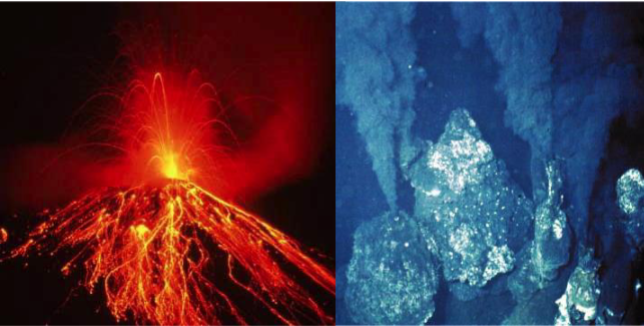
Accretion of the earth from celestial debris
- Frequent celestial collision events
- Formation of the moon
- Formation of early atmosphere by de-gassing
- Water vapor condenses into liquid, forming
ancient seas
Archean Eon
3.8 bya
Beginning of the geologic record
3.5 bya Oldest fossils of cells appear
(stromatolites)
origin of life
2.7 bya Oxygen is produced in oceans,
forming oxide compound
law of superstition
younger rocks are closer to the
surface, and contain younger fossils; older rocks and
older fossils are deeper
Radioactive decay
involves the loss or gain of subatomic particles
or the emission of electromagnetic energy (radiation), resulting in
one isotope being transformed into another.
Half life
represents how long it takes for ½ of a parent isotope to
decay into daughter (a constant)
characteristics of life
organization
energy use and metabolism
maintenance of internal constancy
reproduction, growth, and development
irritability and adaptation (response to environment))
how did the first cells evolve
formation of monomers
linking monomers into polymers
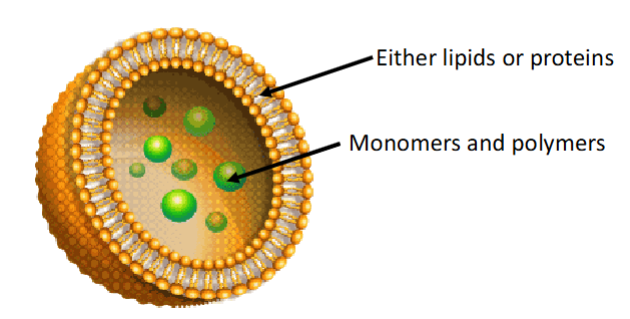
retention of biomolecules in a membrane
evolution of self replication
Criticism of Miller-Urey experiment
Non-reducing gases were emitted from the experiment. Demonstrated the organic formation of simple biomolecules
monomer: amino acids
Polymer: polypeptide
Monomer: Nucleotide
polymer: nucleic acid
Monomer: Simple Sugars
Polymer: polysaccharide
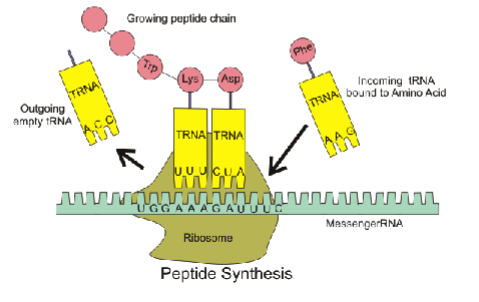
amino acids into polypeptides IN the cell
ribosome builds polypeptides off messenger RNA
amino acids into polypeptides OUTSIDE the cell
Polypeptides can form on dry, hot clay
nucleotides to nucleic acids IN the cell
DNA or RNA polymerase builds new strands of nucleic acids, using a pre-existing strand as a template
nucleotides to nucleic acids OUTSIDE the cell
can form on clay (like polypeptides)
Sugars into Polysaccharides
-Remains an ongoing challenge
- On wet-dry clay, polysaccharides form chaotic
branching patterns, resulting in a “tar” like substance.
Liposomes
- Can grow and shrink through
osmosis
- Stable in water
-Can divide, and fuse with other
liposomes
- Can store energy in the form of
a membrane potential
Proteinoid microspheres
- Can bud and divide
- Allow water in and/out of the cell by osmosis
- Can fuse with other proteinoid microspheres,
combining their innards
- Are stable in water
- Can absorb some molecules through their membranes
Protobiont (literally “first life”):
a membrane-bound
sphere that can divide, fuse, absorb stuff, and carry stuff
around inside. Thought to be the proto-type of the cell.
RNA
Ribose sugar backbone
Usually single-stranded (OH makes double-stranded unstable)
Single strands can fold to make complex shapes, which can perform functions
Can replicate without enzymes

DNA
Deoxyribose sugar backbone
always double-stranded
Doesn’t fold into weird shapes. Just double helices
requires enzymes

RNA world hypothesis
self-replicating
RNA molecules were precursors to the current DNA and
protein-based systems of life, since RNA can store
information and replicate without the assistance of proteins;
DNA can not.
4 domains of life
eukaryote
bacteria
archaea
NCLDVs