Hematology I Non-malignant Lymphocyte
 Call Kai
 Learn
 Practice Test
 Spaced Repetition
 Match
 Flashcards
 Knowt Play
1/29

Earn XP
Description and Tags
CLS 536 Unit 3 - 10/#/2026
30 Terms
What type of infection causes increased lymphocytes?
Viral
What is the adult reference range for absolute lymphocytosis?
>4.8×10³/uL
What is the adult reference range for relative lymphocytosis?
>44%
Why do lymphocyte ranges differ in children?
Depending on the age children have more lymphocytes overall
What is it called when an adult has a relative increase in lymphocytes and relative decrease in neutrophils?
Flipped or reversed diff
What causes lymphocytosis?
Response to viral infection or inflammatory condition
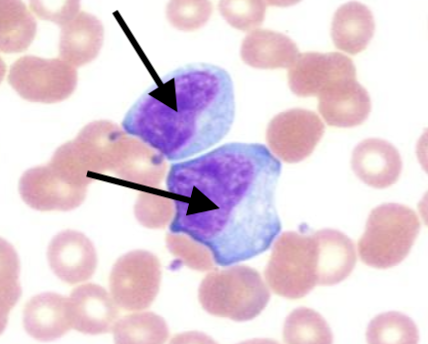
What cells are these?
Reactive lymphocyte
What conditions are associated with lymphocytosis?
Infectious mononucleosis, whooping cough, toxoplasmosis, viral infections (acute and chronic), syphilis, leukemia, inflammatory and immune reactions
What is infectious mononucleosis caused by?
Epstein-Barr virus (EBV)
What are the classic symptoms of mononucleosis?
Fever, pharyngitis, and lymphadenopathy
What is the manifestation of mononucleosis for <10 year olds?
Increased reactive lymphs and CRP
What is the manifestation of mononucleosis for >10 year olds?
Increased liver enzymes, splenomegaly, and hepatomegaly
What would the CBC look like for infectious mononucleosis?
Increased WBC (12-25×10³/uL), increased lymphocytes (>50%), reactive lymphs present (>20%), and slight PLT decrease
What is a heterophile ABY?
Non-specific antibody produced when exposed to EBV
What are the typical lab findings for infectious mononucleosis?
Leukocytosis, lymphocytosis, elevated C-reactive protein, >20% reactive lymphocytes, present immunoblasts and heterophiles ABY, positive EBV test, and elevated aminotransferase
What is toxoplasma gondii?
Intracellular protozoan
What is the definitive host for toxoplasma gondii?
Cats
What is the clinical presentation of toxoplasmosis?
Leukocytosis, relative and absolute lymphocytosis, reactive lyphms, and negative monospot and toxo positive serological testing
What is CMV?
Cytomegalovirus
What is the clinical presentation of CMV?
Leukocytosis, relative and absolute lymphocytosis, reactive lymphs, negative Monospot, and CMV positive serological testing
What causes lymphocytopenia?
Decreased production and increased destruction
What is the relative and absolute ranges for lymphocytopenia in adults?
<1.0×10³/uL and <24%
What are immune deficiency disorders characterized by?
Impaired function of one or more components of immune systems, T, B or NK cells

What are these two cells
Left is and right is
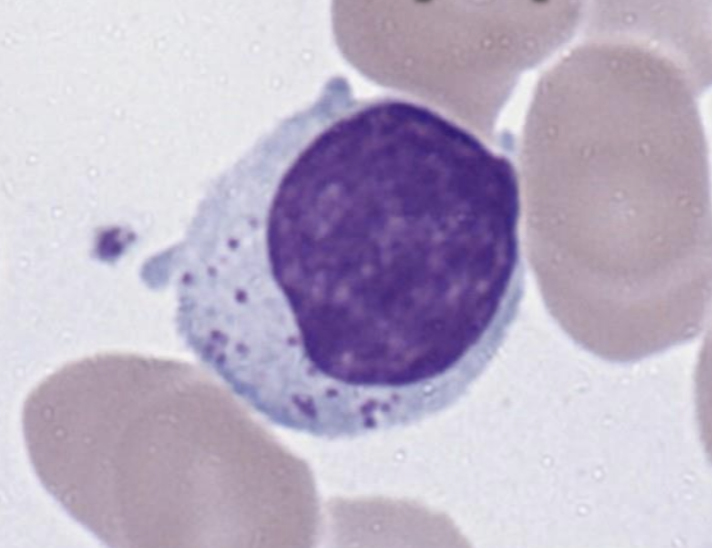
What cell is this?
Large granular lymphocyte

What is this cell?
Plasma cell
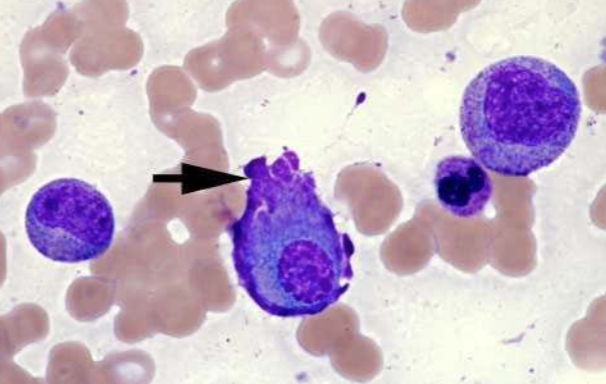
What cell is this?
Flame cell
What are flame cells associated with?
IgA multiple myeloma
Patient example: A 19-year-old man presents with severe fatigue, sore throat, and swollen lymph nodes, so a CBC was ordered. Describe the following results and what is the most common likely condition?
WBC: 17.0 Band neutrophils: 8
RBC: 4.99 Segmented neutrophils: 12
Hgb: 16.1 Lymphocytes: 78
Hct: 49.0 Monocytes: 2
MCV: 98.2 Eosinophils: 0
MCH: 32.3 Basophils: 0
MCHC: 33.3 Metamyelocytes: 0
RDW: 11.9 Myelocytes: 0
PLT: 138.9 Promyelocytes: 0
Leukocytosis, normocytic, normochromic, thrombocytopenia, absolute and relative lymphocytosis and the most likely condition is infectious mononucleosis
What additional tests should be run for the patient example?
Monospot and additional serological testing