1.5 Climate Change
 Call Kai
 Learn
Learn Practice Test
 Spaced Repetition
 Match
Match Flashcards
 Knowt Play
1/14

There's no tags or description
Looks like no tags are added yet.
Name | Mastery | Learn | Test | Matching | Spaced | Call with Kai | Chat |
|---|
No analytics yet
Send a link to your students to track their progress
15 Terms
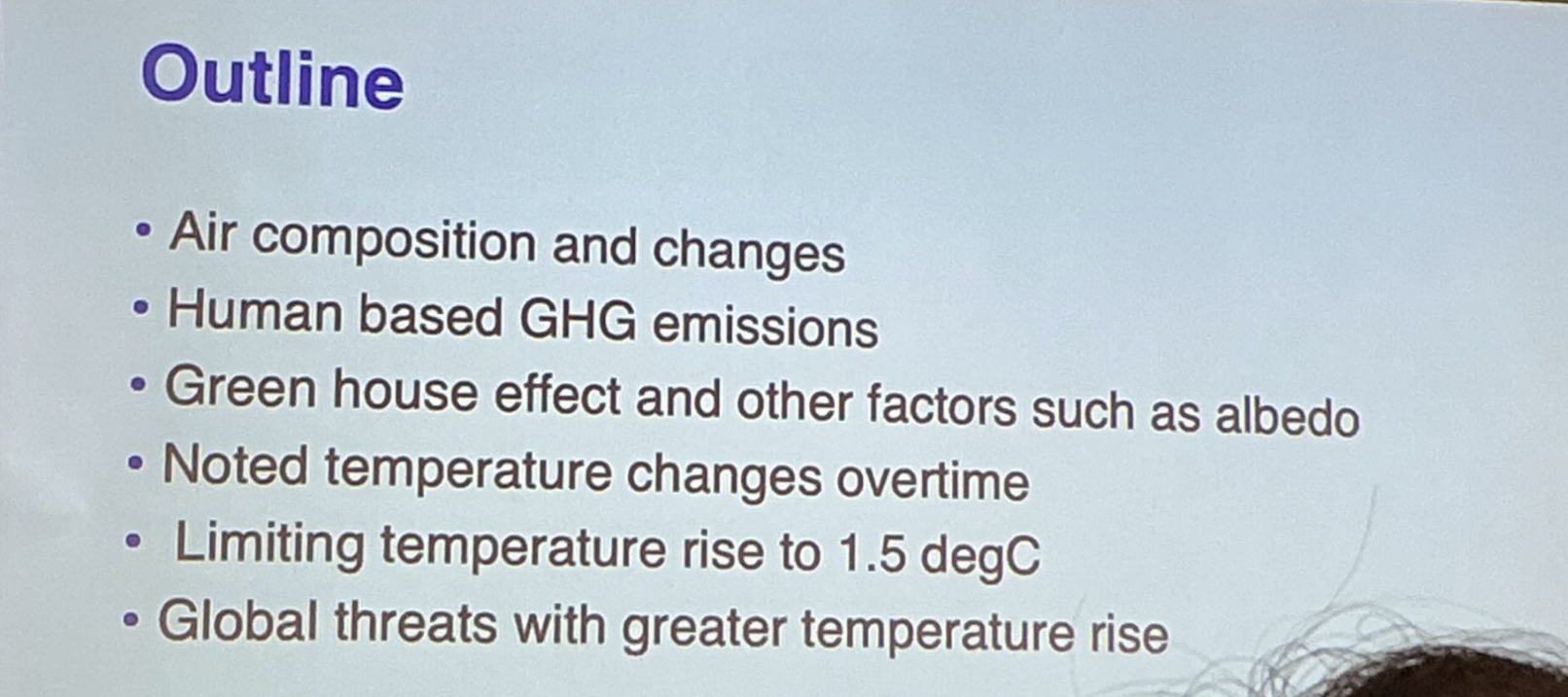

4 principal air components:
Nitrogen
Oxygen
Argon
CO2
4 principal air components %: Nitrogen
78.084%
4 principal air components %: Oxygen
20.90%
4 principal air components %: Argon
0.93%
4 principal air components: ppm: Carbon dioxide
0.36% ppm
Increased CO2 emission f(time) formula
CH4 + 2O2 → CO2 + 2H2O
therefore,
with every ton of fossil oil or coal burnt and transformed to energy, about 0.8 tons of carbon are oxidized,
3 tons of CO2 are released into the atmosphere
Largest sectors with greater emissions: top 3
Electricity and heat (energy)
Industry (chemicals, metals, other)
Agriculture, forestry, and land use
We want to keep Earth’s temp at: according to Paris Agreement
1.5 C
but it is not looking realistic since we would have to go net zero by 2050
A simple representation of energy floe
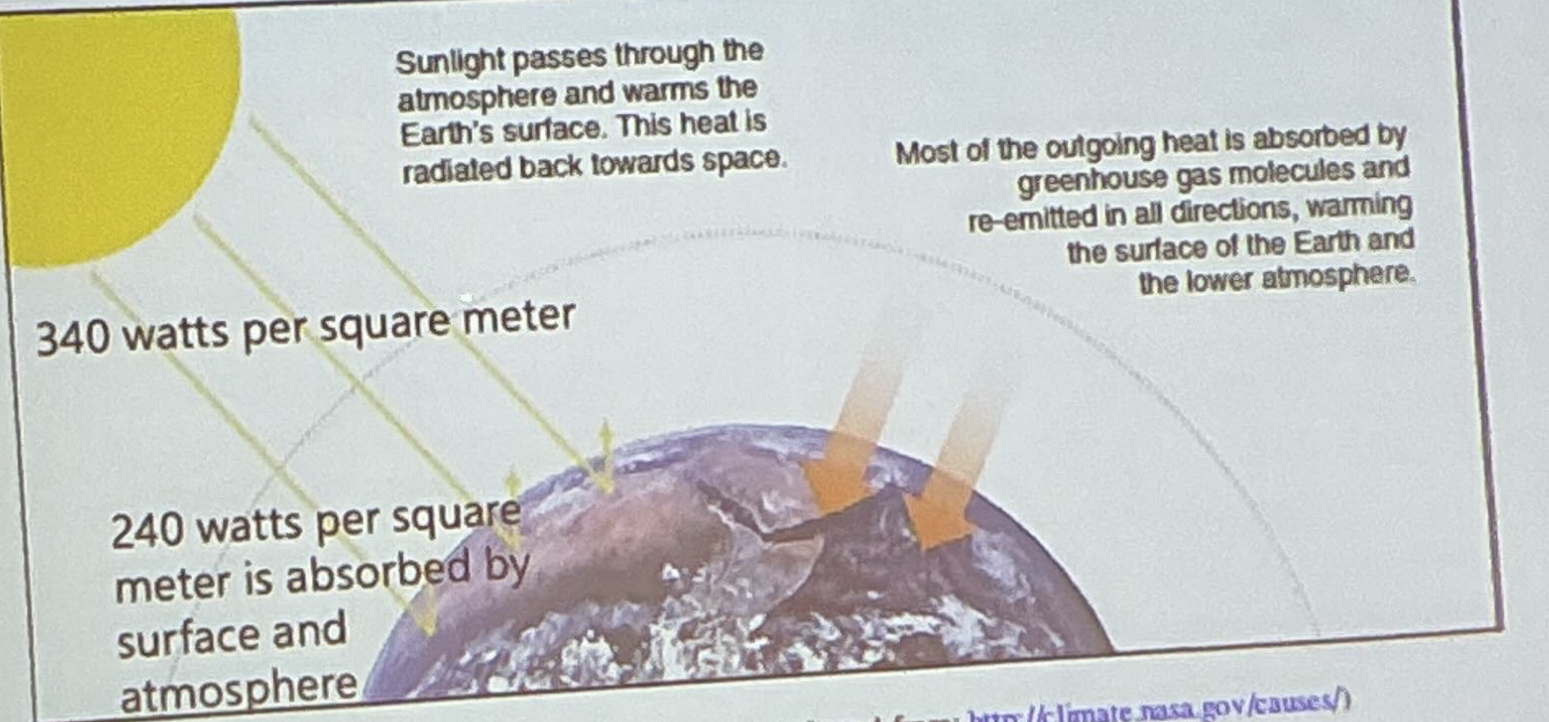
Earth reflects radiation but it’s dependent upon:
surface like ice.
Albedo
The ratio of the outgoing solar radiation reflected by an object to the incoming solar radiation incident upon it.
Albedo is the measure of how much incoming solar radiation (sunlight) a surface reflects back into space.
High albedo → more sunlight reflected → less warming
Low albedo → more sunlight absorbed → more warming

Wavelength of light a key factor in global warming
Wavelength matters because Earth receives mostly shortwave solar energy but emits energy as longer-wave infrared radiation, which greenhouse gases can absorb.
Transmission, reflection, and absorption
