9-11 Subcortical Structures
 Call Kai
 Learn
 Practice Test
 Spaced Repetition
 Match
 Flashcards
 Knowt Play
1/36

There's no tags or description
Looks like no tags are added yet.
37 Terms
central nervous system
system with brain and spinal cord
peripheral nervous system
system with spinal nerves, cranial nerves, sensory and motor connections

forebrain, brainstem, spinal cord
major divisions of cns
telencephalon
what is within the forebrain?
diencephalon, mesencephalon, metencephalon, myelencephalon
what is within the brainstem?

brainstem
what begins where the spinal cord enters the skull and extends up?
brainstem
what receives afferent nerves from all of body senses, send efferent nerves to spinal cord to control movements, and is responsible for most unconscious behavior?
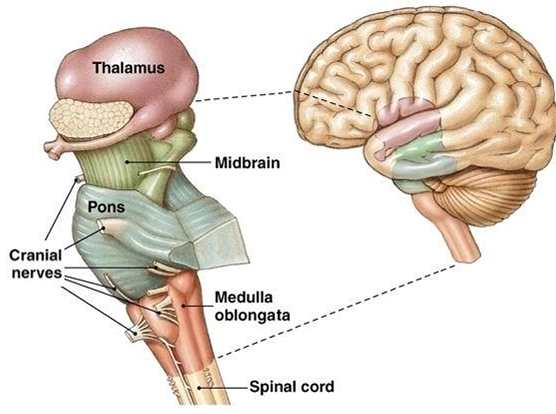
medulla oblongata, pons, midbrain, thalamus
structures within brainstem
medulla oblongata
part of brainstem that controls heart rate and breathing, as well as contains nuclei for hearing, balance/eye movement, and reticular formation (consciousness/arousal)
pons
part of brainstem that forms a bridge from cerebellum to rest of the brain
-auditory and vestibular nerves exit from boundary between _____ and medulla
-nuclei for hearing and balance overlap with medulla and ____
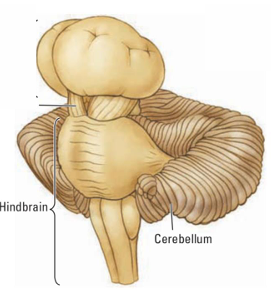
cerebellum
part of brainstem that is important for fine motor control and supports reading fluency and language processing and semantic knowledge.
-lesions to this can affect speech and language (dysarthria slurring of speech and may also affect auditory working memory)
-this dysfunction is implicated in developmental dyslexia
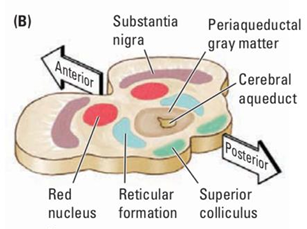
Substantia Nigra & Red Nucleus
front (anterior) part of midbrain that is involved in planning, initiating, and coordinating motor movement (e.g., produces dopamine for smooth motor control). MOTOR CONTROL

Periaqueductal Gray matter
middle part of midbrain that Surrounds the cerebral aqueduct and plays a central role in modulating/suppressing pain perception. PAIN AND REGULATION

superior colliculus
back (posterior) part of midbrain that Handles preliminary visual processing and visual reflex tracking.
inferior colliculus
back (posterior part of midbrain that handles preliminary auditory processing and auditory reflexes
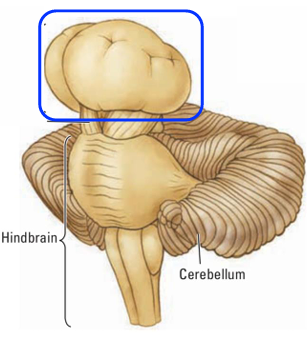
thalamus & hypothalamus
what is within the diencephalon?

thalamus
what structure integrates sensory and motor information, projects to the cerebral cortex, and is gateway through which all sensory info must pass before going on to cortex?

hypothalamus
what structure controls hormone production by interacting with pituitary gland (feeding, sleep, temperature regulation, sexual behavior, emotional behavior)
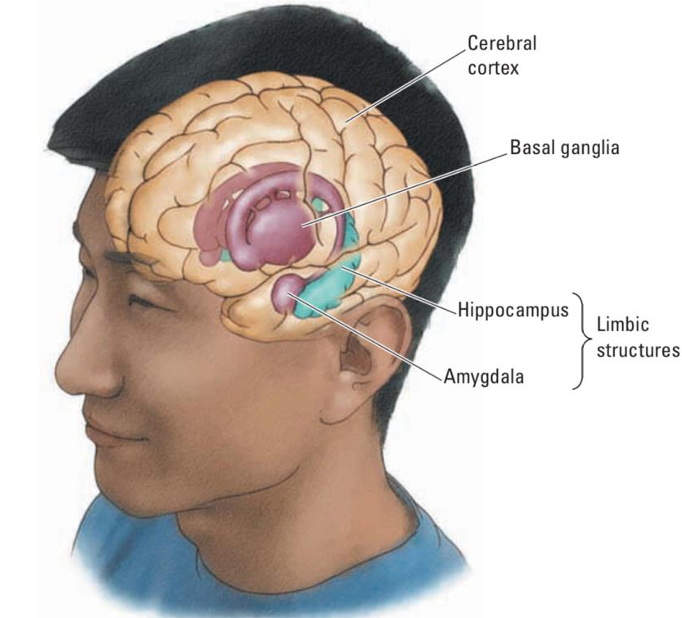
basal ganglia, limbic system, hippocampus & amygdala, cerebral cortex
what is included in the forebrain? (telencephalon)
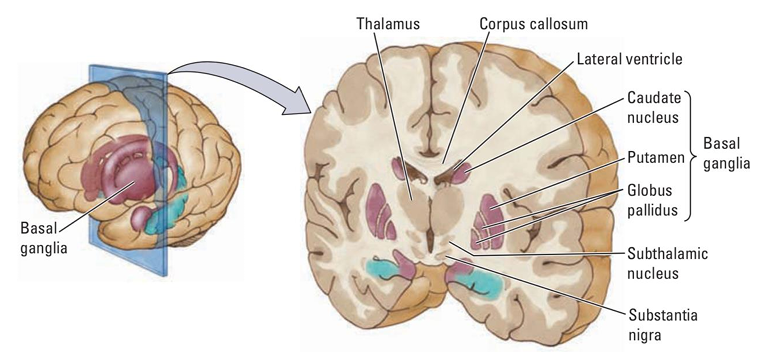
basal ganglia
what structure in the forebrain that includes the caudate, putamen, and globus pallidus. it’s function is coordinating and controlling movements (and reward learning). involved in parkinson disease and tourette syndrom/tics
tourette syndrome
what is the condition characterized by sudden, involuntary movements or vocalizations that occur because an excess of dopamine in the basal ganglia inhibits the neural circuits that normally suppress unwanted motor patterns before they reach the motor cortex

amygdala, hippocampus, cingulate cortex
what structures are within the limbic system?
limbic system
these functions are of what system? memory, spatial navigation, emotional/sexual behaviors, fear, motivation
HM
famous neuroscience patient who had most of his bilateral hippocampi surgically removed to treat epilepsy, resulting in severe anterograde amnesia where he retained past memories but could no longer form new ones.
amygdala & cingulate gyrus
what plays a role in perceiving the emotional content of speech/prosody?
hippocampus
what plays a role in auditory working memory (remembering what you just said)?
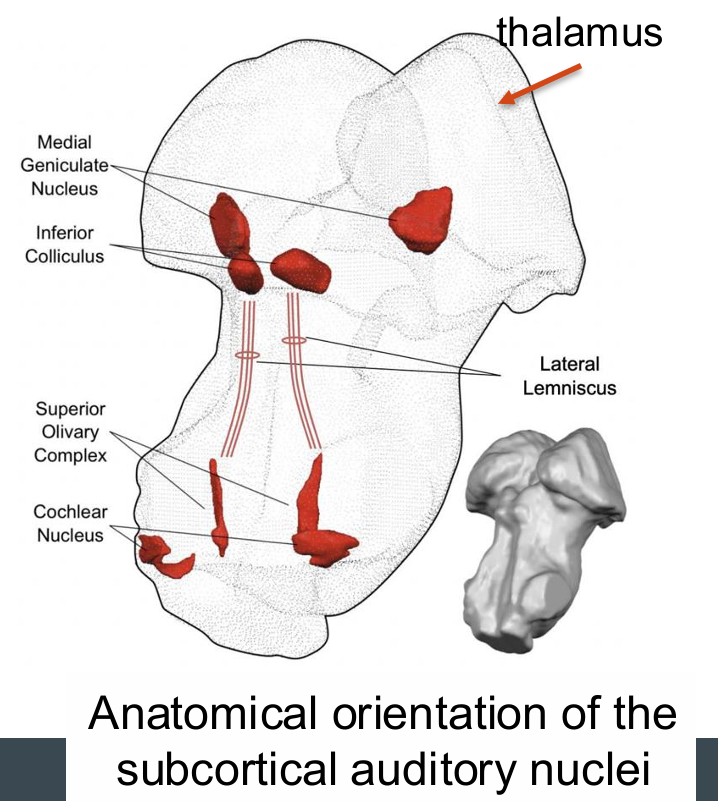
cochlear nucleus
superior olivary complex
lateral lemniscus
inferior colliculus
medial geniculate body
order of information processing in central auditory nervous system

cochlear nucleus
first stop in central auditory nervous system
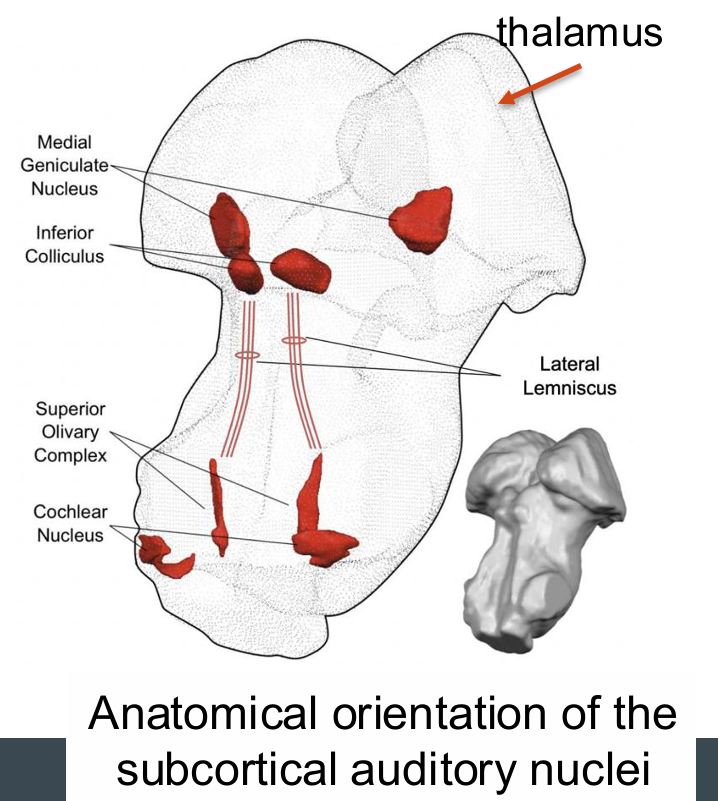
cochlear nucleus
where does the auditory nerve from the cochlea in the ear enters the brainstem and preserves precise sound timing and frequency information

superior olivary complex
second stop in central auditory nervous system
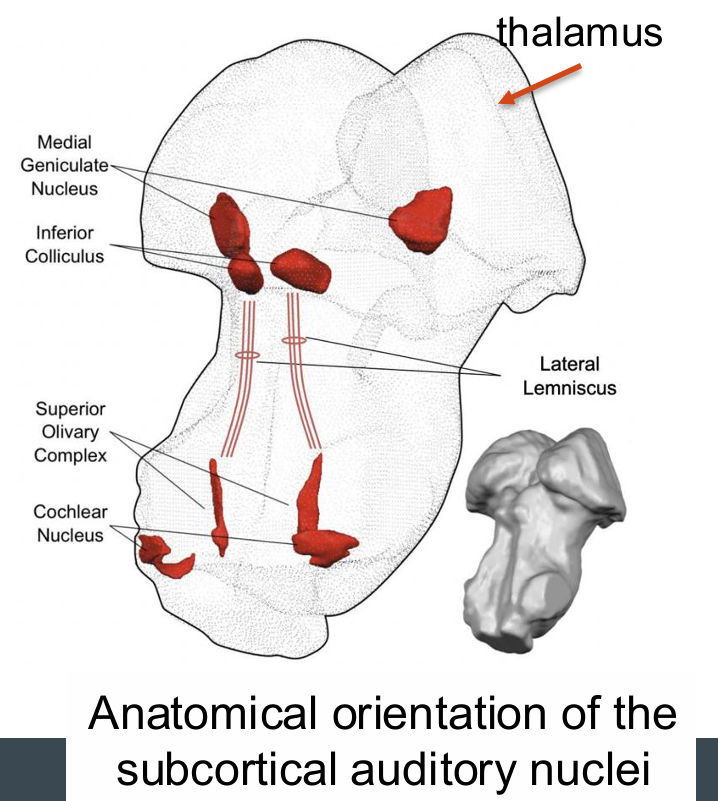
superior olivary complex
what receives information from cochlear nuclei and helps process binaural cues for sound localization? (timing/loudness differences between ears)

lateral lemniscus
third stop in central auditory nervous system

lateral lemniscus
what is a tract of axons from the superior olivary complex and cochlear nucleus to the inferior colliculus and its primary role is to transmit the information to higher subcortical structures?

inferior colliculus
fourth stop of central auditory nervous system

inferior colliculus
what is the point in auditory processing where pathways stop becoming purely relay and begins doing real computations? (helps with sound localization and pitch/rhythm information)

medial geniculate body
fifth/last stop in central auditory nervous system
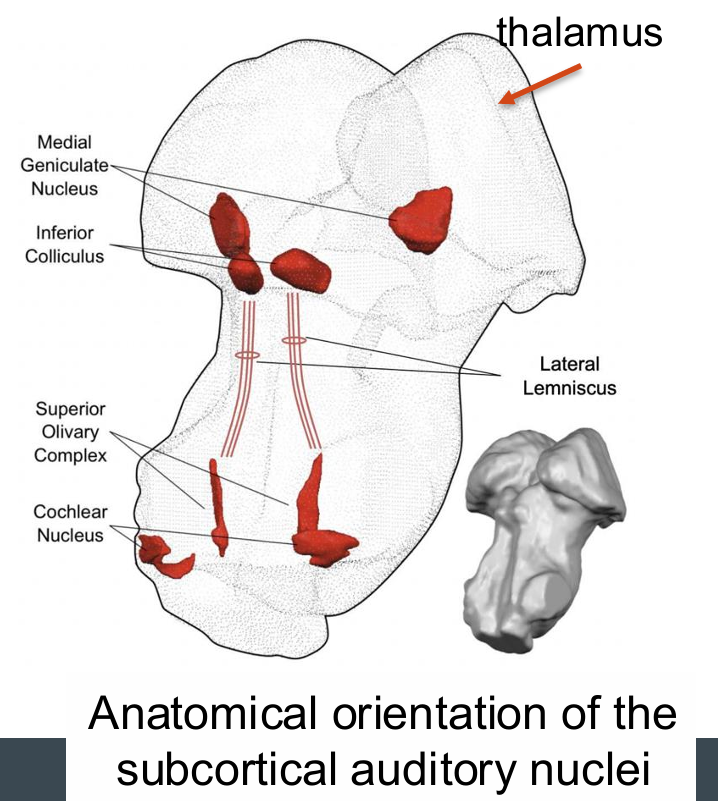
medial geniculate body
what actively shapes information received from the inferior colliculus to project to the auditory cortex (cortical structure)? it filters and integrates timing, frequency, and spatial information