integument & locomotion
 Call Kai
 Learn
 Practice Test
 Spaced Repetition
 Match
 Flashcards
 Knowt Play
1/34

There's no tags or description
Looks like no tags are added yet.
35 Terms
integument structure and function
interface between a mammal and its external environment
protect cells and tissues from environment
conserve water
conserve heat (insulation) or dump it
communication
secondary sexual character
integument structure/function: skin - 3 layers
1.) epidermis: outer layer of dead keratinized cells that prevents desiccation of underlying skin
2.) dermis: contains connective tissue, blood vessels, nerves, and integumentary muscle
3.) subcutanenous layer (hypodermis): loose connective and adipose (fat) tissues, some of which serve as insulation or energy reserves
sebaceous glands
derived form epidermis
associated with hair follicles
secrete an oil product called sebum that keep hair shaft moist and waterproof
lanolin cream is from sheep sebaceous glands
eccrine glands
lie deep in dermis layer; not associated with hairs
produce sweat that helps cool through evaporation
all over the body in primates; hairless areas in non-primates
apocrine glands
derived from epidermis
produce viscous fluids that act as chemical signals (pheromones)
in primates: restricted to armpits, anogenitcal region, nipples; in nonprimates: all over body
scent glands
modified sebaceous or apocrine glands
used as pheromones (chemical signals used for communication)
used to deter predators, mark territories, or mark sites for spatial orientation
mammary glands
functional only in females but dayak fruit bat (Dyacopterus spadiceus) is exception
ducts extend through elevated nipple or teat
number and location and glands vary
mammary glands in prototherians
simple aggregations of glandular tissue along abdominal wall
have neither nipples nor teats
milk secreted into depressions and licked off fur by young
which glands produce chemicals signals?
apocrine
arrector pili
a tiny smooth muscle at the base of each hair within the dermis; cause hairs to stand erect when muscles contract
hair classifications (7)
1.) angora - grows continuously to produce long shafts which may or may not be shed (like in horses)
2.) definitive hairs - grows to a fixed length and then falls out (like in dog coat)
3.) vibrissae - long, stiff hairs that function as tactile receptors and exhibit definitive growth (whiskers)
4.) guard hairs - longer, often course, which complement underfur (short, fine, and dense)
5.) spines - stiff and enlarged guard hairs (like in porcupines)
6.) bristles - form long hairs often for visual signals (like in lion’s mane)
7.) wool - long, soft, and usually curly
functions of hair (5)
insulation - dense underfu; piloerection
protection from UV, abrasions, etc.
sensory - sense immediate surroundings, like through vibrissae or whiskers
communication - interact with immediate surroundings
secondary sexual character - supporting male/male competition and female choice
crypsis
color of animal matches that of the substrate; (basically camouflage?)
hair pigment (or lack of)
pheomelanin - shades of red or yellow
eumelanin - shades of black or brown
albinism - when melanin production is blocked
leucism - loss of pigmentation (but does not affect eyes)
melanism - opposiite of albinism, much darker color
kerantinized structures on digits (3)
claws: most primitive form; consist of unguis (hard exterior) and subunguis (softer ventral surface); used for climbing, digging, fighting, defending
nails: covers only the dorsal surface of phalanx; gripping and object manipulation
hooves: ungulates; U or V shaped ungis; forms sole of foot
true horns
found only in bovids
inner core of dermal bone
covered by a keratinized sheath
grow continuously throughout life
remain unbranched and never shed
pronghorn
found in Antilocapridae
keratinized sheath shed annually; bony core persists
two branched horns
sexual dimorphism (smaller in female)
antlers
found in cervids
branched head ornaments made entirely of bone
covered by layer of velvet (highly vascularized skin)
ossicones
ossified cartilage
extension over the parietals
covered in skin and fur
hair horn
no bony core or keratinized sheath
found in family rhinocerotidae
adaptive significance of hood ornaments
male-to-male competition
female choice (size of antlers shows male quality)
defense
four functional requirements
1.) support and stability even through the feet make only intermittent contact with the substrate
2.) propulsion to move the body forward
3.) maneuverability
4.) endurance
foot positions (4)
plantigrade: foot posture in humans, bears, opossum; all or most of the palms and soles are in contact with substrate
digitigrade: foot posture in dogs, cats; elevated metacarpals and metatarsals to acute angle (only on phalanges)
unguligrade: ungulates foot position; only tips of phalanges (horses)
graviportal: columnar legs in heavy species (e.g., elephants)

name posture and associated gaits
plantigrade - walking (ambulatory) and scurrying (scampering); e.g. squirrels


name posture and associated gates
digitigrade (dog) and unguligrade (deer) - running (cursorial)
saltatorial locomotion
jumping and richocheting - jumping uses all four limbs; richocheting is done bipedally
adaptations for saltatorial locomotion
long hindlimbs
fused metatarsals called cannon bone
tibia and fibula fused into tibiofibula
heavy and elongated tail
long elastic tendons for storing jumping energy
lumbar vertebrae robust; cervical vertebrae often fused
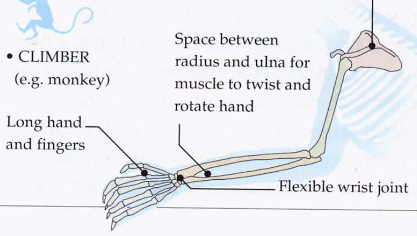
adaptations for climbing locomotion
long limbs with slender bones
very long forelimbs and enlarged feet
opposable pollex or hallux
long and deeply curved claws
prehensile tail
scratch diggers
soil is loosened with foreclaws and flung to rear with hind or forefeet
developed claws and long olecranon process

chisel tooth diggers
huge, gnawing incisors
powerful jaw and neck muscles used to dislodge soil

rotation thrust diggers
“swimming” motion of broad, shovel-shaped forefeet
short, powerful forelimbs

adaptations for digging and burrowing
tubular, heavy body shape with reduced neck
reduced or lost eyes and pinna
limbs short, thick, powerful
curved digging claws (in scratch diggers)
broad, shovel-like claws
tailed reduced or nearly absent
very procumbent upper and lower incisors (in chisel tooth diggers)
what are the main types of diggers
chisel, scratch, and rotation
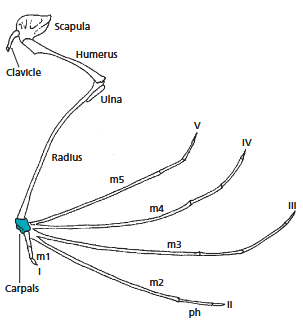
adaptations for flying
gliding (glissant) and flying (volant)
patagium-extensions of skin from wrist to ankles
adaptations for swimmers
dense fur for insulation and buoyancy
elongated body
ear and nostril openings reduced
tail modified
webbed phalanges
bristles on lateral surface or plantar surface
