Chapter 4 Nutrition: Carbohydrates, Digestion, Blood Glucose, and Fiber
 Call Kai
 Learn
 Practice Test
 Spaced Repetition
 Match
 Flashcards
 Knowt Play
1/53

There's no tags or description
Looks like no tags are added yet.
54 Terms
What are carbohydrates?
Carbohydrates are organic compounds that serve as a primary energy source for the body, providing 4 kcal per gram.
What is the primary role of carbohydrates in a healthy diet?
Carbohydrates provide energy, support bodily functions, and are essential for a balanced diet.
What are the three major types of carbohydrates?
Monosaccharides, disaccharides, and polysaccharides.

What is the major monosaccharide in the body?
Glucose, also known as dextrose.
What is fructose and where is it found?
Fructose is a monosaccharide found in fruits and honey, and it is converted into glucose in the liver.
What is galactose and its significance?
Galactose is a component of lactose and is converted to glucose in the liver.
What are disaccharides?
Disaccharides are formed by the bonding of two monosaccharides, such as sucrose, lactose, and maltose.
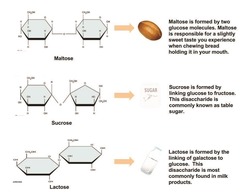
What is sucrose made of?
Sucrose is composed of glucose and fructose.

What is the function of maltase?
Maltase digests maltose into two glucose molecules.
What are polysaccharides?
Polysaccharides are complex carbohydrates made of many glucose units, including starch, glycogen, and fiber.

What is starch and where is it stored?
Starch is a polysaccharide that plants use to store excess glucose.
What is glycogen?
Glycogen is a highly branched polymer of glucose that serves as the stored form of carbohydrate in animals.

What is fiber and its types?
Fiber is an indigestible polysaccharide found in plants, with types including soluble and insoluble fiber.
What is the role of soluble fiber?
Soluble fiber dissolves in water and is digestible by gut microbes, helping to lower cholesterol and stabilize blood glucose.
What is the role of insoluble fiber?
Insoluble fiber does not dissolve in water and aids in digestion by attracting water in the GI tract.
What enzymes are involved in carbohydrate digestion?
Amylase, maltase, sucrase, and lactase are key enzymes in carbohydrate digestion.

Where does carbohydrate digestion begin?
Carbohydrate digestion begins in the mouth with mechanical and chemical digestion by salivary amylase.
What happens to carbohydrates in the stomach?
Acid inactivates amylase, halting carbohydrate digestion.
How are monosaccharides absorbed?
Glucose and galactose are absorbed via active transport, while fructose is absorbed through facilitated diffusion.
What is lactose maldigestion?
Lactose maldigestion occurs when there is a reduction in lactase enzyme, leading to undigested lactose in the intestine.
What is the difference between hypoglycemia and hyperglycemia?
Hypoglycemia is low blood glucose, while hyperglycemia is high blood glucose.
What role does insulin play in blood glucose regulation?
Insulin lowers blood glucose levels by promoting glucose uptake by cells and glycogen synthesis.

What is the function of glucagon?
Glucagon raises blood glucose levels by promoting glycogen breakdown and gluconeogenesis.

What is the RDA for carbohydrates?
The Recommended Dietary Allowance (RDA) for carbohydrates is 130 grams per day for adults.
What are some potential problems from not consuming enough carbohydrates?
Insufficient carbohydrate intake can lead to energy deficits, hypoglycemia, and impaired bodily functions.
What are alternative sweeteners?
Alternative sweeteners are non-nutritive sweeteners used as substitutes for sugar, such as aspartame and stevia.
What is the impact of excessive carbohydrate intake?
Excessive carbohydrate intake can lead to weight gain, insulin resistance, and other metabolic issues.
What hormone promotes gluconeogenesis primarily in the liver?
Glucagon
What happens during a normal insulin response?
Glucose is absorbed from the small intestine into the bloodstream.
What is insulin resistance?
It occurs when cells do not respond to normal insulin signals to take up glucose from the bloodstream.

What does the glycemic index measure?
It measures how quickly a food can raise blood sugar (glucose) levels.
How do low-GI foods affect blood glucose levels?
They do not raise blood-glucose levels as much or as fast as high-GI foods.
What are some benefits of a diet rich in low-GI foods?
It can increase weight loss and reduce the risk of obesity, Type 2 diabetes, and cardiovascular disease.
What is a limitation of the glycemic index?
It does not account for the amount of carbohydrates in a portion of food, only the type.
What is one function of carbohydrates in the body?
Energy production through cellular respiration.
What is glycogen storage?
The storage of carbohydrates in the liver and muscles.
How do carbohydrates assist in protein sparing?
If carbohydrates are insufficient, the body will make glucose from protein.
What are the primary food sources of carbohydrates?
Grains, vegetables, fruits, and dairy.
What distinguishes whole grains from refined grains?
Whole grains contain bran, germ, and endosperm, while refined grains contain only the endosperm.
What is the recommended daily intake of whole grains?
At least half of all grains consumed should be whole grains.
What are the health benefits of replacing refined grains with whole grains?
It decreases the risk for obesity, Type 2 diabetes, and cardiovascular disease.
What role do vegetables play in carbohydrate intake?
They are a valuable source of starch and fiber, and are low in fat and calories.
What is the carbohydrate content in dairy products?
Dairy provides carbohydrates primarily in the form of lactose.
What are added sugars and their consumption trends in the USA?
Added sugars provide calories, with most Americans consuming an average of 20 tsp per day, exceeding the recommended 6 to 9 tsp.
What is High-Fructose Corn Syrup (HFCS)?
A sweetener made from corn, containing 55% fructose.
What are some concerns regarding high fructose intake?
Animal studies indicate it may not produce energy but convert to fat in the liver.
What are sugar alcohols and their effects?
They provide approximately 2.6 kcal per gram and may have a laxative effect if consumed excessively.
What is the RDA for carbohydrates for adults?
130 grams per day.
What is the Acceptable Macronutrient Distribution Range (AMDR) for carbohydrates?
45% to 65% of total calorie intake.
What is the AI for fiber intake?
25 grams per day for women and 38 grams for men.
What health issues are linked to excessive sugar and refined carbohydrate consumption?
Obesity, Type 2 diabetes, cardiovascular disease, and other chronic conditions.
What is the significance of reading food labels regarding sugar content?
Labels indicate sugar content and can help consumers make healthier choices.
What does 'sugar-free' mean on a food label?
It contains less than 0.5 grams of sugar per serving.
What does 'high fiber' mean on a food label?
It contains at least 20% of the daily value of fiber in each serving.