Chapter 14- Cellular Energetics

0.0(0)
Studied by 0 people
call kaiCall Kai
learnLearn
examPractice Test
spaced repetitionSpaced Repetition
heart puzzleMatch
flashcardsFlashcards
GameKnowt Play
Card Sorting

1/102

encourage image

There's no tags or description

Looks like no tags are added yet.

103 Terms

1
New cards

How to gain energy in the cell

Acetyl CoA

<p>Acetyl CoA</p>
2
New cards

where/which molecules converted into Acetyl CoA

mitochondria using:

sugars/polysaccharides

fats

<p>mitochondria using:</p><p>sugars/polysaccharides</p><p>fats</p>
3
New cards

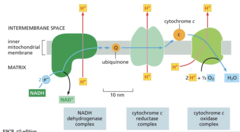
sugars/polysaccharides

sugars/polysaccharides --> sugars --> glucose --> pyruvate --> acetyl CoA

<p>sugars/polysaccharides --> sugars --> glucose --> pyruvate --> acetyl CoA</p>
4
New cards

fats

fats --> fatty acids --> acetyl coA

<p>fats --> fatty acids --> acetyl coA</p>
5
New cards

glycolysis

processing sugar

occurs in the cytoplasm

main process of oxidizing sugars in the cell

<p>processing sugar</p><p>occurs in the cytoplasm</p><p>main process of oxidizing sugars in the cell</p>
6
New cards

ten steps divided among three phases of glycolysis

1. energy investment

2. cleavage/split

3. energy liberation

<p>1. energy investment</p><p>2. cleavage/split</p><p>3. energy liberation</p>
7
New cards

energy investment

glucose --> fructose 1,6 biphosphate

use 2 ATP

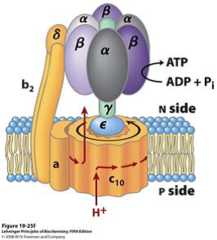
<p>glucose --> fructose 1,6 biphosphate</p><p>use 2 ATP</p>
8
New cards

cleavage/split phase

fructose 1,6 biphosphate --> 2 glyceraldehyde-3-phosphates

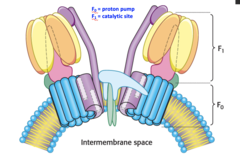
no energy required

<p>fructose 1,6 biphosphate --> 2 glyceraldehyde-3-phosphates</p><p>no energy required</p>
9
New cards

energy liberation

2-glyceraldehyde-3-phosphate --> pyruvate

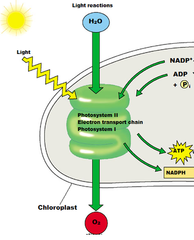
produces 4 ATP and 2 NADH

<p>2-glyceraldehyde-3-phosphate --> pyruvate</p><p>produces 4 ATP and 2 NADH</p>
10
New cards

net gain of glycolysis

2 ATP, 2 NADH, 2 pyruvate

<p>2 ATP, 2 NADH, 2 pyruvate</p>
11
New cards

electron carriers

NAD+/NADH and FAD/FADH2

<p>NAD+/NADH and FAD/FADH2</p>
12
New cards

does glycolysis require oxygen

NO

<p>NO</p>
13
New cards

glycogen

glucose storage polysaccharide found in the liver and muscle of animals; broken down for energy

<p>glucose storage polysaccharide found in the liver and muscle of animals; broken down for energy</p>
14
New cards

starch

A storage polysaccharide in plants consisting entirely of glucose.

<p>A storage polysaccharide in plants consisting entirely of glucose.</p>
15
New cards

fat produces __________ the amount of energy as glycogen oxidation

twice

<p>twice</p>
16
New cards

triglycerides

triglycerides -(hydrolysis)-> fatty acids --> ATP

<p>triglycerides -(hydrolysis)-> fatty acids --> ATP</p>
17
New cards

pyruvate oxidation

occurs in mitochondrial matrix

Conversion of pyruvate to acetyl CoA.

<p>occurs in mitochondrial matrix</p><p>Conversion of pyruvate to acetyl CoA.</p>
18
New cards

citric acid cycle

occurs in the matrix of the mitochondria

breakdown of acetyl CoA and produce NADH, FADH, and ATP

<p>occurs in the matrix of the mitochondria</p><p>breakdown of acetyl CoA and produce NADH, FADH, and ATP</p>
19
New cards

citric acid cycle process

acetyl coA --> citrate --> oxaloacetate

<p>acetyl coA --> citrate --> oxaloacetate</p>
20
New cards

citrate

the conjugate base (or salt/ion form) of citric acid

forms when the enzyme citrate synthase combines a two-carbon acetyl group from acetyl-CoA with a four-carbon oxaloacetate molecule

<p>the conjugate base (or salt/ion form) of citric acid</p><p>forms when the enzyme citrate synthase combines a two-carbon acetyl group from acetyl-CoA with a four-carbon oxaloacetate molecule</p>
21
New cards

oxaloacetate

a four-carbon starting and ending intermediate of the citric acid cycle

regenerated from citrate through a multi-step sequence
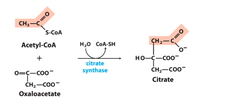
<p>a four-carbon starting and ending intermediate of the citric acid cycle</p><p>regenerated from citrate through a multi-step sequence</p>
22
New cards

how many turns of the citric acid cycle turn per glucose

twice

one glucose makes two acetyl coA

<p>twice</p><p>one glucose makes two acetyl coA</p>
23
New cards

net gain of the citric acid cycle

NADH (3 per cycle)

FADH (1 per cycle)

ATP (1 per cycle)
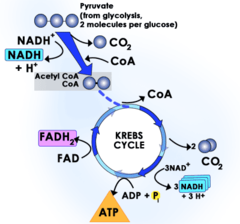
<p>NADH (3 per cycle)</p><p>FADH (1 per cycle)</p><p>ATP (1 per cycle)</p>
24
New cards

oxidative phosphorylation

occurs inner mitochondria membrane

harness energy from electron transfer

generates lots of ATP

requires oxygen

needs lots of electrons to drive process

<p>occurs inner mitochondria membrane</p><p>harness energy from electron transfer</p><p>generates lots of ATP </p><p>requires oxygen</p><p>needs lots of electrons to drive process</p>
25
New cards

oxidative phosphorylation process

NADH + 1/2O + H+

ADP + Pi

--> NAD+ + H2O + ATP

<p>NADH + 1/2O + H+ </p><p>ADP + Pi</p><p>--> NAD+ + H2O + ATP</p>
26
New cards

why is cellular respiration multiple steps

to prevent combustion or explosive release of energy

<p>to prevent combustion or explosive release of energy</p>
27
New cards

why is oxygen needed in oxidative phosphorylation

e- put into H2O as a safe disposal method that will not harm the cell

<p>e- put into H2O as a safe disposal method that will not harm the cell</p>
28
New cards

ATP synthase (cellular respiration)

to synthesize ATP (adenosine triphosphate), the main chemical energy currency of living cells, by using the energy derived from a transmembrane proton (or hydrogen ion) electrochemical gradient

<p>to synthesize ATP (adenosine triphosphate), the main chemical energy currency of living cells, by using the energy derived from a transmembrane proton (or hydrogen ion) electrochemical gradient</p>
29
New cards

electron transport chain complexes

four main protein complexes embedded in the inner mitochondrial membrane that transfer electrons and pump protons to drive ATP synthesis

<p>four main protein complexes embedded in the inner mitochondrial membrane that transfer electrons and pump protons to drive ATP synthesis</p>
30
New cards

complex I

NADH dehydrogenase (bring e- from NADH)

proton pump

<p>NADH dehydrogenase (bring e- from NADH)</p><p>proton pump</p>
31
New cards

complex II

succinate dehydrogenase (bring e- from FADH2)

do not pump protons

<p>succinate dehydrogenase (bring e- from FADH2)</p><p>do not pump protons</p>
32
New cards

complex III

cytochrome-c-reductase

proton pump

<p>cytochrome-c-reductase</p><p>proton pump</p>
33
New cards

complex IV

cytochrome-c-oxidase

proton pump H2O formation

<p>cytochrome-c-oxidase</p><p>proton pump H2O formation</p>
34
New cards

ubiquinone

transports electrons from I to III

<p>transports electrons from I to III</p>
35
New cards

cytochrome c

transports electrons from III to IV

<p>transports electrons from III to IV</p>
36
New cards

electron transports relies on

co-factors

<p>co-factors</p>
37
New cards

co-factors

accept and give up electrons readily

useful for processing electrons between and through complexes

<p>accept and give up electrons readily</p><p>useful for processing electrons between and through complexes</p>
38
New cards

common co-factors in the ETC

iron-sulfur clusters

cytochrome c

quinones (coenzyme Q)

<p>iron-sulfur clusters</p><p>cytochrome c</p><p>quinones (coenzyme Q)</p>
39
New cards

quinones (coenzyme Q)

change shape based on number of electrons obtained

<p>change shape based on number of electrons obtained</p>
40
New cards

uniquinone

Coenzyme Q

Vital electron carrier associated with complexes I, II and III of the ETC

<p>Coenzyme Q</p><p>Vital electron carrier associated with complexes I, II and III of the ETC</p>
41
New cards

ubisemiquinone

QH

partially reduced free radical of ubiquinone
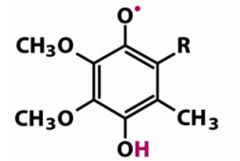
<p>QH</p><p>partially reduced free radical of ubiquinone</p>
42
New cards

ubiquinol

QH2

reduced form of ubiquinone

<p>QH2</p><p>reduced form of ubiquinone</p>
43
New cards

redox potential

- molecules with high redox pull electrons

- molecules with low redox give up electrons

<p>- molecules with high redox pull electrons </p><p>- molecules with low redox give up electrons</p>
44
New cards

more negative molecules

more likely to give up electrons

45
New cards

change in redox potential drives ETC

increasing positive redox potential down chain pulls electrons through

<p>increasing positive redox potential down chain pulls electrons through</p>
46
New cards

NADH dehydrogenase complex

L-shaped

Peripheral Arm (Hydrophilic / Matrix Arm)

Membrane Arm (Hydrophobic / Transmembrane Arm)

<p>L-shaped</p><p>Peripheral Arm (Hydrophilic / Matrix Arm)</p><p>Membrane Arm (Hydrophobic / Transmembrane Arm)</p>
47
New cards

electron transfer of NADH dehydrogenase complex

separate from proton pumping

electrons transferred in through matrix from NADH

<p>separate from proton pumping</p><p>electrons transferred in through matrix from NADH</p>
48
New cards

iron-sulfur clusters in NADH dehydrogenase complex

transport up from the matrix arm

electrons meet ubiquinone in the arm

<p>transport up from the matrix arm</p><p>electrons meet ubiquinone in the arm</p>
49
New cards

alpha helix in NADH dehydrogenase complex

runs along the length of the membrane arm

move back and forth

open mechanically gated H+ pumps

<p>runs along the length of the membrane arm</p><p>move back and forth </p><p>open mechanically gated H+ pumps</p>
50
New cards

NADH dehydrogenase complex pump

4 protons pumped into crista from matrix space

<p>4 protons pumped into crista from matrix space</p>
51
New cards

Q-cycle

NADH dehydrogenase complex passes on electrons via fully reduced quinones

<p>NADH dehydrogenase complex passes on electrons via fully reduced quinones</p>
52
New cards

fully oxidized quinones

pick up more electrons
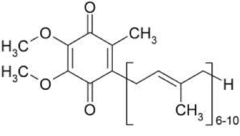
<p>pick up more electrons</p>
53
New cards

cytochrome c reductase

electrons transport through this complex

quinone with a single unpaired electron; free radical

allows for ubisemiquinone to become fully reduced
<p>electrons transport through this complex </p><p>quinone with a single unpaired electron; free radical </p><p>allows for ubisemiquinone to become fully reduced</p>
54
New cards

cytochrome c oxidase

reduction of O2 to form two molecules of H2O without releasing partially reduced, dangerous oxygen intermediates

<p>reduction of O2 to form two molecules of H2O without releasing partially reduced, dangerous oxygen intermediates</p>
55
New cards

bi-metallic center of cytochrome c oxidase

Cu and Fe

holds reactive oxygen intermediates

<p>Cu and Fe</p><p>holds reactive oxygen intermediates</p>
56
New cards

electron transport chain complexes

knowt flashcard image
57
New cards

Mitochondrial ATP synthase

spinning rotor/central stalk

static stator

<p>spinning rotor/central stalk</p><p>static stator</p>
58
New cards

flow of electrons

triggers ATP synthase rotor to turn
<p>triggers ATP synthase rotor to turn</p>
59
New cards

rotor rotation

triggers movement of subunits in the stator

ATP synthesis

<p>triggers movement of subunits in the stator</p><p>ATP synthesis</p>
60
New cards

1 turn of ATP synthesis

3 ATP

<p>3 ATP</p>
61
New cards

Beta barrels in outer mitochondrial membrane

allow it to be more porous than inner mitochondrial membrane

<p>allow it to be more porous than inner mitochondrial membrane</p>
62
New cards

Pool of protons

electron transport chain pools protons in the cristae

<p>electron transport chain pools protons in the cristae</p>
63
New cards

dimer ATP synthase

always at the end of the crista

- stabilizing

- benefit from pool of protons
<p>always at the end of the crista</p><p>- stabilizing</p><p>- benefit from pool of protons</p>
64
New cards

ADP/ATP carrier proteins

shuttle ATP into the cytosol, to be used

shuttle AP into the matrix, to be make into ATP

<p>shuttle ATP into the cytosol, to be used</p><p>shuttle AP into the matrix, to be make into ATP</p>
65
New cards

collaboration of chloroplasts and mitochondria

plants are not consumers and need chloroplasts to generate sugars for mitochondria

<p>plants are not consumers and need chloroplasts to generate sugars for mitochondria</p>
66
New cards

photosynthesis

process by which plants and some other organisms use light energy to convert water and carbon dioxide into oxygen and high-energy carbohydrates such as sugars and starches

<p>process by which plants and some other organisms use light energy to convert water and carbon dioxide into oxygen and high-energy carbohydrates such as sugars and starches</p>
67
New cards

chloroplasts

contain membrane bound compartments (thylakoids)

significantly larger than mitochondria

<p>contain membrane bound compartments (thylakoids)</p><p>significantly larger than mitochondria</p>
68
New cards

thylakoids

where machinery for electron transport chain exist
<p>where machinery for electron transport chain exist</p>
69
New cards

light reactions

electrons used for photosynthetic electron transfer are energized by photons from sunlight

<p>electrons used for photosynthetic electron transfer are energized by photons from sunlight</p>
70
New cards

electrons in photosynthesis

taken from split H2O molecule

energized by light reaction

fed through ETC, forming a proton sink in thylakoid space
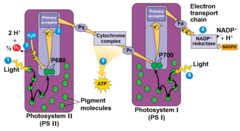
<p>taken from split H2O molecule</p><p>energized by light reaction</p><p>fed through ETC, forming a proton sink in thylakoid space</p>
71
New cards

ATP in photosynthesis

generated along with NADH

<p>generated along with NADH</p>
72
New cards

Water

has very high redox potential (terrible electron donor)

<p>has very high redox potential (terrible electron donor)</p>
73
New cards

photosystem II

charged with light ( - redox) and bring electrons from water to a more negative redox potential

<p>charged with light ( - redox) and bring electrons from water to a more negative redox potential</p>
74
New cards

electron carried by photosystem II

more negative redox potential; brought to:

plastoquinone --> cytochrome b6t complex --> plastocyanin

now has more positive redox potential

<p>more negative redox potential; brought to:</p><p>plastoquinone --> cytochrome b6t complex --> plastocyanin</p><p>now has more positive redox potential</p>
75
New cards

photosystem I

charged with light ( - redox) and bring electrons from water to a more negative redox potential

<p>charged with light ( - redox) and bring electrons from water to a more negative redox potential</p>
76
New cards

electron carried by photosystem I

more negative redox potential; brought to:

ferredoxin--> ferredoxin-NADP+ reductase

now has more positive redox potential

<p>more negative redox potential; brought to:</p><p>ferredoxin--> ferredoxin-NADP+ reductase</p><p>now has more positive redox potential</p>
77
New cards

ferredoxin-NADP+ reductase

reduces NADP+ to NADPH

<p>reduces NADP+ to NADPH</p>
78
New cards

Chloroplast co-factors

quinones

plastocyanin

iron-sulfur clusters

<p>quinones</p><p>plastocyanin </p><p>iron-sulfur clusters</p>
79
New cards

quinones

movee electrons from photosystem II to cytochrome b6f complex

plastoquinones

<p>movee electrons from photosystem II to cytochrome b6f complex</p><p>plastoquinones</p>
80
New cards

plastocyanin

move electrons from cytochrome b6f to photosystem I

<p>move electrons from cytochrome b6f to photosystem I</p>
81
New cards

iron-sulfur clusters

move electrons within photosystem
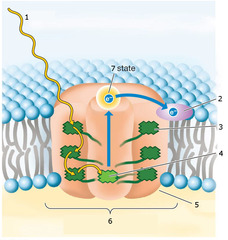
<p>move electrons within photosystem</p>
82
New cards

cytochrome b6f

proton pump to make proton gradient

<p>proton pump to make proton gradient</p>
83
New cards

ATP synthase (photosynthesis)

uses proton gradient to make ATP

<p>uses proton gradient to make ATP</p>
84
New cards

Ferredoxin—NADP⁺ reductase

makes NADPH with carried electrons

<p>makes NADPH with carried electrons</p>
85
New cards

pH in mitochondria

intermembrane space, more protons (pH = 7.4)

matrix, protons pumped out (pH = 7.9)

<p>intermembrane space, more protons (pH = 7.4)</p><p>matrix, protons pumped out (pH = 7.9)</p>
86
New cards

mitochondria electron source

NADH

high energy NADH to low energy water

<p>NADH</p><p>high energy NADH to low energy water</p>
87
New cards

mitochondria cofactors

Q-cycle, iron-sulfur clusters
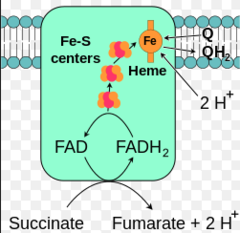
<p>Q-cycle, iron-sulfur clusters</p>
88
New cards

mitochondria redox potential

starts negative
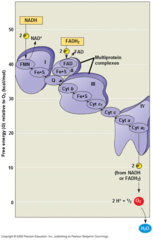
<p>starts negative</p>
89
New cards

mitochondria proton pumping

3 complexes

<p>3 complexes</p>
90
New cards

pH in chloroplast

thylakoid space, more protons (pH = 5.5)

stroma, protons pumped out (pH = 8)

intermembrane space (pH = 7.4)

<p>thylakoid space, more protons (pH = 5.5)</p><p>stroma, protons pumped out (pH = 8)</p><p>intermembrane space (pH = 7.4)</p>
91
New cards

chloroplast electron source

water

low energy water to high energy NADH

<p>water</p><p>low energy water to high energy NADH</p>
92
New cards

chloroplast cofactors

Q cycle, iron-sulfur clusters

<p>Q cycle, iron-sulfur clusters</p>
93
New cards

chloroplast redox potential

starts positive
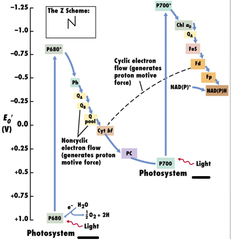
<p>starts positive</p>
94
New cards

chloroplast proton pumping

one complex

<p>one complex</p>
95
New cards

carbon fixation

utilize NADPH and ATP from light reactions to drive Calvin cycle

<p>utilize NADPH and ATP from light reactions to drive Calvin cycle</p>
96
New cards

Calvin cycle

in the chloroplast

electrons from NADPH

PO4 from ATP

carbon from CO2

<p>in the chloroplast</p><p>electrons from NADPH</p><p>PO4 from ATP </p><p>carbon from CO2</p>
97
New cards

dark reaction

the portion of photosynthesis that does not need light to occur; the building of the glucose molecule

<p>the portion of photosynthesis that does not need light to occur; the building of the glucose molecule</p>
98
New cards

phosphoglycerate

made from 3 CO2 fused with RuBP by rubisco

<p>made from 3 CO2 fused with RuBP by rubisco</p>
99
New cards

glyceraldehyde-3-phosphate

made from phosphoglycerate energized by ATP and reduced by NADPH

<p>made from phosphoglycerate energized by ATP and reduced by NADPH</p>
100
New cards

1 glyceraldehyde-3-phosphate

Three-carbon sugar produced in the Calvin cycle.

<p>Three-carbon sugar produced in the Calvin cycle.</p>



