Unit 1
 Call Kai
 Learn
Learn Practice Test
 Spaced Repetition
 Match
Match Flashcards
 Knowt Play
1/111

Earn XP
Description and Tags
Kirkwood PHS-180 Evolution of the Earth, John Dawson
Name | Mastery | Learn | Test | Matching | Spaced | Call with Kai | Chat |
|---|
No analytics yet
Send a link to your students to track their progress
112 Terms
A theory is _____________________.
a well established explanation of a set of observation
As Lyell formulated it, the Principle of Uniformitarianism was a response to:
the doctrine or Principle of Catastrophism.
The older idea called "Catastrophism" was proposed based on the false observation that:
major changes on Earth occurred only by supernatural or major natural disasters such as floods, earthquakes, and volcanic eruptions.
Hutton was the first to believe in the concept of plutonism, which is the idea that:
granite and lava flows (igneous rocks) originated from hot magma that originated from hot interior of the Earth.
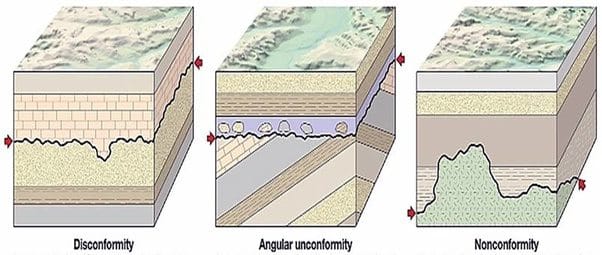
The best description of an angular unconformity would be:
horizontal layers with rocks below that are tilted.
An initial explanation of a set of observations is considered to be:
a hypothesis
Research articles that are reviewed and critiqued by other scientists before publication are considered to be:
peer reviewed
To qualify as a mineral which of the following must be true?
Naturally occurring, Inorganic, Crystalline, Specific chemical composition.
What is the name of the rock type formed from a molten (or liquid) rock?
Igneous
Intrusive (plutonic) igneous rocks form ____________ crystals.
Large and Visible
Metamorphic rocks possessing a foliated texture have what characteristic?
Parallel (in the same direction) mineral alignment
Limestones are the parent rock or protolith for the metamorphic rock called:
Marble
Which of the following are favorable conditions for deposition of carbonates such as limestone?
Warm shallow tropical seas
An igneous rock has a coarse-grained (phaneritic) texture with large visible crystals. The rock must have undergone:
slow cooling
3 major rock groups
igneous, sedimentary, metamorphic
Examples of a biochemical sedimentary rocks (rocks formed from living organisms like shells, skeletons, and plant material)
Chalk, fossiliferous limestone, Coquina, Coal
How are sedimentary rocks are formed?
Through chemicals precipitating out of water
cementation of shells, bones, skeletons of dead organisms
compaction and cementation of fragments of other rocks
Describe Granite
Granite is a light-colored igneous rock that forms below the surface of the earth. It has large, visible crystals that are a good way to tell that it formed by cooling slowly beneath the crust. Higher in minerals such as quartz, muscovite, and potassium feldspar
Describe Basalt
Basalt is also an igneous rock, but it is dark with very small crystals that indicate it cooled quickly on the surface on the earth. High in magnesium and iron.
2 properties of minerals that may be useful for identifying them
Color/streak: Done by scratching the metallic mineral on a piece of unglazed porcelain. The streak of a mineral can be different than the dominant color of the mineral, though some minerals like quartz and fluorite can have multiple colors.
Cleavage vs. Fracture: Done by breaking the mineral. How it breaks helps tell us what kind of mineral it is. Some minerals break into perfect, even, parallel planes and into several directions (cleavage) and some have the surface break irregularly (fracture) and not through the mineral.
Relative time has:
Arrangement, Sequences, Order of events—not years
What is it called when 50% of the parent isotope decays to the daughter isotope?
Half life
14C – 14N radioisotope system (carbon dating) is best for dating ___________.
Organic matter
A mineral started with 100 parent isotopes and decayed until it had 25 parent atoms and 75 daughter atoms. It must:
be at the age corresponding to the second half-life
An unconformity represents a ___________ in the geologic record.
erosional surface and a gap in time
Order of events based on the principle of cross-cutting relationships
Faults are younger than the rocks they cut

The type of unconformity where tilted or folded sedimentary rock layers are below and horizontal sedimentary rock layers are above are called:
Angular unconformity
By themselves, fossils yield which kind of age?
Relative. They are too old to carbon date, so we have to date the rocks above and below the fossil.
Joe, a geologist, has a friend that likes going hiking. Joe's friend says that he can find an older rock than Joe and he proceeds to climb to the top of the outcrop. What should Joe tell his friend?
Tell him to turn around because of the Principle of Superpostion. In any sequence of sedimentary rock layers, the oldest layers are at the bottom, and the youngest layers are at the top.
Describe the relative dating method
Relative dating methods determine if a fossil/rock layer is older or younger than another. Numbers such as years are not used here. Best used for sedimentary rock layers and establishing a sequence of past events (Law of Superposition states that older rock layers will be beneath younger layers). Most of geologic time is based on this principle and dating method.
Describe the numerical dating method
Numerical dating methods assign a numerical age/range in years to a material. Relies mostly on radioactive decay dating, which measures the radioactive decay of unstable isotopes using half-lives (unstable carbon -> stable nitrogen). Not a linear process. This method is best used for igneous and metamorphic rocks (ash and lava flow measured above/below fossils), providing ages rather than a relative sequence.
What is the current known age of the Earth and how do we know that?
Earth is approximately 4.5 billion years old. The oldest rocks and minerals that we've found on Earth are still younger than moon rocks and meteorites. Dating both of these have shown that the original crust of the Earth has been destroyed and recycled, meaning it is younger than the formation of the planet.
Radiocarbon dating works up to ages around_______.
80,000 to 100,000 years old

Igneous Rocks
An igneous rock forms from the cooling and solidification of lava or magma. Igneous rocks can be classified into two categories: intrusive and extrusive. They are sorted into these categories depending on if they cool within the earth via magma (intrusive), or above the earth via lava (extrusive). Intrusive rocks cool slowly due to being beneath the earth's surface where it is hotter. During this time, large crystals can form as it cools. Rocks with crystals that are visible to the naked eye are a good way to tell if a rock is intrusive, as the slower cooling period allows for the formation of larger crystals. Extrusive rocks are formed on the surface of the earth from lava, where it begins to cool rapidly. This allows for very small or even no crystals. You can also find air bubbles within these rocks, giving them a rougher texture. Extrusive rock samples can range from obsidian, where the lava cools so fast that it does not form air bubbles or crystals, to a rock with many air bubbles in it like pumice. These air bubbles are referred to as 'vesicles' due to the small, round pitting in the rock where gas was trapped as the rock cooled.

List what you know about the three categories of sedimentary rocks
Sedimentary rocks can be broken down into three categories:
- Clastic rocks form from the compaction and cementation of sediments. Sediments are fragments of rock that have been broken down from weathering (wind, running water, and ice). As wind and river water rushes over the rock, and ice freezes and thaws many times over the course of time, tiny bits of the rock are broken down and off, creating sediment. Clastic rocks are referred to as inorganic land-derived rocks because they come from the rock that makes up the land (quartz, feldspar, clay). Clastic rocks are categorized according to their size. These include: clay, silt, sand, pebbles, cobbles, and boulders.
- Crystalline rocks are made up of evaporites (evaporating seawater leaves behind salt, creating rock salt) and precipitates (organic matter submerged in water that then separates due to oversaturation in the water, such as heat or gas levels, to collect at the bottom), while organic is made from organic matter.
- Organic rocks are formed of compacted organic matter, such as the remains of plants or even from shells. Sedimentary rocks are also the only rocks that will contain fossils.

Metamorphic Rocks
Metamorphic rocks are formed by undergoing a change, usually by being exposed to intense heat or intense pressure. Two types exist: contact and regional metamorphism. Contact metamorphism is existing rocks coming into contact with intense heat, generally lava or magma. As the lava or magma makes its way to the surface, it burns the rocks in its path. This burning causes the rocks to change. Regional metamorphism is caused by pressure. As two tectonic plates press against each other, the rocks along the boundaries of the plates are subjected to intense pressure. As the rock is subjected to more and more pressure, you will see bands start to form on the rock. Gneiss is an example of a regional metamorphic rock that has been subjected to very intense pressure. Were any more pressure added to gneiss, it would then melt into magma or lava, creating an igneous rock as described above.
law of uniformitarianism
all things we observe on Earth happened the same way in the past
Sedimentary rocks tend to form when______.
sediments are deposited in the bottom of a body of water. Over thousands-millions of years, sediments are compressed into layers of sedimentary rocks. These were likely underwater at one point. If rocks are weathered or eroded, they were likely above water at one point.
law of original horizontality
layers of sediment are originally deposited in flat, horizontal layers due to the force of gravity
Deformations includes______.
folding, faulting, and tilting

Intrusions (such as lava/magma) are younger than______.
the rocks they affect (metamorphize).

Faults are younger than_______.
the rocks they cut through

Inclusions must be older than_______.
the layer they are found in
Uplift, weathering, erosion, and subsidence forms_______.
Unconformities (geologic mysteries)
Alfred Wegener came up with the theory of______.
Continental Drift and Pangea
Evidence supporting continental drift
The shape of the continents (coastlines appear to fit together like puzzle pieces), fossil correlation (ancient animals found in two places that would have once fit together, like southern South America and South Africa), geologic structures (the Appalachian Mountains of the US are the same mountain chain that can be found in Ireland), and paleoclimate data (glaciers move over the earth and leave glacial scratches that shows the direction the ice went as it moved, like in the Amazon rainforest and central Africa).
Tectonic Plates
the solid part of the Earth we live on. Some are oceanic and some continental, or both

The continental crust is______.
thick and made of granite

The oceanic crust is______.
thinner, denser, and made of basalt

asthenosphere
a melty "bubblegum" layer of rock that can move beneath the surface of the Earth
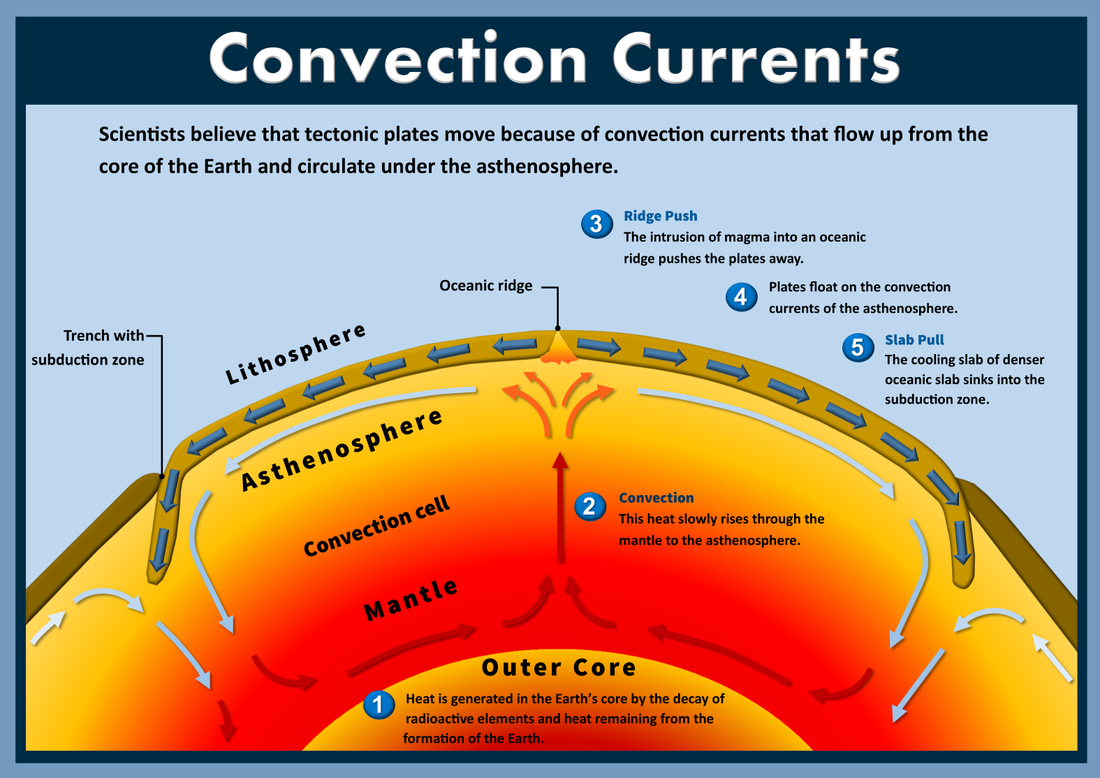
convection
hot material in the asthenosphere becomes less dense and rises, and as it rises, it cools down and sinks, causing continental drift
Earthquakes, mountain ranges, and volcanoes are often located where______.
tectonic plates meet

Transform boundary
Plates slide past each other. Pressure and grinding where the plates meet, which can cause earthquakes, but often not volcanoes, trenches, or mountain ranges. The San Andreas fault in California is the leading cause of earthquakes risk in the area, but there are no mountain ranges in California

Convergent boundary
Plates collide. Subduction zones are when the oceanic crust sinks beneath the continental crust, melting. It then finds little cracks to rise through and causes volcanoes. You'd look for deep trenches, mountain ranges, and volcanoes for these zones. Island arcs are oceanic to oceanic plates, with the older rock often sinking beneath the younger. This melting causes rising magma, but these form volcanic islands out in the ocean. You will often find earthquakes and trenches here. Collision zones are continental to continental, like India crashing into the Himalayas.
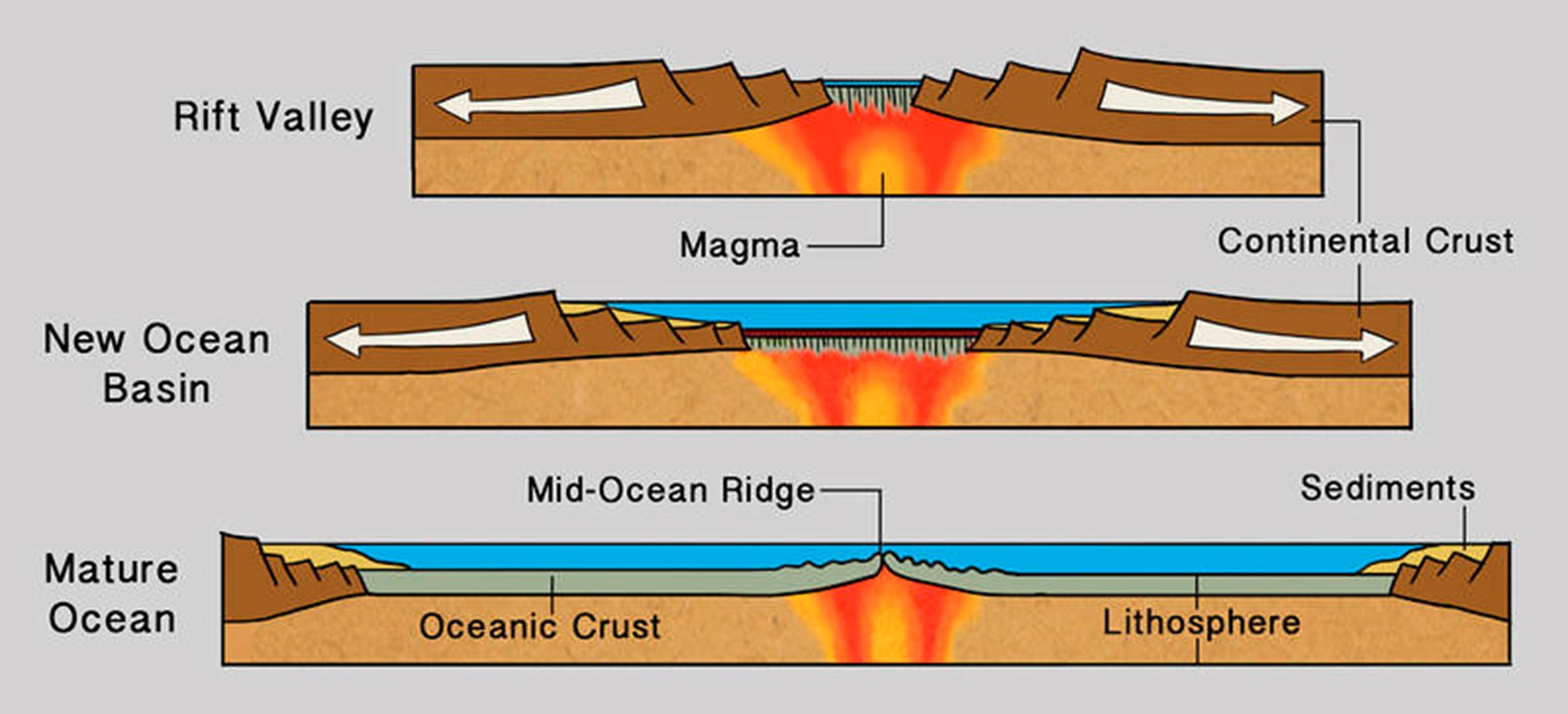
Divergent boundary
Plates drift apart. If it happens on land, there is a rift zone where the land rips apart into two. Magma then rises, forming volcanoes and some minor earthquakes. This can form a mid-Ocean ridge, causing all of the above. The younger rock will be found along the ridge, and the further from it the rock gets older. The new rock will record the magnetism of the earth when it is formed, but this changes over time. You then have alternating bands of magnetism on either side of a mid-Ocean ridge.

hot spots
Volcanoes not found at plate boundaries. These can cause chains of islands with one massive active volcano, and then several inactive ones.
You find a sequence of rocks with shale at the top, sandstone in the middle, and conglomerate at the bottom. This sequence represents:
Transgression
What continental depositional environment is produced by sediments deposited in association with a river or stream?
Fluvial
Transgression
Transgression occurs when sea levels rise and the shoreline moves inward (toward land)
The term “facies” refers to the part of the rock body that identifies the _________.
Depositional environment

The best fossils to use for stratigraphy are sometimes called index fossils. They have the characteristic of being:
abundant, widespread, evolve rapidly, and typically swim or float in the ocean
The type of stratigraphy that uses fossils is called:
Biostratigraphy
The study of the relationships between rock units based on properties of the rocks such as composition, texture, and color is called __________.
Lithostratigraphic correlation
The basic unit of lithostratigraphy are sets of rock layers that are mappable over a good distance with distinctive rock characteristics. These are called:
formations
What is the name of the youngest eon?
Phanerozoic
List the periods of the Mesozoic Era
Triassic, Jurassic, Cretaceous
Sea-level can change due to both global and local processes. Global changes in sea-level is also called:
Eustatic
Regression
Regression happens when sea levels fall and the shoreline retreats outward (to the ocean). As the water levels lower, you'll find coastal sediments like sandstone and conglomerate rocks on top of silts and shale
Lithostratigraphy
classifying rock layers based on properties and positions
Naturalism
it is better to explain things (especially scientific results) by natural laws rather than by supernatural causes.
Catastrophism
Supernatural explanations for the world around us
Scientific Method
Observe
Research
Form Hypothesis
Conduct experiments & collect data
Analyze data
Draw conclusion
Share findings
Proton
+1 charge and a mass of 1. Found in the nucleus of the atom.
Neutron
No charge, mass of 1. Found in the nucleus.
Electron
-1 charge, no mass. Found outside the nucleus.
Atomic Number
The sum of the protons of an element
Atomic Weight
The sum of the neutrons of an element

Dark Silicates
Mafic. Exhibit dark green, brown, or black colors due to the presence of iron and magnesium. Have a higher density. Examples: Olivine, pyroxene
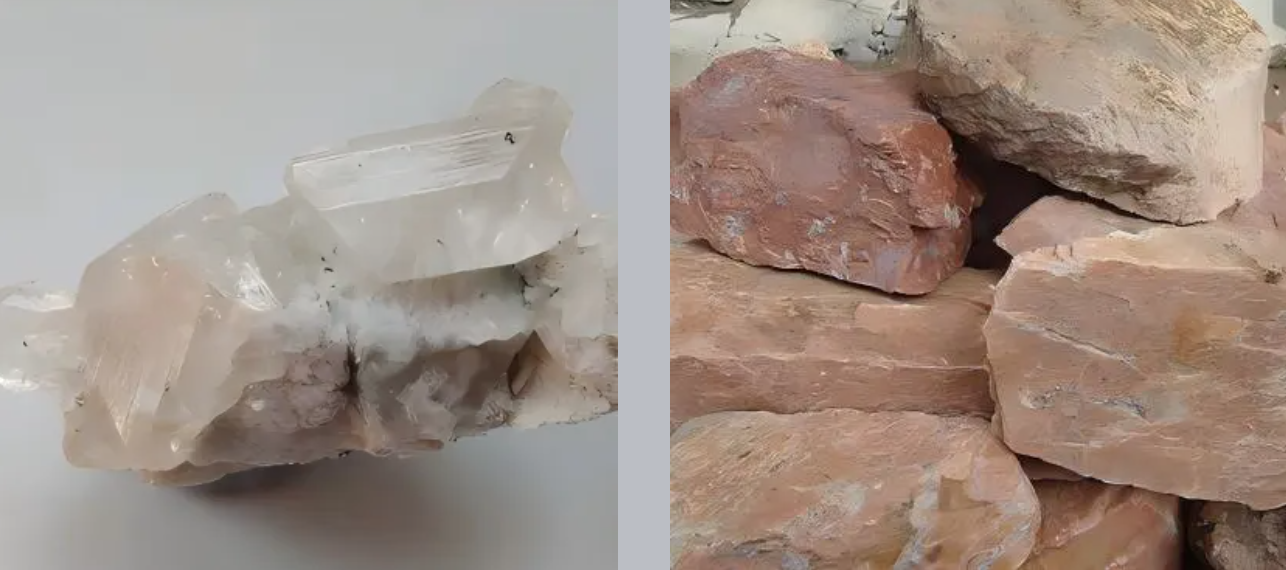
Light Silicates
Felsic. Lack iron and magnesium, containing higher amounts of elements like potassium (K), aluminum (Al), sodium (Na), and calcium (Ca). Exhibit white, light gray, pink, or clear/translucent colors. Have a lower density. Examples: Quartz, feldspar, muscovite mica

Foliated Metamorphic Rocks
Layered, striped, or banded look. Platy or elongated minerals align in parallel planes. Formed under directed pressure or shear stress. Tend to split or break easily along flat sheets or layers. Examples: Slate, Schist, Gneiss.

Non-Foliated Metamorphic Rocks
Uniform, granular, or massive crystalline look. Minerals are blocky/equidimensional. Formed under uniform/confining pressure or extreme heat (contact metamorphism). Break into irregular chunks rather than thin layers. Examples: Marble, Quartzite, Hornfels, or Soapstone.

Examples of Clastic Sedimentary Rocks
Shale, Sandstone, Conglomerate, Breccia

Examples of Chemical Sedimentary Rocks
Rock Salt, Gypsum, Limestone

List what you know about the Rock Cycle
Earth's Internal Heat: Powers deep-Earth processes like melting, metamorphism, and tectonic plate movement cause the formation of igneous rocks.
Igneous Rocks: Formed when molten rock (magma or lava) cools and hardens (crystallizes). Examples include basalt and granite.
Sedimentary Rocks: Formed when small pieces of rock, minerals, or organic matter (sediments) pile up in layers and get squeezed and glued together (compaction and cementation). Examples include sandstone and limestone.
Metamorphic Rocks: Formed when existing rocks are exposed to intense underground heat and pressure, changing their mineral structure without melting them completely. Examples include marble and slate.
Wind, water, and ice break down exposed rocks into tiny pieces called sediments.
Deposition, Compaction, and Cementation: Sediments settle in low areas (like lakebeds), pile up in layers, and are pressed and cemented into sedimentary rock.
Metamorphism: Heat from Earth's interior and immense pressure from tectonic plates transform buried rocks into metamorphic rocks.
Melting and Cooling: Rocks buried deep underground melt into magma, which later cools and hardens back into igneous rock.
Original continuity
layers of sediment initially extend sideways in all directions until they thin out or hit a barrier
Nonconformity
Younger sedimentary rocks or volcanic lavas are deposited directly on top of older, eroded igneous or metamorphic crystalline rocks
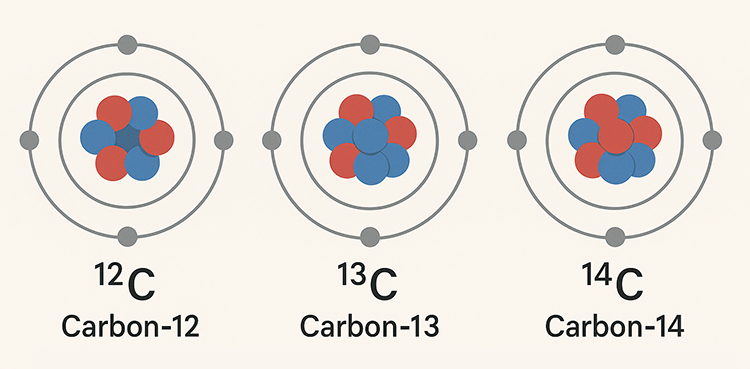
Isotopes
different versions of the same element that have the same number of protons but a different number of neutrons

Parental Isotope
an unstable, radioactive form of an element that spontaneously decays into a new, more stable atom known as a daughter isotope
Exponential Decay
Quantity decreases over time at a rate proportional to its current value (it shrinks faster at the beginning and slows down as it gets smaller)

Zircons
Natural, incredibly durable minerals made of zirconium silicate that serve as the ultimate geological time capsules. Incorporate trace amounts of radioactive uranium when they form. Uranium decays into lead at a steady, known rate, so scientists use radiometric dating to calculate the crystal's ageZircons are exceptionally tough and resist heat, weathering, and melting. They have been dated to 4.4 billion years old, making them the oldest known fragments of Earth ever discovered. They prove that Earth cooled and formed a solid crust much earlier than scientists once thought

Radiometric dating
calculates the age of rocks and organic materials by measuring the ratio of unstable parent radioactive isotopes to stable daughter products
Explain how radiocarbon dating works in detail with an example
Every living thing maintains a steady balance of carbon-14 inside its tissues. When a plant or animal dies, it stops taking in new carbon. The trapped carbon-14 steadily decays back into stable nitrogen-14 with a half-life of 5,730 years. Carbon-12 (stable carbon) does not change. Scientists measure the ratio of remaining carbon-14 to stable carbon-12 in the dead organism.
If a piece of wood has half the carbon-14 ratio of a living tree, one half-life has passed, meaning the tree died about 5,730 years ago. This method works for objects up to about 80,000 to 100,000 years old.
Stratigraphy
the scientific study of rock layers (strata) and layering (stratification), used to interpret Earth's history and relative ages
Faunal succession
Geological principle stating that fossil groups appear in a predictable, chronological order through rock layers
Rock Units
Distinct, mappable bodies of rock in the Earth's crust classified by their physical traits, origin, or age. Geologists use rock units to read the history of the Earth, create geologic maps, and study rock layers, also known as strata.

Examples of facies
Coarse-Grained Sandstone Facies: Contains well-rounded quartz grains or sporadic pebbles, indicating high-energy environments like fast-moving rivers or beaches
Reef Carbonate Biofacies: Dominated by in-place coral skeletons, algal mats, and shelly fragments indicating warm, shallow tropical marine waters

The geologic time scale
a system that breaks down Earth's 4.6-billion-year history into hierarchical chunks of time, ordered from largest to smallest: eons, eras, periods, and epochs
Eon
largest division of geologic time lasting hundreds of millions to billions of years
Era
a major subdivision of Earth's history lasting tens to hundreds of millions of years
Period
Transitions between periods are traditionally marked by major changes in Earth's biotic composition and significant extinction events. Earth is currently in the Quaternary period.