Ch 16 - Sustainable Marketing: Social Responsibility and Ethics
 Call Kai
 Learn
 Practice Test
 Spaced Repetition
 Match
 Flashcards
 Knowt Play
1/13

Earn XP
14 Terms
sustainable marketing
meeting present needs while preserving the ability of future generations to meet their needs
social criticisms of marketing
impact on individual consumers
impact on society as a whole
impact on other businesses
marketing’s impact on individual consumers
high prices
deceptive practices
high-pressure selling
shoddy, harmful, or unsafe products
planned and perceived obsolescence
poor service to disadvantages consumers
marketing’s impact on society as a whole
false wants and too much materialism
too few social goods
cultural pollution
marketing’s impact on other businesses
acquisitions of competitors
marketing practices that create barriers to entry
unfair competitive marketing practices that hurt competitors
traditional rights
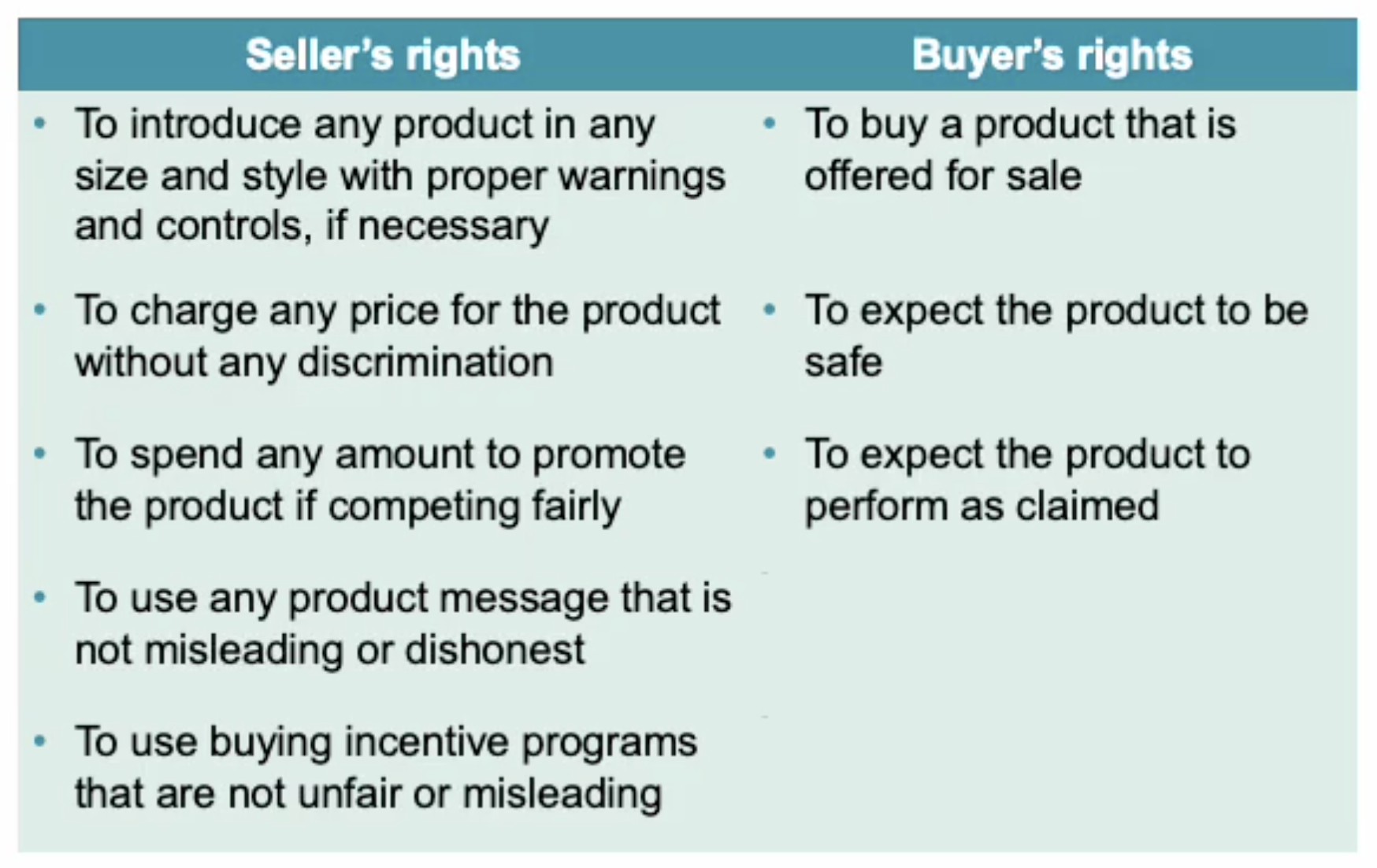
proposed consumer rights
to be well informed
to be protected against questionable products and marketing practices
to influence products and marketing practices to improve quality of life
to consumer in a way to preserve the world for future generations of consumers
environmentalism
protects and improves people’s current and future living environmenten
environmental sustainability
generation of profits while helping protect the environment
customer-centric marketing
viewing and organizing a company’s marketing activities from the consumer’s point of view
customer value-building marketing
putting most of a company’s resources into customer value-building marketing investments
sense-of-mission marketing
defining a compnay’s mission in broad social terms
ethical norms suggested by the american marketing association
do no harm
foster trust in the marketing system
embrace ethical value
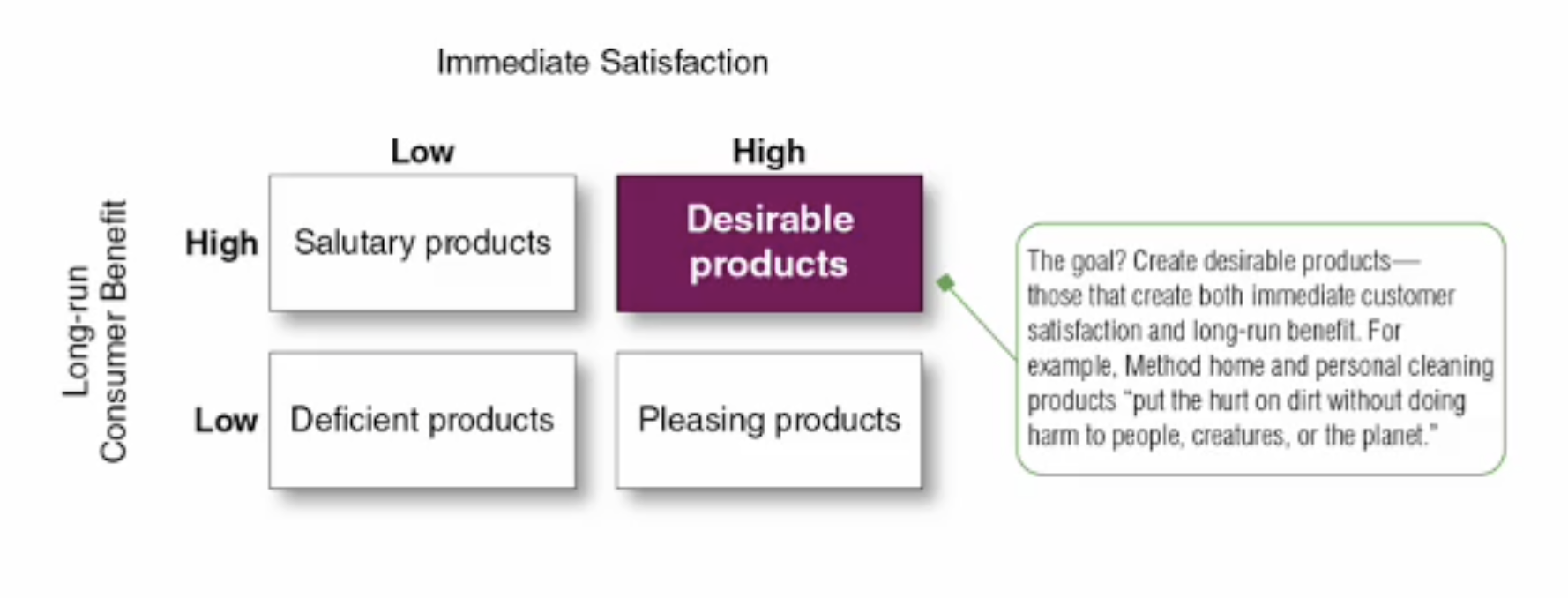
societal classification of products
the categorization of products based on their impact on society and the environment