Module 3: Glucose Homeostasis - Regulation, measurementm and development of T2D
 Call Kai
 Learn
Learn Practice Test
 Spaced Repetition
 Match
Match Flashcards
 Knowt Play
1/162

There's no tags or description
Looks like no tags are added yet.
Name | Mastery | Learn | Test | Matching | Spaced | Call with Kai | Chat |
|---|
No analytics yet
Send a link to your students to track their progress
163 Terms
homeostasis
Maintenance of a relatively consistent internal environment
disturbances to homeostatic balance can lead to disease
glucose homeostasis
balance between hepatic glucose production and peripheral glucose uptake and utilization in relative range
excorine function of the pancreas (release fluids onto surface or into body cavities)
digestive enzymes - 90% of what the pancreas does. - lipases, proteases
endocrine function of the pancreas (directly into bloodstream)
hormones - control blood glucose concentration
4 cell types in the Islet of Langerhans
alpha cells - release glucagon
beta cells - release insulin
delta cells - release somatostatin inhibitory peptide hormone, regulates release of various hormones
F cells - release pancreatic polypeptide
alpha cells
endocrine cells in the pancreatic islets that secrete glucagon to raise blood glucose levels when blood sugar is low
beta cells
specialized endocrine cells in the pancreas that produce, store, and release the hormone insulin to control blood sugar levels when they get too high
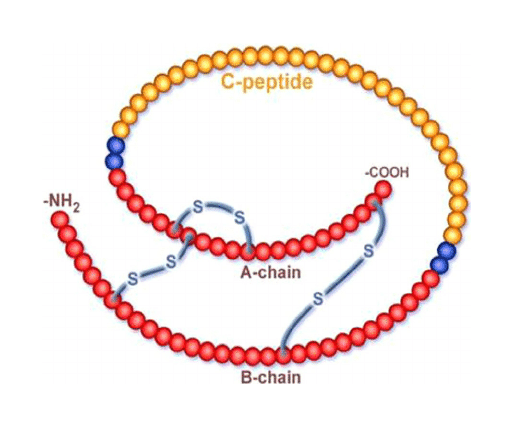
insulin
polypeptide hormone produced by beta cells in pancreas
primarily anabolic - getting glucose out of bloodstream and into cells - glycogenesis
insulin is stimulated by
glucose, amino acids, and GI hormones (gastrin and cholecystokinin) - ozempic?
insulin facilitates
glucose uptake and glycogen synthesis
lipid and protein synthesis
Insulin gets glucose into the cells and tissues
so that they can use it or store it - IN IN IN
When insulin is released into the bloodstream,
C-peptide is equally released with it
c-peptide testing measures
how much natural insulin your pancreas makes by tracking byproduct released when insulin is produced - tests beta-cell function
glucagon
counters insulin
polypeptide hormone produce by alpha cells
primarily catabolic - want to mobilize fuels
high when fasted
glucagon function
maintains plasma glucose between meals
mobilizes glucose from the liver
glucagon is for when the glucose is gone
and you need to mobilize stored energy
normal healthy range for blood glucose concentration even when fasted
4.4-5.6 mmol/L
hypoglycemic =
below 4.4
insulin and glucagon work together to keep blood glucose concentration in
normal range - they counter each other
in a fasted/post-absorptive state (digestion is complete, nothing entering bloodstream) main goal is
increase blood glucose
when body wants to increase blood glucose, it releases
glucagon
muscle cannot
release free glucose into the blood stream
holds onto it because it lacks the enzyme glucose-6-phosphate phosphatase
can’t convert G6-P to free glucose, so it is used within the muscle
it is trapped
the liver can
get glucose(mobilize) into the blood even if you haven’t eaten because glucose is stored as glycogen
glucagon’s effect on the liver in a fasted/post-absorptive state
increase gluconeogenesis
increase glycogenolysis (and decrease glycogenesis)
increase glucose release
you body stores most of glucose in
muscle, only 1/5 is in the liver
over an overnight fast, the liver’s stored glycogen
drops over 50%
gluconegenesis
formation of “new glucose” from metabolic intermediates like lactate, glycerol, or amino acids like alanine and glutamine
the liver does not have unlimited glucose, but it can technically
fuel your body for days
GLUT2
transporter made in the liver that moves glucose out of the liver into the blood, works bidirectionally in the liver
glycogenolysis
breakdown of glycogen into glucose
order of intermediates in glycogenolysis
glycogen → G1-P (glycogen phosphorylase) → G6-P, (phosphoglucomutase) → glucose (G6-P phosphatase)
glycogen phosphorylase
enzyme
breaks down glycogen to G1-P
Phosphoglucomutase
enzyme
converts G1-P to G6-P
Phosphatase
enzyme
converts G6-P to glucose so it can be used
G6-P phosphatase only exists in
the liver, so only the liver can release free glucose into the blood
hexokinase
enzyme
adds a phosphate to glucose to make G6-P
traps it in the cell
works in muscle and liver
in fasted/post-absorptive state, what does glucagon do to adipose tissue
increase lipolysis, this is another fuel source and glucagon focuses on mobilizing fuels
adipose tissue has some receptors
Hypothetical: G6P phosphatase deficiency
this would put you at risk in fasted states of hypoglycemia because you would not be able to mobilize glucose
you would have to constantly consume glucose
glucose homeostasis is largely controlled by the balance between
hepatic glucose output and peripheral glucose uptake
in fasted state, glucagon promotes hepatic glucose production to maintain
glycemia - liver releases glucose while you fast in your sleep
regulation of postprandial (fed) glucose homeostasis timeline
eat food
glucose uptake rises
stimulates the pancreas to release insulin and decrease glucagon
insulin works to get the fuels to the adipose and muscle tissues by increasing peripheral glucose uptake
insulin signal the liver to stop producing glucose because there are sufficient fuels
as the tissues take up the glucose, blood glucose goes back down
insulin’s effect on skeletal muscle in fed state
goal is to increase glucose use and storage
glucose uptake into skeletal muscle
trapping glucose inside the cell
increase glycogenesis and glycolysis
restock muscle glycogen
clear glucose from bloodstream
glucose uptake in muscles in a fasted state
requires a transporter (GLUT) to get from blood/extracellular fluid into muscle fiber
in muscles GLUT1 functions
at rest
in muscles, GLUT4 is
most important and is highly regulated
stored in vesicles in cytosol → translocates to sarcolemma in response to approproate signal
insulin signaling cascade causes this
in postprandial/absorptive state, overall goal is
decrease blood glucose
trapping glucose in the muscle
glucose and ATP → hexokinase → G6-P and ADP
hexokinase phosphorylates glucose entering muscle cell and glucose becomes trapped because a phosphate is added
phosphofructokinase
major rate-limiting enzyme that catalyzes conversion of G6-P into 2 pyruvate to → acetyl-CoA → ATP
stimulate if energy is needed - ex. energy demand in muscle, pyruvate is formed (glycolysis)
glycolysis
glucose from blood enters muscle through GLUT4
hexokinase adds a phosphate and traps it, turning it into G6-P
phosphofructokinase converts it into pyruvate
glycogenesis
glucose enters muscle through GLUT4
hexokinase adds phosphate and converts is to G6-P
phosphoglucomutase converts G6P into G1P
glycogen synthase converts G1-P to Glycogen to store it
phosphoglucomutase
converts G1P to G6P to make glucose
converts G6P to G1P to make glycogen
in postprandial state, insulin - muscle
increases glucose uptake
glucose phosphorylated by hexokinase
increase glycogenesis and glycolysis
insulin affect on adipose tissue in postprandial state
Main goal = decrease FFA mobilization (major) and increase glucose uptake (minor)
major decrease in lipolysis
minor increase in glucose uptake
increase in TG synthesis (lipogenesis)
why does lipolysis decrease majorly with insulin
the body wants to use what you just consumed (carbs!)
too much lipolysis is bad because too much FFA in blood can be toxic
hormone sensitive lipase (HSL)
intracellular enzyme that breaks down stored fats to release fatty acids and glycerol into the body; insulin puts a brake on it
during lipolysis,
beta-adrenergic receptor stimulation activates cAMP signaling cascade to phosphorylate HSL, increase its activity, and activate lipolysis
insulin signaling degrades cAMP to
reduce signal and inhibit lipolysis
lipolysis breaks down TGs into
3 FAs and glycerol
de novo lipogenesis
metabolic process that converts excess dietary carbs into new FAs inside the body
esterification
joins FA and glycerol backbone and turns them into TGs
CD36
fatty acid transporter on that adipocyte membrane that brings FAs into the adipocyte
insulin stimulates
glucose uptake and promotes fat storage
sequence from glucose to new fatty acids
glucose → pyruvate (glycolysis) → TCA →acetyl-coA → de novo lipogenesis→ FA
beta-oxidation
burns fatty acids for energy inside the mitochondria
high carb intake can drive
de novo lipogenesis - this is considered not good, can drive metabolic disease if overdone
insulin’s effect on the liver
major goal: decrease glucose output
decrease glucose release
increase glucose uptake, glycogenesis and glycolysis
counter-regulatory hormones of insulin
generally oppose and act to raise blood glucose levels
glucagon
glucocorticoids (cortisol)
growth hormone
catecholamines (epinephrine and norepinephrine)
how does glucagon raise blood glucose
stimulates liver glycogenolysis and gluconeogenesis
key effect of cortisol (glucocorticoid) on glucose
promotes gluconeogenesis and reduces tissue glucose uptake
counter-regulatory hormones are most active during
fasting, exercise, stress
catecholamines impact on glucose homeostasis
goal - increase blood glucose and increase fuel use
stimulates glucagon release
catecholamine impact on liver
increase glucose release
increase gluconeogenesis
increase glycogenolysis
catecholamine impact on adipose tissue
decreases lipogenesis
increased lipolysis
catecholamine impact on muscle tissue
increase glycogenolysis
increased glycolysis
insulin is a _______ of glycogenolysis
negative regulator
insulin is a _______ of glycogenesis
positive regulator
insulin is a ______ of lipolysis
negative regulator
insulin is a _______ of protein synthesis
positive regulator - anabolic
insulin is a ______ of muscle glycolysis
positive regulator - burning as fuel source
insulin is a _________ of gluconeogenesis
negative regulator - you do not need more
insulin is a __________ of liver glycolysis
positive regulator - encourage using new fuels
ketogenesis
the metabolic process where the liver breaks down fatty acids and ketogenic amino acids to produce ketone bodies for alternative cellular energy. often needed on a low carb diet, brain needs carbs
insulin is a __________ of ketogenesis
negative regulator
insulin is a ________ of muscle glucose uptake
positive regulator
insulin is elevated after a meal and signals to
decrease hepatic glucose production and increase peripheral glucose uptake (ex. skeletal muscle, adipose tissue)
insulin decreases
lipolysis from adipose tissue
Type 1 diabetes
typically diagnosed in childhood or adolescence
pancreas does not produce insulin (beta cells don’t release it)
daily insulin required for management
insufficient evidence to suggest lifestyle strategies can prevent or delay diagnosis
type 2 diabetes
90% of all diabetes cases in Canada
classic onset is in adulthood - it is getting younger
often associated with obesity
defects in insulin action
strong evidence to suggest lifestyle strategies can prevent diagnosis
Both T1 and T characterized by
hyperglycemia if not treated
~3 million canadians have
diabetes
t2d risk factors
high-risk population
over 40
higher blood glucose and insulin
overweight/obesity
hypertension
hyperlipidemia
first-degree relative with T2
young adults of _________ descent face higher risk of prediabetes and diabetes
South Asian - higher fat composition, greater insulin resistance
Insulin sensitivity (IS)
degree to which the body’s cells respond to insulin
insulin resistance (IR)
an impaired response of peripheral tissues to respond to insulin
impaired glucose tolerance (IGT)
a state of hyperglycemia that is associated with insulin resistance following ingestion of carbs; aka glucose intolerance
impaired fasting glucose (IFG)
high post-absorptive blood glucose concentration; issue with glycemic control
glycemic control
ability to keep blood glucose concentration within a normal range
insulin resistance blocks affects of insulin on
adipose, liver, and muscle
hyperinsulinemia
condition where you have a higher level of insulin in your blood than what is considered normal
with impaired glucose tolerance, at first
the pancreas compensates by increasing insulin production to maintain euglycemia(normal) which leads to hyperinsulinemia