fin statement analysis midterm part 3
 Call Kai
 Learn
Learn Practice Test
 Spaced Repetition
 Match
Match Flashcards
 Knowt Play
1/62

There's no tags or description
Looks like no tags are added yet.
Name | Mastery | Learn | Test | Matching | Spaced | Call with Kai | Chat |
|---|
No analytics yet
Send a link to your students to track their progress
63 Terms
what are the three steps in valuing a company?
forecast future amounts of some financial attribute that ultimately determines how much a company is worth
determine the risk or uncertainty associated with the forecasted future amount
determine the PV of the expected future amount using a discount rate that reflects the risk or uncertainty from step 2
what are the financial attiributes?
free cash flows, accounting earnings, balance sheet book values
what is free cash flows?
money available to shareholders after dividends
what is a better representative of free cash flow?
accounting earnings
what is zero growth perpetuity?
assumes a company generates the same cash flow every year forever.
FCF / (1 + r)^1
zero growth, so constant cash flow
appropriate for mature companies b/c of more predictable cash flows
what is the discounted free cash flow model?
a company is worth the present value of the future cash flows it is expected to generate. need to apply appropriate discount rate b/c of the time value of money and the risk.
what are sustainable cash flows?
means that the company can be reasonably expected to generate consistently into the future. valuation should be based on expected future sustainable cash flow, not temporary cash flow increases
in applying zero growth perpetuity to mature firms, what does this mean?
it means that the expected free cash flows in each future period will equal the known current period cash flow
when calculating cash flows available to common shareholders, what is involved?
deduct after tax interest
deduct debt repayments (credits have right to be paid first)
deduct preferred dividends
add new borrowing (b/c its additional cash)
what is the cost of equity?
the return common shareholders require for investing in a company given its risk
what is the capital asset pricing model (CAPM)?
used for determining the required rate of return for the cost of equity
why is current earnings important?
b/c current earnings provide a better measure of long-run expected operating performance than current cash flows
they’re a better forecast of future cash flows than are current cash flows
what is IRR?
internal rate of return. discount rate makes NPV zero
why must NPV be zero?
means it breaks-even. means that the NPV is equal to the discount rate
how to find NPV per share?
NPV / # outstanding shares
what is growing perpetuity?
FCF / (r - g)
r is required rate of return and g is growth rate
what is the flows to equity model?
involves P/E ratio = share price / per share earnings in a year
(1 - return on equity) also equal P/E ratio
what is normal earnings?
cost of equity * beg equity
what is abnormal earnings?
anything that strays from normal earnings.
if more than normal earnings? positive abnormal earnings
if less than normal earnings? negative abnormal earnings
what is permanent earnings?
earnings that are expected to be recurring
what is transitory earnings?
earnings that are not expected to continue into the future
what is value irrelevant (aka noise)?
its unrelated to FCF or earnings; not relevant to analyzing share price
what is perfect correlation?
when r² = 1. above 0.5 is encouraging
why is accrual earnings important in forecasting future cash flows?
accrual accounting recognizes revenue when earned and expenses when incurred, so it provides information about economic activity that has occurred even when the related cash flows haven’t happened yet.
what are the information objectives of financial reporting?
to provide useful financial information to investors, lenders, and other creditors. doesn’t directly predict future cash flows, but provides info to help people make those predictions
what does positive abnormal earnings mean?
earnings exceed shareholders required rate of return; value is being created
what does zero abnormal earnings mean?
earnings is exactly equal to shareholders required return
what does negative abnormal earnings mean?
earnings are below shareholders required return; value is being destroyed relative to that benchmark
can a company be profitable and still have negative abnormal earnings?
yes
a companys future earnings are determined by?
resources (net assets) available to management, &
rate of return (profitability) earned on those net assets
if a firm can earn a return above its cost of capital, then?
will generate positive abnormal earnings
stock will sell at a premium relative to book value
if a firm earns a return on assets below its cost of capital, then?
will generate negative abnormal earnings
stock will sell at a discount relative to book value
stock prices are influenced by?
risk differences, growth opportunities, and components of earnings
what are components of earnings?
permanent, transitory, value irrelevant (noise)
earnings are high quality when they are sustainable. what does this mean?
they are earnings earned from repeat customers and from high quality products that enjoy steady consumer demand
what are unsustainable earnings?
earnings that result from cutting back on discretionary expenses
ex.
asset write-offs, corporate restructuring, gains or losses from debt retirement
we can value firms based on what earnings?
permanent and transitory earnings
when are reported earnings viewed as good news earnings surprise?
when they exceed market expectations
when is reported earnings viewed as no news?
when they correspond to what the market expects
when is reported earnings viewed as bad news earnings surprise?
when they fall below market expectations
what is market to book ratio?
market value of equity / book value of equity
compares what investors are willing to pay for a companys equity with its book value
is market to book value ratio is above 1 what does that mean?
market value exceeds book value
how does sustained profitability relate to valuation?
if a company can consistently earn an ROE above its cost of equity, investors may be willing to pay more than book value for its shares b/c they expect the company to continue generating positive abnormal earnings
how are discounted operations treated?
they are separated because they arent representative of future earnings from continuing operations
what is earnings composition?
the different sources that make up a companys net income. not all earnings are equally valuable for predicting future earnings and cash flows. we need to figure out how much income comes from sustainable business operations vs temporary or unusual events
what is the efficient market hypothesis?
securities prices reflect available information, so when new info is revealed, stock prices adjust rapidly.
why do earnings announcements sometimes produce little price reaction?
stock price respond primarily to unexpected information, not simply to reported earnings. the announcement reaction depends on how it changed investors expectations about future cash flows
what are short term loans?
seasonal lines of credit, special purpose loans (loans for temporary needs), secured or nonsecured
what are long term loans?
used to finance PPE, acquisition of another company, or refinancing existing long term debt. often secured
what are revolving loans?
variation on a seasonal credit line. interest rate usually changes (or floats)
what is a floating interest rate?
tied to banks prime lending rate
what is commercial paper?
short term notes sold directly to investors, interest rate fixed, used when you need quick cash, mostly sold to large companies
what is public debt?
bonds, debentures, notes, sinking fund and call provisions, covenants
what is term debt?
paid at the end of the term
what is serial debt?
paid principal and interest over length of loan
what is debenture?
the terms and conditions of a loan
what is restricted cash?
not for daily operational use. a LT asset
what are the three main credit rating agencies?
Moody’s, Standard & Poor’s, Fitch
what are the credit ratings?
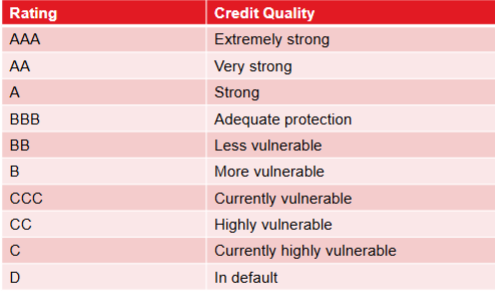
what do credit analysts use financial ratios to measure?
profitability, extent to which operating earnings exceed interest costs, financial structure, cash flow capacity
what are the financial ratio and debt ratings table?

before analyzing a company, what should you do?
research the business and gain an understanding of their core business operations, its recent financial performance, and its financial health
what is the six step financial forecasting process?
analyze historical performance
forecast sales
forecast operating performance
forecast assets and investment needs
forecast financing and dividends
integrate and review statements