Chemical Reactions
 Call Kai
 Learn
 Practice Test
 Spaced Repetition
 Match
 Flashcards
 Knowt Play
1/54

There's no tags or description
Looks like no tags are added yet.
55 Terms
What is a chemical reaction?
A process that breaks and forms chemical bonds, rearranging atoms into substances with different properties.

What are reactants?
The starting substances that enter a chemical reaction.

What are products?
The substances formed by a chemical reaction.

What is free energy (G)?
The portion of a system's energy available to perform work.

What does delta (Δ) mean?
Change or difference.
What equation calculates free energy change?
ΔG = Gfinal − Gstarting.
What does a negative ΔG mean?
The reaction is exergonic, releases free energy, and is thermodynamically favorable.
What does a positive ΔG mean?
The reaction is endergonic, requires an energy input, and is thermodynamically unfavorable.
What does ΔG = 0 mean at equilibrium?
There is no net free-energy change; forward and reverse reactions occur at equal rates.
What is an exergonic reaction?
A reaction that releases free energy; ΔG < 0.

What is an endergonic reaction?
A reaction that requires an energy input; ΔG > 0.

Exergonic vs. endergonic: which is spontaneous?
Exergonic reactions are thermodynamically spontaneous; endergonic reactions require energy input.

What are catabolic pathways?
Pathways that break down molecules; they are generally exergonic and release energy.

What are anabolic pathways?
Pathways that build complex molecules; they generally require energy and are endergonic.

How are catabolism and anabolism connected?
Cells couple energy-releasing catabolic reactions to energy-requiring anabolic reactions.

What is reaction coupling?
Linking an exergonic reaction to an endergonic reaction so the combined process can proceed.

What is the equation for coupled free-energy change?
ΔGcoupled=ΔG1+ΔG2, where ΔGcoupled is the overall change in Gibbs free energy, and ΔG1 and ΔG2 represent the free-energy changes of the individual reactions. Coupling an endergonic reaction with an exergonic reaction allows the overall reaction to proceed spontaneously as long as ΔGcoupled<0.
What condition allows coupled reactions to proceed spontaneously?
The sum of their ΔG values must be negative: ΔGcoupled < 0.
Reaction 1 has ΔG = +8 kJ/mol and reaction 2 has ΔG = −12 kJ/mol. What is total ΔG?
+8 + (−12) = −4 kJ/mol; the coupled reaction is exergonic.
Reaction 1 has ΔG = +10 kJ/mol and reaction 2 has ΔG = −6 kJ/mol. Can coupling drive it?
No. Total ΔG = +4 kJ/mol, so the combined reaction remains endergonic.
What is ATP hydrolysis?
The breakdown of ATP into ADP and inorganic phosphate, releasing free energy.

How does ATP help drive endergonic reactions?
ATP hydrolysis is coupled to an energy-requiring reaction, making the combined ΔG negative.
Why isn't ATP just energy stored in a bond?
ATP's hydrolysis has a negative ΔG because the products are more thermodynamically favorable than the reactants.
What is chemical equilibrium?
A state where reactant and product concentrations remain constant over time because forward and reverse rates are equal.
What is a catalyst?
A substance that speeds up a reaction without being permanently consumed or changed.
What is an enzyme?
A biological catalyst that speeds up and regulates chemical reactions.
What is activation energy (Ea)?
The energy barrier reactants must overcome to reach the transition state and react.
What is the transition state?
A temporary, unstable, high-energy arrangement between reactants and products.
How do enzymes affect activation energy?
They lower the activation-energy barrier, increasing reaction rate.
Do enzymes change ΔG?
No. Enzymes lower activation energy but do not change ΔG or the overall energy difference between reactants and products.
Do enzymes change reaction equilibrium?
No. They speed up forward and reverse reactions without changing equilibrium.
What is a substrate?
The specific reactant that binds to an enzyme and is acted upon.

What is a product in an enzyme reaction?
The molecule or molecules formed when the enzyme acts on its substrate.

What is an active site?
The region of an enzyme where the substrate binds and catalysis occurs.

What is the enzyme-substrate complex?
The temporary complex formed when a substrate binds to an enzyme.

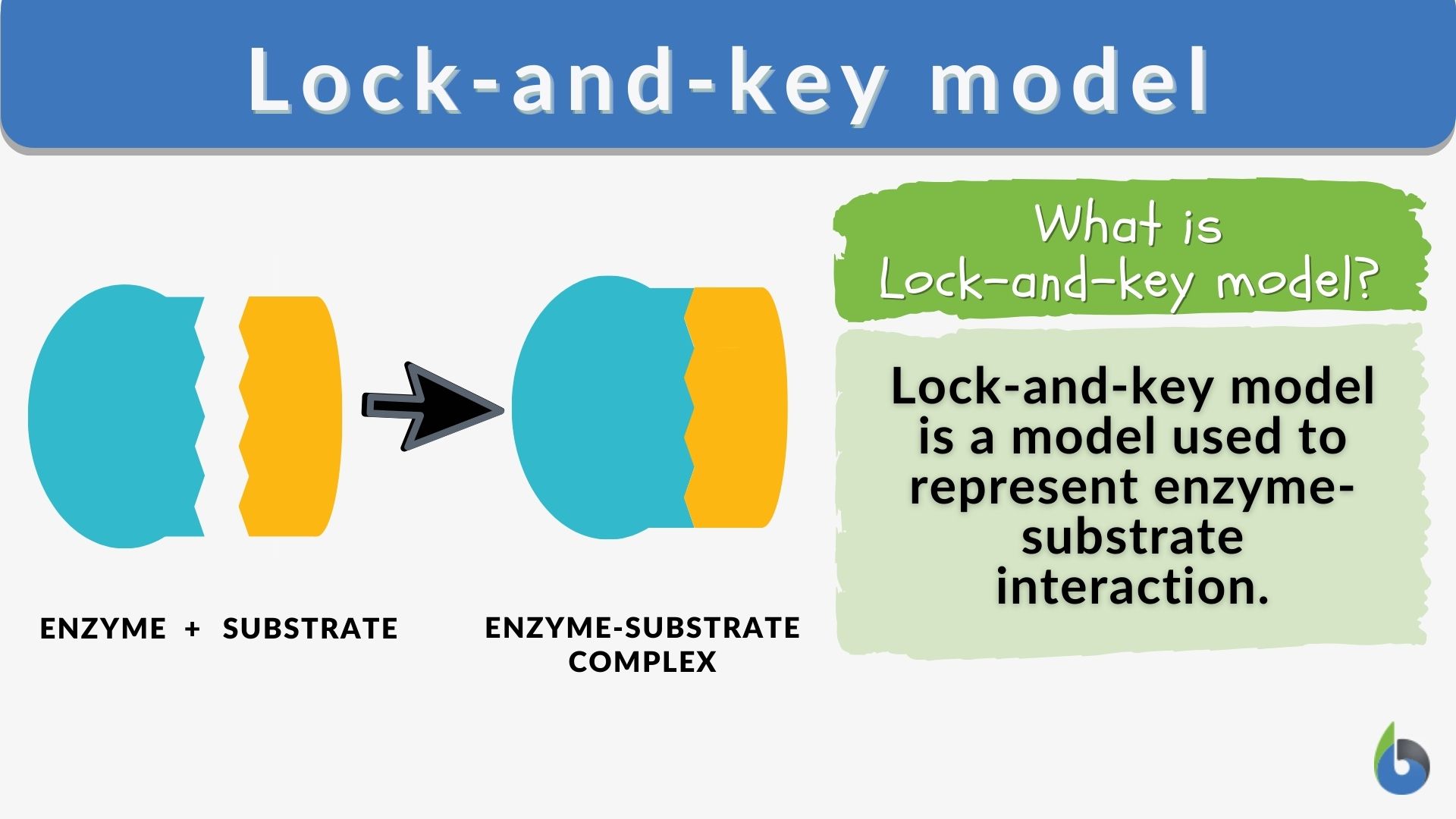
What is the lock-and-key model?
The model that describes a substrate fitting a complementary enzyme active site.
What is induced fit?
The enzyme changes shape upon substrate binding to improve the fit and support catalysis.
How do enzymes bring substrates together?
They position substrates close together and in the correct orientation for a reaction.
How can enzymes strain substrate bonds?
They stress specific bonds, making them easier to break during the reaction.
How can enzymes stabilize the transition state?
Interactions in the active site stabilize the transition state, lowering activation energy.
Are all enzymes proteins?
Most are proteins, but some RNA molecules called ribozymes also catalyze reactions.
Why are enzymes specific?
Their active-site structure and chemical properties favor particular substrates and reactions.
What happens when an enzyme becomes saturated?
All available active sites are occupied; reaction rate reaches its maximum for that enzyme concentration.
How does increasing substrate concentration affect reaction rate?
Rate usually increases until enzyme active sites become saturated.
How does high temperature affect enzymes?
Activity may rise toward an optimum; excessive heat disrupts structure and can denature the enzyme.
What is denaturation?
Loss of a protein's three-dimensional structure, causing reduced or lost function.
How can pH affect enzyme activity?
Changes in pH alter charges and interactions, affecting active-site shape and enzyme function.
What is a cofactor?
A nonprotein helper, often a metal ion, required for an enzyme's proper activity.
What is a coenzyme?
An organic nonprotein helper molecule that assists an enzyme, often by transferring electrons or chemical groups.
What is a competitive inhibitor?
A molecule that competes with the substrate for the enzyme's active site.
What is a noncompetitive inhibitor?
A molecule that binds elsewhere on the enzyme and reduces its activity.
What is irreversible inhibition?
An inhibitor permanently inactivates an enzyme, often through a covalent bond.
What is a metabolic pathway?
An ordered series of enzyme-controlled reactions in which one reaction's product becomes the next reaction's substrate.
What is the commitment step in a metabolic pathway?
An early regulated step that commits a molecule to continue through the pathway.

What is feedback inhibition?
The pathway's final product inhibits an earlier enzyme, often at the commitment step, reducing further product formation.
