NUR 101B Unit 4: Stroke Care, Acute Management & Rehabilitation
 Call Kai
 Learn
 Practice Test
 Spaced Repetition
 Match
 Flashcards
 Knowt Play
1/153

There's no tags or description
Looks like no tags are added yet.
154 Terms
What is a stroke?
A sudden interruption in the blood supply to part of the brain, also known as a cerebrovascular accident (CVA) or 'brain attack.'
What causes injury or death of brain tissue during a stroke?
Interrupted or diminished oxygen and glucose delivery.
What are the two main types of stroke?
Ischemic stroke and hemorrhagic stroke.
What is the contralateral effect in stroke?
Deficits usually appear on the side of the body opposite the damaged side of the brain.
What is the role of the Circle of Willis?
It provides collateral circulation if one vessel narrows or blocks, limiting brain tissue damage during a stroke.

What are the three components that share the fixed space of the skull?
Brain tissue, blood, and cerebrospinal fluid (CSF).
What does the Monro-Kellie doctrine state?
If one component increases in volume, another must decrease, or pressure rises.
What is the primary function of the frontal lobe?
Voluntary movement, judgment, personality, and speech production (Broca's area).
What is the leading cause of long-term disability in the U.S.?
Stroke.
What is a Transient Ischemic Attack (TIA)?
A temporary episode of neurologic dysfunction caused by brief, focal ischemia without permanent brain infarction.

What percentage of TIAs progress to a full stroke?
About 20%.
What is the single most important modifiable risk factor for stroke?
Hypertension.
What lifestyle change significantly reduces stroke risk after cessation?
Quitting smoking.
What are the symptoms of a TIA in the carotid system?
Vision loss, transient one-sided weakness, numbness, sudden trouble speaking.
What is the ABCD² score used for?
Predicting stroke risk after a TIA.
What is the recommended amount of moderate exercise per week to help prevent stroke?
150 minutes.
What are the key roles of the interprofessional stroke team?
Nurse, physical therapist (PT), occupational therapist (OT), and speech-language pathologist.
What impact does a stroke have on a person's life?
It can affect sensory, motor, and cognitive functions, leading to significant lifestyle changes.
What are the signs and symptoms of a stroke?
Sudden numbness or weakness, confusion, trouble speaking, vision problems, and difficulty walking.
What is the significance of recognizing changes in a stroke client's condition?
It is crucial for prioritizing nursing diagnoses and ensuring timely interventions.
What are the effects of cerebral edema on intracranial pressure (ICP)?
It can rapidly increase ICP, compressing brain tissue and reducing blood flow.
What is the primary focus of rehabilitation for stroke clients?
To maximize recovery and improve quality of life post-stroke.
What is the role of the nurse in caring for stroke clients?
To assess, prioritize, advocate, and educate clients and their families.
How does diabetes contribute to stroke risk?
It raises stroke risk by damaging vessel walls and promoting clot formation.
What are the key components of a dysphagia diet?
Levels of texture modification to ensure safe swallowing.
What is the importance of client-centered teaching in stroke care?
To address prevention, medication management, and rehabilitation needs.
What percentage of strokes are ischemic?
About 87%
What percentage of strokes are hemorrhagic?
About 13%
What causes ischemic strokes?
A clot blocking blood flow in a cerebral artery.

What are the two main classifications of ischemic stroke?
Thrombotic and embolic.
What characterizes a thrombotic stroke?
A clot forms directly in a brain artery.
What characterizes an embolic stroke?
A clot forms elsewhere in the body and travels to the brain.
What is a common precursor to thrombotic strokes?
Transient Ischemic Attack (TIA).
What is the most common cause of intracerebral hemorrhage?
Hypertension.
What are the two main types of hemorrhagic stroke?
Intracerebral hemorrhage and subarachnoid hemorrhage.

What is the prognosis for patients with intracerebral hemorrhage?
30-day mortality is 40-80%.
What is a common symptom of subarachnoid hemorrhage?
A sudden severe headache, often described as the 'worst headache of my life.'

What does the acronym B.E.F.A.S.T. stand for in stroke recognition?
Balance, Eyes, Face, Arms, Speech, Time.
What is hemiparesis?
Weakness on one side of the body opposite the brain injury.
What is hemiplegia?
Paralysis on one side of the body opposite the brain injury.
What is aphasia?
A communication deficit resulting from stroke damage to language centers.
What is receptive aphasia?
Difficulty understanding spoken or written language.
What is expressive aphasia?
Difficulty producing words despite understanding language.
What is global aphasia?
Both receptive and expressive deficits; the most severe form of aphasia.
What is the typical progression of muscle tone after a stroke?
Starts flaccid, then progresses to spastic.
What are common manifestations of a hemorrhagic stroke?
Severe headache, nausea/vomiting, one-sided weakness, slurred speech.
What is the role of collateral circulation in ischemic strokes?
It can influence the extent of damage based on blood flow availability.
What is the significance of the Monro-Kellie doctrine in hemorrhagic stroke?
It explains how bleeding raises intracranial pressure.
What is the common treatment for ischemic strokes?
Restoring blood flow, often using tPA or thrombectomy.
What is the common treatment for hemorrhagic strokes?
Controlling bleeding and intracranial pressure, possibly surgery.
What is the typical onset of symptoms in embolic strokes?
Sudden onset with severe deficits that reach maximum intensity almost immediately.
What are the common causes of subarachnoid hemorrhage?
Ruptured cerebral aneurysm, trauma, or illicit drug use.
What is the typical symptom progression in intracerebral hemorrhage?
Symptoms progress over minutes to hours as bleeding continues.
What is the effect of stroke on body functions?
It can affect motor, communication, emotional, cognitive, spatial-perceptual, and elimination functions.
What is dysarthria?
A motor speech disorder where the muscles of the lips, tongue, and vocal cords are weak or uncoordinated, resulting in slurred, slow, or monotone speech.
How does dysphasia differ from aphasia?
Dysphasia is a broader/partial impairment in communication ability and is technically a less severe form than aphasia.
What nursing approach is recommended for patients with dysarthria or dysphasia?
Face the patient, speak slowly and clearly, use short simple sentences, allow extra time, and involve speech-language pathology early.
What is emotional lability in stroke patients?
Sudden, unpredictable outbursts of laughing or crying that may not match the situation.
What common emotional changes occur after a stroke?
Depression, frustration, and emotional lability are common due to neurologic injury and the psychological toll of lost function.
What cognitive changes may occur after a left-brain stroke?
Memory problems tied to language, cautious decision-making, and awareness of deficits.
What cognitive changes may occur after a right-brain stroke?
Impulsivity, lack of awareness of limitations, and spatial awareness problems.
What is unilateral neglect?
A condition where the patient ignores or is unaware of the affected side of the body or environment, often seen in right-sided strokes.
What is homonymous hemianopsia?
Loss of the same half of the visual field in both eyes.
Define agnosia.
Inability to recognize an object by sight, touch, or hearing.
What is apraxia?
Inability to carry out a learned, purposeful movement on command, even when strength is intact.
What are common elimination changes after a stroke?
Temporary bladder and bowel problems, urinary frequency/urgency, and constipation due to immobility.
What is the prognosis for normal bladder function when only one hemisphere is affected?
The prognosis for normal bladder function is excellent.
What are the effects of a left-brain stroke?
Right-sided weakness or paralysis, language problems (aphasia), slower behavior, and emotional changes like frustration and anxiety.

What are the effects of a right-brain stroke?
Left-sided weakness or paralysis, spatial awareness problems, impulsivity, and unilateral neglect.
How do patients with left-brain damage typically behave?
They exhibit cautious behavior and are often aware of their deficits, leading to anxiety.
How do patients with right-brain damage typically behave?
They may act impulsively and often lack awareness of their deficits, posing safety risks.
What is a common bowel concern after a stroke?
Constipation, often related to immobility and reduced fluid intake.
What nursing interventions can help with elimination changes after a stroke?
Scheduled toileting, easy-to-manage clothing, and ensuring adequate fluids and fiber.
How does unilateral neglect differ from blindness?
In unilateral neglect, the eyes and visual pathways may be intact, but the brain does not attend to that side.
What safety hazards can unilateral neglect create?
Hazards include bumping the affected side into objects, not noticing hazards, and eating only from one side of a plate.
What is the first imaging study used to rule out hemorrhage in stroke patients?
Noncontrast CT scan.
Which imaging study is more sensitive for detecting early ischemic changes?
MRI.
What does CT angiography (CTA) visualize?
Blood vessels, identifying blockages and estimating perfusion.
What is the significance of documenting the time of symptom onset?
It drives every treatment decision that follows.
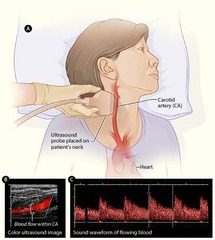
What does a carotid duplex/Doppler ultrasound evaluate?
Blood flow and identifies narrowing in the carotid arteries.
What does cerebral angiography identify?
Cervical and cerebrovascular blockages.
What is the purpose of an EKG in stroke management?
To screen for atrial fibrillation or other arrhythmias that could be an embolic source.
What laboratory studies are essential before considering thrombolytic therapy?
Coagulation studies (PT/INR, PTT).
What is the primary goal of interprofessional care in stroke management?
To preserve life, prevent further brain damage, and reduce disability.
What is the recommended blood pressure management for patients receiving thrombolytic therapy?
Blood pressure must be below 185/110 mmHg before treatment and kept at or below 180/105 for 24 hours after.
What is tPA and its time limit for administration?
IV thrombolytic that dissolves clots, must be started within 4½ hours of symptom onset.
What is mechanical thrombectomy?
A minimally invasive procedure to physically remove a clot using a stent retriever.

What are the goals of managing a hemorrhagic stroke?
To manage airway, breathing, circulation, and intracranial pressure.
What is the target systolic blood pressure for managing a hemorrhagic stroke?
Generally
What surgical options are available for larger bleeds in hemorrhagic stroke?
Evacuation of hematoma, aneurysm clipping, and aneurysm coiling.
What is the role of seizure prophylaxis in hemorrhagic stroke management?
It may be used depending on the patient.
What is the purpose of a lumbar puncture in stroke diagnostics?
To check cerebrospinal fluid for red blood cells, especially when subarachnoid hemorrhage is suspected.
What is the primary focus of nursing assessment for stroke clients?
Neurologic status
What are the key components of a neurologic assessment in stroke patients?
Level of consciousness, mental status, cranial nerve function, and pupil response.
What does the NIHSS stand for?
National Institutes of Health Stroke Scale
What is the purpose of the NIHSS?
To evaluate the severity of an acute stroke.
What score range on the NIHSS indicates more severe stroke?
Higher scores indicate more severe stroke, with a total range from 0 to 42.
What is decorticate posturing indicative of?
Damage to the cerebral hemispheres.
What does decerebrate posturing indicate?
More severe damage involving the brainstem.
What are common nursing diagnoses for stroke clients?
Impaired verbal communication, risk for aspiration, risk for falls, and ineffective coping.