chapter 17: transcriptional regulation in eukaryotes
 Call Kai
 Learn
 Practice Test
 Spaced Repetition
 Match
 Flashcards
 Knowt Play
1/103

There's no tags or description
Looks like no tags are added yet.
104 Terms
cell-type specific expression
different cells may express very different sets of genes, even though they contain the same DNA
the set of genes expressed in a cell gives it its unique properties
gene regulation makes cells different
The mechanisms and systems that control the expression of gene (turn it off or on)
Some genes exhibit environmental and conditional gene expression, and are only active under specific conditions
eukaryotic gene expression is regulated at many stages
E.g. chromatin accessibility, transcription, RNA processing, RNA stability, translation, protein activity
liver cell

neuron

eukaryotic gene regulation is more complex than in prok
greater amounts of DNA that is associated with hisitones and other proteins
mRNAS must be splices, capped, and polyadenylated prior to transport from nucleus
genes on numerous chromosomes are enclosed in a double membrane nucleus
Potential Points for Regulation of Gene Expression in Eukaryotes
Chromatin remodeling
Splicing
Nuclear export
mRNA stability
mRNA localization
Translation
Protein Modification

two structural feautures of eukaryotes distinguish them from prokaryotes
eukaryotic genes
situated on chromosomes that occupy a distinct location (nucleus)
each structural genes has its own promoter and is transcribes separately
euk DNA
combined with histones and nonhistone proteins to form chromatin
dna must unwind from the histone proteins before transcription
transcription and translation are separated in time and space
compact chromatin structure
inhibits transcription, replication, and DNA repair – heterochromatin vs euchromatin
chromatin
the material of which the chromosomes of organisms other than bacteria (i.e., eukaryotes) are composed. It consists of protein, RNA, and DNA.
Need to release this structure/coiling for gene expression.
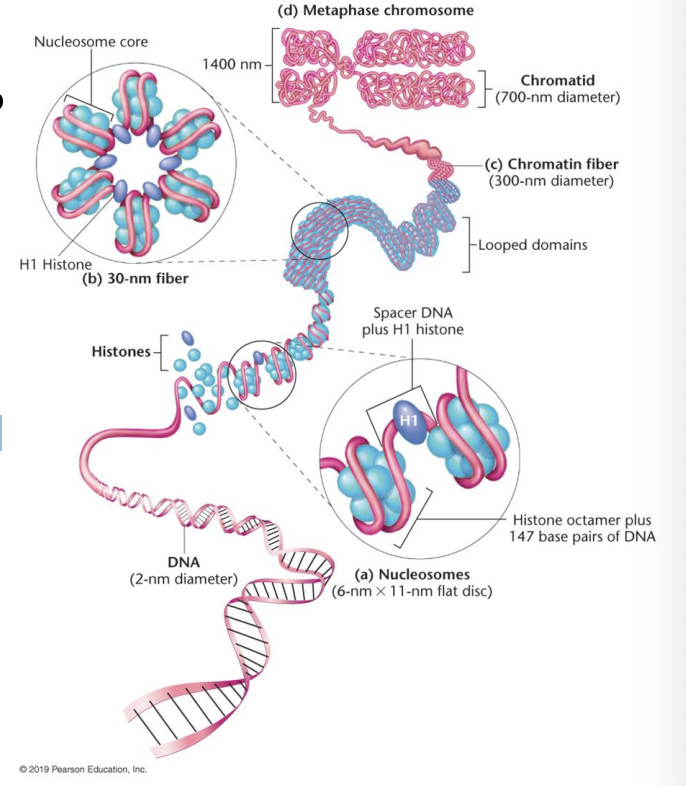
3 processes affect gene regulation by altering chromatin structure:
1-Chromatin remodeling
2-modification of histone proteins
3-DNA methylation
nucleosome
fundamental subunit of chromatin
Each nucleosome is composed of a little less than two turns of DNA wrapped around a set of eight proteins called histones, which are known as a histone octamer.
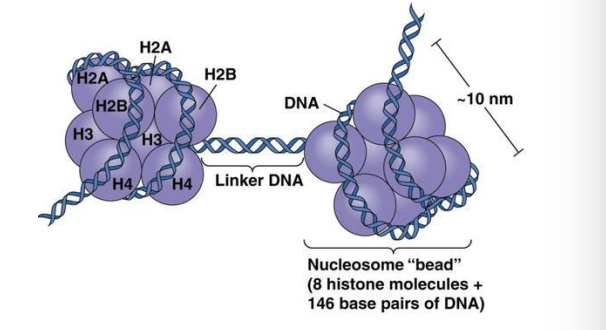
histones
-small proteins (100-200 a.a.)
20-30% arginine and lysine -positively charged
bind to DNA -highly conserved among eukaryotes (besides H1)

each histone october composed of _
two copies each of the histone proteins H2A, H2B, H3, and H4
histone H1
Histone H1 protein binds to linker DNA between nucleosomes forming the macromolecular structure known as the chromatin fiber
each core histonee
Each core histone contains two common regions, the “histone fold” and the “histone tail”

histone folds
structural regions that facilitate assembly into octamers, and are essential for the stability and packing of DNA
histone tails
flexible regions, amino acid chains that protrude from the histone fold, located at both ends of the folds (two tails)
tails undergo various chemical modifications that directly influence DNA accessibility and gene expression
chromosome territory
In interphase nucleus, each chromosome occupies discrete domain and stays separate from other chromosomes
interchromosomal domains
Channels between chromosomes that contain little or no DNA
chromosome structure
continuously rearranged; transcriptionally active genes are cycled to edges of chromosome territories
chromosome territory diagram
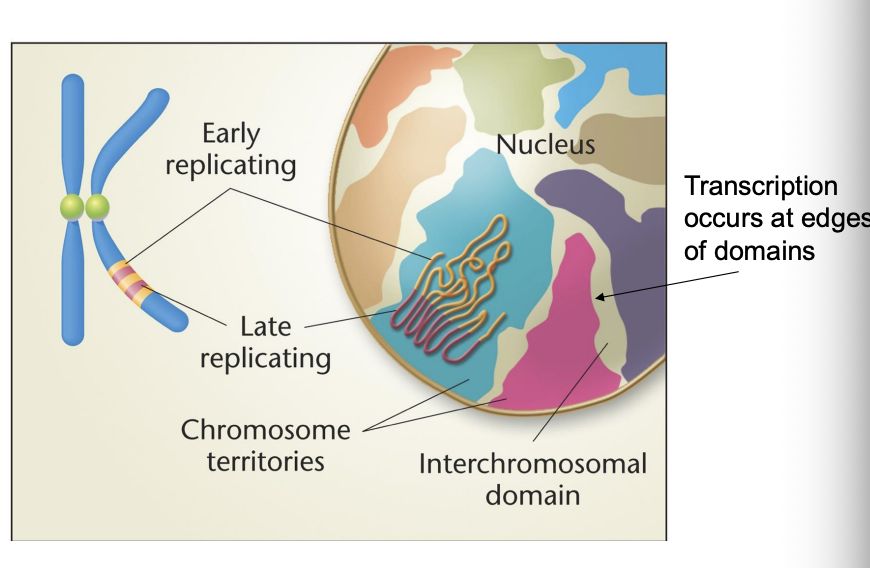
organization of chromosomes at the edges of chromosome territories
brings transcriptionally active genes in closer association with each other and with the transcription machinery, thereby facilitating their coordinated expression
transcription factories
Feature within nucleus that may contribute to gene expression
Nuclear sites that contain most of the active RNA polymerase and transcription regulatory molecules
Dynamic structures that form rapidly and disassemble upon stimulation and repression of transcription
Transcripts produced at the edge of the chromosome territories
move into the adjacent interchromatin compartments
These compartments house RNA processing machinery and are contiguous with nuclear pores
This arrangement facilitates the capping, splicing, and poly-A tailing of mRNAs during and after transcription, and the eventual export of mRNAs into the cytoplasm
nuclear arictecture nad transcriptional regulation
inderdependent
Thus, changes in nuclear architecture affect transcription and changes in transcriptional activity necessitate changes in chromosome organization
chromatin remodeling
To accommodate DNA-protein interactions, chromatin must change structure
To allow gene expression (and replication), chromatin must:
Relax compact structures
Expose regions of DNA to regulatory proteins
Have a reversal mechanism

histone modification
Addition of acetyl groups to histone proteins and histone protein tails
Addition of methyl groups to the histone protein tails (and DNA, later)
DNase I hypersensitivity
DNase I hypersensitive sites: more open chromatin configuration site, upstream of the transcription start site
tight association of DNA with histones/chromatin binding proteins
inhibits access to the DNA
This inhibitory conformation is referred to as “closed” chromatin
Before transcription can be initiated on nucleosomal DNA, the structure of chromatin must become “open” to RNA polymerase
enzyme DNase I
Open and closed conformations (or general access) were confirmed using the enzyme DNase I
DNase I: enzyme that digests DNA to varying degrees depending on the chromatin's confirmation
Fully compacted DNA is protected from DNase I
DNA located in regions of more relaxed chromatin is rapidly digested
DNase I hypersenitive sites
regions of digestion where DNA is located in regions with more relaxed chromatin
DNase I hypersensitivity
more open chromatin configuration site, upstream of the transcription start site (~1000bp)
Relaxed chromatin structure to allow for transcription factors and other proteins to access DNA and carry out transcription.
What we will see next is how relaxation is achieved
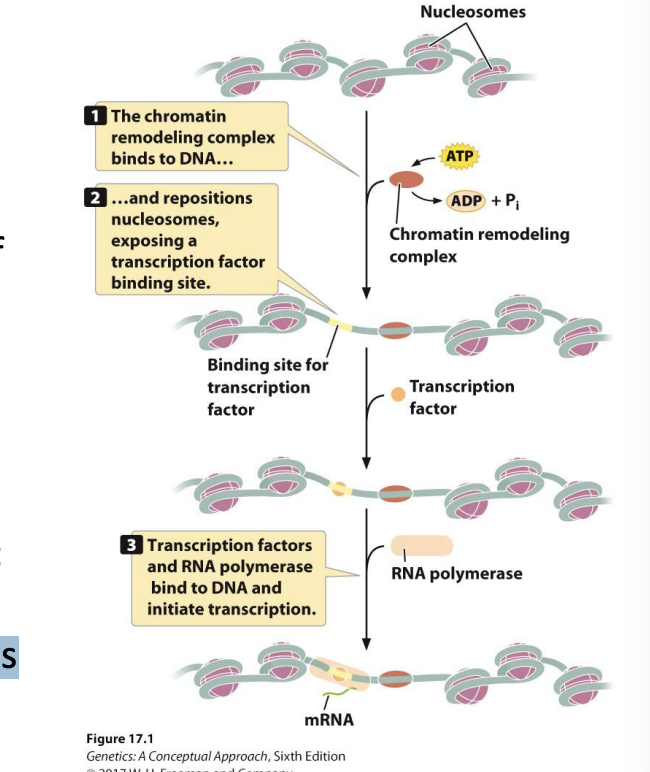
Chromatin remodeling alters the arrangement of nucleosomes and makes genes accessible to the transcription machinery

chromatin remodeling
involved repositioning or removal of nucleosomes on DNA
As nucleosomes can cover transcription binding sites, repositioned nucleosomes make chromosome regions accessible to:
Transcription regulatory proteins
Transcription activators
RNAPII (RNA polymerase II)
nucleosomal modifications
modified via change in composition
important step in gene regulation, involved changes to either nucleosome or dna
histones contain normal hsitone h2a
variant histones affect mucleosome mobility and positioning on dna
H2A.Z variant
are not as stable as H2A, and thus are less of a barrier
H2A.Z variants are enriched at gene regulatory sequences, such as the promoters and enhancers, of actively expressed gene
Nucleosome position may repress or activate transcription via gene promoter
histone modification
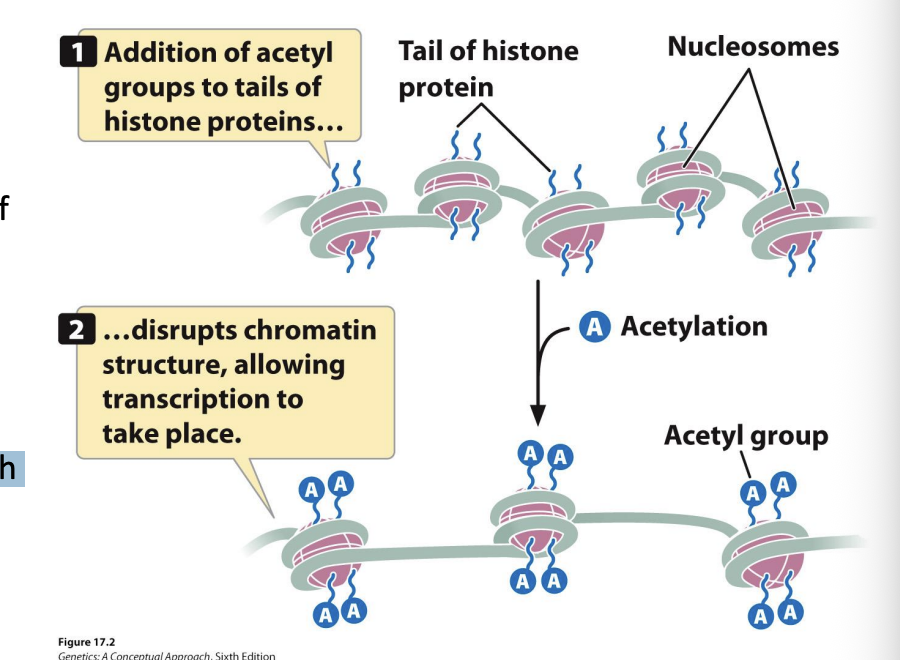
Covalent bonding of functional groups onto N-terminal tails of histone proteins • Most common: acetyl, methyl, phosphate
The histones tails of the core octamer have protein tails that are lysine rich (lysine R group is (+) charged)

acetylation
decreases positive charge, which reduces affinity of histone to DNA
Histone acetylation
catalyzed by histone acetyltransferase enzymes (HATs): associated with increased transcription
some transcriptional activators proteins themselves can have HAT activity
histone deacetylases (HDACs)
remove acetyl groups from histone tails : associated with decreased transcription
recruited by some transcriptional repressor proteins
chromosome remodeling
Another alteration mechanism is chromosome remodeling, involving the repositioning or removal of nucleosomes on DNA
Remodeling is brought about by Chromatin remodeling complexes
large multi-subunit enzymes that use the energy of ATP hydrolysis to remove and arrange nucleosomes

Best-studied remodeling complexes
SWI/SNF
It is directed to specific DNA (gene) sites in several ways: (a) Binding to transcription factors (b) Binding to modified histones (c) Binding to methylated DNA
how SWI/SNF alters nucleosome arrangement
(a) The DNA-histone contacts may be loosened, allowing the nucleosome to slide along the DNA, exposing the DNA regulatory regions
(b) The path of the DNA around a nucleosome core particle may be altered
(c) Components of the core nucleosome particle may be rearranged, such as by swapping in and out variant histone proteins

DNA methylation
an enzyme mediated addition or removal of methyl groups to or from bases in DNA
- Involves the addition of a methyl group catalyzed by DNA methyltransferase (DNMTs) enzymes, modifying adenine or (most often) cytosine bases
Addition of a methyl group (-CH3) to cytosine on the 5-carbon of the cytosine nitrogenous base resulting in 5-methylcytosine (5mC)

The added methyl groups occupy the major groove of DNA
silence genes primarily by blocking the binding of transcription factors and other proteins necessary to form transcription complexes
Recruits repressive protein (methylbinding proteins) that binds methylated DNA and contribute to chromatin condensing (further packing)

in eukaryotes
when cytosines are methylated, they are recognized as part of a CpG dimer and one methyl group is added on on each strand
A CpG site is named so to indicate 5’ – C – phosphate – G – 3’
This is to differentiate from C-G base pairing between two DNA strands
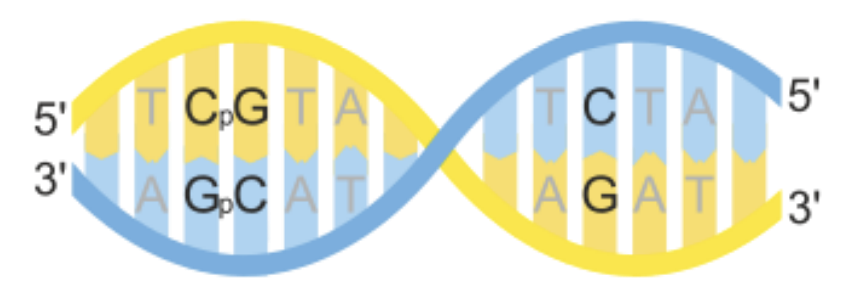
CpG motifs
are methylated throughout the genome to silence genes that are not active in specific cell types
cpg islands
DNA sequences rich in CpG motifs are called CpG Islands
CpG islands have many repeat CpG in the same region (>50% CpG sites within a 200bp sequence).
gene promoters
Methylation is not randomly distributed throughout the genome, they occur often within gene promoters

promoter locations
In humans, about 70% of promoters located near the transcription start site of an active gene (proximal promoters) contain a CpG island
Methylation is associated with decreased gene expression
Low methylation – high levels of expression
High methylation – low levels of expression
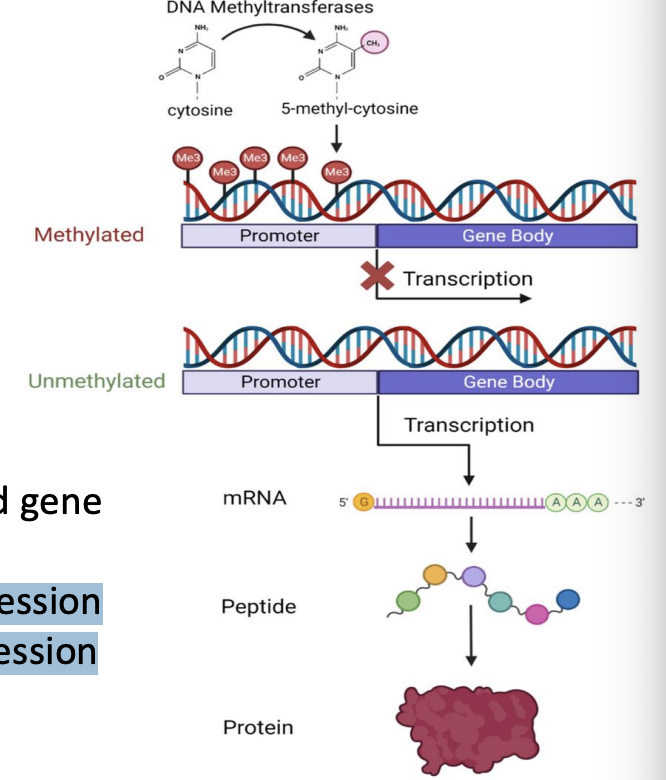
Methylated DNA = silenced DNA (i.e. X-inactivation)
Large transcriptional inert regions of the genome, such as the inactivated X chromosome in female mammalian cells, are often heavily methylated
Most direct evidence of DNA methylation role in gene expression comes from using a base analog for cytidine
5-azacytidine can be incorporated into DNA in place of cytidine but cannot be methylated
Incorporation of 5-azacytidine changes gene expression and stimulates expression of alleles on inactivated X chromosomes
Also induces the expression of genes that would normally be silent in certain differentiated cells
Methylation patterns are tissue specific
Once established, are maintained for all cells of that tissue (somatic maintenance)
Appears that proper patterns of DNA methylation are essential for normal mammalian development
Can be altered by methylase and demethylase enzymes in order to silence or activate gene expression
eukaryotic transcirption
requires specific cis-acting sites
Cis-acting sequence
DNA sequences elements
Located on same chromosome as gene that it regulates
Required for accurately regulated transcription of genes
Promoters
Enhancers
Silencers
Promoters (core and proximal)
Nucleotide sequences that serve as recognition sites for transcription machinery
Located immediately adjacent to regulatory genes
Critical for transcription initiation; There are two subcategories
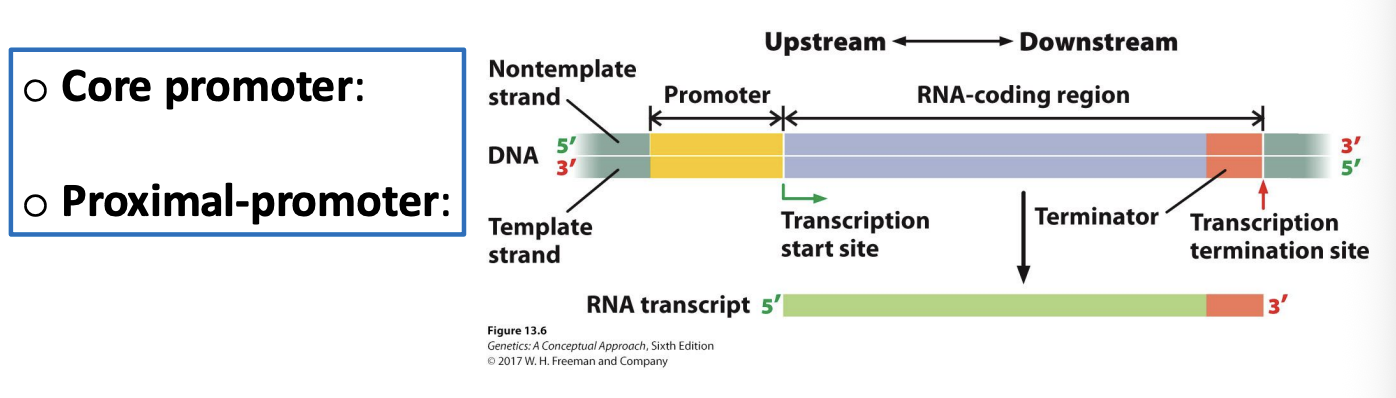
Core promoter:
Determines accurate initiation of transcription ( TATA box) •
Minimum part of the promoter needed for accurate initiation of transcription by RNAP II
These sequences are ~80nt long and include the transcription start site (TSS)

Proximal-promoter elements
Modulate efficiency of basal levels of transcription
Located up to ~250nt upstream of TSS and contain binding sites for sequence specific factors that modulate the efficiency of Tx
promoter diversity
Great diversity exits in eukaryotic promoters, in structure and function: Core Promoters
focused promoters
Specific transcription initiation at start site Major type of initiation for lower eukaryotes
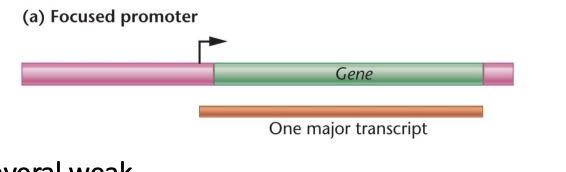
dispersed promoters
Direct initiation from several weak transcriptional start sites located over a 50- to 100-nt region


Within the core promoters are a numerous core-promoter elements
short nt sequences that are bound by specific regulatory factors
Core-promoter elements are usually located between -40 and +40 nucleotides, relative to the transcription start site, indicated as +1.
BRE is the TFIIB recognition element, which can be found on one side or other of the TATA box.
TATA is the TATA box, Inr is the Initiator element, MTE is the motif ten element, and DPE is the downstream promoter element.

Promoters contain proximal-promoter elements
Located upstream of TATA and BRE motifs
Act along with the core-promoter elements to enhance levels of basal transcription
Examples: CAAT and GC boxes (mutating these regions affects relative transcription levels)

promoter structure
Consensus sequences in the promoters of three eukaryotic genes illustrate the principle that these sequences are mixed and matched in different combinations in different promoters
Different transcription factors bind to each consensus sequence, so each promoter responds to a unique combination of transcription factors.
Proximal-promoter = regulatory promoter

Cis-Acting: Enhancers, Insulators and Silencers
In addition to promoters, transcription of eukaryotic genes is influenced by other classes of regulatory sequences

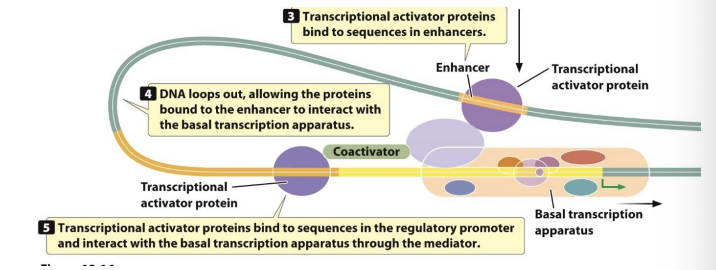
enhancers
Located on either side of gene, some distance from gene, or even within gene
Important in reaching maximum level of transcription
Are cis regulatory elements because they only serve to regulate genes on the same chromosome
They are orientation independent (can be inverted relative to the gene it regulates w/out significant effect on its own action)
Position independent (will function the same whether it is upstream, downstream or within a gene)
Often confer time- and tissue-specific gene expression
Often modular and contain multiple binding sequences that additively enhance their effects
Effects of enhancers have on transcription have been tested using reporter genes in cultured cells, created by recombinant DNA technology
The use of reporter genes such as the green fluorescent protein (GFP), which emits green fluorescence when excited by blue light
The level of GFP emitted is proportional to the transcript of reporter gene being produced, and they can be used to measure the effect of the enhancer on transcription
Enhancers can also drive the the tissue and temporal specificity of GFP reporters to show the pattern of endogenous enhancer expression
insulators
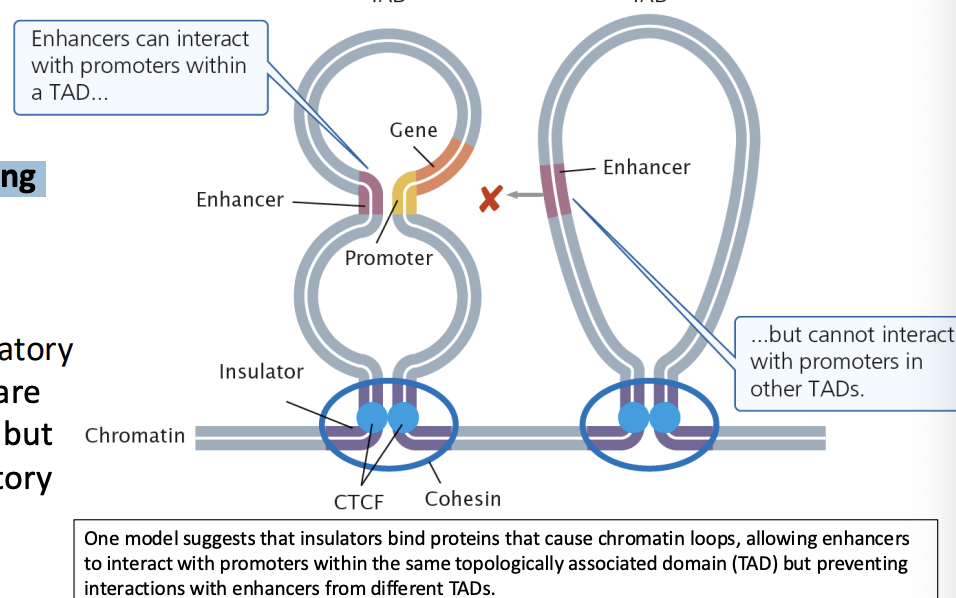
Found between an enhancer and a promoter for a nontarget gene
Limits the extent of an enhancers reach to stop it from coregulating genes on the same chromosome that are transcribed at different times or cell types
allow some enhancer–promoter interactions and block others
Mechanism of action is thought to be that proteins that bind to insulators induce the formation of DNA loops that allow some enhancer-promoter interactions and not others

Insulators and their binding proteins:
may help create “neighborhoods” of regulatory elements and genes that are able to physically interact but are insulated from regulatory elements in other neighborhoods
silencers
like enhancers can be located on either side of gene, some distance from gene, or even within gene
Acts as a negative regulators of transcription, repressing the level of transcription initiation
Similar to enhancers, they also often act in a tissue- or temporalspecific ways to control gene expression
Transcriptional repressors (proteins) bind silencers
transcription factors (TX)
Transcription regulatory proteins
Target cis-acting sites of genes regulating expression
Multiple transcription factors bind to several different enhancers and promoter elements and fine-tune the level of transcription initiation
In addition to the general transcription factors (GTFs) required for the basic process of transcription initiation, some Tx factors are:
Activators that serve to increase transcription initiation
Repressors that decrease transcription initiation
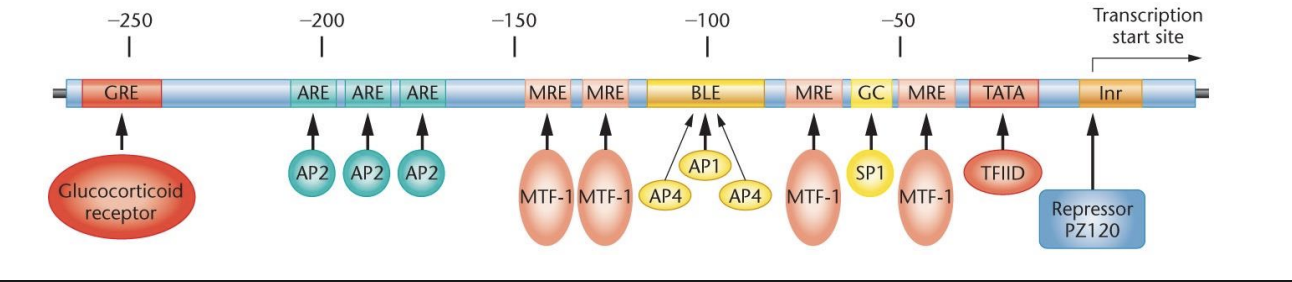
Human metallothionein IIA gene (hMTIIA)
Example of how a gene can be transcriptionally regulated due to interplay of:
Promoters
Enhancer elements
Transcription factors that bind to them
MT2A gene
protein that binds heavy metals such as zinc and cadmium, thereby protecting cells from the toxic effects of high levels of these metals
Also implicated in protecting cells from oxidative stress
Expressed at basal levels in all cells and upregulated at high levels when cells are exposed to heavy metals or stress hormones such as glucocorticoids
MT2A is is also stress induced and this response is mediated by different activator and enhancer factors
Glucocorticoid is a steroid hormone secreted by vertebrates under stressful conditions
When secreted, a glucocorticoid receptor binds the GRE enhancer and enhances MT2A gene transcription
MT2A Tx is repressed by a PZ120 repressor protein, which binds over the start site
The heavy metal response
activated by metal-inducible transcription factor (MTF-1)
Transcription factors (proteins)
Have two functional domains (clusters of amino acids with a specific function):
DNA-binding domain
• Binds to specific DNA sequences in the cis-acting regulatory site
• ~ 60-90 amino acids, form hydrogen bonds with DNA
• Motif: within the binding domain, a simple structure that fits into the major groove of the DNA
Trans-activating or Trans-repressing domain
• Activates or represses transcription by binding to other transcription factors or RNA polymerase
characteristic domains of DNA-binding proteins
Helix-turn-helix (HTH)
• Present in both eukaryotic and prokaryotic transcription factors
Zinc-finger
• Found in wide range of transcription factors that regulate gene expression
Basic leucine zipper (bZIP)
• Allows for protein–protein dimerization
helix-turn-helix (hth)
Present in both eukaryotic and prokaryotic transcription factors
Each monomer incorporates two alphahelices, joined by a short strand of amino acids, that bind to the major groove of DNA
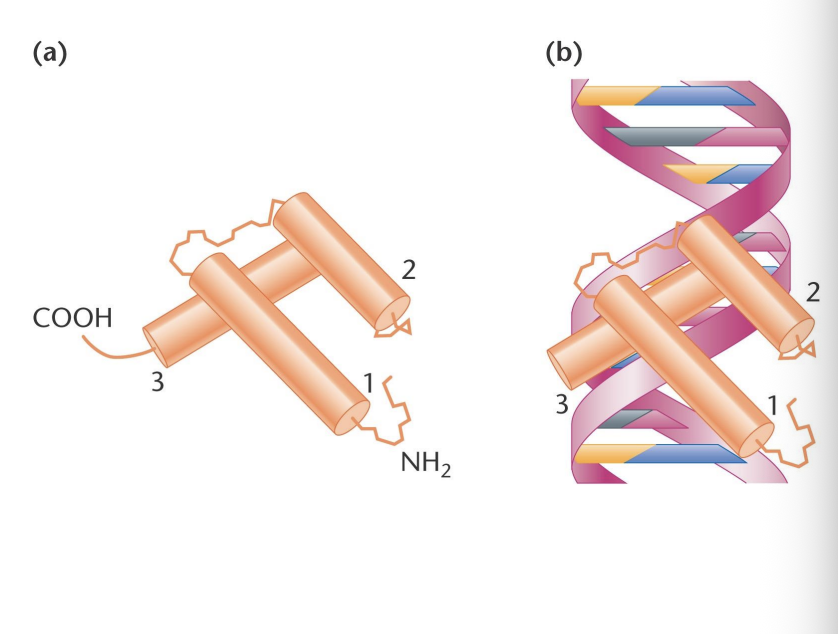
Zinc-finger
Found in wide range of transcription factors that regulate gene expression
Characterized by the coordination of one or more zinc ions (Zn2+) in order to stabilize the fold
Originally coined to describe the finger-like appearance, domains are relatively small and contain multiple finger like protrusions that make tandem contacts with their target molecule
Some domains bind zinc, some do not and bind other metals, or no metal at all
Very diverse protein families have zinc finger domains

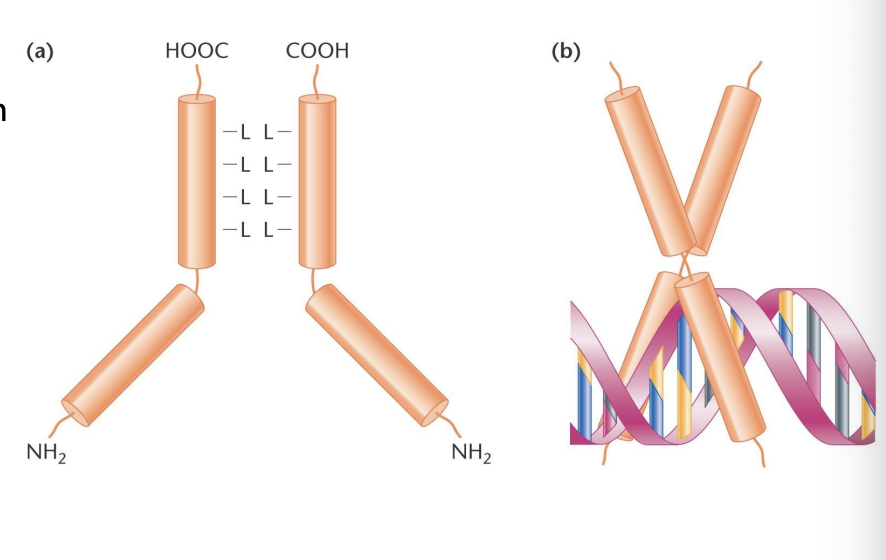
Basic leucine zipper (bZIP)
Allows for protein–protein dimerization
One part of the domain contains a region that mediates sequence specific DNA properties and the leucine zipper that is required to hold together (dimerize) two DNA binding regions
A critical step in initiation of transcription
the formation of RNA Pol II Pre-initiation complex (PIC)
General transcription factors (GTF)
Trans acting Proteins
Required at promoter to initiate basal or enhanced levels of transcription
Assembly of proteins in specific order forms pre-initiation complex (PIC)
PIC provides platform for RNAP II to recognize transcription start sites
Formation of the Pre-Initiation Complex (PIC)
Required for initiation of transcription •
First step in forming PIC—binding of TFIID to TATA box via TATA binding protein (TBP)
TFIID is a multi subunit complex including TATA binding protein(TBP) and several TBP Associated Factors (TAFs)
Then additional factors are loaded: TFIIA, TFIIB, TFIID, TFIIE, TFIIF, TFIIH, and a large multi-subunit complex called Mediator
Fully formed PIC mediates unwinding of promoter DNA at TSS (+1) and transition of RNAP II from Tx to elongation
Depending on the organism, RNAP II pauses and waits for signals to proceed or immediately leaves the promoter and proceeds down the template in an elongation complex
Several general Tx factors (IID, IIE, IIH, and Mediator) remain on the core promoter to help set up the next PIC

Transcription activators and repressors bring changes to RNA Pol II transcription
DNA looping delivers activators, repressors, and general transcription factors to promoter vicinity
Recruitment model: enhancers and silencer elements act as donors; affect regulatory proteins at gene promoters
Coactivators
Interact with proteins and enable activators to make contact with promoter-bound factors
Coactivators form complex “enhanceosome”
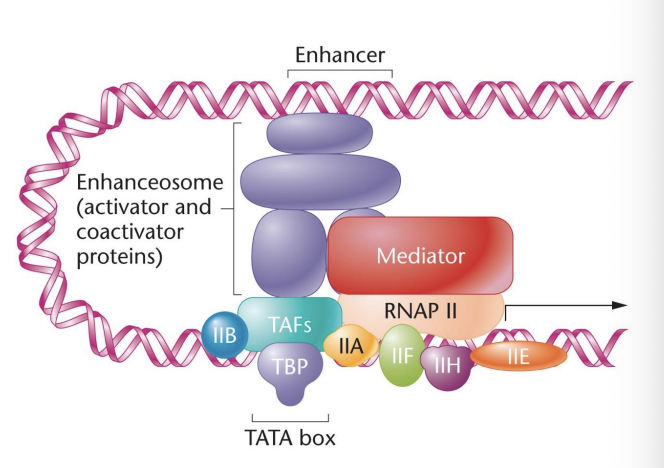
Enhanceosome
Interacts with transcription complex
In a similar way, repressor proteins at silencer elements decrease rate of PIC assembly and RNA Pol II release
Eukaryote yeast
efficiently controls gene expression to produce proteins required for the metabolism of galactose
Involves the orchestration of cis- and trans-acting factors to control gene expression in a way that is decidedly different from bacteria systems
GAL gene system in yeast
Composed of four structural genes (GAL1, GAL10, GAL2, GAL7) and three regulatory genes (GAL4, GAL80, GAL3)
Products of structural genes transport galactose into cell for metabolism
Products of the regulatory gene positively and negatively control the transcription of the structural genes
positive control
Activator protein must be present to turn on gene transcription
GAL genes are inducible
Transcription is regulated by presence or absence of substrate (galactose)
Absence of galactose: GAL structural genes not transcribed
Galactose added to medium: Transcription begins immediately
Mutations in the regulatory gene GAL4 prevent Gal4 activator protein activation
GAL4 encodes the (Gal4p) required for transcription of the GAL structural genes
Gal4p consists of 881 amino acids and functions as a homodimer
A DNA-binding domain (DBD) that recognizes and binds specific DNA sequences
An activation domain (AD) that activates transcription

Gal4 protein (called Gal4p)
Encoded by GAL4 gene
Negatively regulated by Gal80 protein
Has DNA-binding domain that recognizes and binds to sequences in UASG
170bp long cis-acting elements (upstream activation sequences of GAL genes), which are enhancers for all the GAL structural genes
The chromatin structure of UASG sites is open, so Gal4p is able to occupy UASG sites whether galactose is present or not
Because Gal4 can bind in the absence of galactose, UASG sites are not the sole determinant of transcriptional activation
Gal4p is regulated by Gal80p and Gal3p, encoded by the GAL80 and GAL3 genes, respectively
Binding of phosphorylated galactose to Gal80p and/or Gal4p exposes activation domain of Gal4p
GAL Genes are Inducible and Transcription is Positively Regulated by Galactose
GAL1 and GAL10 genes (only showing 2 of 4)
Transcription of both genes is positively regulated
Controlled by central control region, UASG (upstream activating sequence of GAL genes)
Contain four binding sites for Gal4 protein (Gal4p)
UAS is functionally similar to enhancers in eukaryotes
Chromatin structure of UAS is constitutively open, or DNase hypersensitive, meaning that it’s loosely associated with nucleosomes

Galactose Metabolism: SUMMARY
Galactose metabolism is inducible…similar to what we saw in prokaryotes with lactose
Transcription is activated by GAL4 in response to galactose. GAL4 binds to the UASG site and controls the transcription of genes in galactose metabolism.
UASG has properties of an enhancer…regulatory sequence that lies some distance from the gene

encode
In 2003, the U.S. National Human Genome Research Institute launched the ENCODE Project
ENCODE: Encyclopedia of DNA Elements Project
Goal: Identify all functional DNA sequences and determine how elements regulate expression
Discovery by ENCODE (examining 125 different cell types)
• Less than 2% of the human genome consists of protein-coding genes
More than 80 percent of human genome has biochemical function and contains regulatory elements (once considered “junk DNA”)
Still to learn – what is the biochemical function of these areas?
Enhancer and promoter elements
Promoter elements: 30,000 promoter regions found within proteincoding genes
ENCODE data show enhancer elements influence transcription of several different promoters
Interactions could result in formation of DNA loops up to 1 million bp in length
Indications that different cell types use different combinations of regulatory elements and binding proteins in order to determine a cell’s gene-expression phenotype
Enhancer elements: Contain promoter elements that initiate transcription
enhancer RNA
Genomic sequences encoding enhancer RNAs often contain Bonafide promoter elements that initiate transcription from the enhancer and extend outward for several kilobases
The most active enhancers in a cell type produce the most enhancer RNA
Unknown functional relevance
Most surprising finding: Up to 75% of the human genome is transcribed in at least one cell type